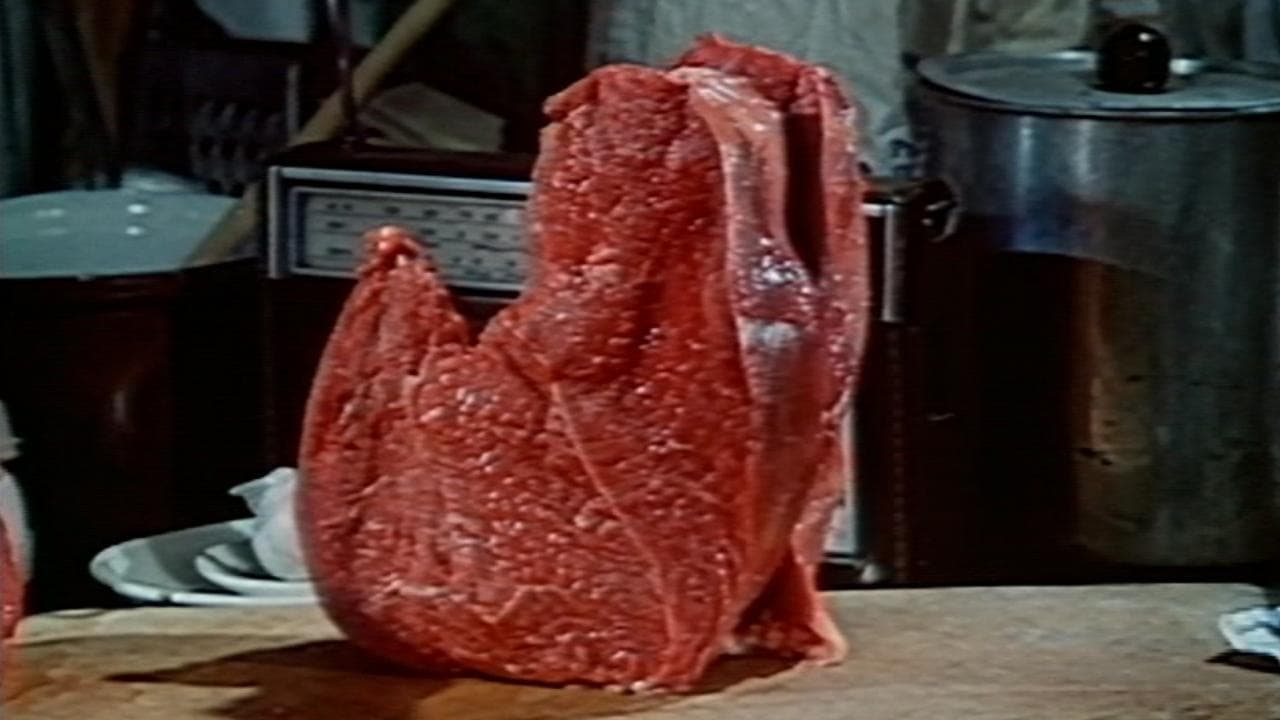
It starts with the glistening, raw flesh. Two crude slabs of meat, pale and veined, twitching not with life, but with the uncanny stop-motion energy only one master could impart. Forget haunted houses or masked killers for a moment; sometimes the deepest unease lurks in the utterly mundane twisted into the profoundly weird. And few twisted reality with the unnerving, tactile genius of Czech surrealist Jan Švankmajer. His 1989 micro-nightmare, Meat Love (Zamilované maso), is less a story and more a primal jolt delivered in just sixty seconds – a greasy, unforgettable stain on the celluloid.
A Minute of Visceral Strangeness
What even is Meat Love? On the surface, it’s absurdly simple: two pieces of meat meet, nuzzle, engage in a clumsy, fleshy tango across a wooden surface, are coated in flour, violently impaled by forks, and dropped into sizzling fat. A love story, Švankmajer-style. It’s grotesque, darkly funny, and deeply unsettling all at once. Watching it feels like uncovering a forbidden artifact, a snippet of film not meant for casual viewing, perhaps spliced onto the end of a worn-out rental tape by some mischievous video store clerk. Remember finding those bizarre shorts or unsettling foreign animations tucked away on compilation tapes, the ones that stuck with you precisely because they were so inexplicable? Meat Love is the distilled essence of that feeling.
The power lies in Švankmajer's signature stop-motion technique. Known for animating everything from puppets to clay to, well, meat, he brings an incredible tactility to his work. You can almost feel the clammy surface of the flesh, smell the flour dust, hear the aggressive sizzle of the frying pan. This isn't slick, clean animation; it's earthy, messy, and disturbingly organic. The meat doesn't just move; it pulses, writhes, presses against its 'lover' with a strange tenderness that makes the inevitable, brutal ending even more jarring. It's a commentary, perhaps, on consumption, desire, the animalistic nature beneath courtship rituals, or maybe just Švankmajer indulging his fascination with the grotesque beauty of decay and transformation.
From Surrealist Master to… MTV?
Here’s a slice of retro trivia that feels almost as surreal as the film itself: Meat Love wasn't just some obscure art-house experiment playing in smoky Prague cinemas. Believe it or not, this minute-long marvel of meaty romance was reportedly commissioned by, of all places, MTV Europe in 1989 to be used as an "ident" – one of those short, branded clips played between music videos. Can you imagine flicking through channels late at night, expecting Madonna or Guns N' Roses, and instead being confronted with this? It speaks volumes about a time when even mainstream channels occasionally took wild, artistic risks. It’s hard to picture something so aggressively strange getting airtime today outside of a dedicated animation festival.
Švankmajer himself, a key figure in the post-war Czech Surrealist Group, often infused his work with political subtext and a deep skepticism towards authority and societal norms. While Meat Love might seem slight compared to his feature-length works like Alice (1988) or Faust (1994), it perfectly encapsulates his worldview in miniature: the blend of desire and destruction, the beauty found in the repulsive, the dark comedy inherent in existence. His influence resonates strongly in the works of directors like Terry Gilliam, Tim Burton, and The Brothers Quay, all of whom have cited his tactile, dreamlike (or nightmare-like) approach as inspirational. Animating something as unstable and perishable as raw meat presents obvious challenges, requiring speed, precision, and likely a very cold studio – a testament to the demanding nature of his craft.
The Lingering Aftertaste
Does Meat Love still hold up? Absolutely. Its power isn't diminished by time; if anything, its sheer oddity feels even more pronounced in today's often-homogenized media landscape. It’s a perfect example of how potent and disturbing animation can be, moving beyond cartoons into the realm of visceral art. It doesn't rely on jump scares; the horror is existential, baked into the very fabric of seeing inanimate flesh imbued with desperate, fleeting life, only to meet a violently mundane end. It sticks in your craw, so to speak. Doesn't that raw, primitive dance feel unnervingly familiar in some strange way?
---
Rating: 9/10
Justification: Meat Love is a miniature masterpiece of surrealist animation. Despite its extreme brevity, it delivers a potent and unforgettable artistic statement. Švankmajer's technical skill in animating such an unconventional material is remarkable, and the film's blend of dark humor, visceral horror, and strange tenderness creates a uniquely unsettling atmosphere that lingers long after its single minute is up. It earns a high score for its sheer audacity, technical artistry, and enduring power to disturb and provoke thought, even if its niche appeal keeps it just shy of perfect.
Final Thought: It's a testament to the weird corners of the VHS era and beyond – a reminder that sometimes the most impactful nightmares come in the smallest, strangest packages, perhaps sandwiched between music videos when you least expect it.