It begins with innocence, or the sketch of it. A stick figure child, rendered with the charming crudeness of a classroom doodle, gazes up at a simple red balloon. There's no immediate threat, no looming score, just the stark white background and the bare minimum of lines needed to convey the scene. Yet, watching Don Hertzfeldt's 1998 short, Billy's Balloon, even now, evokes a peculiar, creeping dread. It’s the kind of unease that settles deep in your gut, whispering that something fundamentally wrong is about to unfold in this deceptively simple world.
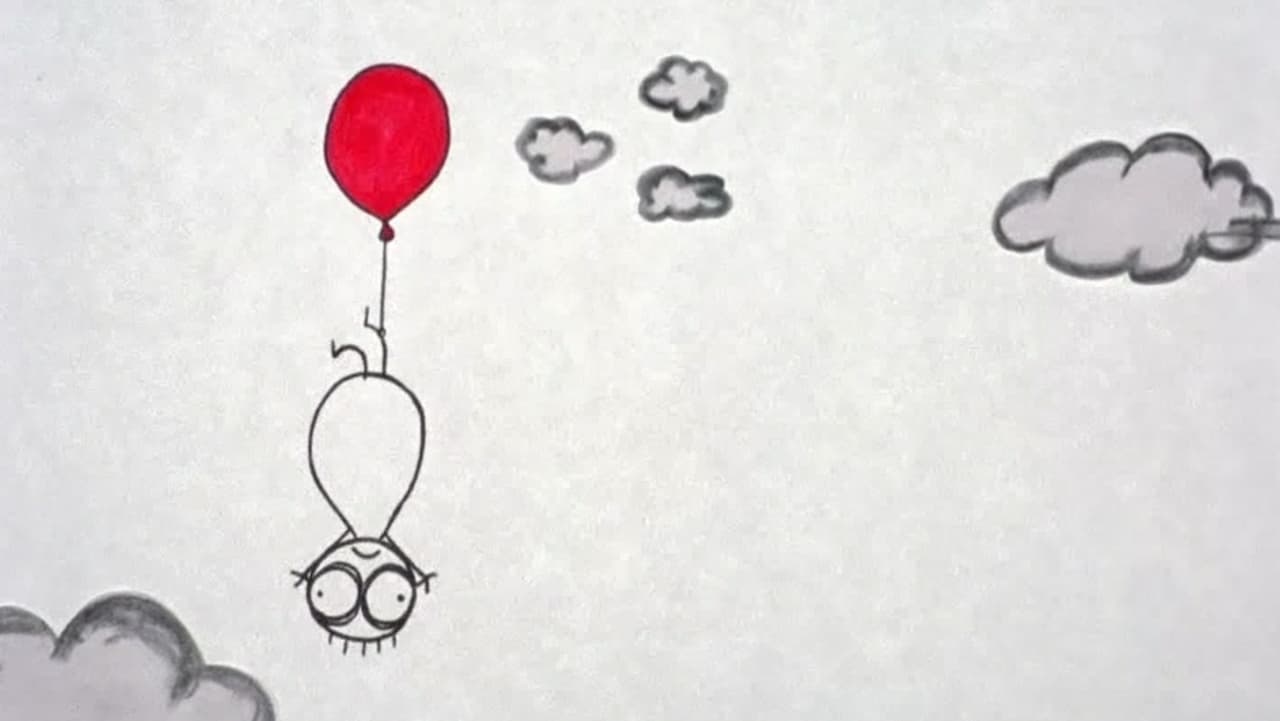
Childhood Fears Made Manifest
The genius, and the horror, of Billy's Balloon lies in its utter commitment to its absurd, violent premise. The balloon isn't just an inanimate object; it's a predator. It doesn't float benignly; it attacks, relentlessly pummeling the helpless stick figure Billy with a detached, almost procedural violence. The lack of dialogue, the minimalist sound design – mostly just the rhythmic, sickening thuds of impact – amplify the disturbing nature of it all. This isn't cartoon violence played for laughs; it feels disturbingly visceral despite the abstract presentation. It taps into that primal childhood fear of the inanimate coming to life with malevolent intent, the nursery rhyme twisted into a nightmare.
The Birth of a Singular Vision
What makes Billy's Balloon more than just a morbid gag is knowing it was one of the earliest works from Don Hertzfeldt, crafted while he was still a film student at the University of California, Santa Barbara. You can see the DNA of his later, more complex works like the Oscar-nominated Rejected (2000) or the profound feature It's Such a Beautiful Day (2012) right here. The minimalist aesthetic wasn't just a choice; it was partly born of necessity, animated painstakingly by Hertzfeldt himself on a 16mm rostrum camera. This hands-on, frame-by-frame process imbues the film with a unique, jittery energy that digital animation often smooths away. It’s reported that Hertzfeldt taught himself animation to make shorts like this, driven by a pure desire to bring his unsettling visions to life, even without formal training in the medium initially. This raw, self-taught quality became a hallmark of his influential style.
The short quickly transcended its student film origins, becoming a sensation on the festival circuit – even winning the Grand Jury Prize for Short Film at the 1999 Slamdance Film Festival. For many of us encountering animation beyond mainstream cartoons in the late 90s, perhaps on a worn compilation VHS tape passed between friends or glimpsed at an indie film screening, Billy's Balloon was a jolt. It was funny, yes, in a profoundly dark way, but it was also genuinely shocking and unforgettable. Doesn't that stark, unexpected brutality still feel potent?
Less is So Much More
There’s no complex plot, no character development beyond victim and aggressor. Yet, in its five-minute runtime, Billy's Balloon achieves a purity of effect that many feature-length horror films miss. The horror isn't in elaborate monsters or shadowy figures; it's in the relentless, inexplicable violence visited upon the innocent by something seemingly harmless. The stick-figure style strips away any artifice, leaving only the raw concept. It’s a testament to the power of suggestion and the unsettling places animation can go when untethered from the expectation of being solely for children. The very simplicity of the drawing makes the violence feel universal, almost symbolic.
This wasn't a film you'd find easily at the local Blockbuster, nestled between the latest Disney release and a high-octane action flick. Discovering Billy's Balloon felt like uncovering a secret, a strange transmission from an edgier, more experimental corner of the filmmaking world that perfectly captured a certain late-90s cynicism bleeding into animation.
Final Thoughts
Billy's Balloon is a masterclass in minimalist dread. It’s a brutal, darkly funny, and strangely poignant piece of animation that announced the arrival of a major talent in Don Hertzfeldt. Its power hasn't diminished; the simple lines and shocking violence still land with surprising force. It proved that profound unease and disturbing concepts could be conveyed with the most basic of tools, relying on pure conceptual strength and unflinching execution.
Rating: 9/10
The score reflects its incredible impact for such a brief, technically simple film. It's near-perfect in achieving its unsettling goal, its influence on independent animation is undeniable, and its stark imagery remains hauntingly effective. It might lack the emotional depth of Hertzfeldt's later work, but as a concentrated dose of absurd horror, it’s virtually unmatched. It’s a tiny stick-figure nightmare that punches far above its weight, a cult animation touchstone that still floats menacingly in the memory.