Doraemon: Nobita and the Legend of the Sun King
Okay, fellow time-travelers and gadget enthusiasts, let's fire up the virtual VCR for a trip that technically nudges past the 90s but carries all the heart and soul of the adventures we grew up with. We're setting the dial for the year 2000 and landing right in the middle of Doraemon: Nobita and the Legend of the Sun King. While released at the dawn of a new millennium, this film feels like a warm hug from the past, proving that the magic of Doraemon and his friends is truly timeless, easily earning its spot in our cherished VHS Heaven memories, even if some of us caught it on a shiny new DVD back then!

This wasn't just another school holiday for Nobita and the gang. Oh no. Thanks to one of Doraemon's typically reality-bending gadgets – this time the "Time Hole," a temporal anomaly conveniently located in Nobita's room – our heroes find themselves whisked away from suburban Tokyo to the lush jungles surrounding the Kingdom of Mayana, a vibrant civilization clearly inspired by ancient Mayan culture. It’s a classic Doraemon setup: ordinary kids thrust into an extraordinary adventure in a faraway land (or time!).
A Royal Mix-Up in Mayana
The core conceit, penned by writer Nobuaki Kishima based on the beloved world created by Fujiko F. Fujio, borrows playfully from Mark Twain's The Prince and the Pauper. Nobita, our perpetually unlucky but good-hearted protagonist, discovers he’s the spitting image of Mayana’s young prince, Tio. Cue the inevitable swap! Tio, weary of his royal duties and fascinated by Nobita's descriptions of modern life (especially the snacks, naturally), decides to experience 21st-century Japan, leaving Nobita to navigate palace intrigue, ancient prophecies, and the looming threat of the wicked sun-hating sorceress, Ledina.
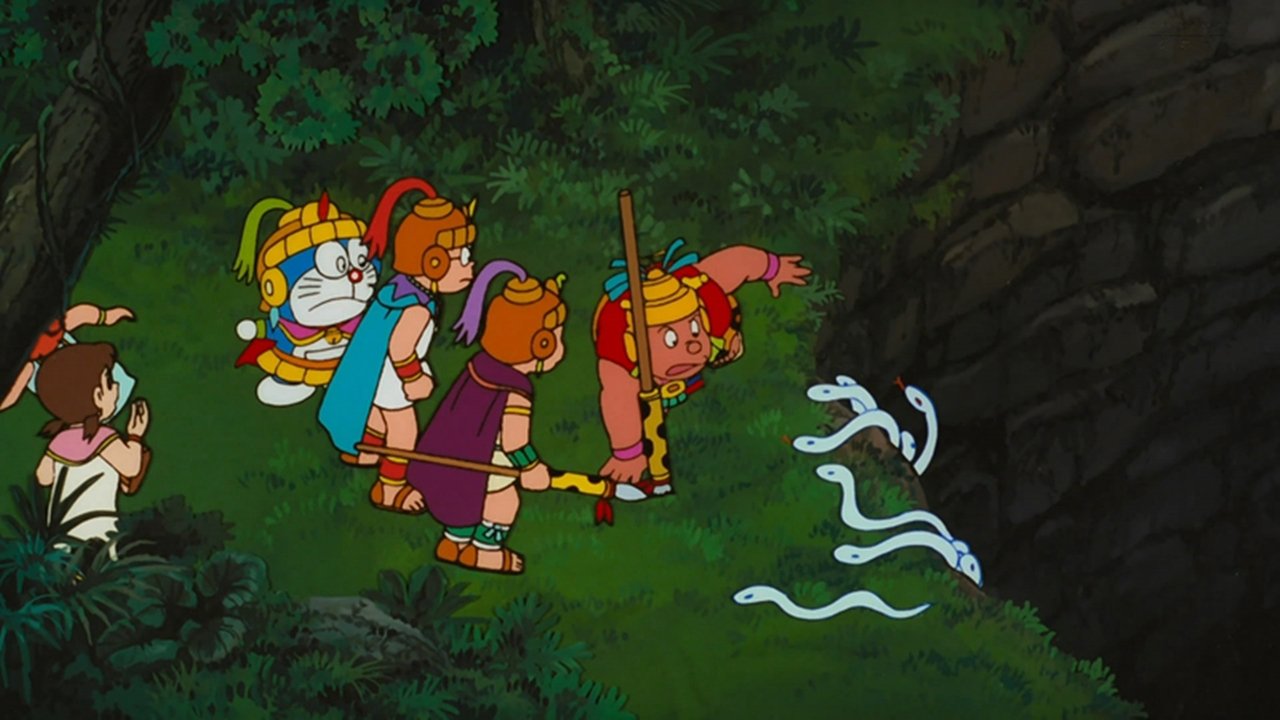
It's a joy to see Nobita, voiced with his signature endearing whine by the legendary Noriko Ohara, forced to step up. Suddenly, the kid who struggles with homework is mistaken for royalty and has a kingdom looking to him for courage. Meanwhile, the capable Tio finds modern Tokyo just as challenging in its own way. This duality provides plenty of gentle humor and surprisingly touching moments about responsibility and finding your own strength. Of course, Doraemon (the eternally comforting Nobuyo Ōyama), Shizuka (Michiko Nomura), Gian, and Suneo are never far behind, bringing futuristic gadgets and unwavering loyalty to the ancient world.
Classic Charm in a New Millennium
Directed by Tsutomu Shibayama, a veteran who helmed numerous Doraemon features throughout the 80s and 90s, Legend of the Sun King maintains that classic, comforting 2D animation style. In 2000, when CGI was rapidly becoming the norm, there’s something wonderfully familiar and grounding about Doraemon's hand-drawn world. The character designs are expressive, the action sequences are lively (especially the final confrontation with Ledina), and the Kingdom of Mayana itself is beautifully realized, full of intricate details that make it feel like a genuinely fascinating place to explore. You can almost feel the humid jungle air and the cool stone of the temples.
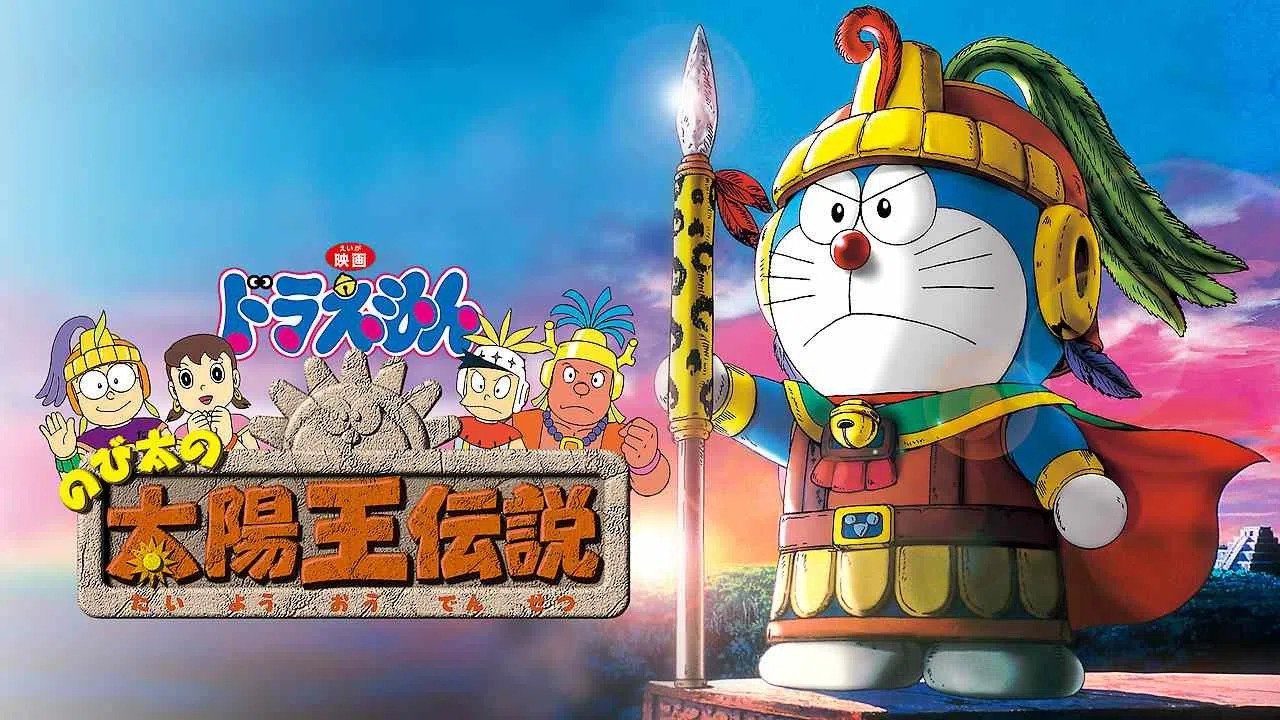
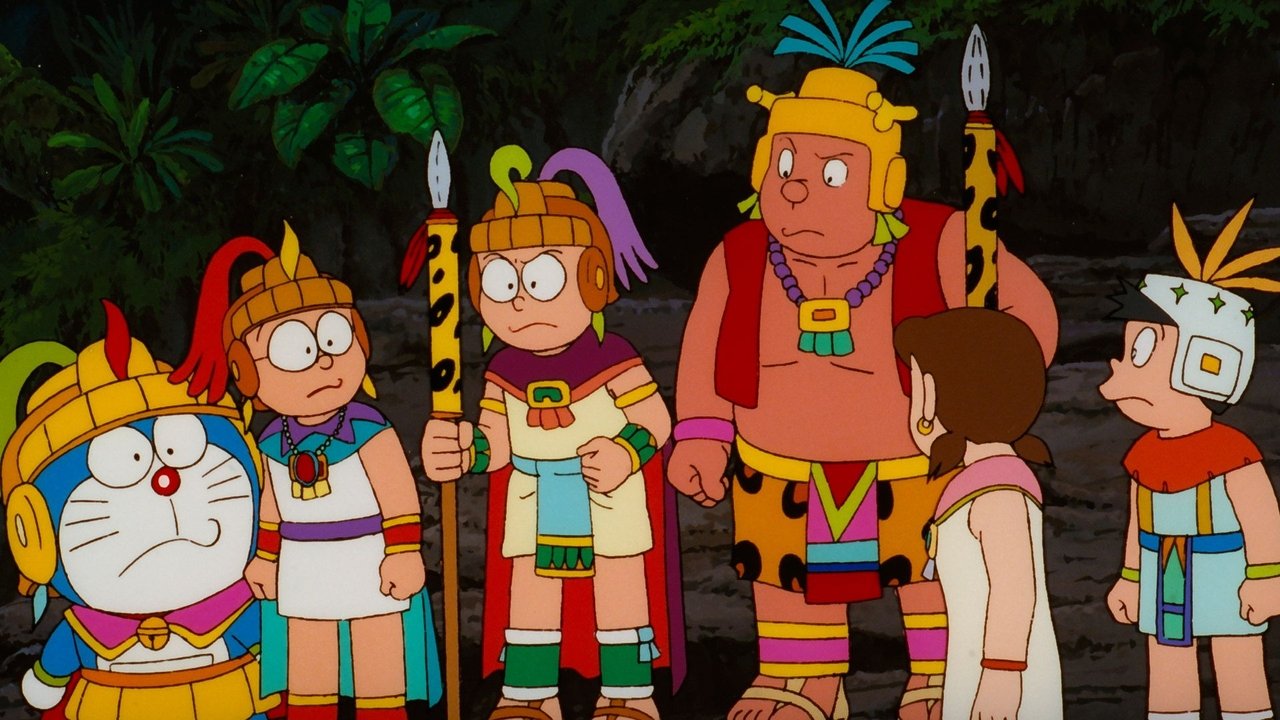
This was, believe it or not, the 21st feature film in the Doraemon theatrical series – a testament to the enduring appeal of this blue robot cat from the future. Even though Fujiko F. Fujio himself had sadly passed away a few years prior, his spirit permeates the film. It hit big in Japan, pulling in ¥3.05 billion (around $28 million USD back in 2000), proving audiences were still very much enchanted. For many outside Japan, Doraemon might have been encountered through fuzzy VHS tapes of the TV series or maybe one of these later films, acting as a gateway to this massive, beloved franchise. I distinctly remember the thrill of finding any Doraemon adventure back in the day; each one felt like uncovering a treasure.
Retro Fun Facts & Enduring Appeal
Beyond the Prince and the Pauper nod, the film cleverly weaves Doraemon's gadgets into the ancient setting. Imagine trying to explain the Take-copter or the Anywhere Door (though I believe the Time Hole is the primary transport here) to people who worship the sun! It’s these delightful culture clashes, handled with the series' typical light touch, that make the adventure so much fun. The film also features some memorable supporting characters, like the brave warrior Popol, adding depth to the Mayana Kingdom. The theme songs, as often is the case with Doraemon films, were catchy earworms in Japan, further cementing the movie in the pop culture landscape of the time.
What makes Legend of the Sun King, and indeed most Doraemon films, resonate is the unwavering focus on friendship, courage, and empathy. Nobita might be flawed, but his kindness always shines through. Doraemon might have amazing gadgets, but it's the bond between the characters that ultimately saves the day. This film perfectly captures that essence – the thrill of adventure balanced with genuine heart. It reminds us that even ordinary kids can do extraordinary things, especially with a loyal robot cat and good friends by their side.
Final Thoughts
Doraemon: Nobita and the Legend of the Sun King might technically be a year 2000 baby, but its spirit is pure classic adventure, easily fitting alongside the 80s and 90s escapades we fondly remember. It delivers everything fans love: exotic locales, clever gadget use, laugh-out-loud moments, and touching displays of friendship. The animation is charming, the story engaging, and the voice acting is simply iconic for anyone familiar with the original Japanese cast. It successfully carries the torch of Fujiko F. Fujio's creation into a new decade.
Rating: 8/10 - This rating reflects a thoroughly enjoyable, well-crafted animated adventure that perfectly captures the enduring magic of the Doraemon universe. It hits all the right notes for fans and serves as a great example of the franchise's blend of sci-fi whimsy and heartfelt storytelling, even if it doesn't radically reinvent the wheel.