Okay, fellow travelers of the magnetic tape highways, settle in. Today, we’re dusting off a cassette that whisks us away not just to another time, but to another world entirely – the shimmering, sun-baked deserts and bustling bazaars of folklore, all thanks to a certain blue robotic cat from the future. Let's rewind to 1991 and dive headfirst into the enchanting adventure that is Doraemon: Nobita's Dorabian Nights (ドラえもん のび太のドラビアンナイト).
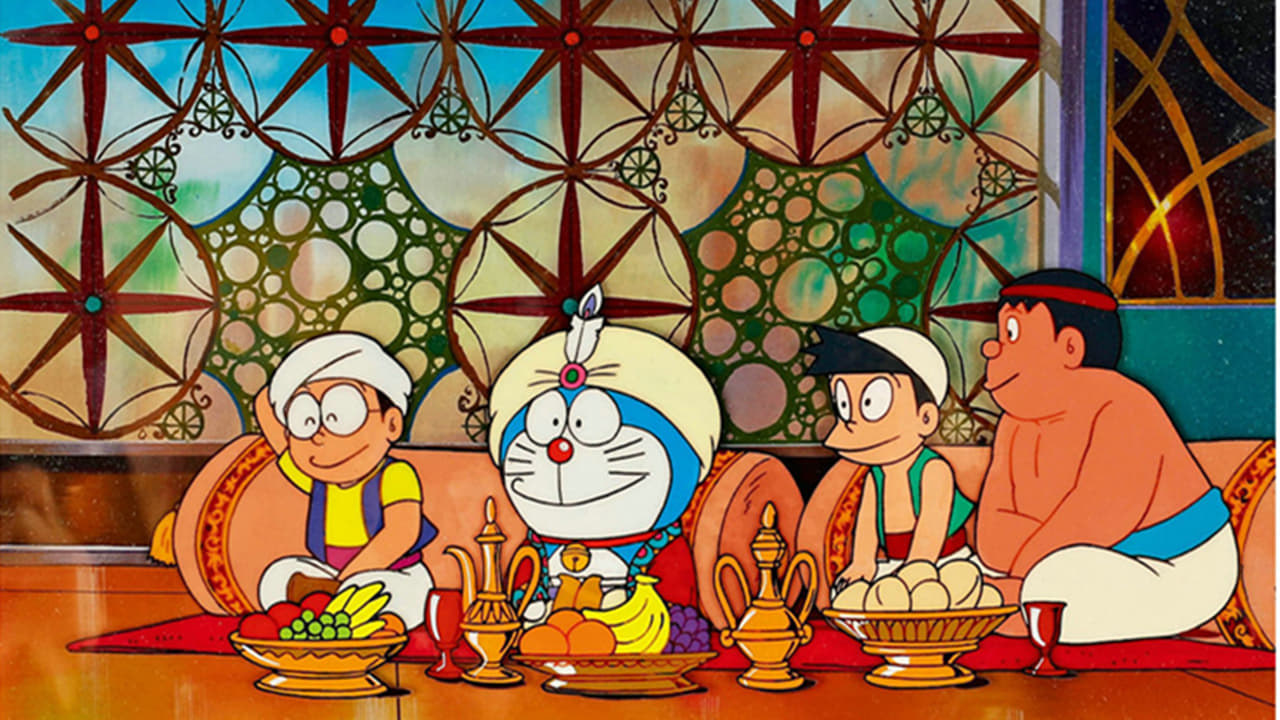
There was always something special about the annual Doraemon feature films. They took the relatable, everyday suburban chaos of Nobita Nobi and his futuristic feline guardian and exploded it onto grand, cinematic canvases. While the TV series offered bite-sized gadget-fueled solutions to homework woes and playground rivalries, the movies promised genuine peril, breathtaking landscapes, and emotional stakes that felt truly epic on our flickering CRT screens. Nobita's Dorabian Nights, the 12th theatrical outing, felt like a particularly potent blend of this magic, weaving the familiar comforts of the gang with the timeless allure of the One Thousand and One Nights.
Into the Storybook
The premise, as always, springs from Nobita's grand ambitions colliding with his inherent laziness. Dreaming of experiencing the Arabian Nights tales firsthand after boasting to Gian and Suneo, Nobita (Noriko Ohara, whose exasperated sighs remain iconic) ropes Doraemon (Nobuyo Ōyama, the reassuring, slightly metallic voice of reason) into using the "Storybook Shoes" gadget. This nifty invention allows our heroes to literally step into the pages of their favorite books. Initially, it's all fun and games, exploring different storybook worlds. But disaster strikes when Shizuka (Michiko Nomura, ever the heart of the group) gets accidentally left behind within the treacherous world of Sinbad the Sailor during a gadget malfunction.
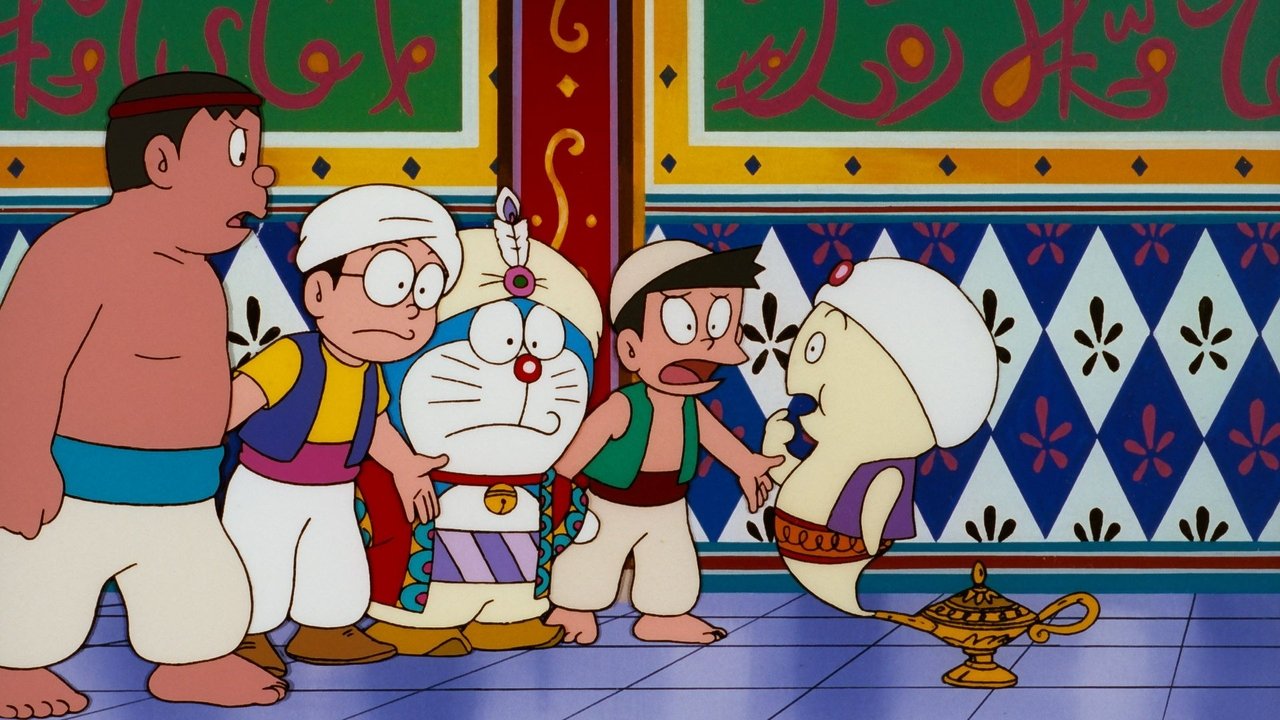
What follows is a classic Doraemon rescue mission, but with considerably higher stakes. Directed by Tsutomu Shibayama, a veteran hand who guided many of the series' most beloved film entries (including the tear-jerking Nobita's Dinosaur from 1980), the film confidently shifts gears from lighthearted gadgetry to a genuinely thrilling quest across a dangerous, mythic landscape. The familiar dynamic is here – Gian and Suneo initially bail but are eventually guilt-tripped/coerced into joining – but the threat feels more palpable than usual.
Desert Sands and Sinister Schemes
This isn't just a simple retrieval mission. Our heroes find themselves entangled with Cassim and his gang of thieves, eventually facing off against the genuinely menacing sorcerer Abujil. This villain isn't just trying to steal Doraemon's spare pocket; he’s aiming to conquer the entire storybook world, enslaving its inhabitants. Abujil felt like a significant step up in terms of villainy for the series at the time, adding a layer of real tension to the adventure. Remember watching those scenes in his imposing fortress, genuinely wondering how the gang would possibly overcome his magical might?
The animation, typical of early 90s anime features, possesses a wonderful hand-drawn charm. While perhaps not as fluid as modern productions, there's a solidity and expressiveness to the characters and environments that feels incredibly nostalgic. The vast desert vistas, the bustling marketplaces, the magical flying carpet sequences – they all possess a storybook quality that perfectly complements the narrative. Fujiko F. Fujio, the legendary creator of Doraemon, co-wrote the screenplay with Nobuaki Kishima, ensuring the film retained the core spirit and inventive gadgetry that defined the franchise, even amidst the epic fantasy setting.
Retro Fun Facts & Enduring Charm
- Nobita's Dorabian Nights was a significant hit in Japan upon release, pulling in around ¥1.8 billion at the box office – proving the enduring appeal of these annual cinematic events. Adjusted for inflation, that's a pretty hefty sum, showcasing Doraemon's status as a cultural phenomenon.
- The film cleverly weaves elements from various Arabian Nights tales, primarily focusing on Sinbad but incorporating genies (like the helpful guide Mikujin), thieves, and treacherous sorcerers, creating a rich tapestry of folklore.
- Abujil is often cited by fans as one of the more memorable and intimidating villains in the Doraemon movie pantheon, a testament to the film successfully raising the stakes.
- The theme song, "Yume no Yukue" (Where Dreams Go) by Maruko Kawaida, became another beloved piece of the Doraemon musical legacy for Japanese audiences who grew up with these films. For many of us watching on imported tapes, the music was just another layer of the exotic, captivating experience.
Beyond the action and fantasy, the film retains the heart of Doraemon: the unwavering loyalty between friends. Nobita might be flawed, but his determination to save Shizuka drives the plot. Doraemon's ingenuity, Gian's grudging bravery, and Suneo's… well, Suneo’s presence, all contribute to the familiar, comforting dynamic that makes these adventures so endearing. It’s that blend of high-concept sci-fi/fantasy adventure with relatable childhood friendships that cemented Doraemon's place in so many hearts.
Watching it now, yes, some elements feel distinctly of their time, but the core adventure, the inventive use of gadgets within a classic fantasy setting, and the sheer warmth of the characters shine through brightly. It taps into that universal childhood desire to step inside our favorite stories, to become part of the myths and legends we read about.
VHS Heaven Rating: 8/10
Doraemon: Nobita's Dorabian Nights stands as a wonderfully imaginative and thrilling entry in the long-running series. It delivers epic scope, genuine stakes, memorable characters (both heroic and villainous), and that perfect blend of science fiction gadgetry and classic fantasy that only Doraemon could provide. While perhaps lacking the emotional gut-punch of some other entries, its sense of pure, unadulterated adventure is infectious. It perfectly captures the magic of being whisked away to another world, something those well-worn VHS tapes delivered time and time again.
It’s a reminder that sometimes, the greatest adventures begin simply by opening a book… or, in Nobita’s case, convincing your robot cat from the future to let you step right into one. A true treasure from the golden age of anime features.