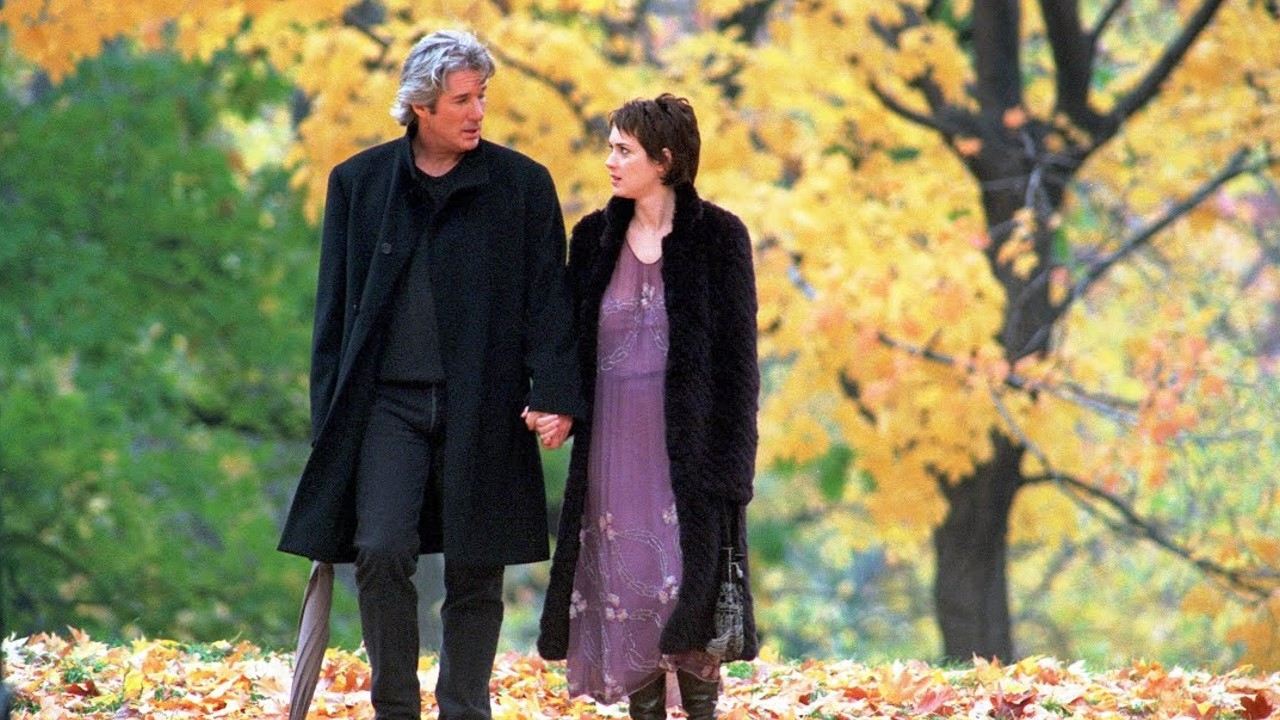
There’s a certain quality to the light in New York City when autumn truly takes hold – a soft, golden haze that seems to make even the sharpest edges of the skyline feel melancholic, romantic. It’s this very light, this specific, fleeting beauty, that director Joan Chen attempts to capture and bottle in Autumn in New York. Released right at the turn of the millennium in 2000, it feels like a film caught between eras – carrying the torch for the glossy, star-driven romantic dramas of the 90s while hinting at the changing tides of cinema. Seeing that clamshell case on the rental shelf, perhaps nestled between leftover 90s hits and the burgeoning wave of DVDs, you knew what you were likely in for: stars, scenery, and sentiment.
A City Painted in Gold and Grief
The premise itself is as familiar as the changing leaves: Will Keane (Richard Gere), a wealthy, charming, and resolutely commitment-phobic restaurateur well past his romantic prime, finds himself unexpectedly captivated by Charlotte Fielding (Winona Ryder). She’s significantly younger, possesses a quirky, free spirit seemingly untouched by cynicism, designs whimsical hats, and, as the genre demands, carries a tragic secret – a terminal heart condition giving her perhaps a year to live. Their ensuing romance unfolds against the stunning backdrop of Central Park aflame with fall colours, upscale Manhattan eateries, and rain-slicked city streets, all gorgeously rendered by cinematographer Gu Changwei. Visually, the film is often breathtaking; Joan Chen, herself a gifted actress known for nuanced work in films like The Last Emperor (1987) and TV's Twin Peaks, demonstrates a keen eye for composition and mood. She lets the city itself become a character, its autumnal beauty a poignant counterpoint to the unfolding human drama.
An Unlikely Pair Under Scrutiny
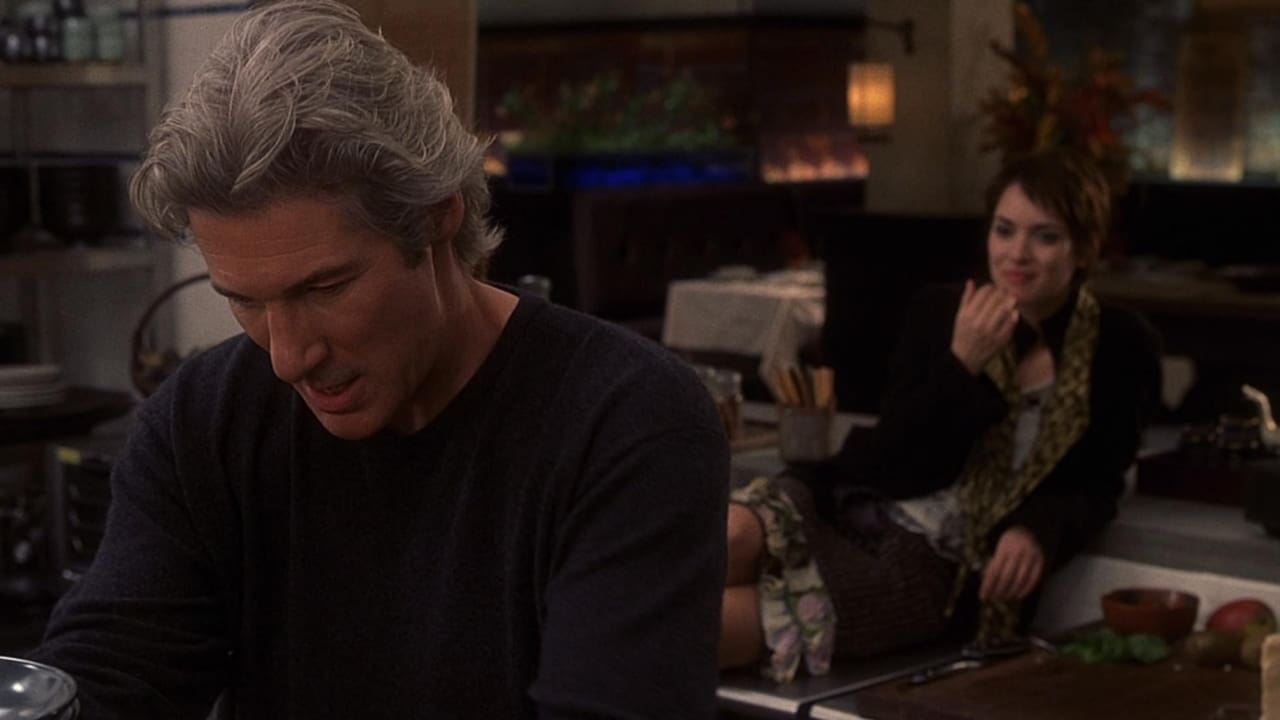
Much discussion at the time, and even now, revolves around the central pairing. Richard Gere, then still riding high as one of Hollywood's most reliable leading men (Pretty Woman, Primal Fear), embodies Will’s practiced charm and underlying emotional vacancy with ease. It’s a type he played often, the silver fox learning a late-life lesson in love. Winona Ryder, the quintessential 90s icon grappling with finding her footing in a new decade (Reality Bites, Little Women), brings a delicate fragility to Charlotte. She radiates a certain ethereal quality, fitting for a character described as being almost too pure for the world.
Yet, the significant age gap (Gere was 50, Ryder 28 during filming) and the script's sometimes-clumsy handling of their dynamic often pull focus. Does their connection feel entirely authentic? That’s debatable. There are moments where their chemistry sparks, brief glimpses of genuine tenderness. But too often, Allison Burnett’s screenplay leans into predictable tropes, making their interactions feel less like organic character development and more like fulfilling the requirements of a May-December tearjerker. It occasionally struggles to convince us why this particular relationship transforms Will so profoundly, beyond the narrative necessity.
Wrestling with Familiar Feelings
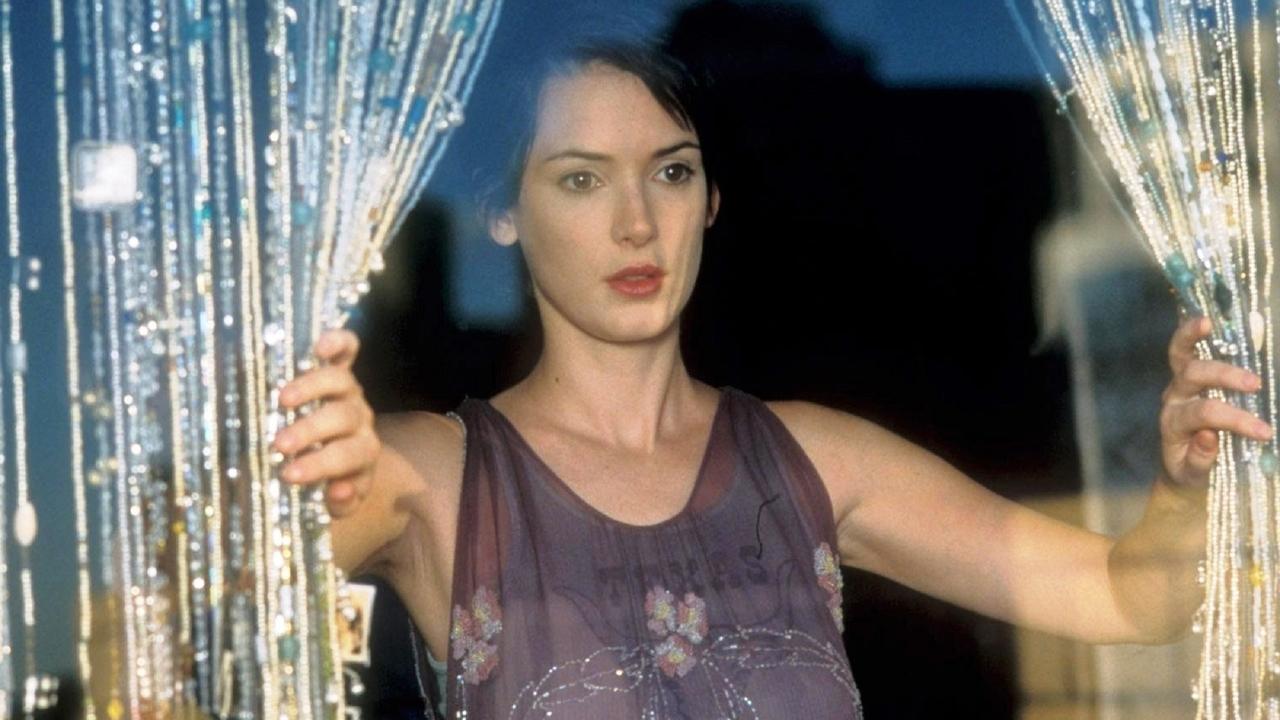

Beneath the undeniably stunning visuals and the star power, Autumn in New York grapples with weighty themes: mortality, the nature of love, regret, and the possibility of redemption. It asks whether a man seemingly incapable of deep connection can truly change when faced with finite time and genuine affection. These are potent questions, but the film often opts for emotional shorthand rather than deep exploration. We're clearly meant to feel the tragedy, the bittersweetness of their fleeting time together, and sometimes we do, thanks largely to Ryder's expressive eyes or a particularly well-framed shot of Gere looking lost amidst the city's splendor.
Interestingly, despite a critical drubbing upon release (it still sits at a chilly 20% on Rotten Tomatoes), the film found its audience, grossing over $90 million worldwide against a $37 million budget. Perhaps viewers were simply drawn to the undeniable star wattage, the comforting familiarity of the genre, or the sheer aesthetic pleasure of watching beautiful people suffer beautifully in picturesque locations. It’s a reminder that sometimes, a film connects on a purely emotional, almost visceral level, bypassing critical faculties. I remember seeing it back then, perhaps on a rented VHS tape over a weekend, and while recognizing the clichés, still feeling that familiar tug at the heartstrings the genre aims for.
Retro Reflections: Gloss and Sentiment
Looking back, Autumn in New York feels very much of its time. It’s a studio picture built on established stars, a high-concept romantic premise, and polished production values. There's a certain earnestness to its sentimentality that feels less common today. The supporting cast, including the ever-reliable Anthony LaPaglia as Will’s best friend and colleague, adds texture, but the focus remains squarely on the central couple. Even the score by Gabriel Yared (The English Patient) swells and sighs exactly when you expect it to.
It lacks the sharp edges or quirky realism that defined many indie romances emerging around the same period. This is mainstream melodrama, delivered with conviction and undeniable visual flair. It might not be a film that inspires deep critical analysis, but it certainly evokes a specific mood – one of autumnal melancholy mixed with glossy Hollywood romance. It’s the kind of movie that likely graced many a “New Releases” wall at Blockbuster, promising a comforting, if predictable, emotional journey.
Rating & Final Thoughts
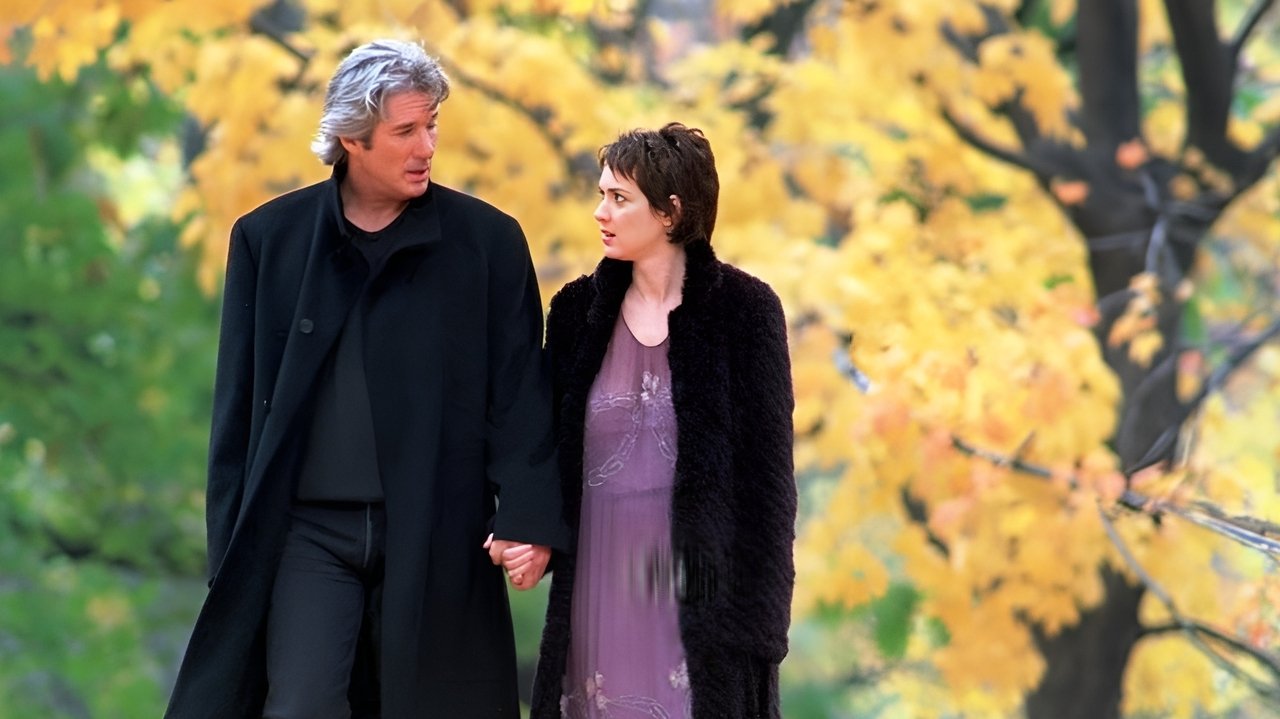
Autumn in New York is a film easier to admire for its aesthetics than its narrative depth. Joan Chen’s direction provides a visual feast, and Richard Gere and Winona Ryder commit fully to their roles, even when hampered by a script that leans heavily on convention. It tugs at the heartstrings, sometimes effectively, sometimes manipulatively, but its beauty is undeniable.
Rating: 5/10
This score reflects a film that achieves its visual and atmospheric goals beautifully but stumbles on narrative originality and genuine emotional resonance. The performances are solid, but the story feels overly familiar, preventing it from being truly memorable beyond its stunning depiction of New York in the fall. It remains a fascinating artifact of turn-of-the-millennium studio filmmaking – glossy, star-powered, and deeply sentimental, a perfect candidate for a nostalgic revisit, perhaps best enjoyed with a warm drink on a crisp autumn evening, acknowledging its flaws while appreciating its undeniable mood. What lingers isn't necessarily the plot, but the feeling – that golden light, that sense of fleeting beauty.