## Running Wild on the Edge of Reason: Revisiting Mad Love (1995)

There’s a specific kind of nervous energy that radiates from certain mid-90s films, a blend of post-grunge angst and pre-millennium uncertainty. Mad Love taps directly into that vein, presenting a teenage romance that quickly spirals away from sunny Seattle skies into something far more turbulent and complex. It wasn't the breezy love story its casting might have suggested, and watching it again now, decades removed from its Blockbuster shelf days, reveals a film wrestling with themes perhaps bolder than its initial marketing let on. I remember renting this one, probably drawn by the star power of Chris O'Donnell and Drew Barrymore, expecting something akin to a John Hughes film with slightly edgier music. What unfolded felt… different. Heavier.
First Love, First Warning Signs
The setup is classic teen movie territory: Matt Leland (Chris O'Donnell, then riding high on Batman Forever vibes), the responsible, straight-arrow student photographer, becomes instantly smitten with Casey Roberts (Drew Barrymore), the rebellious, free-spirited new girl who literally appears across a lake, a force of nature disrupting his placid high school existence. Their initial courtship is charming, filled with the impulsive energy of young love – sneaking out, driving fast, feeling like the only two people in the world. Barrymore, already deep into her remarkable career reinvention after well-publicized struggles, is captivating as Casey. She embodies that intoxicating blend of vulnerability and wild abandon that makes Matt – and the audience – fall hard. There's a magnetic quality to her performance; she doesn't just play chaotic, she inhabits it, making Casey's allure utterly believable. O'Donnell, for his part, effectively portrays the steady, slightly bewildered anchor to Casey's whirlwind, his earnestness providing the film's grounded perspective.

When the Road Gets Rocky
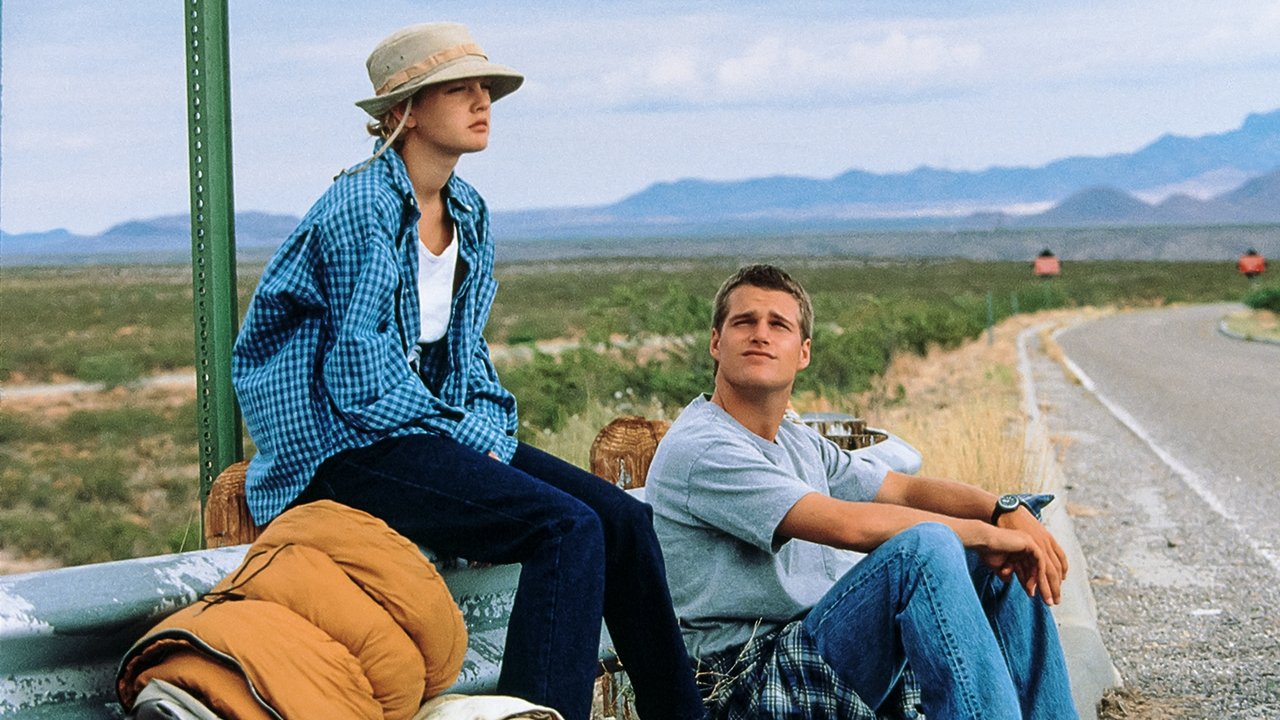
The film takes its pivotal turn when Casey's erratic behavior escalates beyond charmingly eccentric into genuinely concerning territory, culminating in a suicide attempt. Fearing she'll be institutionalized by her parents, Matt makes the impulsive, deeply romanticized decision to break her out of the psychiatric ward and hit the road. This is where Mad Love departs from standard teen fare and ventures into murkier waters. The sun-drenched optimism of their early romance gives way to the claustrophobia of cheap motel rooms and the mounting tension of Casey's manic episodes and depressive crashes. It’s a road trip fuelled not by wanderlust, but by desperation.
The film attempts to grapple with the reality of mental illness – specifically, what appears to be bipolar disorder, though the script by Paula Milne (a British TV veteran) avoids explicit labels. This was fairly ambitious for a mainstream teen drama in 1995. Does it handle it perfectly? Perhaps not by today's standards. There are moments where Casey's condition feels romanticized or used primarily as a plot device to drive the lovers' flight. Yet, there's a raw honesty, particularly in Barrymore's fearless performance, that prevents it from feeling entirely exploitative. She captures the dizzying highs but also the terrifying, isolating lows with a conviction that resonates. You see the confusion and dawning fear in Matt's eyes as the "mad love" he signed up for reveals its truly frightening side. What does loyalty mean when the person you love is fundamentally unwell? How much can love truly conquer?

Behind the Intensity
It's interesting to note that the film was directed by Antonia Bird, a British filmmaker known for tougher, socially conscious dramas like Priest (1994) and later, the cult cannibal western Ravenous (1999). Her outsider's perspective might account for the film's slightly less glossy feel compared to typical Hollywood teen movies of the era. She doesn't shy away from the uglier aspects of Casey's struggles or the strain it puts on Matt. The Pacific Northwest locations are used effectively, shifting from idyllic vistas to rain-slicked, anonymous highways mirroring the couple's journey.
Apparently, the original title was pitched as "Touched," which feels gentler, perhaps more ambiguous. "Mad Love," while certainly grabbing attention, leans into the more sensational aspects. The film didn't exactly set the box office alight, pulling in around $15.5 million domestically against a reported $13 million budget. Perhaps audiences expecting a straightforward romance starring two of the moment's biggest young stars were unprepared for the darker, more challenging themes. It occupied a tricky middle ground – too dark for the rom-com crowd, maybe not gritty enough for serious drama aficionados. Even Matthew Lillard, in an early role as Matt's friend Eric, provides some levity but exists largely outside the central intense dyad.
Lingering Questions
What lingers most after watching Mad Love today isn't just the potent chemistry between O'Donnell and Barrymore, or the evocative mid-90s alternative soundtrack. It's the film's earnest, if imperfect, attempt to explore the devastating impact of mental illness on young lives and relationships, wrapped in the guise of a teen romance. It asks difficult questions about the nature of love, responsibility, and the limits of romantic ideals when faced with harsh realities. There's a sadness that permeates the film, a recognition that sometimes love, no matter how intense, isn't enough. It might stumble in balancing its tones, occasionally simplifying complex issues, but its central performances – particularly Barrymore's – give it a haunting power that many slicker, safer teen films lack.

Rating: 7/10
This score reflects the film's strengths – primarily Drew Barrymore's committed and magnetic performance, its willingness to tackle difficult subject matter within a mainstream framework, and its palpable mid-90s atmosphere. It avoids a higher score due to some tonal inconsistencies and moments where the handling of mental illness feels slightly simplified or overly romanticized for dramatic effect. However, the core emotional honesty, especially from Barrymore, makes it a compelling watch.
Mad Love remains a fascinating time capsule – a teen drama with a heavier heart than most, anchored by a truly memorable turn from an actress hitting a new stride, leaving us to ponder the thin line between passionate devotion and destructive obsession. It wasn’t just puppy love; it was something far more complicated, and maybe that’s why it still sticks with you.