Okay, settle in, maybe grab a cup of coffee. Let’s talk about a film that might have slipped past many on the bustling video store shelves back in '99, nestled somewhere between the fading action heroes and the burgeoning teen comedies. I'm talking about Joel Schumacher's Flawless (1999), a picture that feels decidedly un-Schumacher in many ways, especially if your main reference points are his more flamboyant contributions like Batman & Robin (1997) or The Lost Boys (1987). This one offers something quieter, grittier, and surprisingly tender, anchored by two performances that are simply magnetic.

### An Unlikely Duet in a Gritty New York
What immediately strikes you about Flawless isn't explosive action or dazzling visuals, but the raw, almost uncomfortable intimacy of its premise. We meet Walt Koontz (Robert De Niro), a decorated NYPD security guard, a man steeped in conservative values and quiet machismo. He's the sort of guy who wouldn't give his upstairs neighbor, the vibrant and unapologetically flamboyant drag queen Rusty Zimmerman (Philip Seymour Hoffman), the time of day. Their worlds are orbits apart, existing in the same dilapidated apartment building but separated by walls of prejudice and misunderstanding.
Then, catastrophe strikes. Walt suffers a debilitating stroke, leaving him partially paralyzed and, crucially for the plot, with severe speech impairment. His therapy? Singing lessons. And who, in a twist of fate only cinema could conjure so effectively, lives upstairs and possesses the vocal skills to potentially help? Rusty, of course. It's a setup that could easily veer into cliché or schmaltz, but Schumacher, who also penned the script, handles it with a surprising degree of sincerity. He apparently wrote the part of Rusty specifically with Philip Seymour Hoffman in mind after being impressed by his turn in Boogie Nights (1997). It shows; the role feels tailor-made, allowing Hoffman to explore depths beyond mere caricature.
### Beyond the Surface: Performance as Revelation
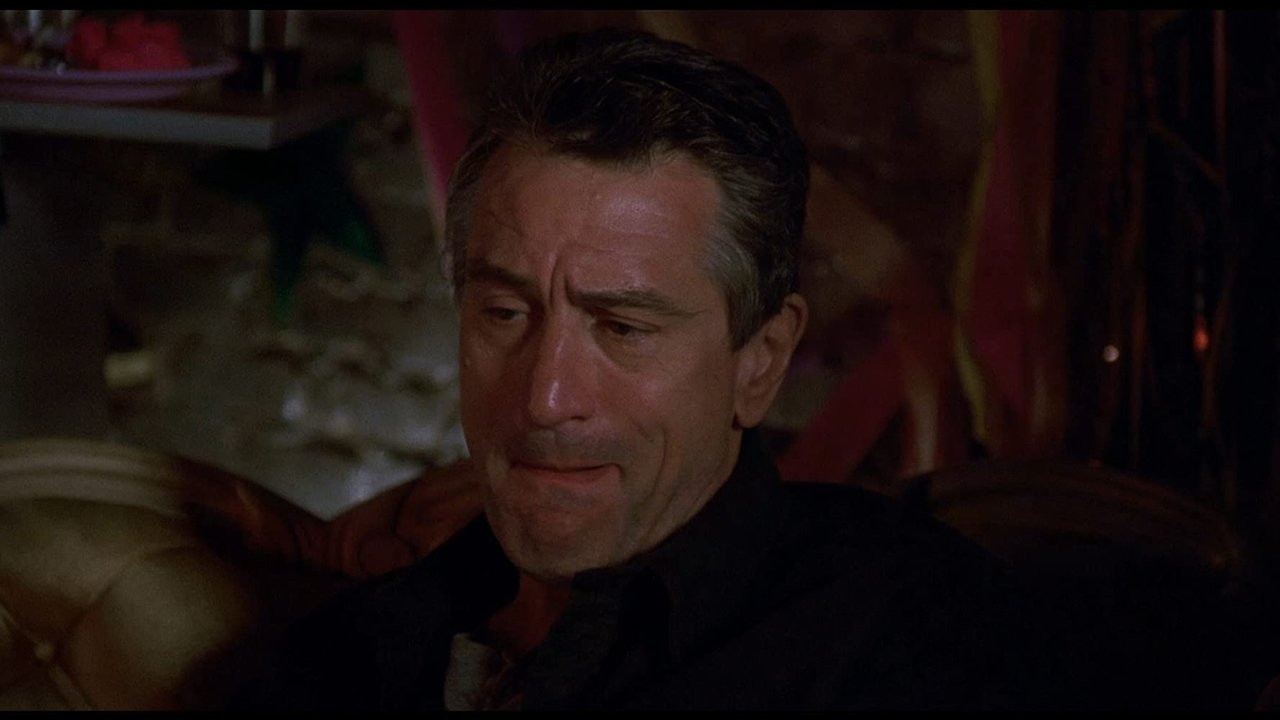
This film truly belongs to its leads. Robert De Niro, an actor known for his explosive power, delivers a remarkably restrained and physically demanding performance. Playing a stroke victim requires immense control, conveying frustration, vulnerability, and gradual recovery often without the aid of clear speech. There's a scene where Walt struggles simply to articulate a basic need, and the raw frustration etched on De Niro's face is palpable. It's a testament to his craft, forcing the audience to lean in, to understand the man beneath the impairment. We see the pride warring with the helplessness, the ingrained prejudices slowly, painfully eroding through sheer necessity.
And then there's Philip Seymour Hoffman. Oh, Rusty. Hoffman doesn't just play a drag queen; he embodies a complex human being dealing with their own societal pressures, aspirations, and heartaches. Rusty is flamboyant, yes, often using biting wit as armor, but Hoffman reveals the vulnerability beneath the makeup and sequins. He’s not just a plot device for Walt's recovery; he has his own life, his own struggles – saving money for gender confirmation surgery, navigating a world often hostile to his existence. The singing lessons become a space where these two fractured souls find a strange, fragile common ground. Their interactions are often tense, laced with Walt's residual homophobia and Rusty's sharp defensiveness, but moments of genuine connection flicker through. Hoffman finds the delicate balance, making Rusty strong yet fragile, hilarious yet heartbreaking. It's a performance that foreshadowed the incredible range and depth he would bring to countless roles later in his tragically shortened career.
### Grit, Heart, and Late 90s Authenticity
Schumacher captures a specific late-90s New York vibe – weary, a little grimy, pre-Giuliani polish in some corners perhaps. The film doesn't shy away from the ugliness of prejudice, both homophobia and the casual disregard Walt initially shows Rusty. It also touches upon the dangerous underworld Rusty navigates to fund his dreams. Interestingly, for a film budgeted around $15 million, it didn't make a huge splash at the box office, perhaps because its character-driven, slightly melancholic tone wasn't what audiences expected from either Schumacher or De Niro at the time. Renting this on VHS might have felt like discovering a hidden gem, something more substantial than the typical Friday night fare.
The narrative isn't perfect. A subplot involving stolen drug money feels somewhat tacked on, perhaps an attempt to inject conventional thriller elements into what is essentially a two-hander character study. It occasionally distracts from the core strength: the evolving dynamic between Walt and Rusty. But these moments don't entirely derail the film's emotional impact. The focus remains on how these two individuals, forced together by circumstance, begin to see the humanity in each other.
### Finding a Voice, Finding Connection
What lingers after watching Flawless isn't the crime subplot, but the quiet moments of understanding. The hesitant progress in Walt's speech therapy, mirrored by the hesitant softening of his prejudices. Rusty's unwavering self-possession in the face of adversity, coupled with his moments of quiet despair. It asks us, doesn't it, how much adversity it takes for us to truly see beyond our own biases? Can empathy be learned, even when born from desperate need?
The film isn't about grand epiphanies but small, incremental shifts. It's about finding your voice, both literally and figuratively, and the unexpected places and people that can help you do it. It feels grounded, truthful, even amidst its more dramatic flourishes.
Rating: 7.5/10
This score reflects the sheer power of the central performances, particularly Hoffman's unforgettable turn and De Niro's committed physicality. They elevate the material significantly. While the crime subplot feels a bit forced and detracts slightly, the core relationship study is compelling, sensitive, and surprisingly resonant. It avoids easy sentimentality, offering a gritty yet hopeful look at connection across seemingly insurmountable divides.
Flawless might not be the first title that springs to mind when thinking of 90s classics, but for fans who appreciate powerful acting and character-driven stories, it remains a poignant and rewarding watch – a testament to the unexpected beauty found in flawed humanity.