There’s a certain kind of film that felt right at home on a well-worn VHS tape, nestled between blockbuster hits and forgotten thrillers on the rental store shelf. "Music from Another Room" (1998) is precisely that kind of movie – a film radiating a quirky charm and earnest romanticism that perhaps felt a little too delicate, a little too specific, for the multiplex glare, but perfectly suited for discovery on a quiet evening at home. It arrives with a premise bordering on fairytale: a young boy declares he will marry a baby girl moments after helping deliver her, only to reappear in her life twenty-five years later, intent on fulfilling that childhood vow. Does fate truly operate with such whimsical precision?

A Destiny Declared, A Family Encountered
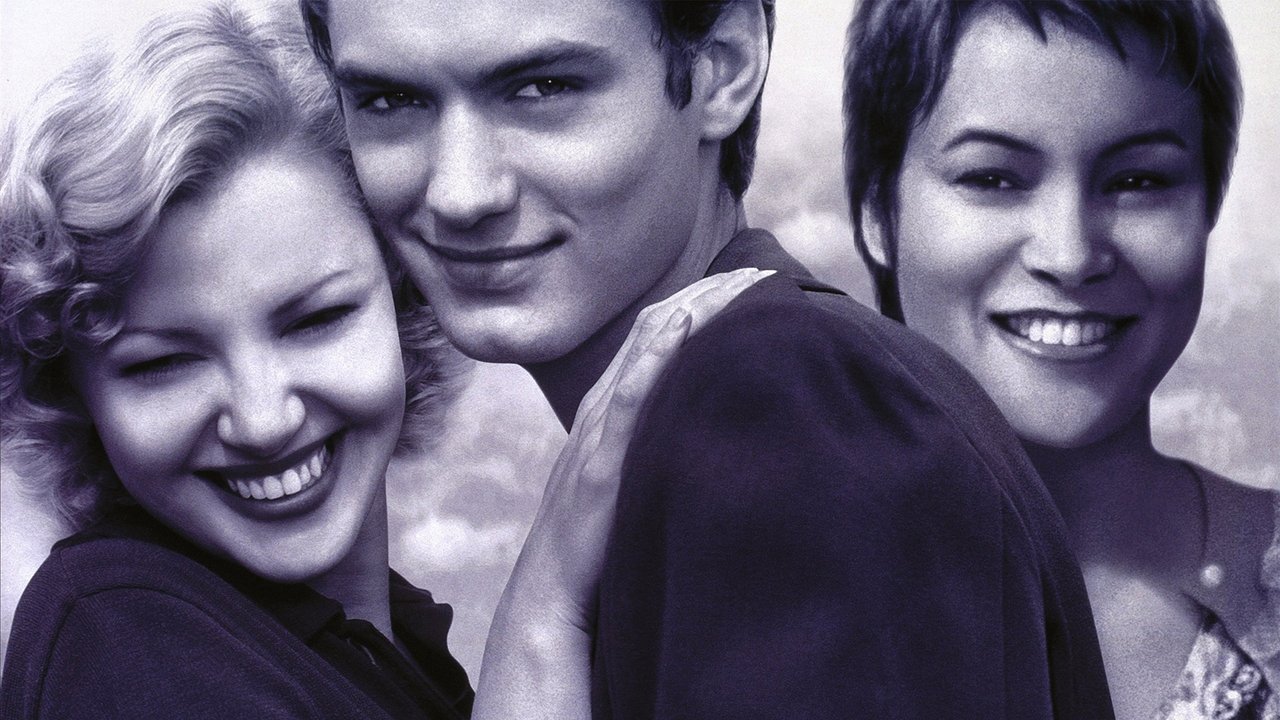
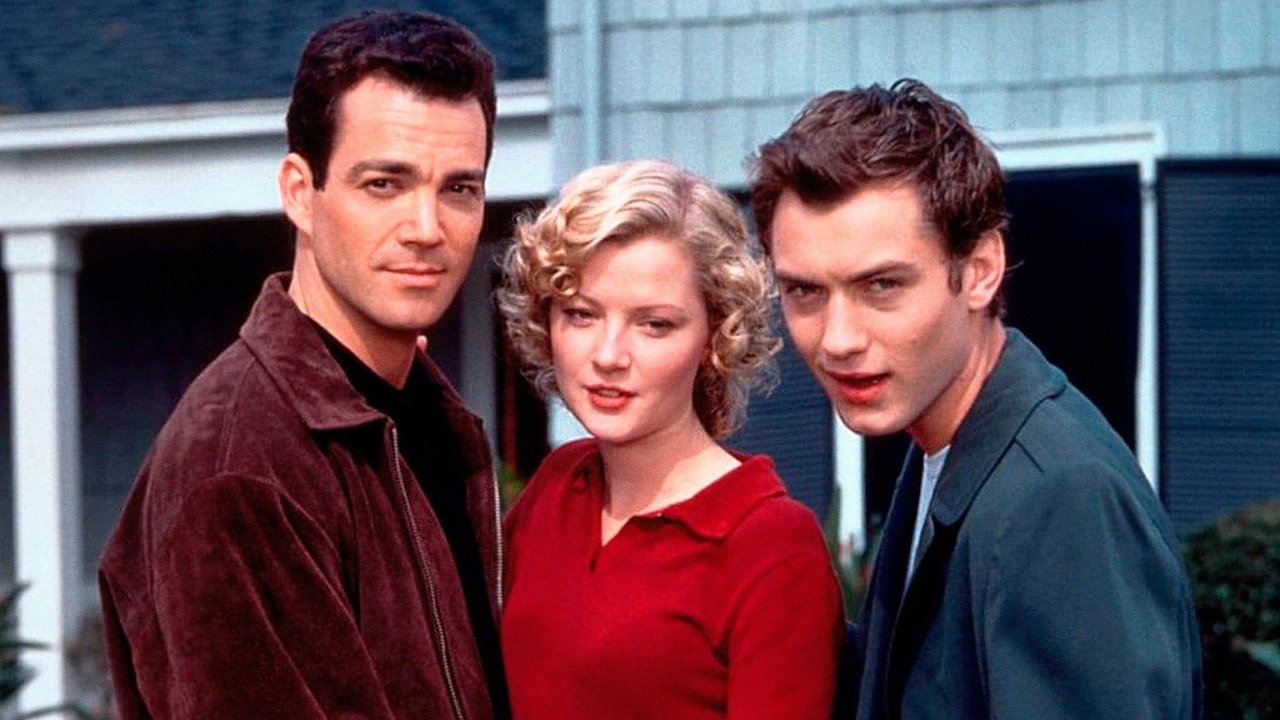
The film hinges on this slightly preposterous notion of destiny, personified by Danny (Jude Law), returning from England to the Swan family household. He’s the boy who made the declaration, and Anna Swan (Gretchen Mol) is the baby, now grown into an intelligent, beautiful, and unfortunately for Danny, engaged young woman. What unfolds isn't just a pursuit of Anna, but an immersion into the swirling, chaotic, and deeply eccentric world of the Swans. This isn't your typical meet-the-parents scenario; it's more like stumbling into a beautifully dysfunctional play where everyone is performing their assigned role with maximum commitment.
This is where "Music from Another Room" truly finds its rhythm. While the central romance provides the narrative engine, it's the ensemble cast portraying the Swan family that elevates the film beyond a simple romantic comedy. Brenda Blethyn, fresh off her Oscar-nominated turn in Secrets & Lies (1996), is Grace, the blind, perceptive matriarch holding court with gentle but firm authority. Jennifer Tilly absolutely steals scenes as Nina, Anna's adopted sister, a perpetually dramatic former ballerina confined to a wheelchair, delivering lines with her signature breathy intensity and impeccable comic timing. Then there’s the pragmatic, perpetually exasperated Karen (Martha Plimpton) and her boorish husband Billy (Jeremy Piven), adding another layer of familiar familial friction. Their interactions crackle with the believable energy of people who have loved, annoyed, and endured each other for decades.
Navigating the Quirks
Director and writer Charlie Peters, primarily known for penning family comedies like Three Men and a Little Lady (1990), makes his sole directorial effort here. It’s an interesting choice, and perhaps explains the film's slightly uneven tone. Peters crafts a world that feels both heightened and grounded. The Swan house itself feels like a character – filled with slightly odd angles, overflowing bookshelves, and the faint hum of unspoken histories. Yet, amidst the undeniable eccentricity, the film aims for genuine emotional beats. Danny’s unwavering belief in his destiny could easily feel creepy or stalkerish, but Jude Law, in one of his earlier, charmingly earnest American roles following his breakout in Gattaca (1997), imbues Danny with a sincere conviction that mostly keeps him on the right side of romantic. He sells the idea that this isn't just infatuation; it's a deeper, almost spiritual calling he can’t ignore.
Gretchen Mol as Anna has the difficult task of being the grounded center around which the family chaos revolves. She portrays Anna's conflict well – the pull towards the safe, sensible fiancé versus the undeniable, slightly unnerving spark ignited by Danny’s sudden reappearance. Does his persistence wear down her defenses, or awaken something dormant? The film suggests the latter, playing into that romantic ideal that sometimes, the heart recognizes something the mind isn't ready to accept.

A Forgotten VHS Find?
Interestingly, "Music from Another Room" was made on a relatively modest budget (reportedly around $5.5 million) and didn't make much noise at the box office upon its limited release. This lack of commercial splash likely contributed to its status as something of a hidden gem, the kind of movie you might have stumbled upon browsing the 'New Releases' wall at Blockbuster and taken a chance on, perhaps drawn in by the appealing cast. For Charlie Peters, it remains his only foray behind the camera, making it a curious footnote in his writing career. Its very existence feels like a product of that late-90s independent film sensibility, where quirky character studies and offbeat romances could still find funding, even if widespread success wasn't guaranteed.
The film isn't without its flaws. The pacing sometimes meanders, and the sheer volume of family quirks occasionally threatens to overshadow the central romance. The resolution, leaning heavily into the fated connection, might feel a touch too convenient for some viewers. But isn't that part of the charm of discovering these less-heralded films from the era? They weren't always perfectly polished, but they often possessed a unique voice or a specific feeling that lingers. Watching it now evokes a certain nostalgia for a time when romantic comedies could be a little stranger, a little less formulaic, willing to embrace the slightly magical alongside the mundane.

Rating: 7/10
"Music from Another Room" earns its score through the sheer force of its ensemble cast, particularly the delightful eccentricities of the Swan family led by Blethyn and Tilly, and the earnest charm brought by a young Jude Law. While the central premise requires a significant suspension of disbelief and the execution isn't flawless, the film possesses a unique, warm atmosphere and a genuinely sweet core. It successfully captures that feeling of being swept up in a family's peculiar orbit, making the slightly unbelievable romance feel strangely earned within its specific world.
It might not be a forgotten masterpiece, but "Music from Another Room" is a genuinely pleasant discovery or rediscovery – a reminder of the quieter, quirkier romantic comedies that populated the video store shelves, offering a gentle melody distinct from the era's louder hits. It leaves you pondering not just fate, but the beautiful, baffling music that plays within the rooms of any family.