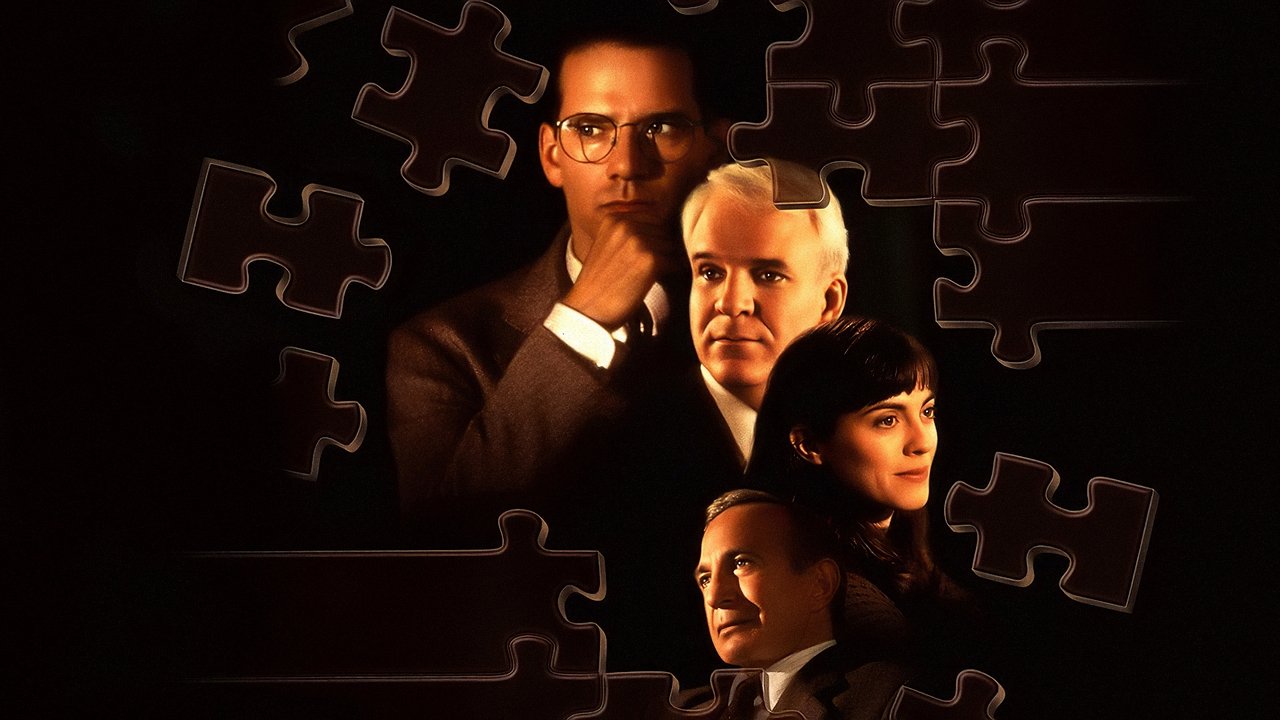
Okay, let’s dim the lights, imagine the satisfying clunk of the VCR door, and settle in. Tonight, we’re revisiting a film that doesn't rely on explosions or spectacle, but rather the chillingly precise click of puzzle pieces falling into place, often revealing a picture far more sinister than anticipated. I'm talking about David Mamet’s The Spanish Prisoner from 1997, a thriller that wraps you in a cold, elegant paranoia.
### The Seduction of the Secret
What truly hooks you in The Spanish Prisoner isn't just the plot, but the gnawing feeling that accompanies it. We meet Joe Ross (Campbell Scott), a young corporate inventor who believes he’s created something immensely valuable – "The Process." It’s deliberately vague, a MacGuffin defined only by its potential to make its owners obscenely rich. This vagueness is key; it’s a blank canvas onto which greed, ambition, and betrayal can be projected. From the sterile boardroom presentations on a fictional Caribbean island to the hushed conversations in exclusive New York clubs, Mamet establishes an atmosphere thick with unspoken motives and transactional relationships. You feel, almost immediately, that Joe is swimming in waters far deeper and colder than he realizes.
### Mamet's Precise Cruelty

If you know David Mamet's work, especially from stage or films like House of Games (1987), you'll recognize the distinct rhythm here. The dialogue is sharp, clipped, sometimes unnervingly formal. Conversations feel less like natural exchanges and more like carefully constructed maneuvers in a high-stakes game. It’s a style that can feel artificial to some, but in the context of The Spanish Prisoner, it perfectly mirrors the intricate, artificial reality being constructed around Joe. Mamet, both writing and directing, crafts a world where trust is a commodity, easily bought and sold, and every friendly gesture might be a calculated step in an elaborate con. The direction is similarly controlled, almost detached, observing Joe’s escalating panic with a cool, unflinching gaze. There’s a distinct lack of visual flourish; the tension comes purely from the situation and the performances.
### The Charm Offensive
The casting is, frankly, inspired. Campbell Scott is perfect as Joe Ross. He embodies a specific kind of naive intelligence – smart enough to invent "The Process," but perhaps not worldly or cynical enough to navigate the shark-infested waters he finds himself in. His vulnerability becomes palpable as his carefully ordered world begins to unravel, piece by agonizing piece. You see the dawning horror in his eyes long before he fully grasps the extent of the manipulation.

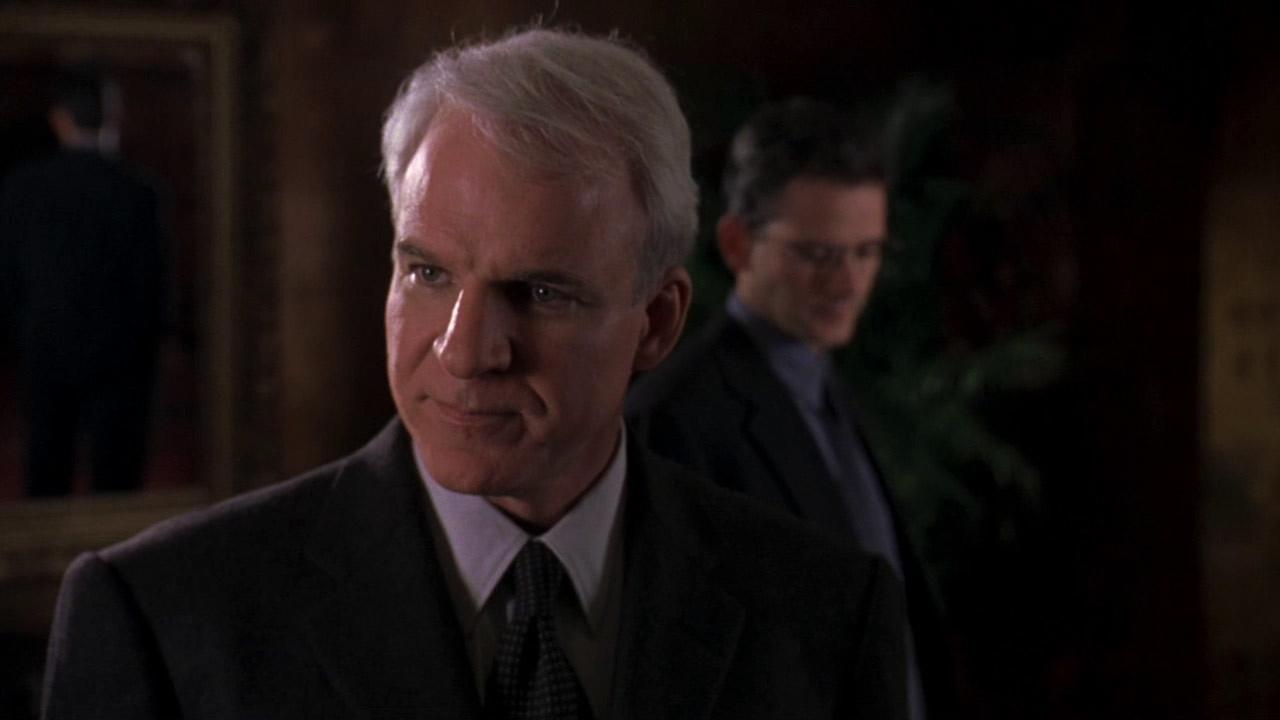
And then there's Steve Martin. Casting the beloved comedian, known for his wild and crazy antics in films like The Jerk (1979) or Planes, Trains & Automobiles (1987), as the smooth, wealthy, and potentially dangerous Jimmy Dell was a stroke of genius. Martin sheds his comedic persona entirely, adopting an unsettlingly calm, avuncular charm that feels simultaneously reassuring and deeply threatening. Every polite offer of help, every shared confidence, feels loaded with hidden meaning. It’s a masterclass in understated menace, proving Martin’s dramatic range beyond any doubt. Apparently, Martin had been a long-time admirer of Mamet's work and actively pursued a role, any role, in one of his films. He certainly made the most of the opportunity here.
Adding to the intricate web is Rebecca Pidgeon (Mamet’s wife, a frequent presence in his work) as Susan Ricci, a seemingly helpful colleague whose allegiances remain deliberately murky. Her performance, like the dialogue she delivers, has that distinct Mamet cadence – slightly stylized, holding emotions at arm’s length, which only deepens the film's enigmatic quality.
### Behind the Curtain: Threads of the Con
Mamet has long been fascinated by confidence tricks and the psychology of deception. The "Spanish Prisoner" itself is a classic, old-world con, typically involving a wealthy prisoner needing funds to secure their release (and promising a huge reward). Mamet updates this concept for the late 20th-century corporate world, replacing the imprisoned nobleman with intellectual property, but the core mechanics – playing on greed and trust – remain the same. It’s fascinating how the film itself functions like a con on the audience; we’re constantly fed information, misdirection, and shifting perspectives, trying to piece together the truth alongside Joe.
It’s also worth noting that The Spanish Prisoner, made for a relatively modest $10 million, wasn't a huge box office smash, grossing just under its budget back. Like many Mamet films, its appeal was perhaps more intellectual and nuanced than mainstream audiences were seeking in the late 90s blockbuster landscape. Yet, its reputation has rightly grown over the years, finding its audience on home video – that trusty VHS tape becoming a portal to its tightly wound world for many of us. It became one of those word-of-mouth rentals, the kind you’d recommend to a friend who appreciated a smart, slow-burn thriller. The crisp, clean visuals and deliberately paced editing felt sophisticated, a stark contrast to the often frantic energy of the era's action fare.
### The Lingering Question

What stays with you after The Spanish Prisoner fades to black? It's the unsettling reminder of how fragile our sense of reality can be, how easily trust can be exploited, and how devastating the consequences of unchecked ambition – both our own and others' – can become. Joe Ross isn't necessarily greedy in a cartoonish way; he simply wants recognition and reward for his work, a desire many can relate to. It’s this relatable vulnerability that makes his predicament so chilling. Doesn't the film tap into a primal fear of being utterly deceived, of having the solid ground beneath our feet revealed as nothing more than an elaborate stage set?
Rating: 8.5/10
This score reflects the film's masterful construction, its intelligent script, the strength of its central performances (especially Martin's against-type brilliance), and its effectively chilling atmosphere. It might lack the emotional warmth some viewers crave, and Mamet's stylized dialogue isn't for everyone, but as a precise, intricate puzzle box of a thriller, it's exceptionally well-crafted. The Spanish Prisoner doesn't shout; it whispers threats in your ear, leaving you questioning every shadow long after the tape ejects. A truly underrated gem from the twilight of the VHS era.