It begins with footprints in the snow, stark against the white expanse of a Copenhagen rooftop. Not just any footprints, but ones that speak a silent language to Smilla Jaspersen, a language only she, with her Greenlandic Inuit heritage and scientific mind, truly understands. They tell her the death of Isaiah, a young Inuit boy she’d befriended, wasn't the accident the authorities claim. This haunting image, this silent accusation etched in frozen water, is the key that unlocks Smilla's Sense of Snow (1997), a film that wraps a complex mystery within layers of ice, cultural friction, and profound loneliness.
A World of Cold and Silence
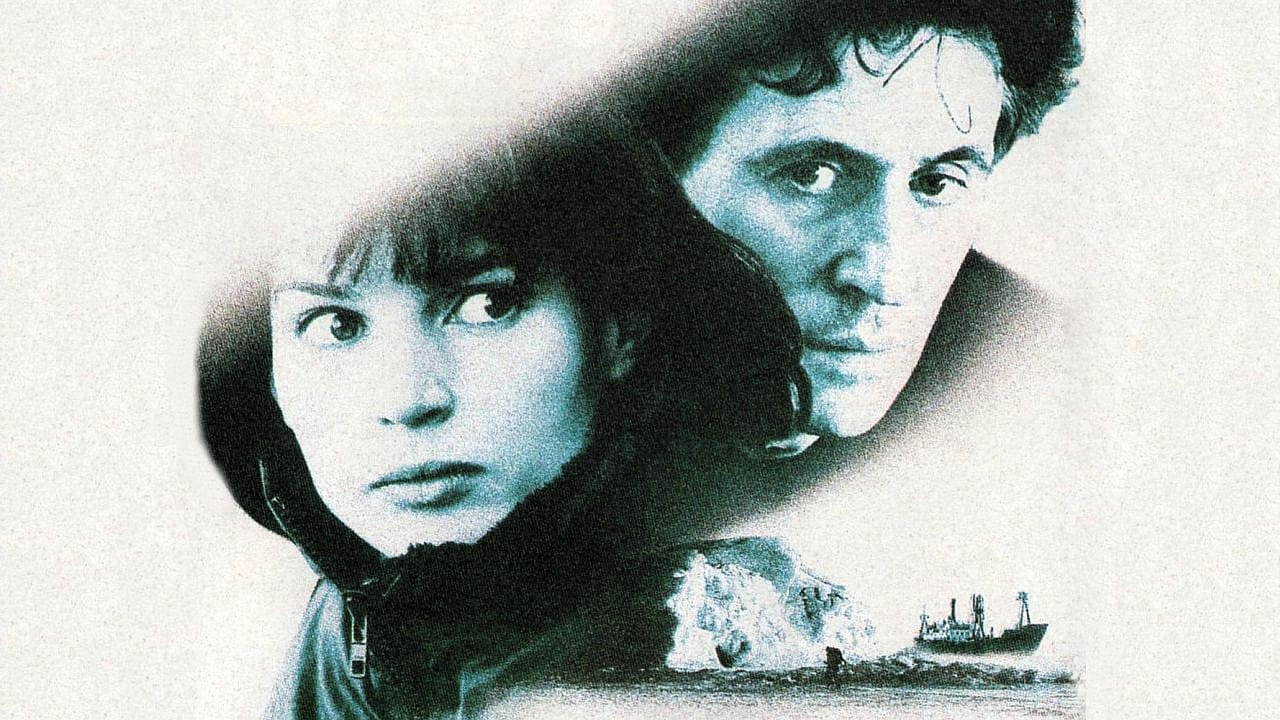
Directed by the acclaimed Danish filmmaker Bille August (who gave us the Palme d'Or and Oscar-winning Pelle the Conqueror back in 1987), the film immediately immerses us in a world defined by cold. Not just the biting chill of Scandinavian winters, but the emotional frost that coats Smilla's interactions with the world around her. The cinematography masterfully captures this, contrasting the sterile, modern lines of Copenhagen with brief, evocative flashbacks to the vast, primal beauty of Greenland. There’s a deliberate, almost meditative pace here, allowing the atmosphere to seep into your bones, much like the damp cold Smilla seems perpetually immune to. It’s a feeling many of us might dimly recall from renting this tape – a thriller, yes, but one with an unusual weight and texture.
The Woman Who Knew Too Much Ice
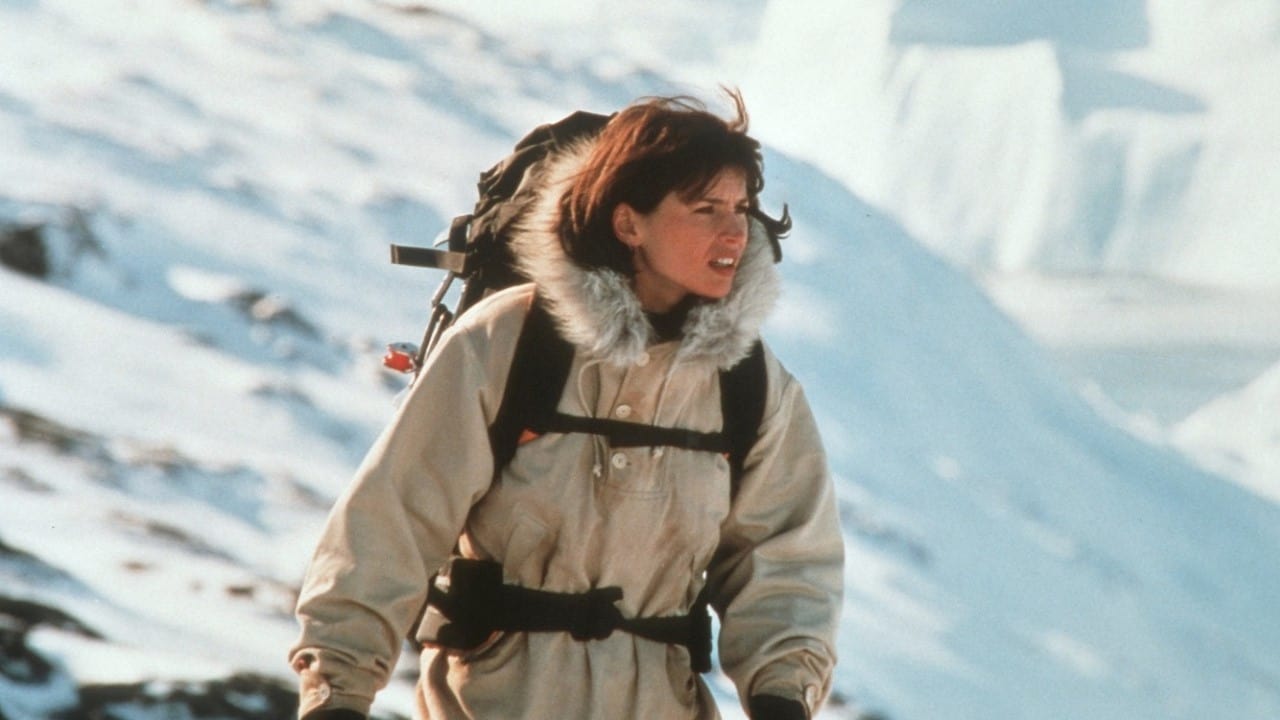
At the heart of it all is Julia Ormond's portrayal of Smilla. It’s a performance of fierce intelligence and guarded vulnerability. Smilla is an outsider in every sense – geographically, culturally, emotionally. Her Greenlandic roots give her unique insights, particularly her titular "sense of snow," but they also isolate her in Danish society. Ormond embodies this complex duality beautifully; her Smilla is prickly, distrustful, and intensely private, yet driven by a powerful sense of justice for Isaiah. We see the world through her sharp, analytical gaze, feeling her frustration with dismissive officials and her cautious thawing towards the enigmatic Mechanic (Gabriel Byrne, bringing his characteristic quiet intensity). It’s a demanding role, requiring both cerebral detachment and simmering emotional depth, and Ormond navigates it with compelling grace. I remember hearing she spent time in Greenland preparing, and that dedication feels palpable in her nuanced portrayal of Smilla's connection to her heritage.
Unravelling Secrets Beneath the Ice
The plot unfolds as Smilla, rejecting the official verdict of accidental death, pulls at the threads of conspiracy surrounding Isaiah. Her investigation leads her into the orbit of powerful figures like Dr. Andreas Tørk (Richard Harris, lending his formidable presence), the head of a corporation with shadowy interests in Greenland. The mystery takes Smilla from Copenhagen's snowy streets to the perilous, groaning confines of an icebreaker ship pushing through Arctic waters. This journey forms the film's backbone, a slow burn punctuated by moments of genuine tension. The film, adapted by Ann Biderman from Peter Høeg's dense, internationally bestselling novel, faced the considerable challenge of translating Smilla's rich internal monologue and complex scientific explanations to the screen. While some critics at the time felt the thriller elements eventually overshadowed the character study, the journey itself remains captivating.
Retro Fun Facts & Frozen Realities
Bringing Høeg's intricate world to life wasn't simple. With a reported budget of around $35 million – quite substantial for a European production then – filming took place in challenging conditions, including on location in Greenland itself and Kiruna, Sweden, lending an undeniable authenticity to the frozen landscapes. You can almost feel the sub-zero temperatures radiating from the screen, a testament to the logistical hurdles overcome. The novel’s ending, involving complex scientific and philosophical ideas, was notoriously difficult to adapt, leading to some changes that book purists might notice. Despite its pedigree and a Golden Bear nomination at the Berlin International Film Festival, Smilla's Sense of Snow didn't quite become the mainstream hit some might have expected (grossing just over $2 million in the US), perhaps making it one of those intriguing titles you discovered tucked away on the shelf at Blockbuster, promising something different from the usual Hollywood fare.
More Than Just a Thriller
What elevates Smilla beyond a standard mystery is its thoughtful engagement with deeper themes. It’s a story about alienation – Smilla’s personal isolation mirroring the cultural displacement felt by Inuit people within Western society. It touches upon the arrogance of corporate power encroaching on fragile ecosystems and indigenous ways of life, themes that feel perhaps even more resonant today. Smilla’s reliance on both scientific knowledge and intuitive understanding, rooted in her heritage, poses questions about different ways of knowing the world. Doesn't her unique perspective challenge the often-rigid boundaries we draw between logic and instinct?
The film isn't flawless. The pacing, while atmospheric, might test the patience of some viewers expecting a more conventional thriller, and the conspiracy plot, particularly in its final act, can feel a touch formulaic compared to the nuanced character work that precedes it. Yet, its strengths are considerable: Ormond's captivating lead performance, the palpable sense of place, and its willingness to tackle complex ideas within a genre framework.
Rating: 7.5/10
This score reflects a film that succeeds brilliantly in creating a unique and immersive atmosphere, anchored by a truly compelling central performance. It’s a thinking person’s thriller, one that values mood and character over explosive action. While the adaptation might struggle slightly under the weight of its source material, particularly in the latter stages, its evocative setting, thematic depth, and Julia Ormond's unforgettable portrayal of Smilla make it a standout piece of 90s cinema well worth rediscovering on a cold night.
What lingers long after the credits roll isn't just the intricate plot, but the profound chill of Smilla's world and the haunting question of what secrets lie buried, waiting to be read, beneath the silent, indifferent snow.