Here we go again, digging through those towering stacks of well-loved tapes, the scent of plastic and possibility thick in the air. Sometimes, nestled between the explosive action flicks and neon-drenched sci-fi, you’d find something different. Something quieter, heavier, yet possessing a unique kind of strength. That’s the space Paradise Road (1997) occupies – a film perhaps less frequently rented than its contemporaries, but one that leaves a profound, resonant echo long after the VCR clicks off. It’s not an easy watch, certainly not a Friday night popcorn movie, but its story, drawn from the harrowing realities of World War II, demands attention.
The film asks a stark question right from the outset: In the face of unimaginable brutality and despair, what power does art truly hold? Can a melody offer more than fleeting comfort when survival itself hangs by a thread?
### Echoes in the Jungle
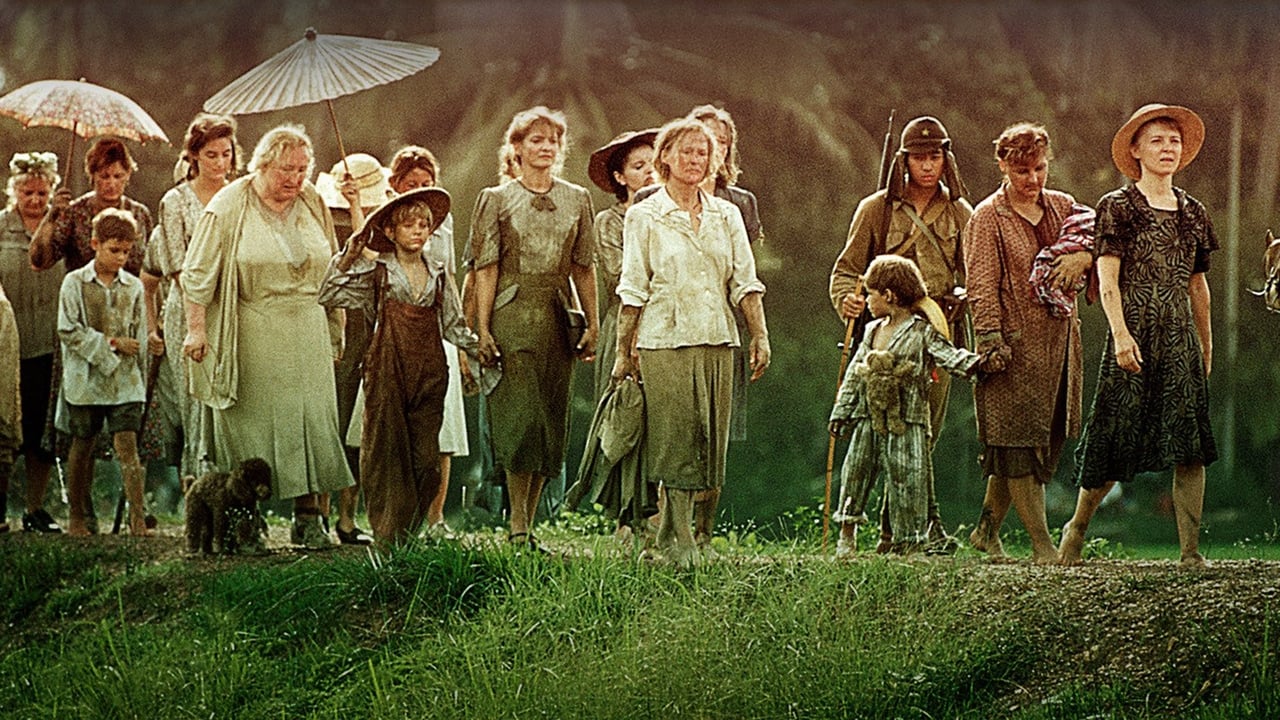
Director Bruce Beresford, who navigated vastly different emotional landscapes in films like the gentle Driving Miss Daisy (1989) or the grounded Tender Mercies (1983), takes us to Sumatra during the Japanese occupation. Based on the true experiences of female prisoners of war captured after the fall of Singapore, the film focuses on a disparate group of British, Australian, American, and Dutch women enduring the appalling conditions of a jungle internment camp. Stripped of their former lives, facing starvation, disease, and casual cruelty, hope seems an almost alien concept.
Beresford doesn’t shy away from the grim realities. There’s a palpable sense of heat, filth, and fear that permeates the screen, grounding the narrative in a harsh authenticity. This isn't a Hollywood sanitization of war; it’s an attempt to convey the texture of endurance. I remember watching this on a rainy afternoon, the grey light outside somehow mirroring the film's muted, often oppressive palette, making the eventual emergence of music feel even more startlingly vibrant.
### A Chorus of Defiance
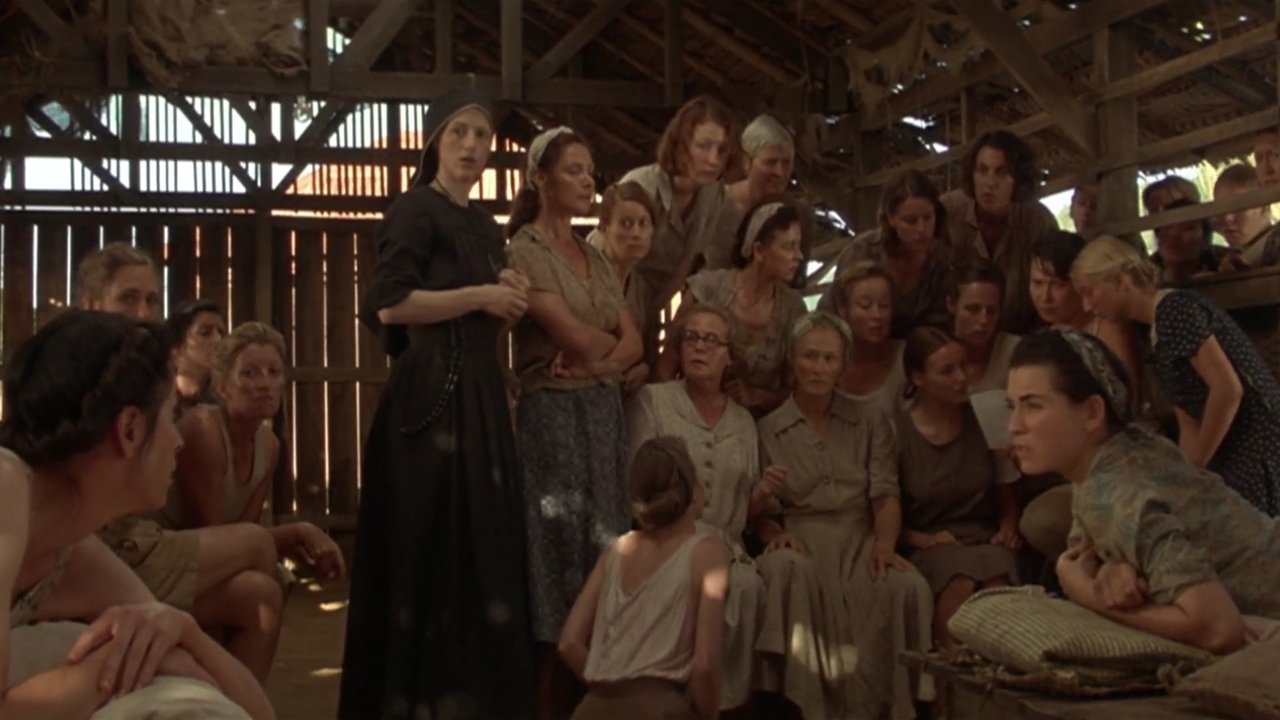
The film's heart lies in the formation of a vocal orchestra. Led by the determined Adrienne Pargiter (Glenn Close) and inspired by missionary Margaret Drummond (Pauline Collins, bringing gentle resolve), the women begin to transcribe orchestral scores from memory – Dvořák, Ravel, Bach – arranging them for the human voice alone. It’s a seemingly small act in the face of overwhelming power, yet it becomes a profound act of resistance. Their voices, mimicking cellos, violins, and woodwinds, are not just music; they are a reclaiming of humanity, a defiant assertion of spirit against forces seeking to crush it.
It’s fascinating to know that this central element is entirely true. The vocal orchestra existed, meticulously documented in diaries like Helen Colijn's 'Song of Survival', which heavily informed the screenplay co-written by Beresford. The sheet music they painstakingly recreated survived the war. Hearing those intricate arrangements performed by the cast (many of whom reportedly underwent vocal training) adds a layer of incredible poignancy. It wasn't just acting; it was a tribute.
### Portraits of Resilience
The performances are uniformly exceptional, forming a powerful ensemble. Glenn Close, ever the master of controlled intensity, embodies Pargiter’s fierce will – a woman using intellect and discipline as armour. Frances McDormand, playing the pragmatic, cynical German Jewish refugee Dr. Verstak, offers a stark counterpoint, her disbelief in the choir's utility slowly giving way to a grudging respect. Her performance is wonderfully unvarnished, full of weary truth. Pauline Collins provides the film's gentle soul, her faith and musicality the initial spark.
Beyond the leads, the film is notable for featuring early-career appearances from actresses who would become major stars, including Cate Blanchett and Jennifer Ehle as Australian nurses, and Julianna Margulies as an American socialite. Each contributes significantly to the tapestry of personalities forced together, showcasing different facets of courage and despair. They don't feel like characters; they feel like individuals caught in history's unforgiving gears. You see the gradual erosion caused by deprivation, but also the flickering embers of defiance in their eyes.
### Behind the Wire: Crafting Authenticity
Beresford and his team went to great lengths to ensure authenticity. Filming took place in locations like Penang, Malaysia, and Singapore, adding to the realism. Reportedly, the conditions were challenging, mirroring (to a much lesser degree, of course) the oppressive heat and environment depicted. This commitment translates to the screen; the sweat feels real, the exhaustion palpable.
While a critical success in some circles for its performances and unique story, Paradise Road wasn't a box office smash, grossing only around $2 million in the US against its estimated $16 million budget (adjusted for inflation, that's roughly a $30 million budget failing to recoup even $4 million domestically today). Perhaps its unflinching portrayal of suffering, combined with its focus on female experiences in a genre often dominated by male combat narratives, made it a tougher sell for mainstream audiences in the late 90s. This might be why it feels like a slightly forgotten gem now, waiting to be rediscovered on platforms far removed from the sticky shelves of the video store. It never spawned sequels or remakes; its power lies in its singular, devastating historical account.
### The Lingering Note
Paradise Road isn't about heroism in the traditional, action-packed sense. It’s about the quiet, stubborn heroism of the human spirit finding ways to endure, to connect, and to create beauty amidst ugliness. It explores the complex dynamics within the group – the tensions, the collaborations, the shared moments of grace. Does music save them from the physical horrors? No. But does it provide a vital lifeline, a way to preserve identity and dignity? The film argues, compellingly, that it does. What lingers most after watching isn't just the suffering, but the haunting power of those voices raised together against the suffocating silence of oppression.
Rating: 8/10
Justification: This score reflects the film's powerful true story, exceptional ensemble performances (especially from Close, McDormand, and Collins), and Beresford's sensitive direction. It successfully conveys the harrowing reality of the camps while highlighting the extraordinary resilience found in art and community. It loses a couple of points perhaps for pacing that occasionally feels slow, and its unrelenting bleakness can make it a difficult, albeit rewarding, viewing experience.
Final Thought: A vital, often overlooked piece of 90s historical drama that reminds us that even in the darkest corners of human history, the drive to create and connect can offer profound, soul-sustaining resistance. A tough but essential watch for those interested in the untold stories of war.