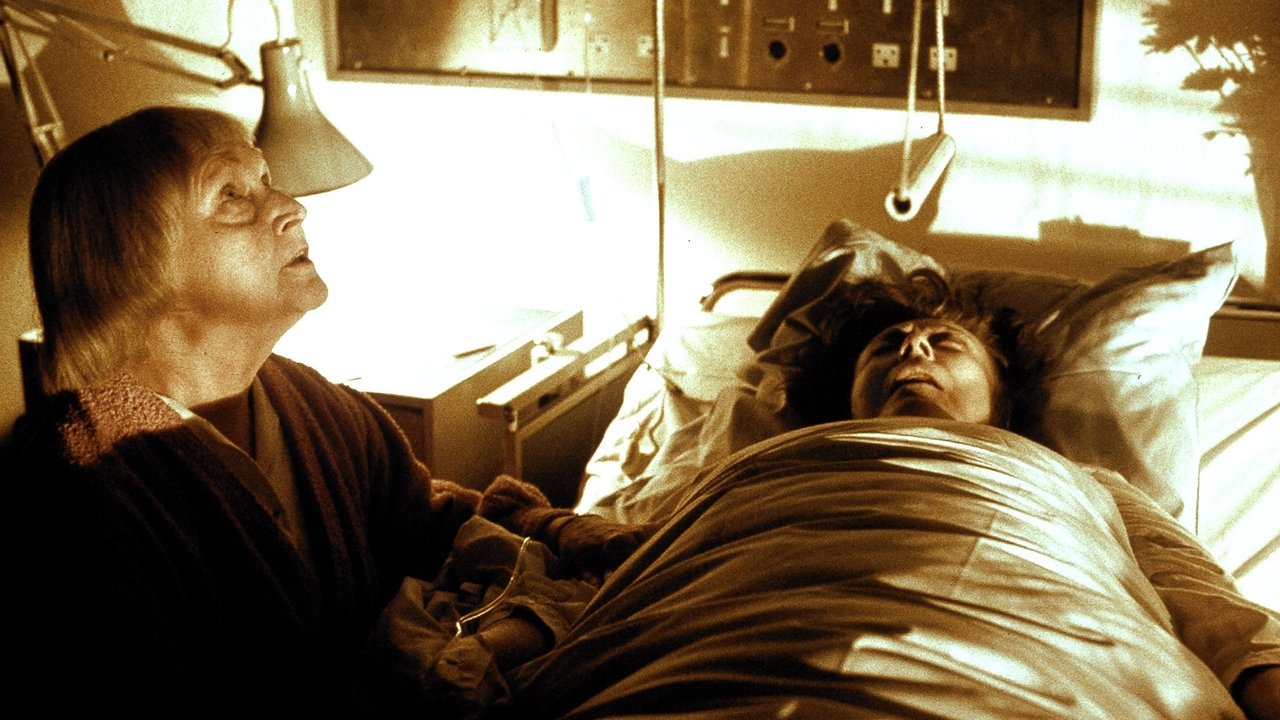
There's a certain sickly yellow pallor that hangs over Copenhagen's Rigshospitalet, a colour that seemed to seep right out of the television screen and stain the memory back in the day. Watching Lars von Trier and Morten Arnfred's The Kingdom (original title: Riget, 1994) wasn't like watching other television, even on a fuzzy VHS tape likely acquired through less-than-mainstream channels. It felt less like a story being told and more like eavesdropping on a building slowly losing its mind, a place where the ghosts in the machine weren't just metaphorical. Did anyone else feel that creeping unease settle in their living room, that sense that the sterile logic of medicine was about to be swallowed whole by something ancient and unwell?
Where Science Meets the Spooky
Set within the imposing, labyrinthine walls of Denmark's premier hospital – affectionately nicknamed "The Kingdom" – the series immediately throws us into a world teeming with peculiar characters and unsettling occurrences. On the surface, it’s a workplace drama: surgeons bicker, administrators fret, patients complain. But beneath the veneer of scientific rationality, the hospital itself is... wrong. Built on old bleaching ponds where restless spirits linger, Rigshospitalet becomes a pressure cooker where the supernatural bleeds into the mundane. Spiritualist patient Sigrid Drusse (Kirsten Rolffes) communes with ghosts in the elevator shafts, while the arrogant Swedish neurosurgeon Stig Helmer (Ernst-Hugo Järegård) rails against Danish incompetence ("Danskjävlar!") and tries desperately to cover up a botched operation. It's a narrative tapestry woven from ghost stories, medical ethics nightmares, secret societies, and pitch-black comedy.
A Vision Born of Necessity?
The visual style is perhaps the first thing that grabs you. Forget polished cinematography; The Kingdom embraces a deliberately raw, handheld aesthetic, often bathed in that signature sepia/yellow hue. This wasn't just an artistic choice; it was partly born from the rapid shooting schedule common for television, demanding flexibility and speed. Von Trier, already known for pushing boundaries and clearly developing ideas that would later crystallize in Dogme 95, used these limitations to create something uniquely unnerving. The jerky camera movements mimic a frantic, disoriented perspective, as if we, the viewers, are nervously peering around corners, catching glimpses of things we shouldn't. It effectively shatters any sense of comfort or stability, perfectly mirroring the crumbling sanity within the hospital walls. There's an immediacy here, a feeling of being present in those echoing corridors, that few productions achieve. It’s a far cry from the slick productions we often associate with the 90s, feeling almost like found footage before that became a genre staple.
Faces in the Haunted Halls
The performances are uniformly excellent, capturing the perfect blend of absurdity and pathos. Kirsten Rolffes is magnificent as Mrs. Drusse, the determined, slightly dotty psychic investigator whose belief is unwavering even when faced with institutional mockery. She grounds the supernatural elements with a kind of homespun conviction. But it's Ernst-Hugo Järegård as Stig Helmer who steals every scene he’s in. His volcanic outbursts, his utter contempt for everything Danish, his simultaneous arrogance and deep-seated insecurity – it's a performance of pure, operatic intensity, yet somehow completely believable within this bizarre world. His rooftop railings against Denmark became instantly iconic. We also see memorable turns from Holger Juul Hansen as the increasingly ineffective hospital director Moesgaard, trying futilely to implement crackpot management initiatives like "Operation Morning Air," and a young Nikolaj Lie Kaas (who would become a Danish star) as a medical student entangled in the hospital's darker secrets.
Retro Fun Facts: Behind the Bleaching Ponds
- The Kingdom was conceived and written relatively quickly by Lars von Trier and Niels Vørsel. They famously plotted the entire series on a trip, aiming for something that blended the hospital drama popular at the time with supernatural elements reminiscent of Twin Peaks (though The Kingdom possesses a distinctly European, perhaps more cynical, flavour).
- The series was a massive hit in Denmark and gained a significant cult following internationally, often shared on traded VHS tapes among genre fans hungry for something different. Its influence on later dark, quirky television is undeniable.
- The frantic, handheld camerawork wasn't just stylistic; it allowed for faster setups and shooting on location within the real Rigshospitalet, adding to the authenticity (and likely the unease of actual staff and patients!).
- Tragically, the planned third and final season, Riget III, never materialized in its original form due to the untimely deaths of several key actors, including Ernst-Hugo Järegård and Kirsten Rolffes, as well as Morten Rotne Leffers (one of the dishwashers with Down syndrome who act as a kind of Greek chorus). This left the story hanging on a tantalizing cliffhanger, a fact that only adds to its mystique. (Von Trier did eventually complete a third season in 2022 with a new cast).
- Horror maestro Stephen King was such a fan that he adapted it into the American miniseries Kingdom Hospital (2004), though it arguably smoothed out many of the original's rough, unsettling edges.
An Unfinished Symphony of Unease
What lingers most about The Kingdom isn't just the ghosts or the gore (though there are moments of genuine body horror). It's the pervasive atmosphere of decay, the sense that institutions built on logic are inherently fragile when confronted by the irrational, the historical, the things we try to bury. The series masterfully balances its tones – one moment you're laughing at Helmer's absurdity, the next you're genuinely creeped out by a spectral ambulance or the unsettling presence in the basement. Does the unresolved ending frustrate? Perhaps. But it also feels strangely fitting for a story steeped in mystery and the unknowable. It leaves questions echoing in the viewer's mind long after the static fades.
Rating: 9/10
This score reflects The Kingdom's sheer audacity, its unique and influential style, unforgettable characters (especially Helmer), and its masterful blend of horror, comedy, and social commentary. It was unlike anything else on television in the mid-90s, shot with a raw energy that still feels potent. The point deduction accounts mainly for the inherently frustrating (though unavoidable) lack of resolution from the original run, which might leave some viewers feeling incomplete.
The Kingdom remains a high-water mark for weird television, a truly unsettling and darkly funny journey into a place where the sickness isn't just in the patients. It's a reminder that sometimes, the most sterile environments hide the deepest, darkest stains. Didn't you just feel compelled to check your own elevator shafts after watching?