It’s a quiet film, in many ways. Not one that shouts its tragedies from the rooftops, but one that lets the weight of history settle slowly, inevitably, like dust gathering on cherished possessions. Watching Tian Zhuangzhuang's The Blue Kite (1994) again, decades after first encountering it likely on a worn arthouse VHS tape, feels less like revisiting a movie and more like bearing witness. It doesn't grab you with spectacle; it draws you in with the undeniable gravity of ordinary lives caught in the gears of extraordinary, often cruel, times.
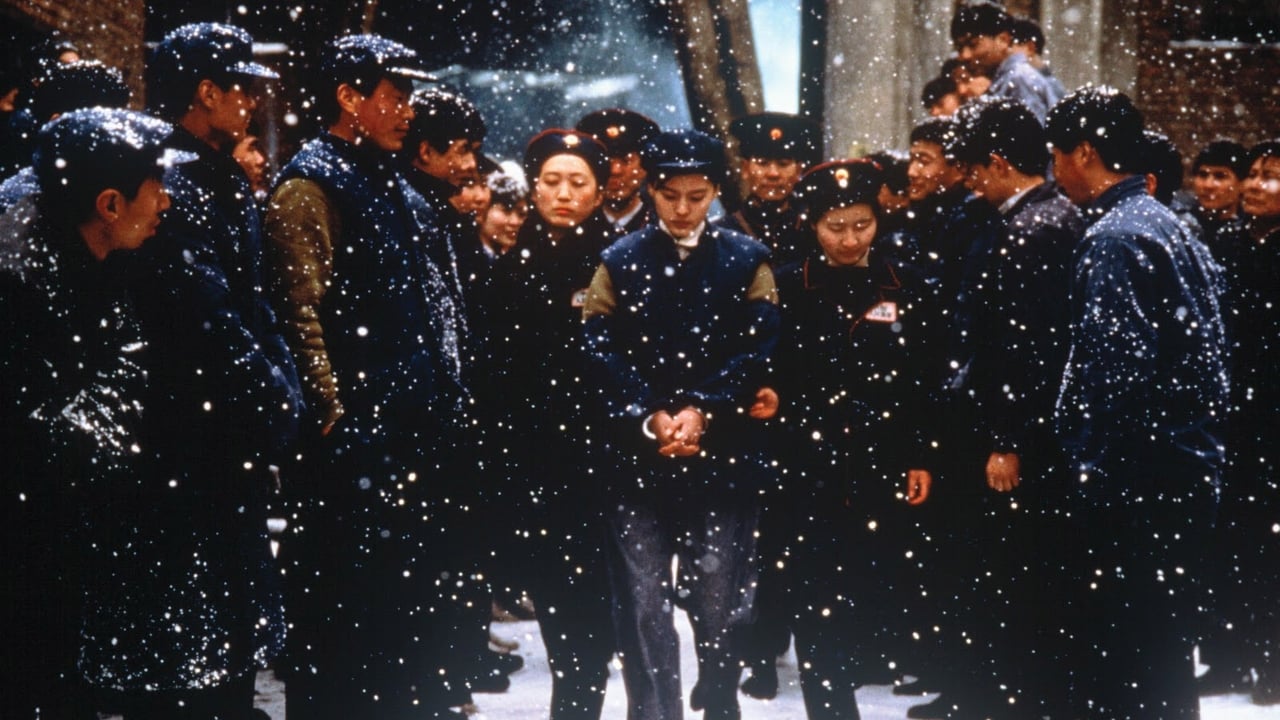
The film asks a profound question, whispered rather than yelled: What is the human cost when ideology trumps individual lives? It unfolds through the wide, often uncomprehending eyes of Tietou, a young boy growing up in Beijing through the 1950s and 60s. His childhood becomes a map of China's turbulent political landscape – the Hundred Flowers Campaign, the Great Leap Forward, the Cultural Revolution – each movement sweeping through his family like a recurring, destructive storm.
A Mother's Resilience, A Nation's Scars
At the heart of the narrative is Tietou's mother, Shujuan, portrayed with devastating understatement by Lü Liping. Hers is not a performance of histrionics, but of quiet endurance. We see her navigate love, loss, and the constant, grinding pressure of political scrutiny. She marries three different men (Pu Quanxin and Li Xuejian memorably embody two of them), each relationship offering a fleeting glimpse of stability before being fractured by the shifting political winds. Lü Liping conveys reservoirs of strength and sorrow behind a facade that rarely cracks, embodying the resilience required simply to survive. It’s a performance that stays with you, a portrait of quiet dignity amidst relentless upheaval. Tietou, the child observer, doesn't always grasp the political nuances, but he feels the absences, the fear, the bewildering changes in the adults around him. His perspective grounds the immense historical forces in tangible, personal loss.
History Through a Child's Eyes
Director Tian Zhuangzhuang, often associated with China's "Fifth Generation" filmmakers (though his style here is perhaps more observational than some peers like Zhang Yimou or Chen Kaige), chooses a remarkably restrained approach. There are no soaring orchestral swells dictating emotion, no dramatic zooms emphasizing tragedy. Instead, the camera often watches, letting events unfold with a documentary-like patience. Simple, symbolic images – like the titular blue kite, a fragile symbol of freedom and childhood innocence, repeatedly lost or broken – carry immense weight. This deliberate lack of directorial intrusion makes the emotional blows land harder; they feel earned, rooted in the chilling reality of the characters' experiences. The muted color palette further enhances this sense of lived history, avoiding any romantic gloss.
The Courage of Creation
Understanding The Blue Kite requires knowing the story behind its creation, a narrative as compelling as the one on screen. This wasn't just a film; it was an act of courage. Made largely outside the official studio system and without explicit government approval, its completion was fraught with difficulty. Tian Zhuangzhuang knew the risks. Upon its screening at international film festivals – where it garnered significant acclaim, including the Grand Prix at the Tokyo International Film Festival – the Chinese authorities reacted swiftly. The film was banned in China, and Tian himself was prohibited from making films for nearly a decade.
Knowing this context transforms the viewing experience. It’s not just a historical drama; it’s a piece of cinematic testimony, made under duress, that dared to present a human-level view of periods the official narrative preferred to forget or reshape. The fact that it exists at all, preserved on those VHS tapes that circulated in the 90s and now thankfully available through other means, feels like a minor miracle. It speaks volumes about the impulse to record, to remember, even when remembrance is forbidden.
Why It Still Resonates
Decades on, why does The Blue Kite still hold such power? Perhaps it’s the universality of its themes. While rooted specifically in Chinese history, the story of individual lives crushed by impersonal political forces, of families striving for normalcy against overwhelming odds, resonates across cultures and time periods. Doesn't the struggle to maintain one's humanity and personal connections amidst ideological extremism feel chillingly relevant today?
The film doesn't offer easy answers or cathartic resolutions. It simply shows, with quiet power and profound empathy, the impact of history on the human heart. It reminds us that grand political movements are experienced not as abstract doctrines, but as concrete realities that shape love, loss, hope, and despair in the most intimate corners of our lives.
Rating: 9/10
The Blue Kite is a masterpiece of restraint and quiet devastation. Its power lies in its unwavering focus on the human cost of political turmoil, anchored by Lü Liping’s unforgettable performance and Tian Zhuangzhuang’s courageous, observational direction. The film's troubled production history only deepens its significance as a vital piece of cinematic testimony. It's not an easy watch, but it's an essential one – a profound and deeply moving experience that lingers long after the screen goes dark. It stands as a testament to the enduring need to tell personal stories, especially those history might prefer remain silent.