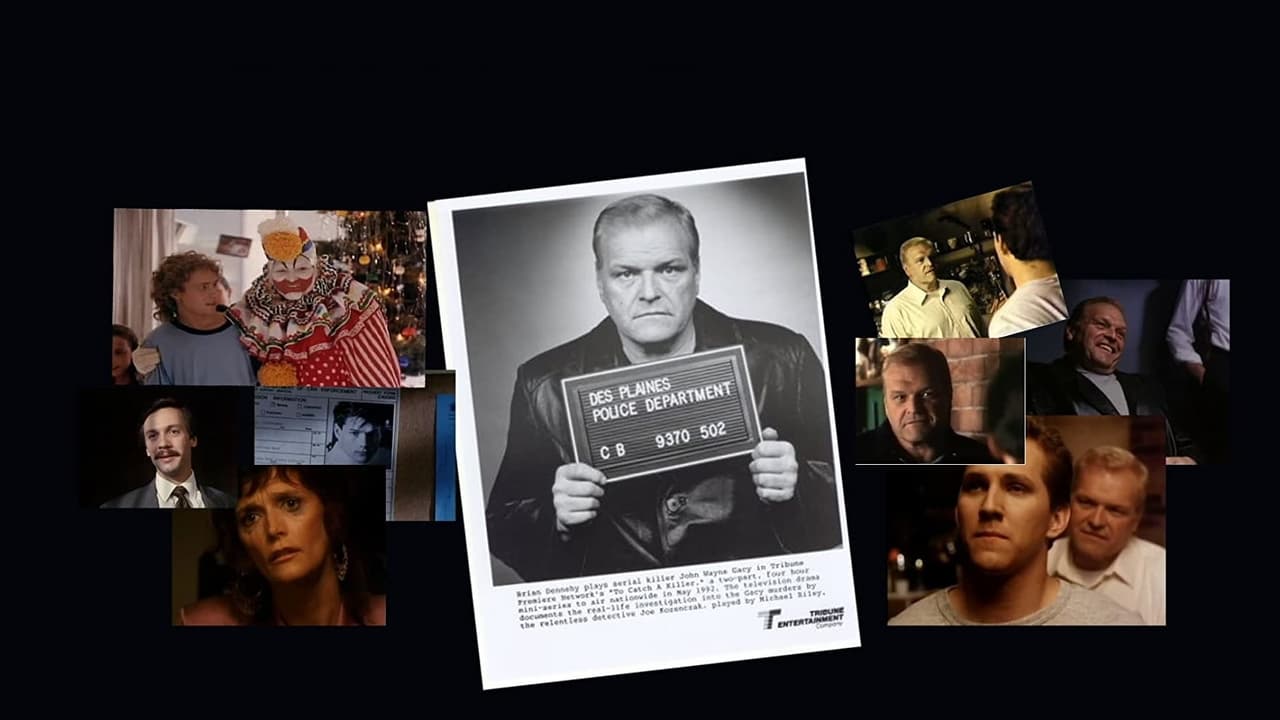
There are performances that stick with you, long after the static hiss of the VCR powering down fills the room. Not just because they’re good, but because they tap into something unsettling, something primal about the masks people wear. Watching Brian Dennehy embody John Wayne Gacy in the 1992 TV movie To Catch a Killer, that’s the feeling that resurfaces – a profound unease mixed with a grudging admiration for an actor completely losing himself in the skin of a monster. This wasn't just another procedural; it felt different, heavier, even through the fuzzy resolution of a CRT screen.
Beneath the Greasepaint
Based on the non-fiction book by Joe Kozenczak (the lead detective on the case) and Karen Moore, To Catch a Killer plunges us into the grim reality of Des Plaines, Illinois, in the late 1970s. When teenage boys start disappearing, the trail eventually leads to John Wayne Gacy, a local businessman, contractor, and part-time children's party clown known as Pogo. The film largely follows Detective Joe Kozenczak, played with understated determination by Michael Riley (perhaps familiar to some from the Canadian series Power Play), as he and his team painstakingly build a case against a man shielded by a veneer of community respectability.
What immediately set this production apart, especially for a television movie of the era, was its refusal to shy away from the psychological darkness. Director Eric Till, whose diverse credits surprisingly include the charming A Muppet Family Christmas (1987), crafts a palpable sense of dread. The tension isn't built on cheap jump scares, but on the slow, sickening realization of the horror unfolding just beneath the surface of suburban normalcy. The film understands that the true terror of Gacy wasn't just the murders, but the chilling betrayal – the friendly neighbour, the helpful contractor, the man who entertained children, was capable of unimaginable evil.
Dennehy's Defining Darkness
Let's be frank: the reason To Catch a Killer is still discussed, the reason it likely wore out more than a few rental tapes, is Brian Dennehy. Already a beloved, imposing figure known for roles like the conflicted Sheriff Teasle in First Blood (1982) or the gentle giant in Cocoon (1985), Dennehy’s transformation here is nothing short of terrifyingly brilliant. He doesn’t just mimic Gacy; he inhabits him. The forced bonhomie, the calculating eyes, the sudden flashes of chilling rage – it’s all there. He captures the manipulative charm Gacy reportedly used, making you understand, uncomfortably, how people could be taken in. It's a performance devoid of caricature, grounded in a disturbing psychological reality.
There's a scene where Kozenczak's team has Gacy under surveillance, and Dennehy simply stares back at them from his car, a look of such pure, cold malevolence crossing his face that it freezes the blood. It’s moments like these, small, potent flashes of the monster behind the mask, that elevate the film. Little wonder Dennehy earned an Emmy nomination for Outstanding Lead Actor in a Miniseries or a Special for this role; it felt less like acting and more like channeling. Reportedly, Dennehy steeped himself in research, aiming for accuracy in capturing Gacy's specific mannerisms and speech patterns, a dedication chillingly evident on screen.
The Relentless Pursuit
While Dennehy dominates, Michael Riley provides the essential counterpoint. His Kozenczak is weary but relentless, the embodiment of dogged police work chipping away at Gacy’s facade. He portrays the immense pressure and the emotional toll of confronting such evil with a quiet intensity that grounds the film. We see the investigation's frustrations, the legal hurdles, the ticking clock as the fear mounts that Gacy might strike again. Margot Kidder (Superman's Lois Lane), appears in a supporting role as Kozenczak's supportive wife, offering moments of human connection amidst the grim proceedings, reminding us of the world outside the investigation.
Adapting a true crime story, especially one as horrific as Gacy's, for television in the early 90s came with inherent challenges. While it avoids graphic depictions of the violence (a necessity for broadcast standards then, and perhaps a mercy for the viewer), the film effectively conveys the weight of the crimes through atmosphere, performance, and the investigators' dawning horror. Originally broadcast as a two-part event, its pacing reflects this, allowing time to develop both the investigation's methodical nature and the psychological portrait of Gacy. Shot largely in Ontario, Canada, the production does a respectable job of recreating the late-70s suburban Chicago milieu, grounding the extraordinary evil in ordinary settings.
Lingering Shadows
To Catch a Killer isn't a comfortable watch. It wasn't then, and it isn't now. It's a stark reminder of the darkness that can hide in plain sight. Seeing it again, years later, the TV movie constraints are perhaps more apparent – the lighting, the score, sometimes betray its origins. But the core strength remains undeniably powerful: Dennehy's monumental performance and the film's chillingly effective portrayal of the hunt for one of America's most notorious serial killers. It stands as a high water mark for the true crime genre on television, treating its subject with gravity while delivering genuine, character-driven suspense.
Does it still hold up? For anyone fascinated by true crime, or appreciative of powerhouse acting, absolutely. It taps into that specific 90s TV movie vibe – earnest, sometimes a little unpolished, but capable of delivering unforgettable moments. It captured a specific cultural moment when the Gacy case still felt like a fresh wound, a terrifying anomaly we were collectively trying to comprehend.
Rating: 8/10
This rating is earned primarily through Brian Dennehy's tour-de-force performance, which remains one of the most compelling and terrifying portrayals of a real-life killer ever committed to film (or tape). The strong supporting work from Michael Riley, the effective tension-building by director Eric Till, and the film's relatively sensitive handling of horrific material contribute significantly. While undeniably a product of its time as a TV movie, its psychological depth and central performance elevate it far above standard fare.
It leaves you pondering the facades we encounter every day, and the chilling truth that monsters rarely look like monsters until it’s too late. A grim but essential piece of 90s television history.