Manufacturing Consent: Noam Chomsky and the Media
It arrives not with a bang, but with the quiet, persistent rhythm of a lecturer laying out an argument, piece by meticulous piece. Yet, watching Manufacturing Consent: Noam Chomsky and the Media back in the early 90s, perhaps on a rented double VHS set that felt unusually heavy in the hand, carried the force of a revelation for many of us. In an era before the internet reshaped everything we thought we knew about information, this sprawling documentary dared to ask: what if the news isn't merely reporting the world, but actively constructing our perception of it?
The Professor Holds Court
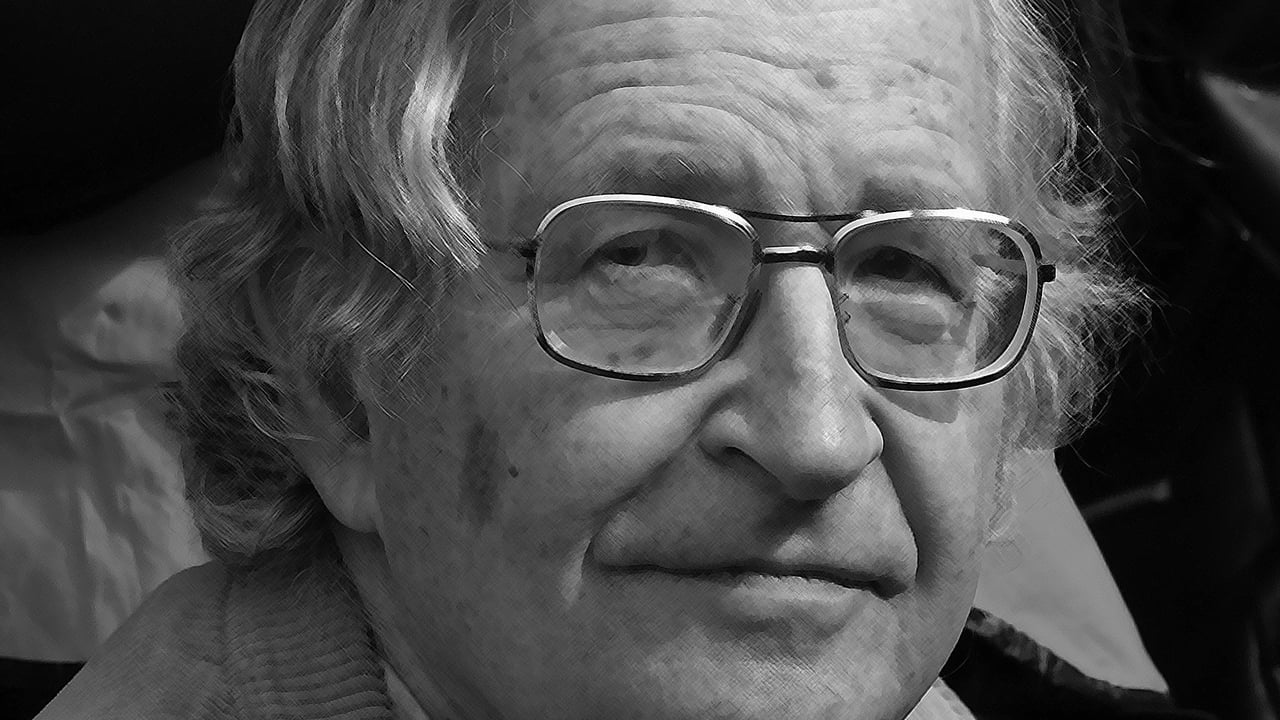
At the heart of this 1992 film, directed and patiently assembled over four years by Mark Achbar and Peter Wintonick, is linguist and political dissident Noam Chomsky. He isn't performing in the traditional sense; there's no character arc, no dramatic transformation. Instead, we witness Chomsky the public intellectual – in lecture halls, television studios, interviews – calmly, methodically, and often with a wry, almost weary understatement, dissecting media coverage of global events. His presence is magnetic, not through charisma in the usual Hollywood sense, but through the sheer force of his intellect and the clarity of his arguments. He presents his and Edward S. Herman's "propaganda model," suggesting that inherent structural biases within corporate media (ownership, advertising reliance, sourcing, "flak," and anticommunist ideology as an overarching mechanism) effectively filter the news we receive. Watching him lay out examples, from Central America to East Timor, felt less like watching a movie and more like attending the most challenging, eye-opening university lecture imaginable.
Beyond the Talking Head
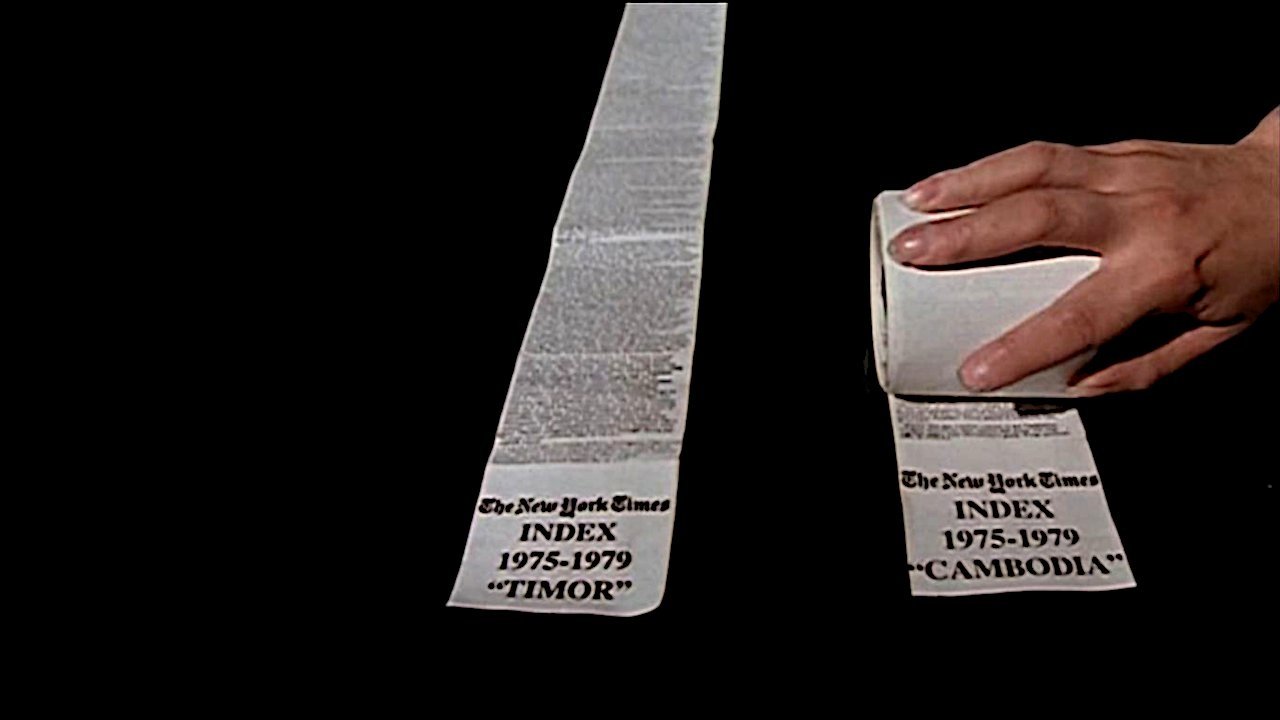
While Chomsky is the undeniable centrepiece, Manufacturing Consent is far more dynamic than a simple filmed lecture. Achbar and Wintonick employ a fascinating, almost scrapbook-like approach. They weave in archival news footage, clips from Chomsky's media appearances (often showing him calmly pushing back against interviewers), illustrative graphics that attempt to visualize the abstract concepts, and even moments following Chomsky through airports or dealing with event logistics. This structure prevents the nearly three-hour runtime (in its original cut, often split across two tapes) from becoming monotonous. It contextualizes Chomsky's ideas, showing the media landscape he's critiquing in action. One particularly memorable technique involves juxtaposing headlines or news reports from mainstream sources with Chomsky's alternative interpretations, forcing the viewer to confront the discrepancies directly. Was it always subtle? Perhaps not. But was it effective in making complex ideas accessible and provoking thought? Absolutely.
A Relic of Analogue Dissent?
Seeing the film today inevitably evokes the specific textures of the early 90s – the boxy televisions in the footage, the slightly fuzzy look of standard definition video, the very idea of discovering such radical critique via a physical tape rented from a store shelf. It’s a potent reminder of a different media ecosystem. Does its core thesis still resonate in our hyper-connected, social media-saturated world? That's a question the film implicitly leaves us with. While the specific mechanisms of media control may have evolved, the underlying questions about power, influence, and whose voices get amplified remain startlingly relevant. Watching Chomsky debate Dutch television hosts or patiently respond to audience questions feels both like a historical document and a continuing conversation.
Retro Fun Facts: The Making of a Counter-Narrative
Crafting this ambitious documentary was no small feat. Made over four years on a relatively modest budget (around CAD $435,000, scraped together from various grants and co-production deals), it was a labor of love and conviction for Achbar and Wintonick. Its success was surprising; Manufacturing Consent became one of Canada's highest-grossing documentaries up to that point, finding a significant audience on university campuses, in independent cinemas, and eventually, through those crucial VHS rentals and sales. It proved there was an appetite for challenging, long-form political discourse, even packaged in a format usually reserved for escapism. Chomsky himself, though participating extensively, reportedly maintained his characteristic distance, viewing the film as the filmmakers' interpretation of his work, not a definitive statement dictated by him.
The Enduring Question
Manufacturing Consent isn't necessarily an "enjoyable" watch in the conventional sense; it’s demanding, dense, and designed to make you uncomfortable with passively accepting information. It doesn't offer easy answers, but rather a framework for critical thinking. What lingers long after the hum of the VCR stopped wasn't just Chomsky's specific arguments, but the fundamental challenge he posed: are we truly informed, or are we consuming narratives carefully constructed to maintain the status quo? The film itself, a product of independent spirit and intellectual rigor, felt like an act of defiance against the very system it was critiquing.
Rating: 8/10
This score reflects the film's profound intellectual impact, its skillful (if sometimes unpolished) documentary filmmaking craft in making complex ideas engaging, and Chomsky's compelling screen presence. It’s a landmark work of political documentary, capturing a specific moment in media criticism while raising questions that echo even louder today. It loses a couple of points perhaps for its sheer length, which can test viewer endurance, and a visual style that, while functional, is undeniably rooted in its time.
Final Thought: For anyone who remembers seeking out alternative viewpoints on those Blockbuster or indie video store shelves, Manufacturing Consent remains a potent reminder of the power of independent media to challenge, provoke, and maybe, just maybe, change the way we see the world. It’s a VHS tape that carried intellectual weight far exceeding its physical form.