Okay, let's settle in and dim the lights. Remember that feeling? Browsing the aisles of the local video store, the slight hum of the fluorescent lights overhead, the weight of a promising VHS tape in your hand? Sometimes, the cover art alone, especially graced by a megastar like Jack Nicholson, was enough. And when you saw his name alongside director Bob Rafelson and writer Carole Eastman – the very team that gave us the searing, iconic Five Easy Pieces (1970) – well, anticipation crackled like static off an old CRT screen. That anticipation makes revisiting 1992's Man Trouble such a peculiar, almost melancholy experience. It’s a film built on a foundation of prestigious talent that somehow results in… well, let’s just say it wasn’t quite the reunion tour we’d hoped for.
### Echoes of Greatness, Faintly Heard
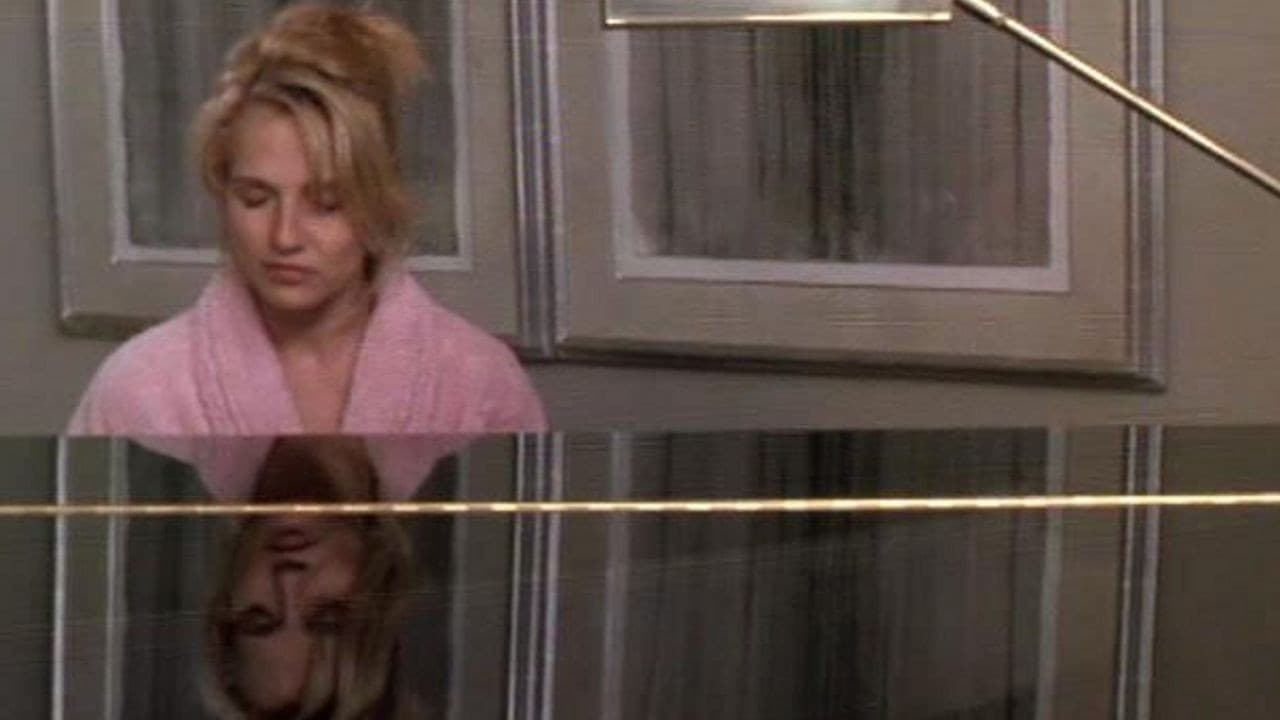
The premise itself feels like it should work, sketching a slightly noir-tinged romantic comedy landscape. Ellen Barkin, always possessing that captivating blend of vulnerability and sharp edges (think Sea of Love), plays Joan Spruance, a classical singer whose life and marriage are fraying. Feeling threatened after a break-in, she seeks protection and finds Harry Bliss (Jack Nicholson), owner of a guard dog agency called "Faithful Protection." Harry’s own life is a mess – estranged from his wife, involved with a volatile Japanese-American woman (played with gusto by Beverly D'Angelo), and running his business with a charming, albeit ethically flexible, approach. Sparks are meant to fly between Joan and Harry, entwining them in a plot involving stolen manuscripts, marital discord, and, naturally, some rather imposing Dobermans.
It sounds like fertile ground, particularly for Eastman, whose dialogue in Five Easy Pieces was so sharp and resonant. Here, though, the script feels strangely… inert. The wit often lands with a thud, the romantic elements feel forced, and the thriller subplot meanders without ever building real tension. It’s like hearing a beloved song played slightly out of tune – the familiar notes are there, but something is fundamentally off.

### Stars Adrift in LA Haze
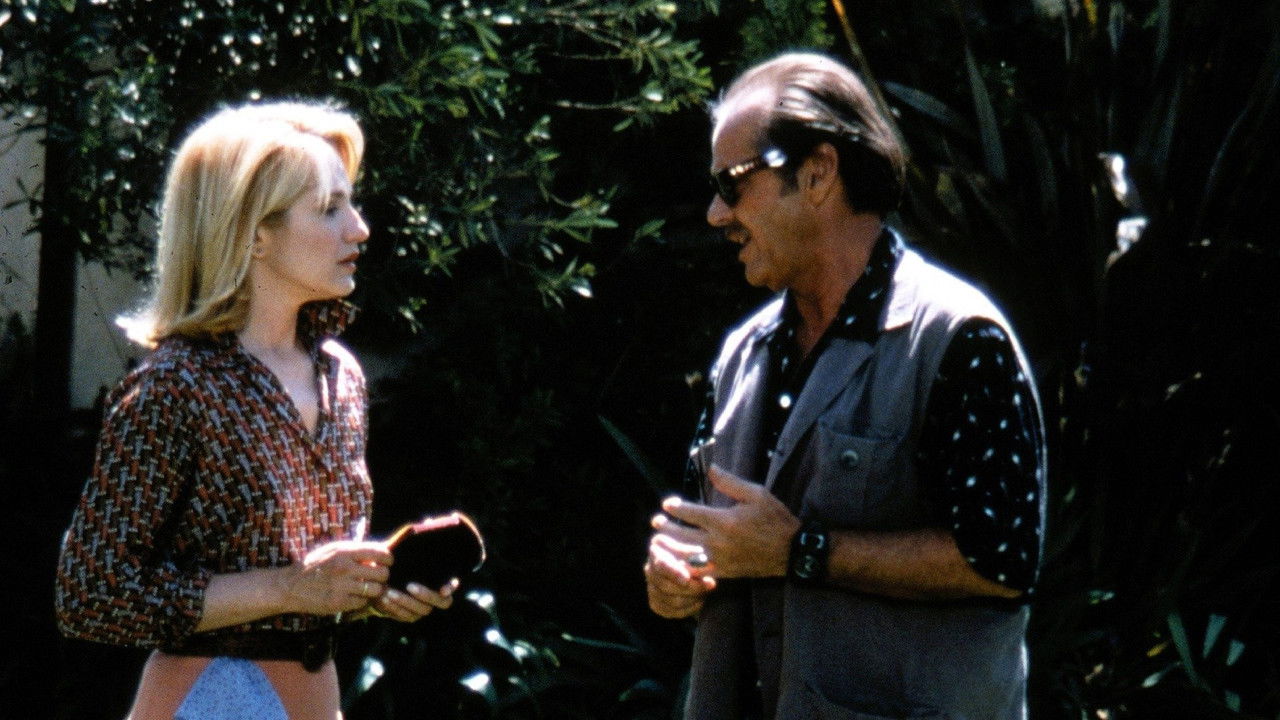
Seeing Jack Nicholson back under Rafelson's direction, decades after Bobby Dupea raged against the system (and a side order of toast), should have been electric. Nicholson certainly brings his trademark charisma – the sly grin, the knowing eyebrow arch, the cadence that can turn mundane lines into something… Nicholson-esque. He's playing a variation of the charming rogue he perfected throughout the 80s and 90s. Yet, Harry Bliss feels less like a character and more like a collection of familiar Nicholson mannerisms searching for a coherent personality. There’s a sense, perhaps unfair but persistent, of an actor coasting on charm rather than digging deep. Was the material simply not there to challenge him?
Ellen Barkin fares slightly better, grounding Joan in a believable anxiety and yearning. Her chemistry with Nicholson, however, is disappointingly lukewarm. They occupy the same scenes, deliver lines to each other, but that essential spark, that sense of two people genuinely connecting (or clashing) on screen, feels conspicuously absent. It’s a shame, as both are formidable talents. One wonders if the disconnect reflects the film’s own tonal confusion. Even the reliable presence of the legendary Harry Dean Stanton as Redmond Layls, Harry’s perpetually weary business associate, can't quite anchor the proceedings. He brings his usual weathered authenticity, a welcome sight in any film, but feels underutilized.

### Behind the Uneasy Reunion
The story behind Man Trouble offers some clues to its disjointed feel. Carole Eastman's script, originally titled "Bed Rest," had reportedly been floating around Hollywood for years, perhaps even dating back to the late 70s. By the time it finally went into production in the early 90s, maybe its rhythms and concerns felt slightly out of step. Film development can be a tricky beast; sometimes a project simply misses its moment. Rafelson, a director known for his thoughtful character studies and atmospheric direction (think The King of Marvin Gardens or his later work on Blood and Wine), seems strangely disconnected here. The film lacks a distinct visual style or mood; the sun-drenched Los Angeles setting feels generic rather than evocative, and the pacing often drags where it should snap.
Interestingly, despite the pedigree, Man Trouble was met with near-universal critical dismissal and bombed at the box office, reportedly grossing only around $4 million against a budget estimated near $30 million. It became a footnote, a curious misstep in otherwise stellar careers. Did the weight of expectation from the Five Easy Pieces connection become an impossible burden? It's a question that hangs over the film like the California smog.
### The Verdict: A Misfire with Familiar Faces
Revisiting Man Trouble on worn-out VHS tape (or perhaps a streaming equivalent these days) is an exercise in managing expectations. It’s not aggressively terrible in the way some 90s comedies could be; it’s more… bewilderingly flat. There are flashes of what might have been – a well-delivered line from Nicholson, a moment of genuine emotion from Barkin, the simple pleasure of seeing Stanton on screen. But these moments are islands in a sea of narrative incoherence and tonal inconsistency. It lacks the sharp insight of Rafelson and Eastman's best work and fails to generate the romantic sparks or comedic energy it seems to be striving for. It's a 90s rom-com curio, notable primarily for the reunion it represented and the disappointment it ultimately delivered.

Rating: 3/10
The rating reflects the profound disconnect between the immense talent involved and the lackluster final product. While not offensively bad, it's a sluggish, unfunny, and dramatically inert film that wastes its potential and the charisma of its stars. The Nicholson-Rafelson-Eastman reunion promised so much, making the emptiness of Man Trouble feel even more pronounced.
What lingers most after the credits roll isn't a memorable scene or line, but rather a sense of puzzlement. How did these filmmakers, with these actors, produce something so forgettable? Sometimes, even in VHS Heaven, you stumble upon a tape that serves primarily as a reminder that lightning rarely strikes twice.