Okay, let’s rewind the tape. Picture this: it’s 1987. MTV is king, neon is everywhere, and one star burns brighter than almost any other – Madonna. Fresh off True Blue and world domination, her move into movies felt less like a choice and more like an inevitability. So, when Who's That Girl hit the shelves of Blockbuster, clad in that vibrant VHS cover, it felt major. You grabbed it because, well, it was Madonna. What you got was… something else entirely. A frantic, often bewildering, but undeniably 80s screwball comedy attempt that landed with a thud critically but remains a fascinating pop culture artifact.
### Causing a Commotion (On Screen, Anyway)
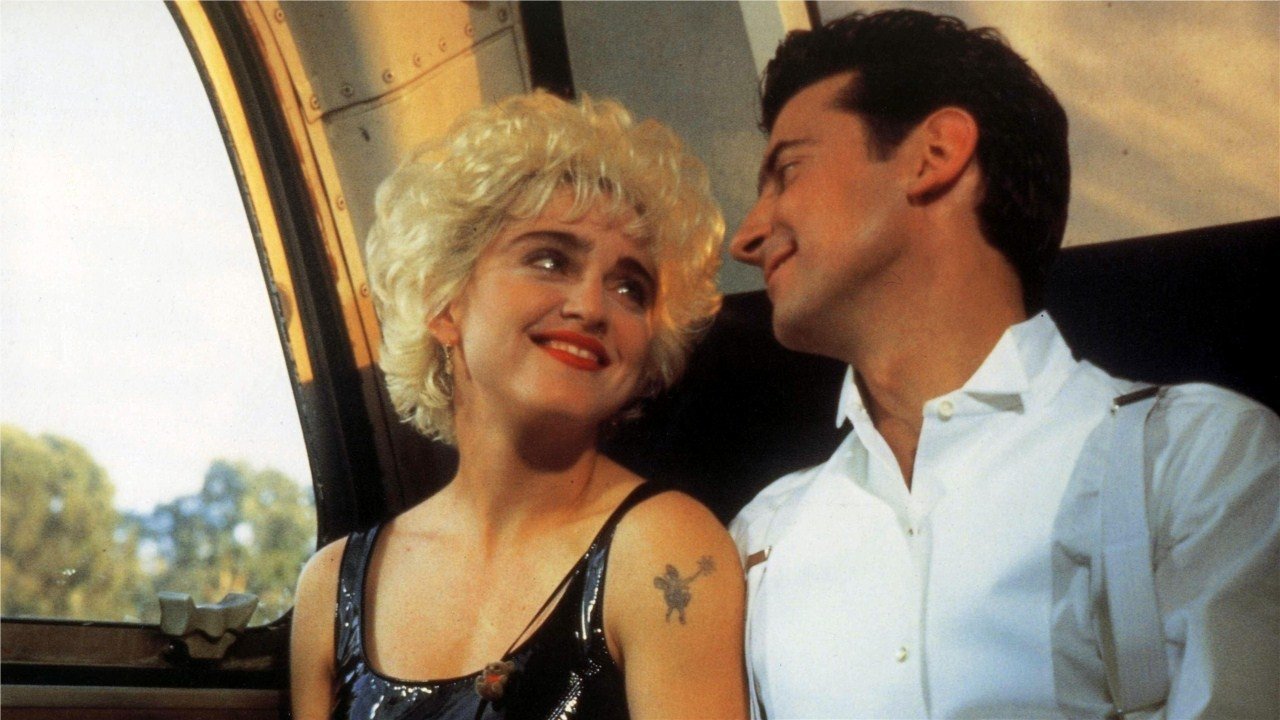
The setup screams classic Hollywood farce: Nikki Finn (Madonna) is fresh out of prison, wrongly convicted of her boyfriend's murder. Loudon Trott (Griffin Dunne) is a stuffy, stressed-out lawyer tasked with simply getting her on a bus out of town before he marries his boss’s blandly demanding daughter (Haviland Morris). Naturally, Nikki is a whirlwind of peroxide-blonde hair, street smarts, questionable fashion choices, and pure, unadulterated chaos. Throw in a stolen Rolls Royce Silver Cloud, some gangsters, a skeleton key, and, oh yeah, a rare South American cougar named Murray, and you have… well, you have Who's That Girl.
Director James Foley, interestingly, was Madonna’s personal pick for the job. Having directed her visually stunning music videos for "Live to Tell," "Papa Don't Preach," and "True Blue," she clearly felt a creative kinship. But translating that moody music video aesthetic to the rapid-fire pacing and physical comedy demanded by screwball proved a different beast entirely. Foley, who would later give us the intense character studies of At Close Range (1986) and the sharp dialogue of Glengarry Glen Ross (1992), seems a bit adrift here, struggling to harness the manic energy the script demands.

### Madonna Unleashed
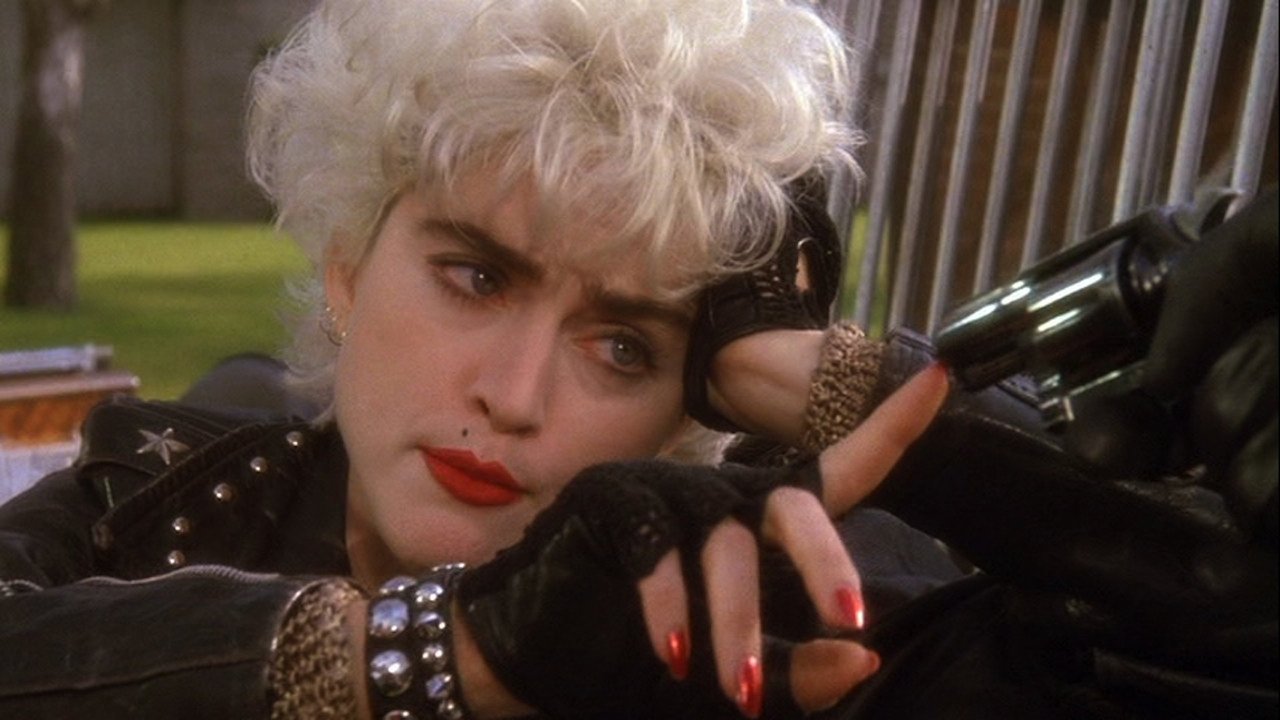
Let’s talk about the Material Girl herself. Madonna throws absolutely everything she has into Nikki Finn. She’s channeling Judy Holliday, maybe a dash of Marilyn Monroe, filtered through her own distinct 80s persona. The accent is broad, the energy is high, and she’s clearly having some kind of fun. Is it a great performance? The 1988 Razzie Award for Worst Actress suggests perhaps not, and honestly, the comedic timing often feels forced rather than effervescent. But magnetic? Absolutely. You can’t take your eyes off her, even when the gags fall flat. It’s pure star power desperately searching for the right vehicle. The film was originally titled Slammer, which feels a bit more indicative of Nikki’s backstory, but Who’s That Girl obviously tied into the massive hit song.
Playing the exasperated straight man is Griffin Dunne, a master of portraying likable guys in over their heads, as anyone who saw him navigate the surreal nightmare of Martin Scorsese's After Hours (1985) can attest. He does his level best here, reacting with increasing panic as Nikki systematically dismantles his carefully ordered life. His mounting desperation is probably the most relatable thing in the movie, providing a necessary anchor amidst the escalating absurdity. And yes, there’s Murray the cougar, a nod to the leopard in Bringing Up Baby (1938), providing moments of bewildered animal reaction shots. Rumor has it working with the big cat wasn't always the easiest part of the production, adding another layer of challenge to an already ambitious comedy.

### That 80s Feeling
Beyond the stars, the film is drenched in the aesthetics of its time. The synth-heavy score (separate from the pop songs), the shoulder pads, the frantic pace that mistakes movement for momentum – it’s all aggressively 1987. The film tries hard, really hard, to capture that classic screwball magic, but often feels more exhausting than exhilarating. The jokes pile up, the situations get wilder, but the genuine wit and charm of those 30s and 40s classics it emulates remain elusive. It’s less champagne fizz, more shaken-up soda pop.
Yet, there’s an undeniable, almost innocent energy to its attempts. It’s a film swinging for the fences, even if it mostly strikes out. And let's be brutally honest: the main reason Who's That Girl has any staying power in our collective memory isn't the film itself, but the phenomenal soundtrack album. Spawning massive global hits like the title track, "Causing a Commotion," and "The Look of Love," the music wildly outperformed the movie. While the film limped to a $7.3 million domestic gross against a reported budget somewhere between $17 and $20 million (a significant flop), the soundtrack sold millions worldwide, cementing its place on countless cassette decks. It’s one of those rare instances where the tie-in completely overshadowed the main event.
### Final Rewind
Who's That Girl is a curious case. It’s a misfire, a failed star vehicle, and a critical punching bag from its era. Watching it today is an exercise in observing peak 80s Madonna trying to bend a film genre to her will, with mixed results. It’s loud, colourful, chaotic, and often more awkward than funny. But for fans of the era, or those fascinated by Madonna's career trajectory, it holds a certain undeniable nostalgic pull. It’s like finding that worn-out tape at the bottom of a box – you know it’s not high art, but popping it in feels strangely comforting.

Rating: 4/10
Justification: The score reflects the film's fundamental flaws – weak script, uneven tone, often strained comedy – and its status as a critical and commercial disappointment. However, it avoids a lower score due to Madonna's sheer star wattage (even if miscast), Griffin Dunne's solid straight-man performance, the undeniably killer soundtrack it spawned, and its value as a pure, uncut hit of 80s pop culture nostalgia. It's fascinatingly bad in some ways, but not entirely without merit for retro enthusiasts.
Final Thought: A cinematic equivalent of a hyperactive kid demanding attention at a wedding – messy, loud, occasionally bewildering, but powered by an energy (and a soundtrack) that’s pure, uncut 1987.