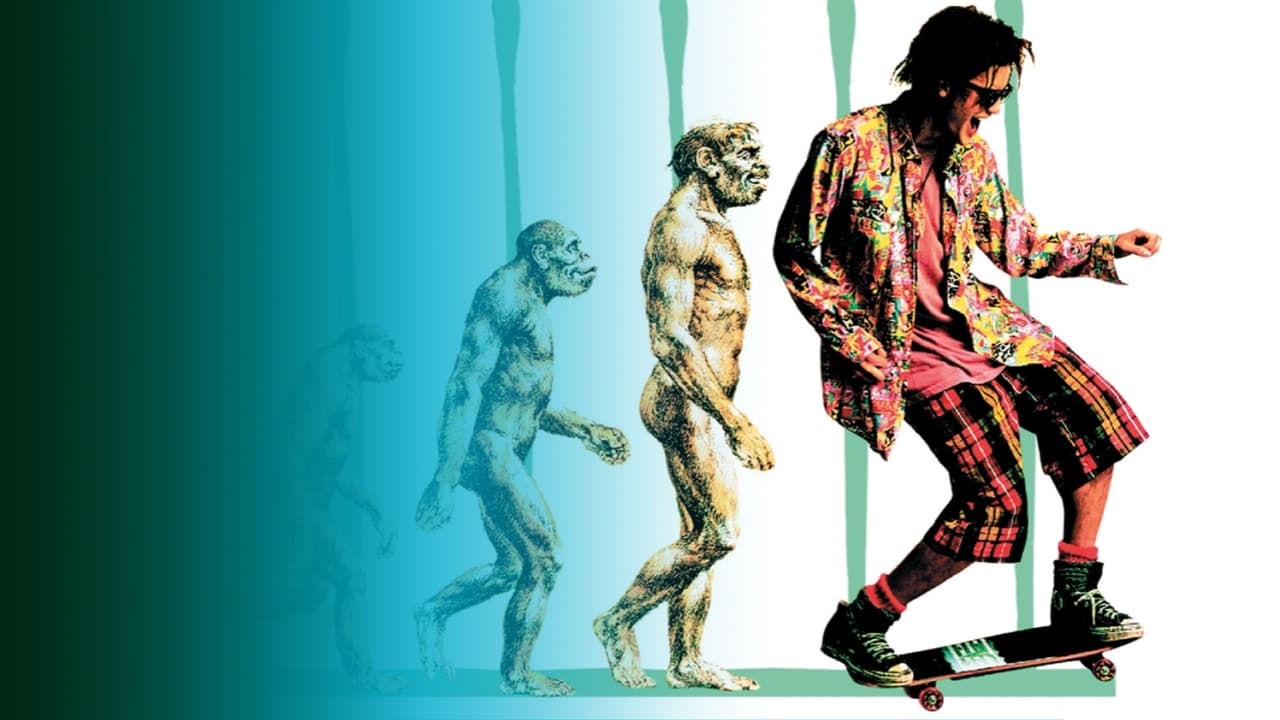
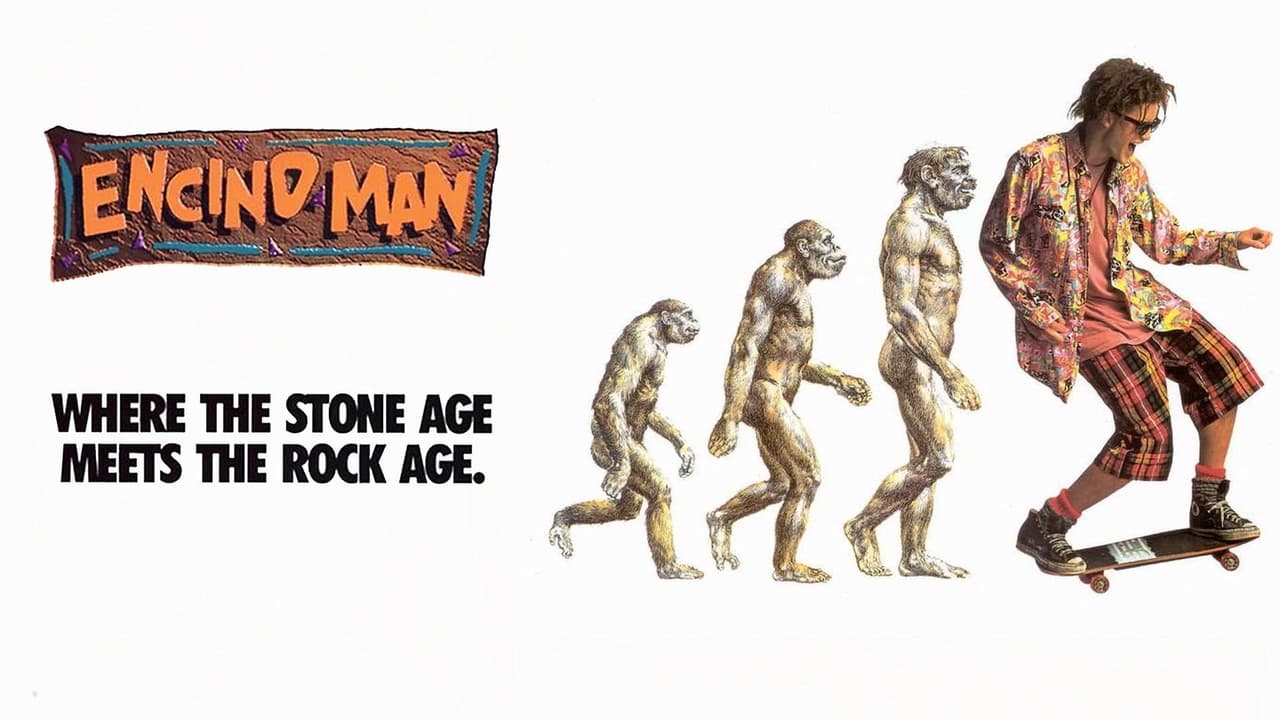
Okay, picture this: It's Friday night, sometime in the early 90s. You’ve just biked back from the local video store, the chunky plastic case of Encino Man clutched in your hand like a treasure. The promise? Goofy laughs, maybe some California sunshine, and whatever magic Pauly Shore was brewing back then. Popping that tape into the VCR, adjusting the tracking just so… yeah, that’s the vibe. Encino Man (1992) wasn't high art, folks, but it tapped directly into that glorious, unpretentious vein of early 90s teen comedy, leaving a surprisingly fond memory trace for many of us.

### Digging Up Trouble (and a Caveman)
The setup is pure high-concept wish fulfillment, the kind Hollywood loved back then. Nerdy but earnest Dave Morgan (Sean Astin, already a familiar face from The Goonies) and his aggressively laid-back, slang-slinging best friend Stoney Brown (Pauly Shore, essentially playing his MTV "Weasel" persona dialed up to eleven) are social outcasts in sunny Encino, California. While digging a pool during an earthquake (because, California), they unearth a block of ice containing… you guessed it, a perfectly preserved Cro-Magnon man. A little hairdryer action and some accidental thawing later, and voila! Meet Link (Brendan Fraser), our titular caveman, suddenly thrust into the bewildering world of malls, convenience stores, and high school hierarchy.
The plot, naturally, revolves around Dave and Stoney trying to pass Link off as a foreign exchange student ("Linkavitch Chomofsky") to boost their own popularity, navigate high school bullies (led by a perfectly smarmy Michael DeLuise), and maybe, just maybe, get Dave a date with his long-time crush Robyn (Megan Ward). It’s simple, it’s silly, and it knows exactly what it is.
### Wheezin' the Juice, Bu-ddy!
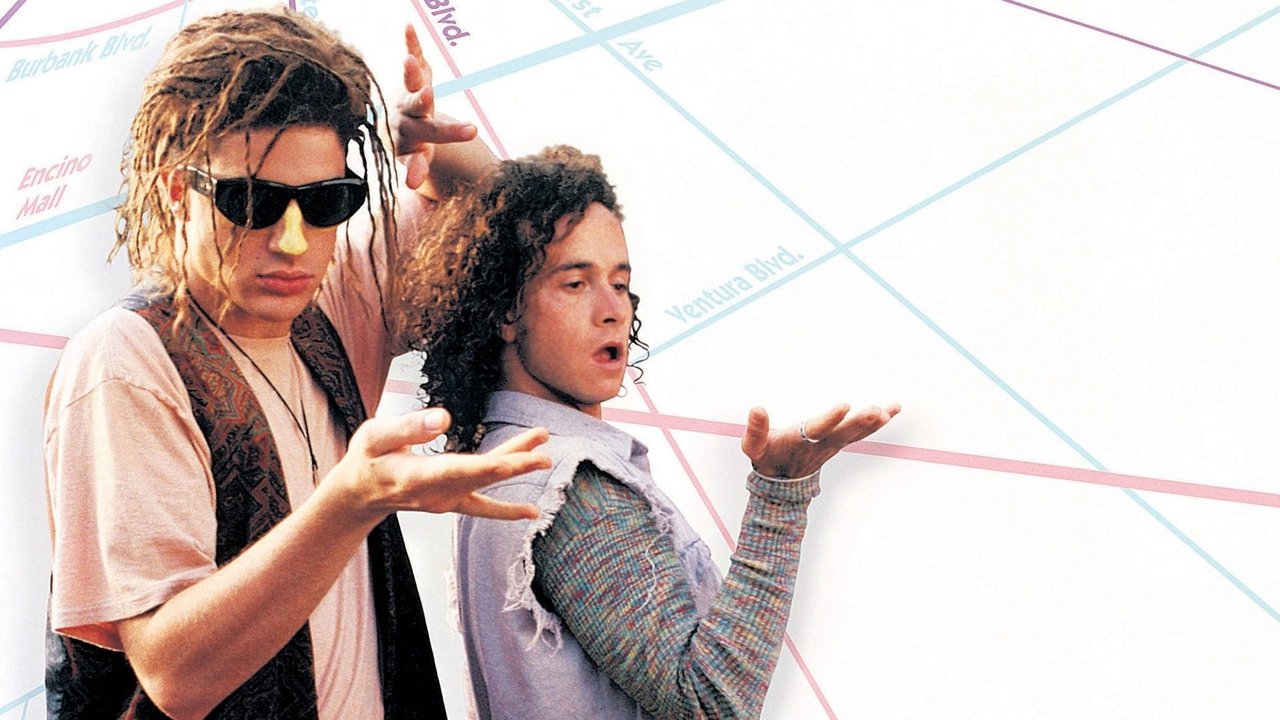
Let's be honest, a huge part of Encino Man's initial buzz, and enduring cult status, comes down to its two breakout stars. Pauly Shore was at the absolute peak of his unique, love-it-or-hate-it popularity. His nonsensical slang ("wheezin' the juice," "grindage," "bu-ddy") became instantly quotable, defining a specific, bizarre moment in pop culture. Watching it now, his performance is like opening a time capsule – baffling to some, hilariously nostalgic to others. Did you know Shore apparently ad-libbed a significant amount of his dialogue? It certainly feels that way, capturing that loose, almost chaotic energy he was known for.
But the real revelation here is Brendan Fraser. This was one of his first major leading roles, and you can see the raw talent and sheer physical charisma that would make him a star in films like George of the Jungle (1997) and The Mummy (1999). He commits fully to the caveman persona – the grunts, the wide-eyed wonder, the hilariously inappropriate reactions to modern life. Fraser reportedly spent time studying anthropological documentaries to get the physicality right, and it shows. He manages to make Link endearing and genuinely funny, often conveying more with a confused expression or a sudden burst of primal energy than the script sometimes allows. The scene where he discovers flame via a lighter? Pure comedic gold delivered through physicality.
### A Perfectly Preserved Slice of the 90s
Watching Encino Man today is an exercise in recognizing just how much has changed. The fashion is a glorious explosion of neon, oversized shirts, and questionable hairstyles. The soundtrack pulses with early 90s alternative rock and pop. The high school dynamics feel both familiar and charmingly dated. Director Les Mayfield, making his feature film debut here before going on to direct flicks like Flubber (1997), keeps things moving at a brisk pace, never letting the absurdity outstay its welcome.
It's fascinating to remember that Encino Man wasn't exactly a critical darling upon release. Reviews were largely dismissive, finding it juvenile and slight. However, audiences disagreed. Made on a modest budget of around $7 million, it pulled in over $40 million domestically – a tidy profit that spoke volumes about its connection with the target demographic. That $7 million budget in 1992 would be roughly $15.3 million today, making its $40.7 million gross (around $89 million adjusted for inflation) a solid success story, fueled significantly by its life on VHS and cable TV. It found its tribe, the kids and teens who just wanted a fun, goofy escape.
There aren't elaborate practical effects or death-defying stunts here, obviously. The "action" is mostly slapstick and culture-clash comedy. But there's an earnestness to its silliness, a good-natured heart beneath the "noogie!" chants and freezer-burn jokes. Sean Astin provides the necessary anchor of relatability, the slightly stressed straight man trying to keep the increasingly bizarre situation under control.
### The Verdict
Encino Man is undeniably a product of its time. Some of the humor feels simplistic now, and Pauly Shore's shtick might not land for everyone revisiting it decades later. But there's an undeniable charm here, largely thanks to Brendan Fraser's wonderfully committed performance and the film's overall goofy energy. It captures a specific, innocent moment in teen comedy history before irony completely took over.

Rating: 6.5 / 10
Justification: The score reflects the film's success as pure, unadulterated 90s comfort food. It earns points for Brendan Fraser's breakout physical comedy, its genuine nostalgic pull, and its surprising quotability (for better or worse). It loses points for its paper-thin plot, dated elements, and humor that doesn't always hold up. It’s not aiming for greatness, but it achieves exactly what it sets out to do: provide a fun, silly time.
Final Thought: It might be caveman simple, but pop Encino Man in, and for 88 minutes, you can almost smell the stale popcorn and plastic VHS case from your local rental joint. Sometimes, that's all the sophistication you need. No wheezin' the juice required.