Alright, settle back into that worn spot on the couch, maybe crack open a soda that isn't quite craft brew yet. Tonight on VHS Heaven, we’re pulling out a tape that probably gathered more dust than playtime in most VCRs, but whose lurid box art might just flicker a memory. It's the baffling, the bizarre, the utterly mid-90s concoction that is 1995’s Dr. Jekyll and Ms. Hyde.
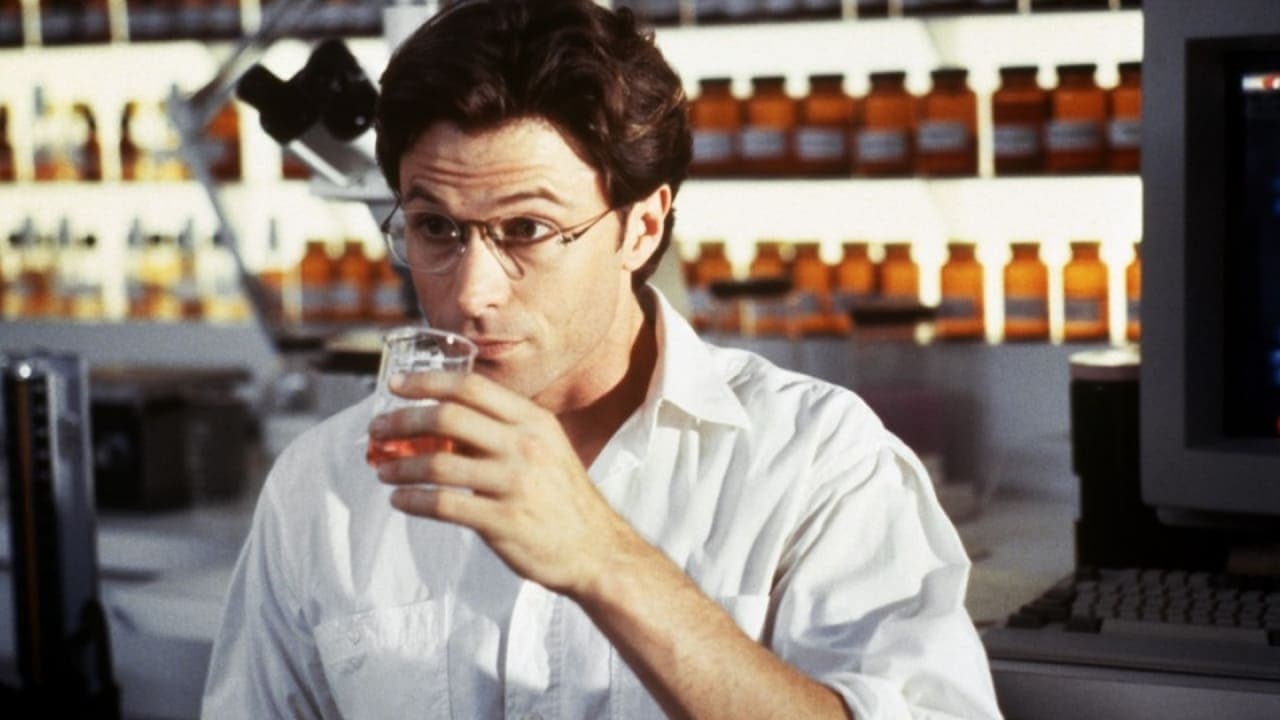
Remember those video store shelves crammed with high-concept comedies trying desperately to put a fresh spin on old tales? This one took Robert Louis Stevenson's gothic classic and asked, "What if, instead of pure primal rage, the transformation unleashed... ambitious corporate ruthlessness in heels?" It’s a premise so peculiar, you almost have to admire the audacity. The film centers on Dr. Richard Jacks (Tim Daly), a timid perfumer working for a massive corporation, struggling under a demanding boss (played with enjoyable slime by Jeremy Piven). Jacks inherits his great-grandfather Victor Jekyll's research notes, hoping to isolate the "aggression" formula for... well, better perfume, I guess? Naturally, things go sideways.
### From Milquetoast to Man-Eater
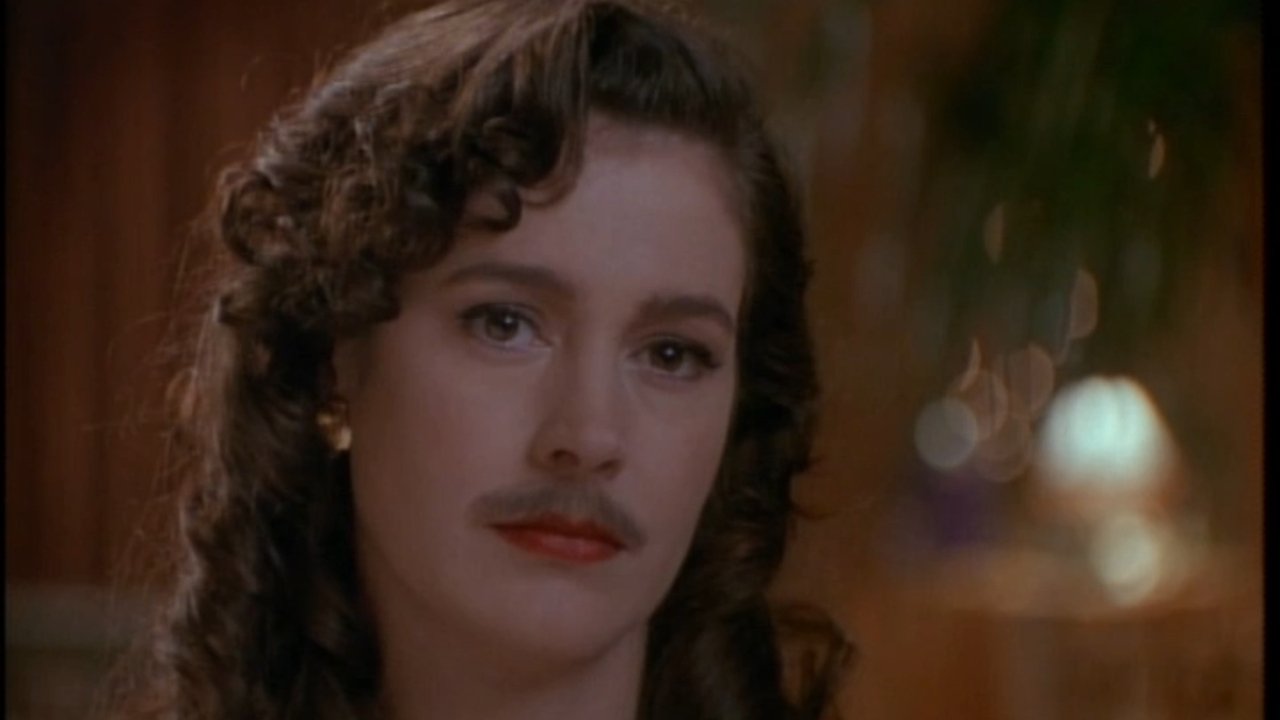
Instead of unleashing a male id, the formula transforms the nebbish Dr. Jacks into Helen Hyde (Sean Young), a power-suited, manipulative, and hyper-sexualized corporate climber who embodies every negative female stereotype the mid-90s could awkwardly jam into one character. Tim Daly, probably best known then for the sitcom Wings, plays the earnest, flustered scientist with a kind of bewildered commitment. You feel for the guy, even as the script saddles him with increasingly nonsensical motivations.
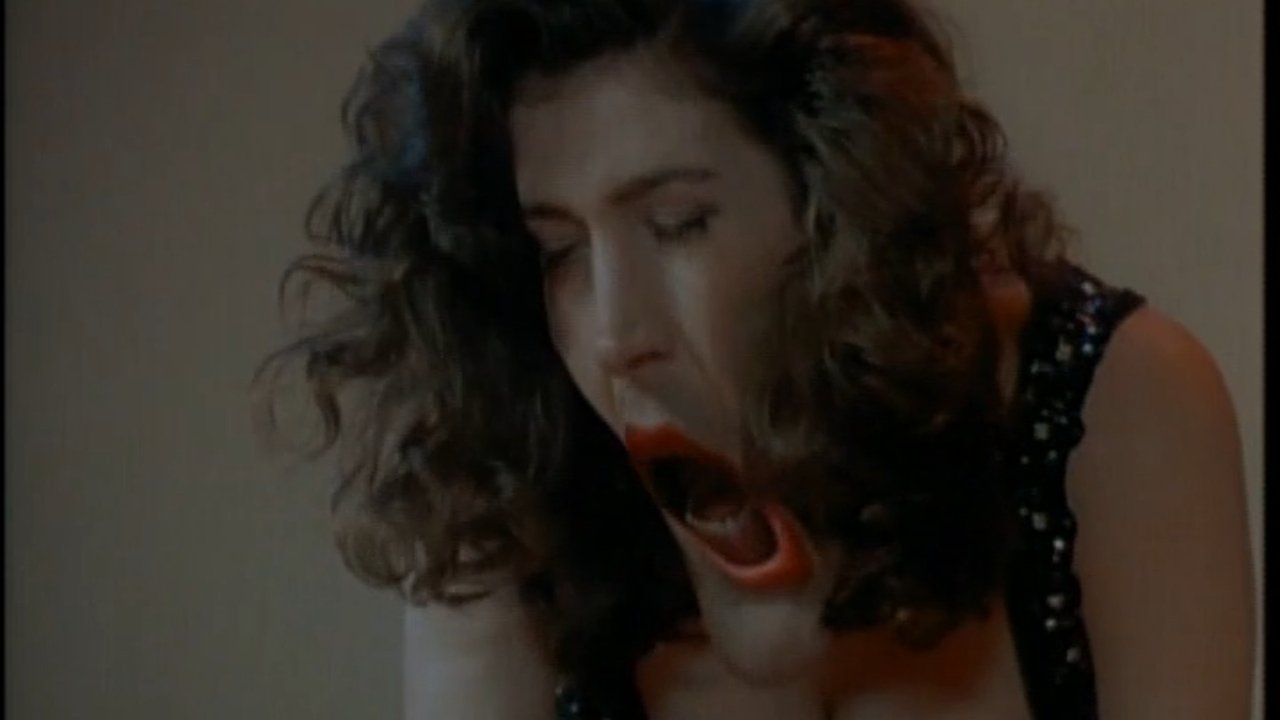
But let's be honest, the movie hinges entirely on Sean Young's portrayal of Helen Hyde. Young, who had dazzled audiences in films like Blade Runner (1982) and No Way Out (1987), throws absolutely everything at the wall here. Her Hyde is less a creature of pure evil and more a whirlwind of boardroom backstabbing, aggressive flirting, and shoulder pads sharp enough to cut glass. It’s a performance that oscillates wildly between campy fun and genuinely uncomfortable, a tightrope walk the film itself never quite navigates successfully. It’s a far cry from the subtle terror of the source material, leaning heavily into broad, often crude, comedy. Remember how those transformation scenes looked back then? Less state-of-the-art morphing, more clever editing, prosthetic work, and perhaps a strategically placed smoke machine – the practical magic of the era, even when serving a shaky concept.
### A Troubled Brew
Behind the scenes, this film felt like a recipe with too many cooks. Credited to four writers (Tim John, Oliver Butcher, William Davies, William Osborne – two of whom also worked on Twins and Stop! Or My Mom Will Shoot), the script feels like a patchwork quilt of conflicting ideas: slapstick comedy, corporate satire, attempts at sexy thriller elements, and a bizarrely mean-spirited take on gender dynamics. You can almost picture the frantic rewrites trying to find a tone that worked.
Adding to the B-movie pedigree, it was directed by David Price, whose prior credits included Children of the Corn II: The Final Sacrifice (1992) and Son of Darkness: To Die For II (1991). While he brings a certain workmanlike approach, there’s little stylistic flair to elevate the muddled material. Filmed primarily in Montreal, it has that slightly non-specific North American city look common to many productions seeking tax incentives during the era. It’s a reminder that not every 90s film aiming for laughs hit the mark like Ace Ventura or Dumb and Dumber.
The supporting cast includes Lysette Anthony as Sarah, Richard's fiancée, who mostly exists to look alternatively concerned and appalled, and the aforementioned Jeremy Piven chewing scenery as Jacks's odious boss, Pete. They do what they can, but the focus remains squarely on the Jekyll/Hyde dynamic.
### Reception and Razzie Glory
Unsurprisingly, Dr. Jekyll and Ms. Hyde didn't exactly set the box office on fire. On a reported budget of around $8.5 million, it barely made a dent, pulling in under $3 million worldwide. Critics were savage, and the film achieved a certain notoriety at the Golden Raspberry Awards, snagging the Razzie for Worst Remake or Sequel and nominations for Worst Picture, Actress, Director, and Screenplay. Ouch. It quickly faded, becoming one of those titles you'd see lingering on the rental shelves long after the hits were gone.
Yet, watching it now evokes a specific kind of nostalgia – not necessarily for the film's quality, but for its type. This was the era of weird high-concept comedies, often greenlit based on a catchy premise and a recognizable star, sometimes hitting gold, often landing with a thud. It’s a fascinating artifact of mid-90s studio thinking, questionable gender politics played for laughs, and the kind of movie that likely wouldn't even get made today, at least not like this.
### Final Verdict
Dr. Jekyll and Ms. Hyde is undeniably clumsy, frequently baffling, and often cringeworthy in its attempts at humour and social commentary. The performances are uneven, the script is a mess, and its grasp on the source material is tenuous at best. It tries to be a sexy corporate satire but lands closer to a confused, slightly mean-spirited sitcom pilot.
Rating: 2/10
Why the Score? Look, this isn't a 'good' film by conventional standards. It's poorly written, tonally bizarre, and often uncomfortable. The 2 points are awarded purely for its value as a time capsule – a perfectly preserved specimen of a very specific, often misguided, type of mid-90s studio comedy, and for the sheer go-for-broke energy Sean Young brings, even if it's in service of a deeply flawed character. It's the kind of cinematic trainwreck you might morbidly appreciate with fellow connoisseurs of questionable VHS finds.
Final Thought: Some experiments are best left unpublished in dusty old journals; this one escaped the lab and mutated into pure, unadulterated 90s cheese – fascinating to observe under glass, but probably not something you need in your regular rotation.