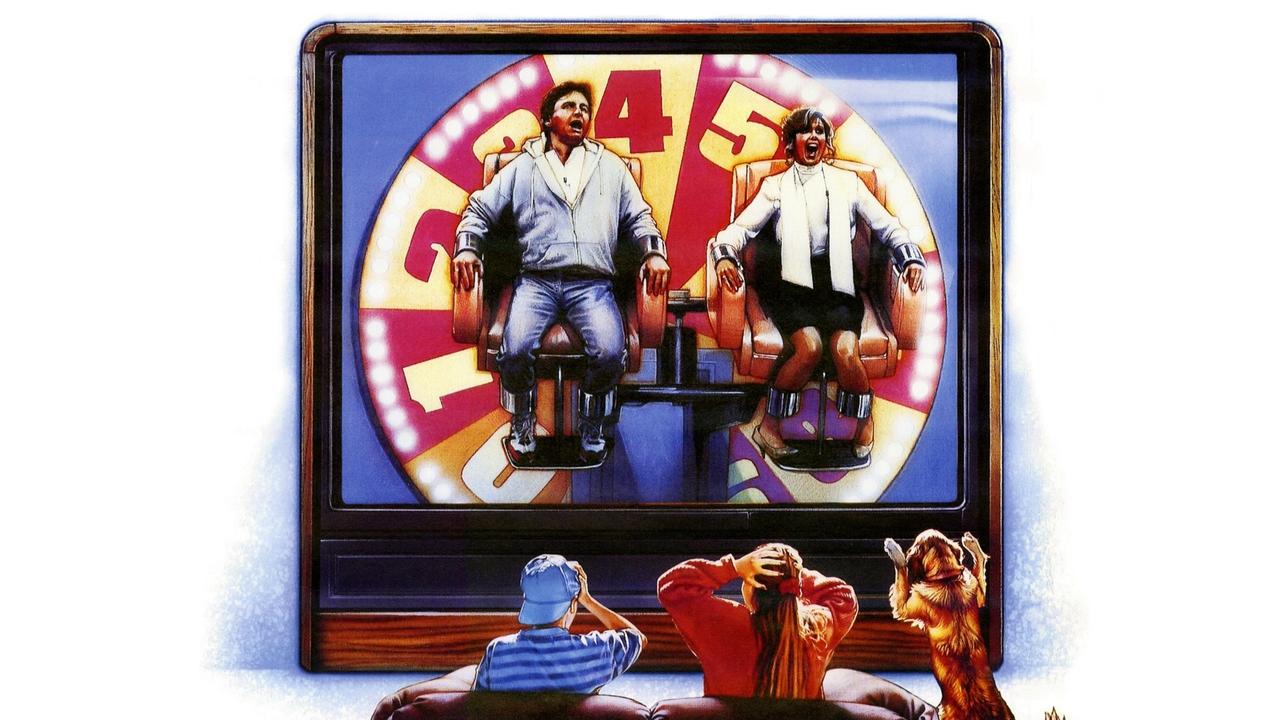
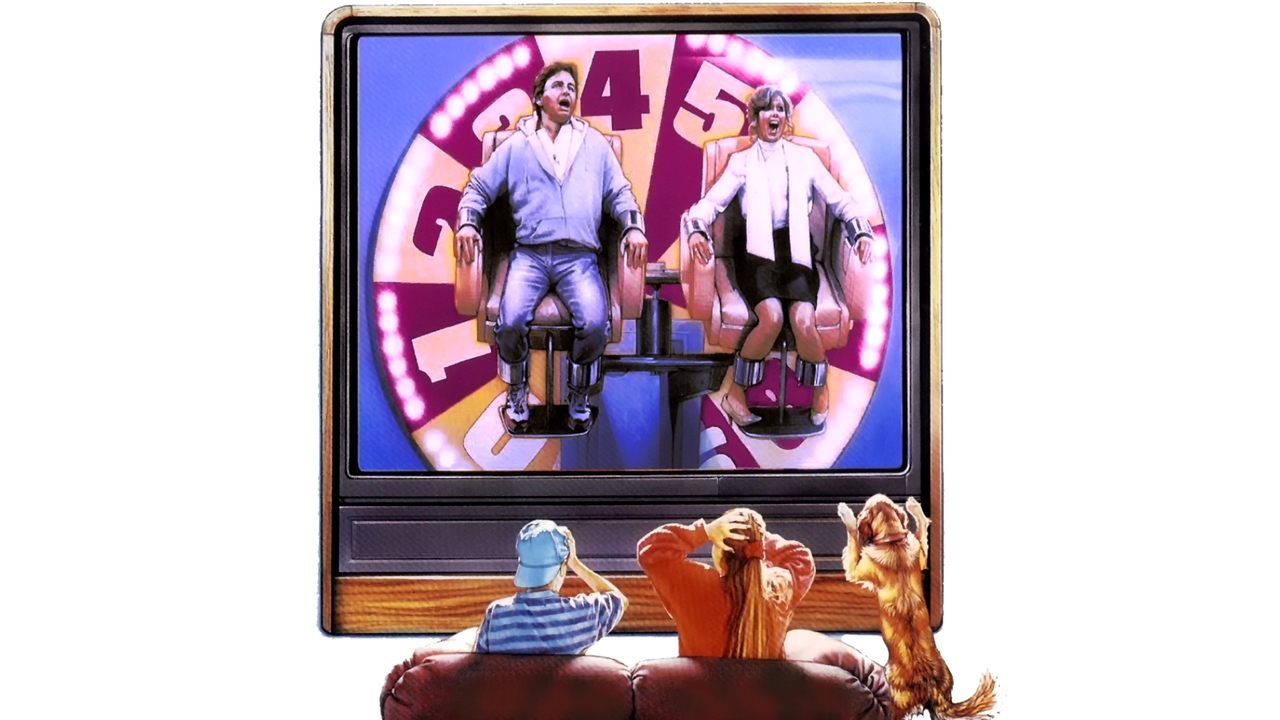
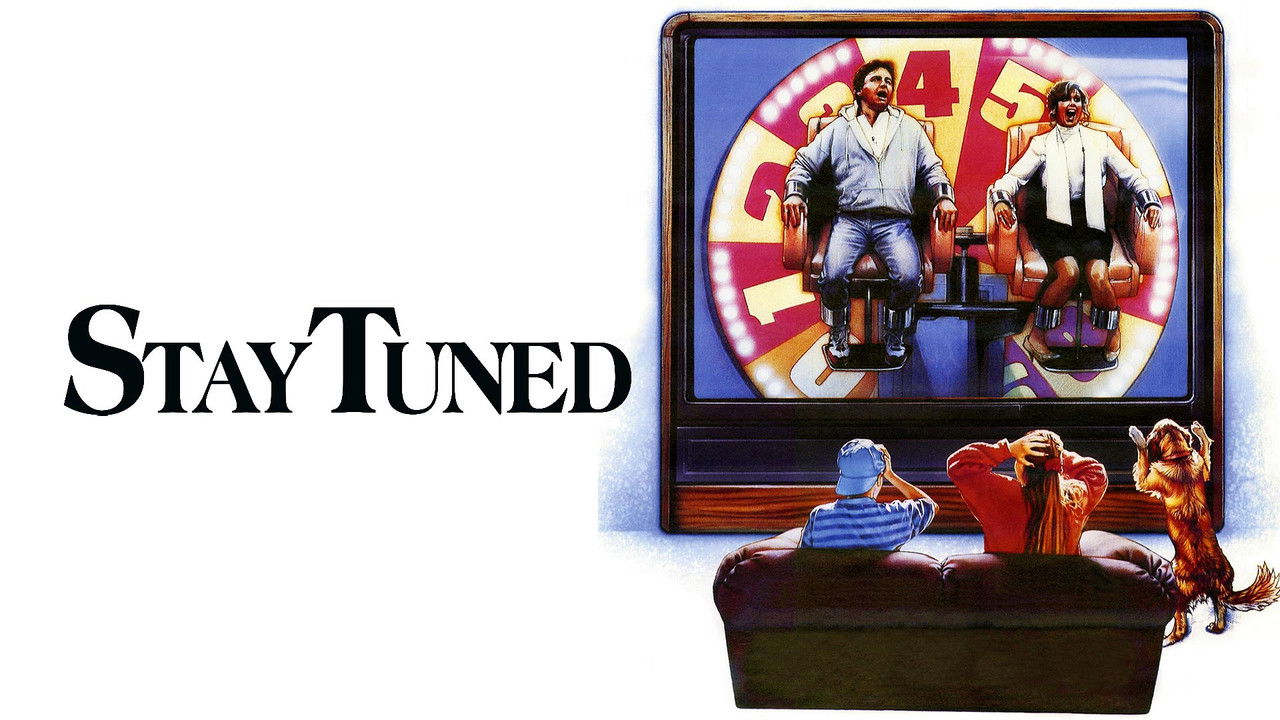
Okay, fellow tapeheads, let's rewind to 1992. Remember scanning those glorious, slightly sticky shelves at the video store? Amidst the action heroes and slasher villains, sometimes you stumbled onto something… weird. Something like Stay Tuned. It wasn't a blockbuster, maybe the cover art with John Ritter looking panicked caught your eye, but pop this one in the VCR late at night, and you were in for a bizarrely clever ride through television hell. What’s truly wild is that the journey almost began very differently – Tim Burton was originally attached to direct! Can you imagine that version? While Burton moved on, the kernel of surreal, satirical energy remained, making this a fascinating artifact of early 90s pop culture anxiety.
Your Regularly Scheduled Nightmare
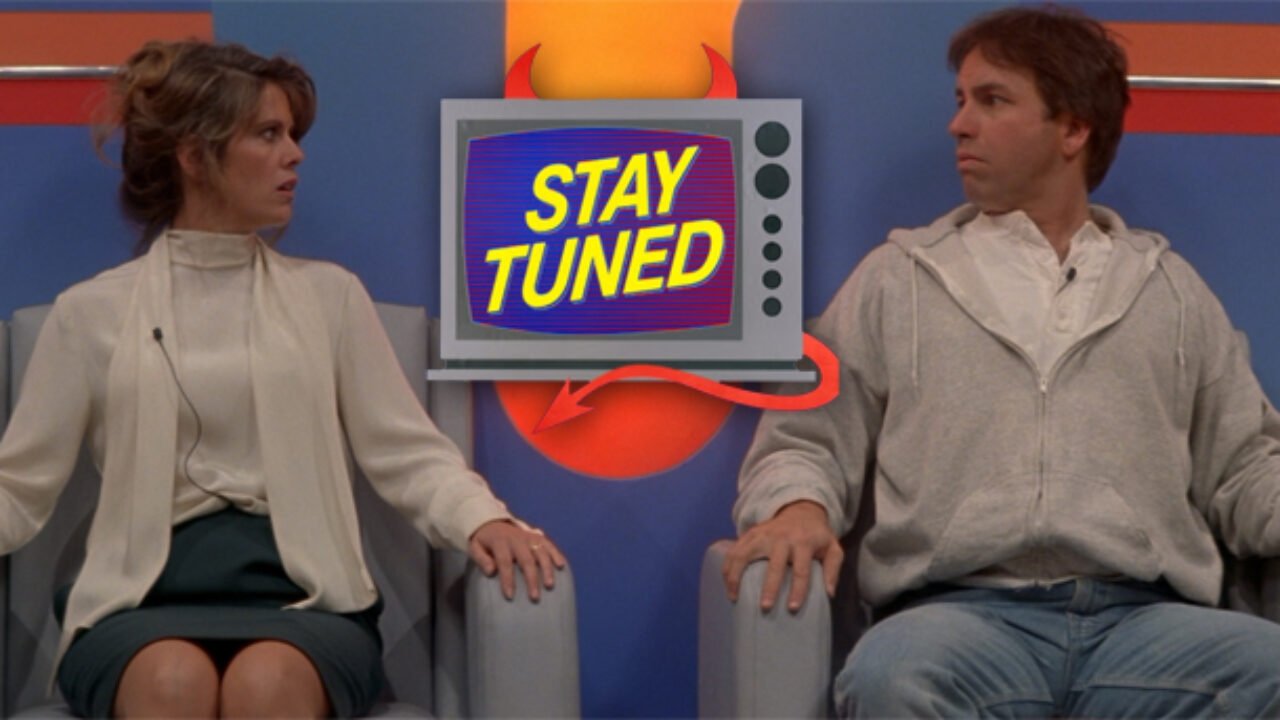
The premise is pure high-concept gold, the kind of thing studios loved back then: Roy Knable (John Ritter), a couch potato whose marriage to the increasingly frustrated Helen (Pam Dawber) is dissolving faster than cheap videotape, makes a deal with a very suspicious salesman named Spike (Jeffrey Jones). The deal? A state-of-the-art satellite dish offering 666 channels of exclusive programming. Naturally, this isn't DirecTV; it's a portal run by Hell itself, designed to suck souls into a television dimension where they must survive parodies of popular shows for 24 hours or become permanent residents of the underworld. It’s Faust meets TV Guide, filtered through a distinctly early 90s lens.
Ritter, known to millions as the lovable Jack Tripper from Three's Company, is perfectly cast here as the perpetually bewildered everyman thrown into chaos. His knack for physical comedy and portraying sheer panic gets a full workout as Roy bounces from one deadly channel to the next. Pam Dawber, beloved as Mindy from Mork & Mindy, provides the essential grounding force as Helen, the more capable and increasingly exasperated half of the duo. Their chemistry works, selling the absurdity while keeping a relatable human core. And Jeffrey Jones? Fresh off iconic roles in Ferris Bueller's Day Off (1986) and Beetlejuice (1988), he absolutely nails Spike's slick, malevolent charm. He’s having a blast, and it shows.
Channel Surfing Through Oblivion
The real fun, of course, lies in the channel parodies. This is where Stay Tuned truly shines, offering a rapid-fire assault of visual gags and clever (if sometimes dated) send-ups. We get "Northern Overexposure," "Duane's Underworld" (a Wayne's World spoof), a deadly game show called "You Can't Win," a terrifyingly accurate Salt-N-Pepa music video parody ("Start Me Up"), and even a ridiculously violent Looney Tunes-esque cartoon. That animated sequence, "RoboCat," is a standout, and for good reason – it was directed by the legendary Chuck Jones himself, a fantastic retro fun fact that adds a layer of genuine class to the proceedings.
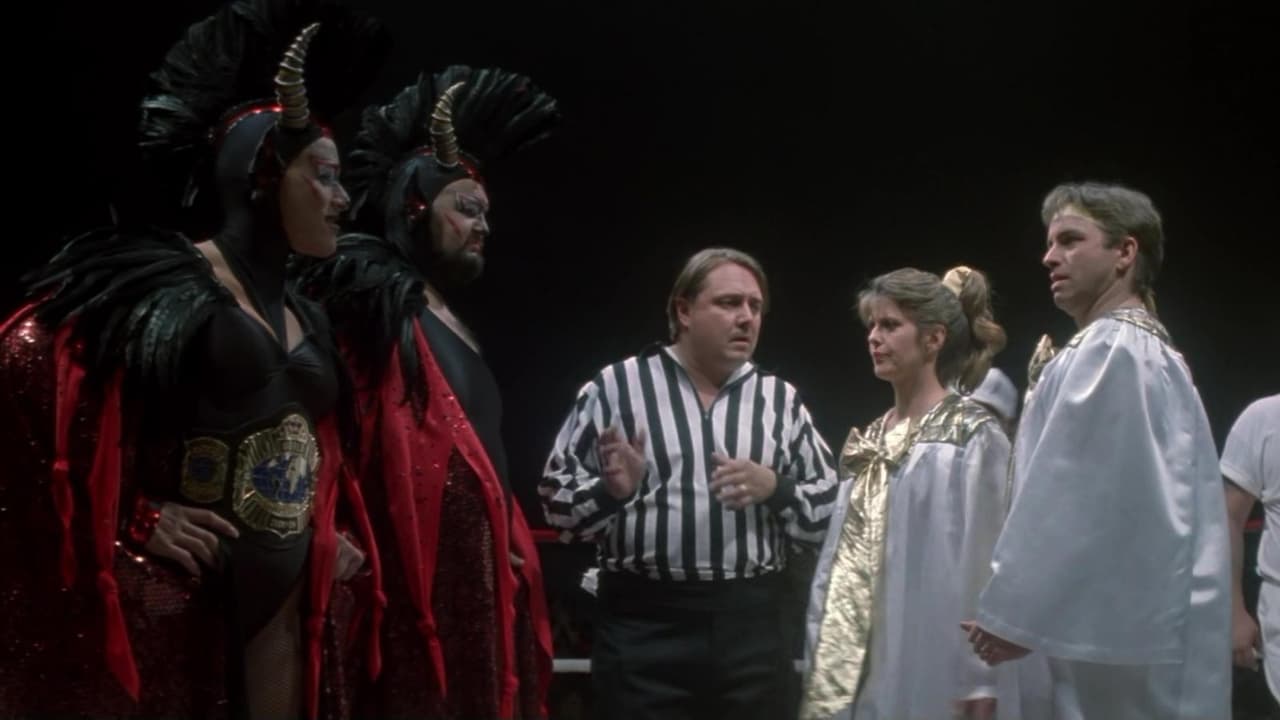
Seeing these parodies today is a trip. Some references might fly over younger viewers' heads, but for anyone who grew up channel-surfing in the 80s and 90s, they land with a nostalgic thud. The effects used to create these worlds aren't seamless CGI; they have that tactile, slightly rough-around-the-edges feel of the era. Think miniatures, puppetry, clever compositing, and creative costume/set design. It wasn't about photorealism; it was about capturing the vibe of the show being parodied, often with a demonic twist. Remember how convincing those rapid transitions felt? It was inventive filmmaking born from necessity as much as creativity.
An Odd Director for an Odd Film?
Interestingly, the director's chair was filled by Peter Hyams. This is the guy who gave us gritty sci-fi like Outland (1981) and 2010: The Year We Make Contact (1984), and later, action flicks like Timecop (1994). A surreal comedy about TV hell seems like a departure, right? While Hyams brings a certain visual competence, Stay Tuned doesn't quite have the distinctive directorial flourish you might expect from, say, Tim Burton. It feels more like a vehicle for the concept and the performers. Still, Hyams keeps the pace brisk and the visuals engaging, navigating the constant shifts in tone and genre effectively enough. The script itself, credited to Tom S. Parker and Jim Jennewein (who would later pen the live-action The Flintstones in 1994) along with Richard Siegel, provides plenty of fodder for laughs and weirdness.
Cult Following After Box Office Static
Despite its clever premise and game cast, Stay Tuned wasn't exactly a smash hit upon release. It cost around $15 million but only pulled in about $10.7 million domestically. Critics were lukewarm, perhaps unsure what to make of its strange blend of satire, fantasy, and slapstick. But like so many quirky films from the era, it found its true audience later – on VHS and cable. I definitely remember catching this numerous times on late-night TV, that slightly fuzzy picture somehow adding to its charm. It became a cult classic, a shared memory for those of us who appreciated its offbeat humor and its surprisingly pointed commentary on television addiction, something that feels almost quaintly prescient in today's multi-screen world. It tapped into that feeling that maybe, just maybe, too much TV could actually rot your soul.
Rating: 7/10
This score reflects a genuinely fun, inventive concept executed with enthusiasm, great lead performances, and some truly memorable parody sequences (especially the Chuck Jones bit). It’s docked a few points for some dated references and a directorial style that feels competent rather than inspired, but the core idea remains strong. The initial box office failure ($10.7M on a $15M budget) cemented its journey to becoming a beloved 90s comedy movie gem primarily discovered through home video rentals and TV airings.
Final Thought: Stay Tuned is a perfect slice of early 90s weirdness – a clever, funny, and occasionally dark trip through the dial that feels like channel surfing on a slightly cursed VCR. It might not be high art, but grab some popcorn, dim the lights, and appreciate this pre-streaming nightmare; they definitely don't make 'em quite like this anymore.