It starts with a question, doesn't it? A simple inquiry in a sterile police interrogation room, but one that cracks open a world of secrets, lies, and desperate choices. That's the lingering feeling of Mortal Thoughts (1991), a film that pulls you into the messy aftermath of violence and forces you to sift through conflicting stories, never entirely sure where the truth lies, or if it even matters anymore. It wasn't a blockbuster that shook the multiplex foundations, but for those of us browsing the thriller section of the video store back then, its stark cover art and the unsettling pairing of its lead actors promised something intense, something knotty. And it delivered.

Under the Harsh Lights
The setup is deceptively straightforward: Cynthia Kellogg (Demi Moore) recounts the events leading up to and following the murder of Jimmy Urbanski (Bruce Willis), the volatile and abusive husband of her best friend, Joyce (Glenne Headly). Detectives John Woods (Harvey Keitel) and Linda Nealon (John Pankow) listen, prod, and piece together the narrative through Cynthia's hesitant, sometimes contradictory testimony, interspersed with Joyce's own equally tangled version of events. Director Alan Rudolph, perhaps better known for his more eccentric ensemble pieces like Choose Me (1984) or Trouble in Mind (1985), brings a claustrophobic intimacy to the proceedings. The film unfolds largely in flashbacks filtered through memory and self-preservation, drenched in the working-class grit of Bayonne, New Jersey, a setting that feels less like a backdrop and more like another character, trapping its inhabitants in cycles of frustration and limited options.
A Friendship Forged and Fractured
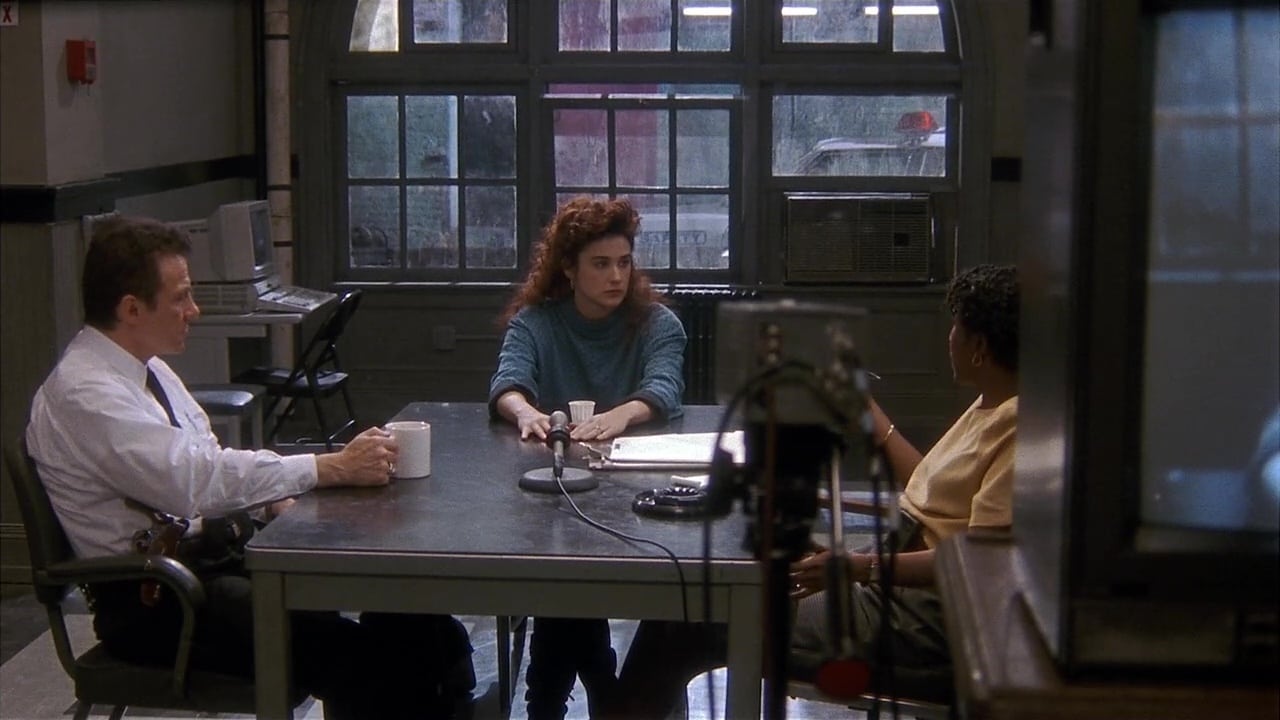
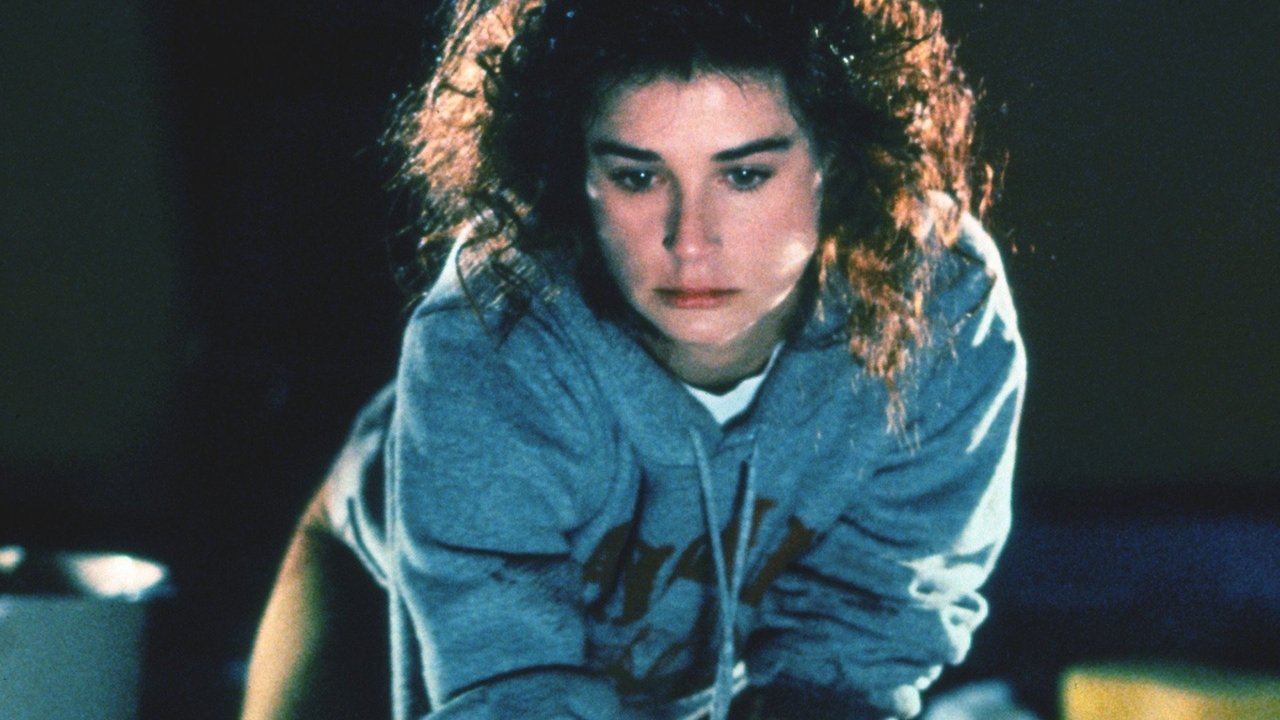
At its heart, Mortal Thoughts is a powerful two-hander showcasing the immense talents of Demi Moore and the late, great Glenne Headly. Moore, riding high on the success of Ghost (1990), dives deep into Cynthia's turmoil. She’s not just recounting events; she's reliving them, wrestling with her conscience, her loyalty, and her fear. You see the calculations behind her eyes, the moments of genuine panic, the desperate attempts to shield both herself and Joyce. It’s a performance layered with ambiguity – is she a victim of circumstance, a loyal friend pushed too far, or something else entirely?
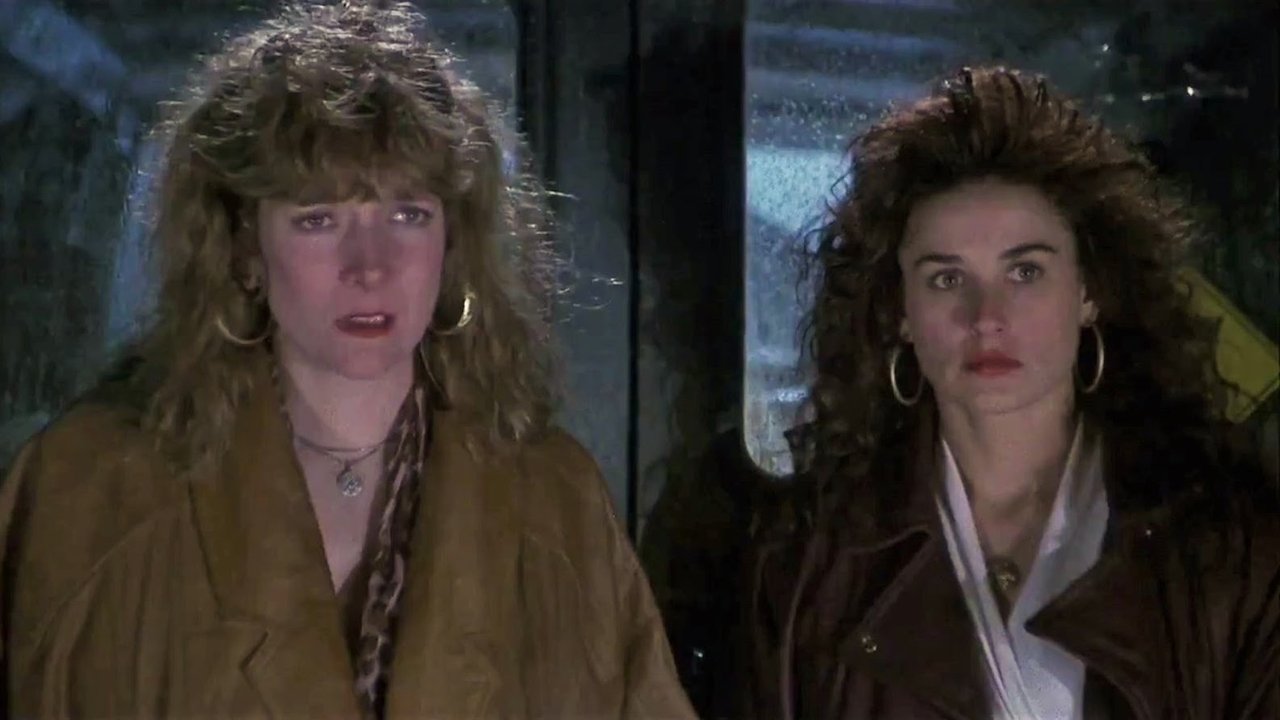
Opposite her, Headly is simply devastating as Joyce. She embodies the frazzled energy of a woman worn down by abuse, clinging to a fragile hope that often manifests as reckless defiance. Her portrayal of Joyce's desperation, her volatile shifts between vulnerability and rage, feels terrifyingly authentic. The chemistry between Moore and Headly is the film's engine; their bond, frayed and tested by unbearable circumstances, feels painfully real. You believe in their shared history, the shorthand of their interactions, which makes the potential betrayals cut so much deeper. What does loyalty mean when survival is on the line? It’s a question the film poses relentlessly through their interactions.
Playing Against (or Into?) Type

And then there’s Bruce Willis as Jimmy. Seeing him, then married to Demi Moore in real life, play such a loathsome, abusive figure was certainly a jolt back in '91. Moore was actually instrumental in getting Willis cast, believing he could bring the necessary menace – and she was right. He sheds any trace of the charismatic smirk that defined John McClane, embodying pure, terrifying volatility. There’s no wink to the audience here; Jimmy is crude, violent, and utterly unpredictable. It’s a chilling performance precisely because it feels so grounded in ugly reality. It's worth noting that Willis took a significant pay cut (reportedly working for scale or close to it) to do the film, perhaps eager to stretch beyond his action-hero persona. Supporting them is the ever-reliable Harvey Keitel, bringing his signature weary intensity to Detective Woods, a man who’s seen too much to be easily fooled.
Grit Over Gloss
Rudolph doesn't opt for flashy thriller pyrotechnics. Instead, he focuses on the psychological pressure cooker of the situation. The non-linear structure, cutting between the interrogation and the escalating flashbacks, effectively mirrors the fractured nature of memory and testimony. The film cost a relatively modest $8 million and felt refreshingly grounded compared to glossier Hollywood fare. Its success was moderate ($19 million domestic), but it found a solid life on VHS, becoming one of those thrillers you’d recommend to a friend looking for something darker, something with teeth. There's an almost documentary-like feel to the depiction of the characters' lives – the beauty salon, the dreary bars, the cramped houses – adding to the oppressive atmosphere. It’s a film less interested in whodunit than why they did it, and what the fallout does to the human spirit.
Final Thoughts
Mortal Thoughts isn't a feel-good movie; it leaves you wrestling with ambiguity and the uncomfortable truths about desperation and self-preservation. The pacing can feel deliberate, occasionally slow, demanding patience as the layers are peeled back. But the powerhouse performances from Moore and Headly, coupled with Willis's unsettling turn and Rudolph's atmospheric direction, make it a compelling and often disturbing watch. It captures that early 90s wave of psychological thrillers that weren't afraid to get messy and explore the darker corners of relationships and responsibility.
Rating: 7.5/10
This score reflects the film's undeniable strengths, particularly the raw, committed performances and the suffocatingly effective atmosphere. While its narrative structure might test some viewers, the emotional authenticity at its core resonates. It earns its place as a memorable, if unsettling, piece of early 90s cinema – a stark reminder that sometimes the most terrifying monsters are the ones living next door, and the hardest secrets to keep are the ones shared between friends. What lingers most is the knot in your stomach, the weight of choices made under duress, and the haunting question: faced with the same circumstances, what would you have done?