Alright, fellow tape travelers, let's rewind to 1990. Flickering neon signs, smoke machines working overtime, and the distinct aroma of Aqua Net hanging heavy in the Los Angeles air. This was the backdrop when 20th Century Fox decided, in a move that still boggles the mind with its sheer audacity, to hand the keys to a major summer release to the most controversial stand-up comedian on the planet: Andrew Dice Clay. The result? The Adventures of Ford Fairlane, a film as loud, obnoxious, and strangely fascinating as the era that spawned it. Popping this cassette into the VCR back then felt like an act of minor rebellion, didn't it?
Rock 'n' Roll Detective on the Prowl
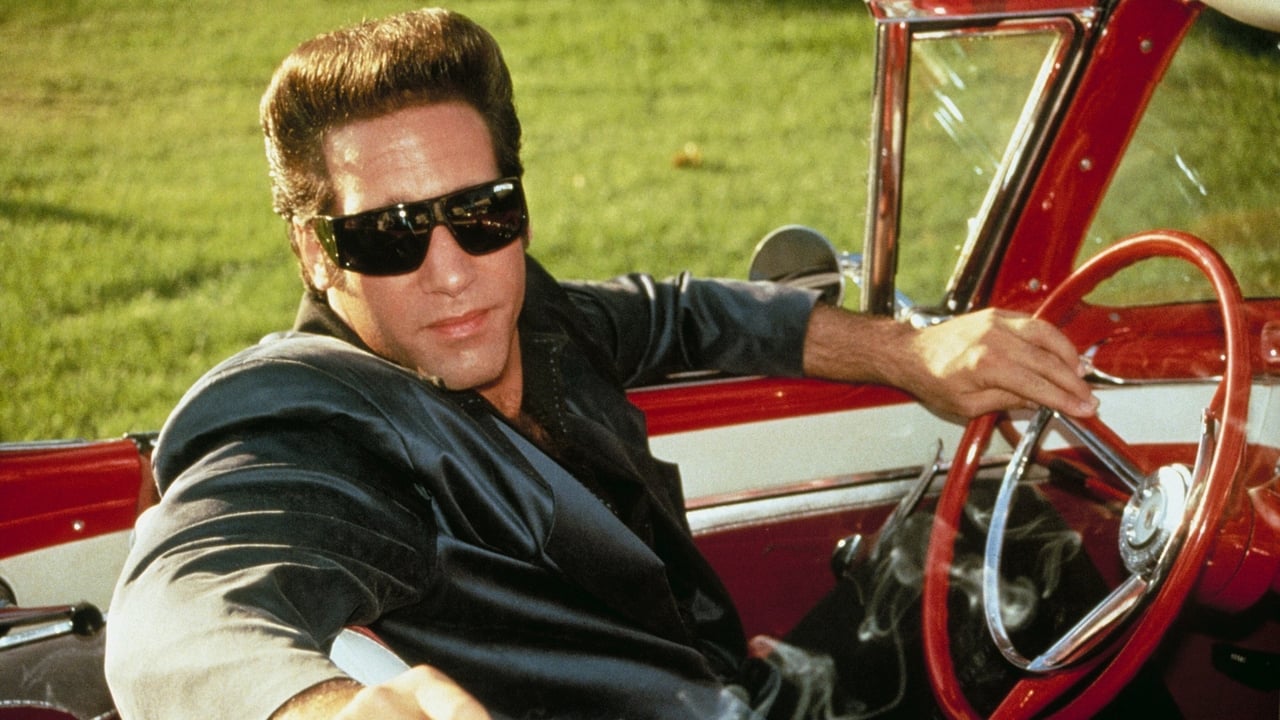
Our hero, Ford Fairlane, bills himself as the "Rock n' Roll Detective." He solves crimes exclusively within the music industry, navigating a world of spoiled rock stars, sleazy managers, and dangerous groupies, all while dropping Dice's signature nursery rhymes and maintaining an ego the size of the Hollywood Bowl. When shock-jock Johnny Crunch (a perfectly cast Gilbert Gottfried, shrieking his way into our hearts) is murdered on-air, Ford gets pulled into a convoluted mystery involving missing groupies, coded messages, and a conspiracy that goes... well, somewhere noisy.
The plot itself feels like a hyper-caffeinated Raymond Chandler pastiche filtered through MTV sensibilities and doused in cheap cologne. Written by Daniel Waters (who penned the darkly brilliant Heathers just a year prior), along with James Cappe and David Arnott, you can occasionally glimpse sharp, cynical barbs aimed at the excesses of the music biz peeking through the barrage of Diceman shtick. One wonders how much studio tinkering might have happened; Waters himself has alluded to the script being somewhat defanged from its original bite. Still, the setting – a pre-grunge L.A. music scene dripping with hair metal residue – feels surprisingly authentic, a snapshot of a moment about to vanish.
Dice, Direction, and Decadence
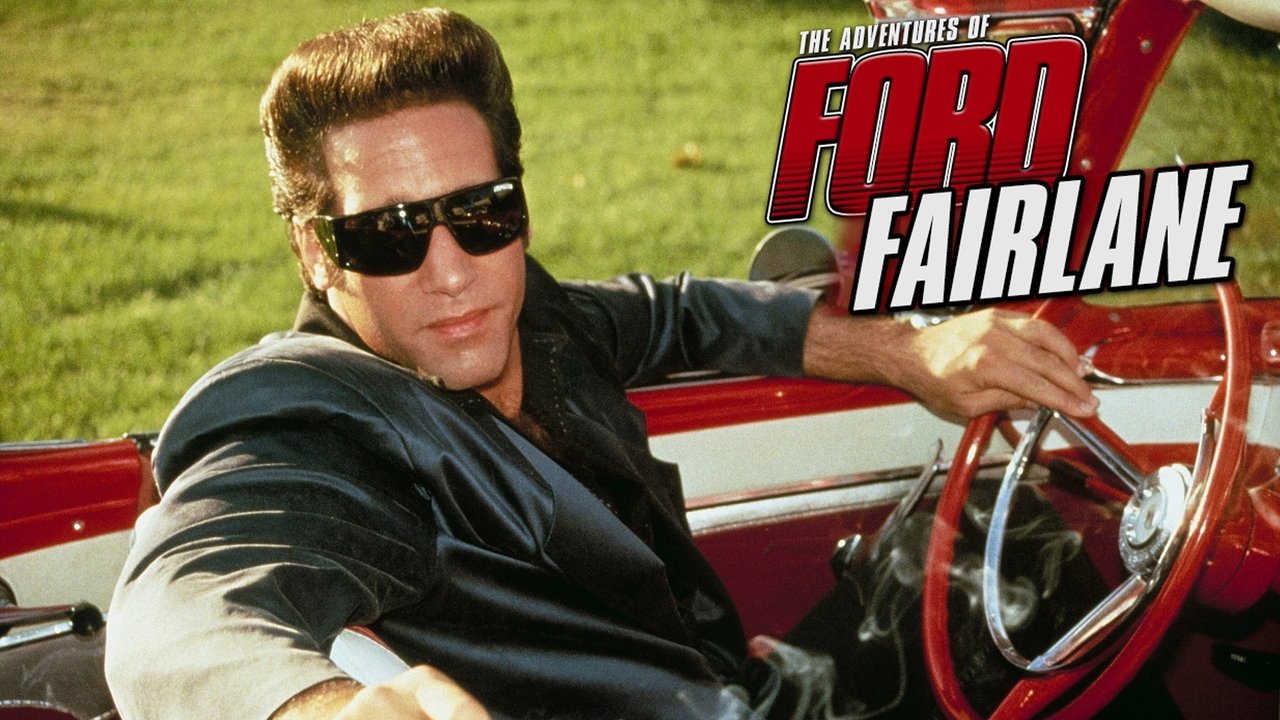
Let's be honest: your enjoyment hinges almost entirely on your tolerance for Andrew Dice Clay. He's not really acting here; he is Ford Fairlane, swaggering, smirking, and delivering every line with the same defiant cadence he used on stage. It's a performance that hasn't aged gracefully for many, rooted in a brand of humor that feels particularly abrasive today. Yet, there's an undeniable, almost hypnotic commitment to the bit. He owns the frame, for better or worse. Surrounding him are some truly inspired casting choices: Wayne Newton chews scenery with villainous glee as the slimy record producer Julian Grendel, and Priscilla Presley brings a cool, knowing elegance to her role as the wealthy Colleen Sutton. Even Ed O'Neill, fresh off Married... with Children, pops up as a hard-boiled cop constantly exasperated by Ford's antics.
But what elevates Ford Fairlane beyond just a vehicle for its star is the man behind the camera: Renny Harlin. Fresh off the high-octane success of A Nightmare on Elm Street 4: The Dream Master and incredibly directing Die Hard 2: Die Harder in the same year (talk about a wild schedule!), Harlin brings a slick, kinetic energy to the proceedings. He clearly understands the assignment is absurdity, leaning into the visual bombast. Remember that scene where Ford’s house explodes spectacularly after he lights a cigarette near a gas leak? That’s pure Harlin – big, loud, and unapologetically over-the-top, achieved with good old-fashioned practical effects and miniatures that felt huge on our fuzzy CRT screens. The action, while not non-stop, has that satisfyingly crunchy, pre-CGI feel. Cars flip, punches land with meaty thuds, and things blow up real good. It wasn't quite Die Hard 2 money (reports suggest a budget around $20 million), but Harlin knew how to make every dollar count visually.
Behind the Music Mayhem
The film is packed with little moments and trivia that make revisiting it fun. The whole subplot with the rock star Bobby Black (played by Mötley Crüe's own Vince Neil) getting killed off early was originally meant for a much bigger star. Billy Idol was signed on to play the film’s main musical antagonist but had a devastating motorcycle accident just before filming commenced, leading to Neil stepping into the smaller role and the character dynamics shifting. Imagine Idol swaggering through this! And yes, that's a surprisingly catchy theme song by Idol, "Cradle of Love," which became a massive MTV hit thanks to its stylish, David Fincher-directed video (often featuring clips from the movie itself!). The soundtrack overall is a pretty solid slice of late 80s/early 90s rock.
Despite the talent involved and the slick production, Ford Fairlane crash-landed at the box office, barely recouping its budget domestically ($21.4 million gross). The intense backlash against Clay certainly didn't help, and the film was famously savaged by critics, sweeping the Golden Raspberry Awards for Worst Picture, Actor, and Screenplay. It felt like a cultural moment – the peak and immediate implosion of the Diceman phenomenon captured on celluloid.
The Verdict
The Adventures of Ford Fairlane is undeniably a product of its time – brash, politically incorrect, and soaked in early 90s excess. The humor is often juvenile, the plot scattershot, and Clay's persona remains divisive. Yet... there's something compelling about its sheer, unadulterated nerve. Harlin's direction gives it a visual polish and energy that elevates the material, the supporting cast is game, and the glimpse into that specific L.A. music scene feels like opening a time capsule. It’s a fascinating cinematic artifact, a slickly made slice of controversial pop culture history.
Rating: 6/10 - Flawed and dated, yes, but Harlin's stylish direction, some genuinely fun supporting turns, and its status as a unique cultural curio make it a surprisingly rewatchable (if occasionally wince-inducing) trip down memory lane.
Final Take: Unapologetically loud and often dumb, but with enough slick 90s action gloss and bizarre energy to remain a cult curiosity – the kind of movie perfectly suited for a late-night VHS discovery, warts and all. OOOOH!