There are figures in cinema who embody comfort, warmth, a sense of nostalgic safety. And then there’s Tatie Danielle. Forget the kindly grandmother trope; Étienne Chatiliez’s 1990 masterpiece of misanthropy takes that familiar image, douses it in vitriol, and sets it ablaze before our astonished eyes. Watching Auntie Danielle (Tatie Danielle) for the first time, perhaps plucked curiously from the foreign film shelf at Blockbuster back in the day, was often an exercise in recalibrating one's expectations. This wasn't just dark humor; it was a plunge into the icy depths of human awfulness, guided by one of the most memorably monstrous characters committed to celluloid.
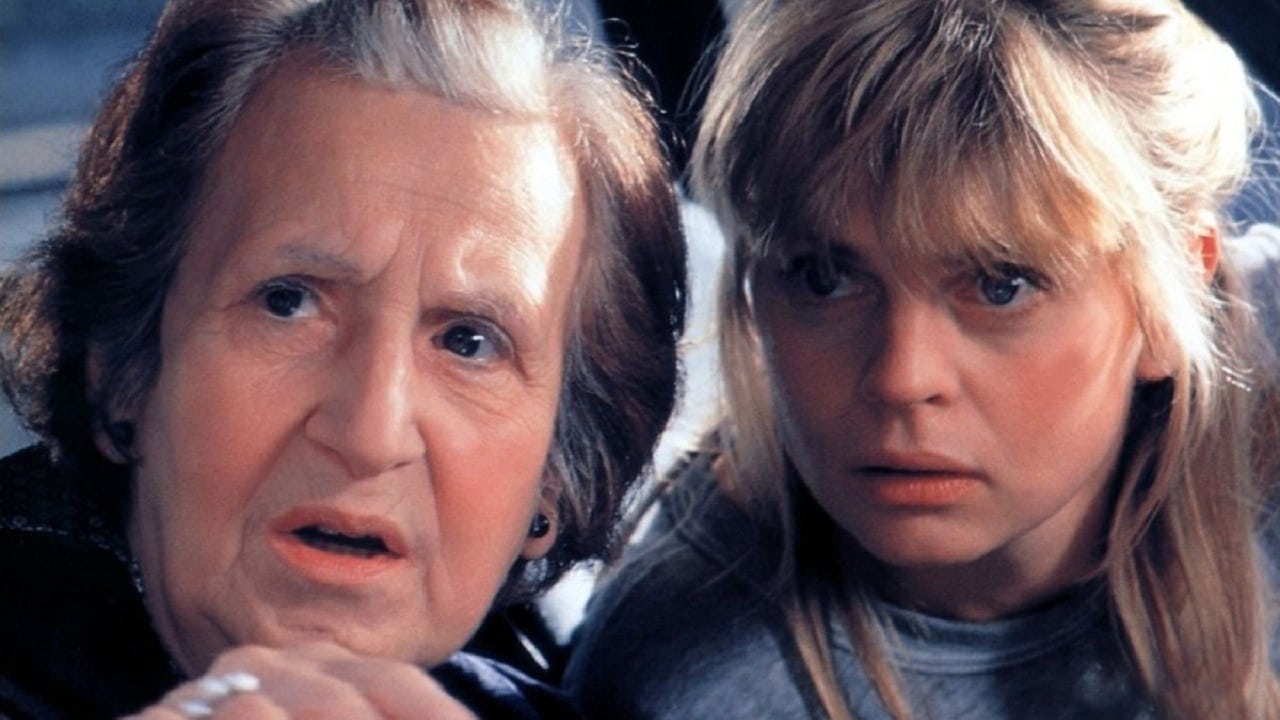
A Portrait in Venom
At the heart of the storm is Danielle Billard, played with terrifying conviction by the legendary Tsilla Chelton. Widowed and wealthy, Danielle lives a life seemingly dedicated to the meticulous torment of everyone around her. Her aged housekeeper, Odile, bears the brunt of it initially, enduring endless complaints, passive-aggressive demands, and outright cruelty, all delivered with the practiced air of frail victimhood. Chelton, a highly respected stage actress who found late-career screen stardom with this role (she was around 70 at the time), doesn't just play Danielle; she inhabits her. Every sigh, every narrowed gaze, every seemingly innocent request is laden with manipulative intent. It’s a performance devoid of vanity, utterly committed to portraying a character who weaponizes perceived vulnerability. It's hard to imagine anyone else pulling off such sustained, believable nastiness. It’s a testament to her skill that the performance earned her a César Award nomination for Best Actress.
Domestic Terror, Bourgeois Nightmare
Following the template he’d successfully mined in his breakout hit Life Is a Long Quiet River (1988) (La vie est un long fleuve tranquille), director Étienne Chatiliez, working from a scalpel-sharp script by Florence Quentin (also César-nominated), uses Danielle’s eventual move into the home of her unsuspecting great-nephew Jean-Pierre (Eric Prat) and his wife Catherine (Catherine Jacob, also brilliant and César-nominated) to dissect the anxieties and hypocrisies of French middle-class life. The initial comedy stems from the sheer audacity of Danielle’s behaviour – simulating illnesses, deliberately causing chaos, turning family members against each other. Yet, the laughter often catches in the throat. Chatiliez frames these domestic scenes with a chillingly objective eye. The family’s comfortable suburban home becomes a pressure cooker, their patience fraying, their own flaws exposed under the relentless glare of Tatie’s malevolence. We witness their gradual disintegration, and while Danielle is the clear antagonist, the film subtly questions the foundations of their seemingly happy life even before her arrival.
An Unlikely Kindred Spirit?
Just when you think the film can't possibly sustain Danielle's reign of terror, or perhaps when the audience's tolerance for cruelty is reaching its limit, the dynamic shifts with the introduction of Sandrine (Isabelle Nanty, yet another César nominee for her role). Hired as a caregiver, Sandrine initially seems like the ultimate victim – young, seemingly unassuming, perhaps easily manipulated. What unfolds is far more complex and darkly satisfying. Sandrine isn't cowed by Danielle; she meets her difficult nature with a pragmatism and resilience that borders on indifference, occasionally even turning the tables. Nanty brings a wonderfully grounded energy to the role. Their relationship evolves into something strangely symbiotic, a bizarre truce built on mutual understanding of human nature’s less savory aspects. Is it friendship? Co-dependence? Or simply two difficult people recognizing something of themselves in the other? The film leaves it deliberately ambiguous, adding another layer to its unsettling portrait.
More Than Just Malice?
It’s easy to dismiss Danielle as purely evil, a caricature of nastiness. But the film occasionally offers glimmers, hints of something deeper beneath the bile. Is her cruelty born from profound loneliness after her husband's death? A desperate, twisted cry for attention in a world that increasingly renders the elderly invisible? A rebellion against the societal expectation that old women should be sweet and docile? Florence Quentin's script doesn't offer easy answers or cheap sentimentality. Danielle remains largely unrepentant, her motivations complex and perhaps ultimately unknowable. This refusal to sand down her sharp edges is precisely what makes the film so potent and enduring. It forces us to confront uncomfortable questions about aging, neglect, and the darkness that can fester behind a polite facade. I remember renting this on VHS, probably drawn by the promise of a quirky French comedy, and being utterly sideswiped by its ferocious intelligence and unflinching gaze. It wasn't what I expected, but it was something far more memorable.
The film was a significant success in France, sparking conversation and proving Chatiliez wasn't a one-hit wonder. Its legacy lies in its daring subversion and that central, unforgettable performance. It reminds us that black comedy, when done this skillfully, can be as revealing and thought-provoking as any straight drama.
Rating: 9/10
Auntie Danielle earns this high score for its sheer audacity, its pitch-perfect performances (especially Tsilla Chelton's iconic turn), and its wickedly smart script. It's an impeccably crafted film that uses dark humor not just for laughs, but to explore uncomfortable truths about human nature and family dynamics. It’s deeply cynical, yes, and its unrelenting acidity won't appeal to everyone, but for those who appreciate challenging, character-driven cinema with a razor-sharp edge, it remains a standout from the era.
It lingers long after the credits roll, leaving you to ponder the Tatie Danielles of the world – are they born, or are they made? And perhaps, more unnervingly, is there a tiny sliver of Tatie lurking somewhere within us all?