It begins not with words, but with consumption. Grotesque heads formed of vegetables, kitchen utensils, or office supplies meet, devour one another, and vomit forth near-duplicates, only to repeat the cycle. This isn't dialogue as we know it; this is Jan Švankmajer's Dimensions of Dialogue (Možnosti dialogu, 1983), a short film that burrows under your skin and leaves an unsettling residue long after its brief runtime concludes. Forget pleasantries; this is communication rendered as a visceral, often horrifying, physical act. Finding this slice of surrealist brilliance back in the day, perhaps nestled on a compilation tape or aired in a late-night art-house slot, felt like uncovering forbidden knowledge.
Three Acts of Breakdown
Švankmajer, a master of Czech surrealist animation, structures his exploration into three distinct, yet equally disturbing, chapters. The first, "Eternal Conversation" (Dialog věcný), gives us those Arcimboldo-inspired heads locked in a cycle of assimilation and regurgitation. It's a stark, almost primitive depiction of how ideas (or perhaps ideologies) are consumed and corrupted. The second, "Passionate Discourse" (Dialog vášnivý), shifts to two clay figures – one male, one female – who meet, intertwine in frantic, desperate intimacy, dissolve into a frenzied puddle, and ultimately reform, only to tear pieces from each other in mutual destruction. It’s desire and conflict made terrifyingly tangible. Did anyone else feel a cold dread watching those figures frantically merge and then rip each other apart? The sound design here – the squelching clay, the frantic movements – is pure nightmare fuel.
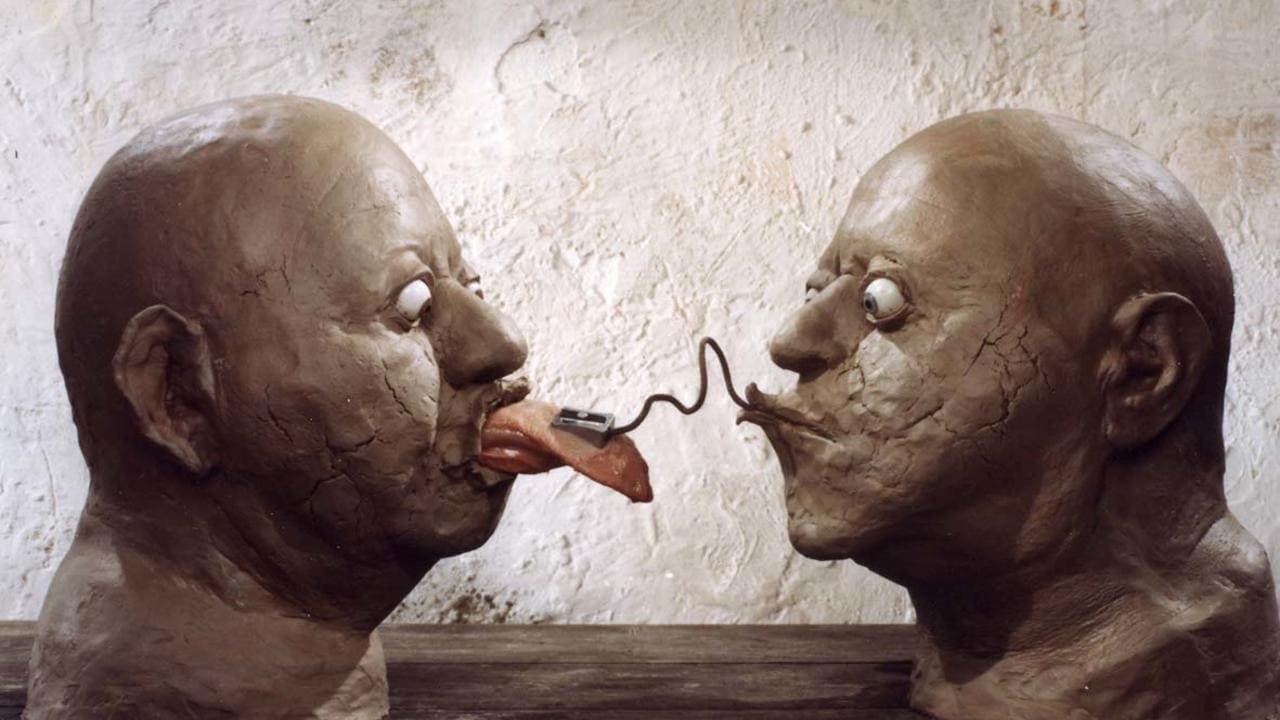
Finally, "Exhausting Discussion" (Dialog vyčerpávající) presents two sculpted clay heads exchanging objects from their mouths – toothbrush and toothpaste, pencil and sharpener, bread and butter – in a seemingly productive, complementary fashion. But soon, the objects mismatch, the rhythm breaks, and the attempt at functional dialogue collapses into frustrated, repetitive failure. It’s a chillingly accurate portrayal of communication breakdown, the kind of bureaucratic or relational dead-end that feels both absurd and deeply familiar.
The Švankmajer Touch
What makes Dimensions of Dialogue so potent is Švankmajer's singular vision and his mastery of stop-motion. This isn't slick, clean animation; it's tactile, gritty, and deeply physical. You feel the texture of the clay, the weight of the real-world objects he animates with such painstaking care. It's said that the sheer labor involved in Švankmajer's work is immense, each frame a testament to patience and precision, making the chaotic results feel paradoxically controlled and deliberate. He wasn't just moving puppets; he was breathing a disturbing, twitching life into inanimate matter. His background within the Czech Surrealist Group deeply informs the work, tapping into subconscious fears and societal critiques through bizarre, unforgettable imagery.
A Subversive Masterpiece
It’s perhaps unsurprising that Dimensions of Dialogue ran into trouble with authorities. Reports suggest it was banned in Czechoslovakia for a time, its bleak and critical view of interaction seen as potentially subversive. Whether critiquing political systems, the failures of human connection, or simply the inherent difficulty of true understanding, the film packs a punch far exceeding its length. This wasn't just animation; it was a statement, smuggled onto screens under the guise of surrealist art. Finding a copy felt like holding a piece of underground resistance, a testament to art that refuses to be silenced or sanitized. Its influence can arguably be seen in the work of animators like the Brothers Quay or even the darker, more visceral moments of Terry Gilliam's Monty Python animations, though Švankmajer's brand of unease remains uniquely his own.
Why It Still Haunts
Decades later, the film has lost none of its power. The lack of spoken dialogue forces you to confront the raw visual metaphors. The meticulous, yet often repulsive, practical effects feel more real, more unsettling, than much modern CGI. It bypasses the intellect and hits you squarely in the gut. It’s a reminder of how animation, often relegated to children’s entertainment, can be a medium for profound, disturbing, and complex artistic expression. Watching it again now, that same feeling returns – a mix of fascination and revulsion, an appreciation for the artistry coupled with a deep sense of unease about the truths it reflects.
VHS Heaven Rating: 9/10
Dimensions of Dialogue is challenging, grotesque, and utterly brilliant. Its brevity belies its thematic depth and technical mastery. The rating reflects its status as a landmark of surrealist animation and its enduring power to disturb and provoke thought. It’s not an easy watch, but it’s an essential one for anyone interested in the outer limits of cinema and the dark poetry of stop-motion. It’s a stark reminder that sometimes, the most profound dialogues are the ones without words, told through the unsettling dance of decay and creation.