What happens when the very thing you crave to elevate your life becomes the catalyst for its utter destruction? That’s the grim territory Harold Becker’s 1988 drama The Boost plunges into, and frankly, it’s a film that doesn’t offer easy answers or comfortable viewing. Forget the neon-soaked optimism often associated with the 80s; this is the hangover, the dark underbelly of ambition curdling into addiction, captured with a raw intensity that still feels potent today. It wasn't exactly the tape you'd grab for a light-hearted Friday night pizza party, but pulling this one off the shelf at the rental store always felt like committing to something serious.
Chasing the High
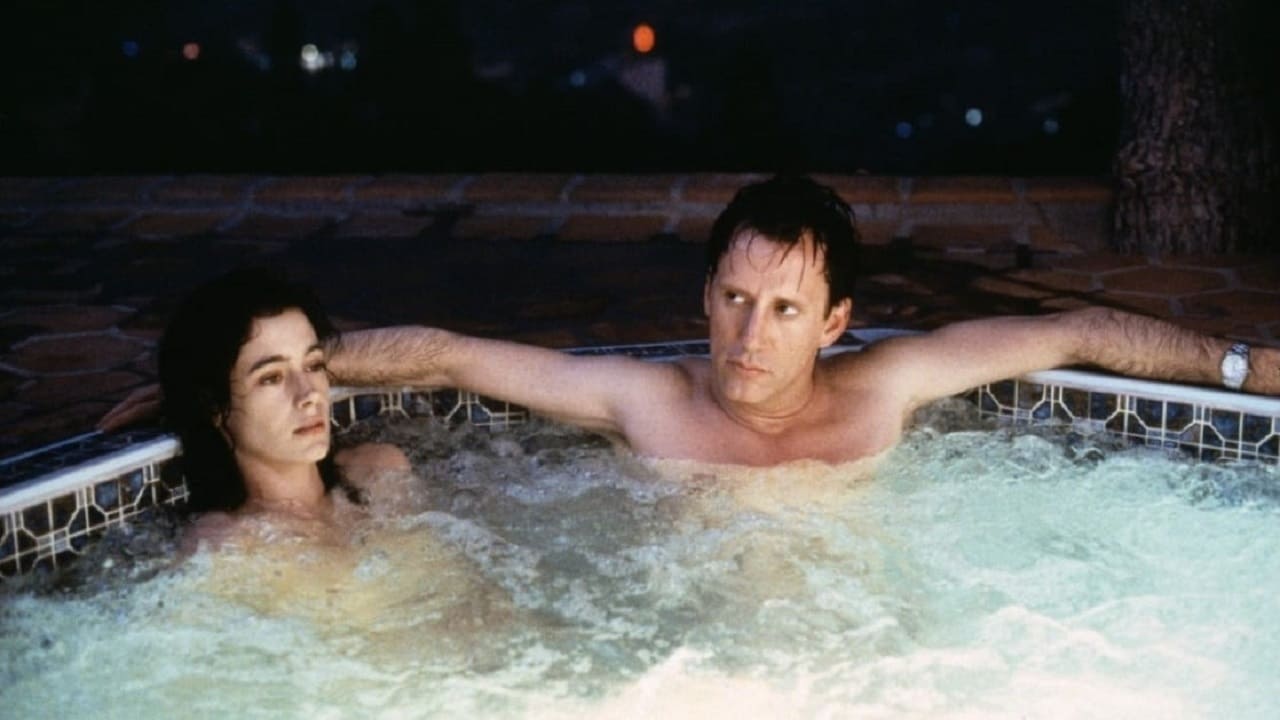
The setup feels almost archetypal for the era: Lenny Brown (James Woods) is a charismatic, fast-talking salesman bursting with potential but struggling to make ends meet. A move to sunny California with his supportive wife Linda (Sean Young) promises a fresh start in high-stakes real estate investment. Success comes quickly, fueled by Lenny's aggressive charm and seemingly boundless energy. But with the dizzying heights of financial gain comes the introduction of cocaine – the titular "boost" – initially perceived as a tool to maintain momentum, a way to keep the edge in a cutthroat world. It’s the classic yuppie dream taking shape, complete with sharp suits, expensive cars, and luxurious homes. But Becker subtly sows unease even in these early scenes; there's a frantic quality beneath the surface, a sense that this dazzling ascent is built on shaky ground.
The Unraveling
What follows is less a plot progression and more a harrowing descent. The Boost doesn't shy away from depicting the brutal realities of cocaine addiction. The initial euphoria gives way to paranoia, aggression, financial ruin, and the complete disintegration of Lenny and Linda's relationship. The film is relentless in its portrayal, charting the physical and psychological decay with uncomfortable honesty. There are scenes here that are genuinely difficult to watch, moments of desperation and degradation that burn into your memory long after the VCR whirs to a stop. It’s a stark contrast to the slicker, perhaps more romanticized portrayals of excess seen in some other films of the period. It's interesting to note the film was co-written by Ben Stein, based on his own semi-autobiographical book Ludes: A Ballad of the Drug and the Dream. Knowing that personal connection adds another layer of chilling authenticity to the narrative.
A Tour-de-Force of Desperation
Let's be clear: the gravitational center of The Boost is James Woods. Already known for his intense, often volatile screen presence in films like Videodrome (1983) and Salvador (1986), Woods delivers a performance here that is nothing short of terrifying. His Lenny isn't just addicted; he's consumed. Woods vibrates with a nervous energy that escalates into full-blown mania, capturing the seductive highs and the soul-crushing lows with frightening conviction. It’s not always subtle, but it feels terrifyingly real – the rapid-fire speech patterns, the darting eyes, the explosive rage followed by pathetic pleading. It’s a performance that grabs you by the throat and refuses to let go.
Matching him step for harrowing step is Sean Young. Often remembered for iconic roles like Rachael in Blade Runner (1982), Young delivers arguably one of her most complex and demanding performances as Linda. She isn't merely a passive victim; she's initially swept up in the allure of success, then becomes entangled in the addiction herself, portraying the painful journey from supportive partner to co-dependent enabler and finally, to someone fighting for her own survival. The chemistry between Woods and Young is electric, shifting from passionate intimacy to toxic hostility with devastating believability. Their shared scenes are the film's agonizing core. Even John Kapelos, a familiar face from countless 80s/90s films (think The Breakfast Club or Becker's later Sea of Love), provides a necessary grounding contrast as Joel, Lenny's increasingly concerned friend and business associate.
Behind the Bleakness
Directed by Harold Becker, who would go on to helm slicker thrillers like Sea of Love (1989) and Malice (1993), The Boost feels rawer, less polished than his later work. He creates an atmosphere thick with impending doom, even amidst the California sunshine. The film's unflinching nature might explain its commercial failure; reportedly made for around $8 million (roughly $20.7 million today), it barely scraped $800,000 at the box office (about $2 million today). Perhaps audiences in 1988, craving escapism, weren't ready for such a stark and uncomfortable cautionary tale, especially when films like Bright Lights, Big City (also 1988) tackled similar themes with perhaps a bit more gloss. The Boost offers no easy outs, no redemptive arc neatly tied up by the end credits. It simply presents the wreckage.
Does a film need to be enjoyable to be effective? The Boost forces that question. It’s not a movie you "enjoy" in the conventional sense. It’s draining, disturbing, and deeply sad. I remember renting the tape, drawn perhaps by Woods's face on the cover, and feeling utterly pummeled by the experience afterwards. It wasn’t something you easily recommended to friends looking for a good time.
Yet, its power lies precisely in that uncompromising vision. It serves as a potent, if painful, snapshot of the dark side of the decade's relentless pursuit of 'more'. It strips away the glamour often associated with drug use in films and reveals the ugly, destructive reality beneath. What lingers most is the chilling authenticity of the central performances and the film's refusal to soften the blow.
Rating: 7/10
Justification: While undeniably a difficult and often unpleasant watch, The Boost earns its score through the sheer force of its central performances, particularly James Woods's terrifyingly committed portrayal of addiction's grip. Sean Young is equally compelling in a demanding role. The film's unflinching honesty and refusal to compromise its bleak vision make it a powerful, albeit grim, cautionary tale that stands as a stark counter-narrative to 80s excess. It loses points perhaps for its relentless intensity, which can be overwhelming, and a narrative that offers little beyond the downward spiral itself, but its impact is undeniable.
Final Thought: The Boost might be one of the least "feel-good" films from the VHS era, but its searing portrayal of addiction's destructive power makes it a necessary, if harrowing, watch – a stark reminder that sometimes the highest highs lead to the lowest depths. It’s a tape that definitely left a mark.