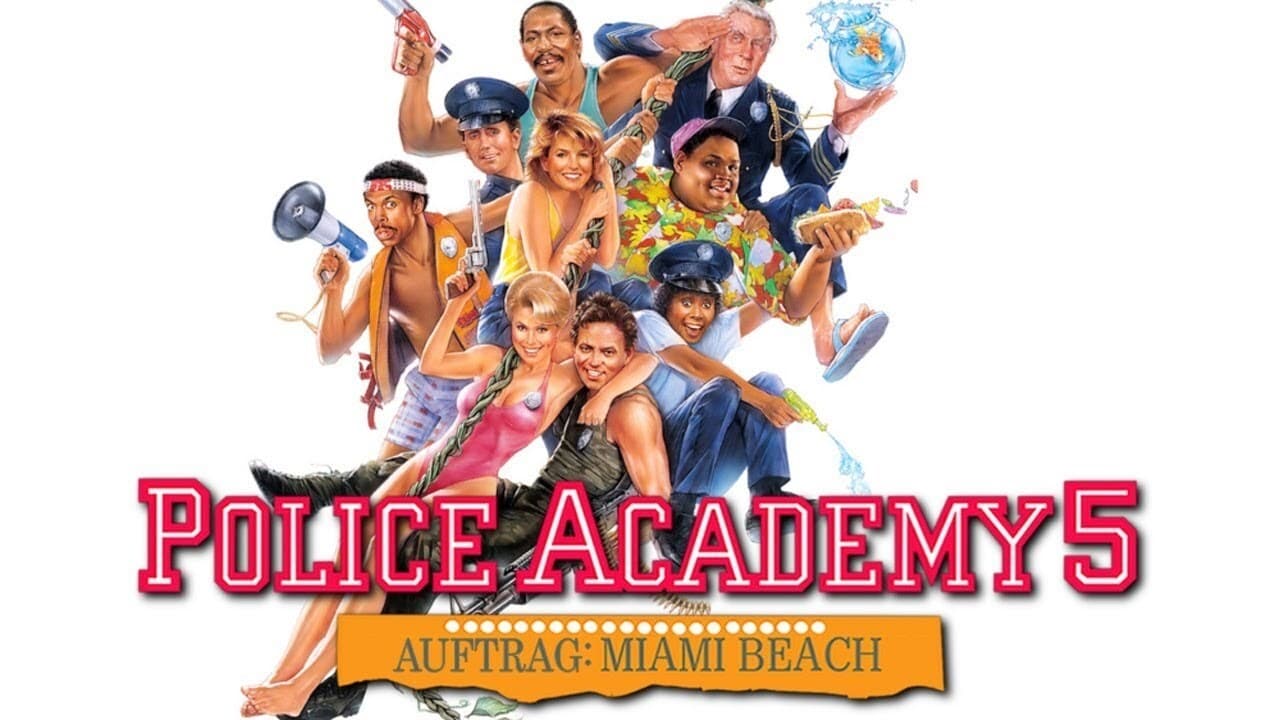
Alright, fellow tape travelers, slide that well-worn copy of Police Academy 5: Assignment Miami Beach into the VCR (after blowing the dust off, naturally). Remember that feeling? By 1988, the Police Academy theme tune was practically Pavlovian – you heard those opening notes, and you knew exactly what you were getting: low-brow gags, familiar faces, and a general sense of comfortable chaos. This fifth outing might not have had the original's scrappy charm, but grabbing this off the 'New Releases' shelf promised another dose of the Academy's particular brand of silliness, now with added sunshine and questionable swimwear.
### Sun, Sand, and Slapstick
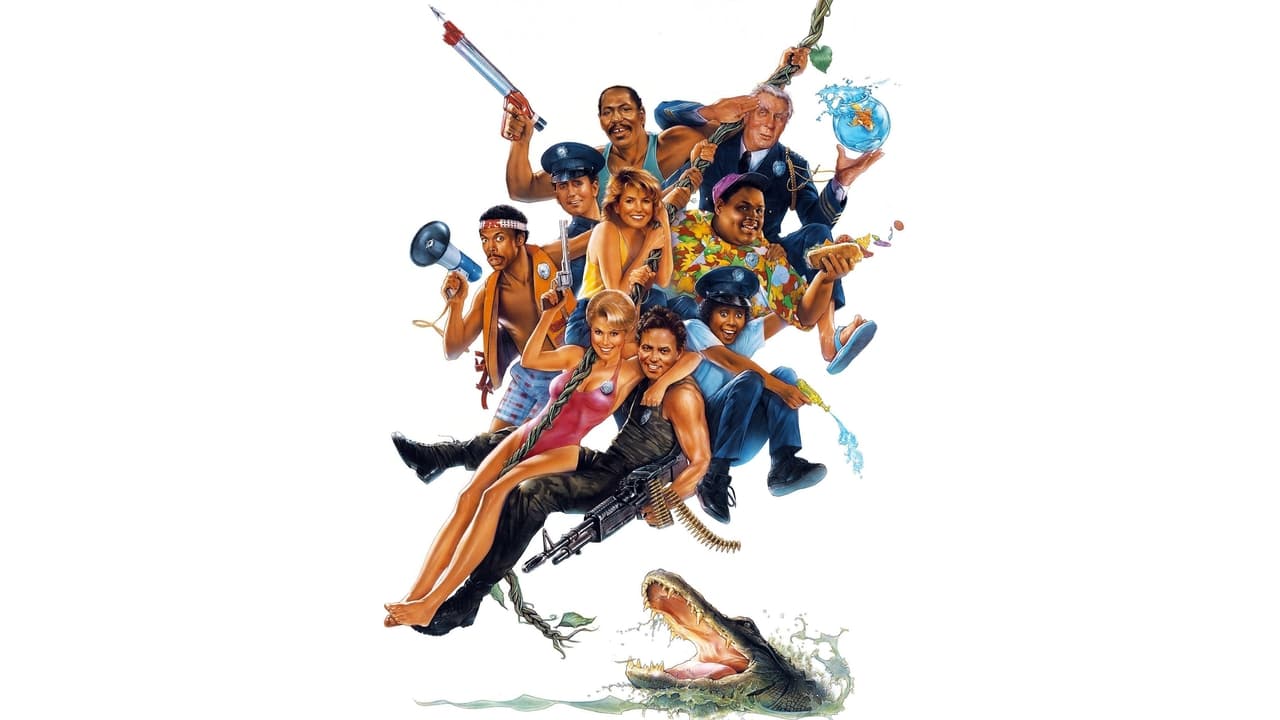
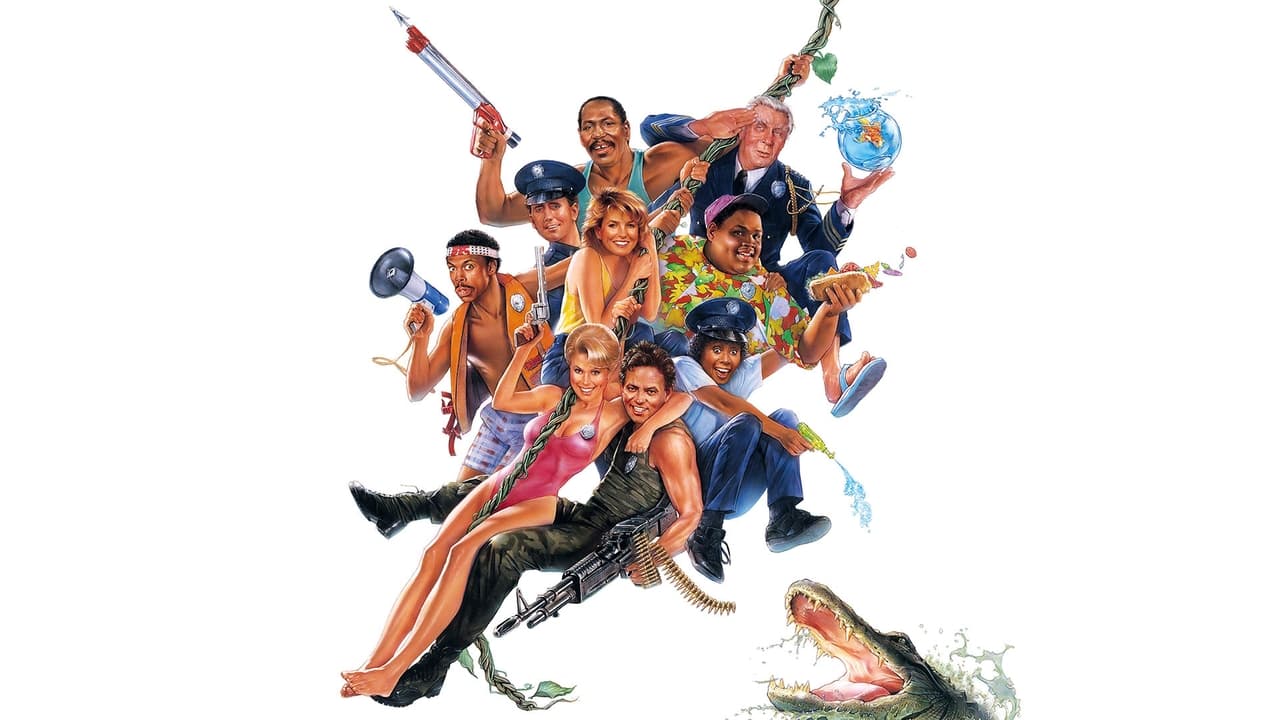
The premise is classic Police Academy formula, just transplanted. Commandant Lassard (George Gaynes, bless his endearing befuddlement) is heading to Miami Beach to receive a 'Police Officer of the Decade' award (sure, why not?). Naturally, he brings his favorite disaster magnets along: the towering Hightower (Bubba Smith), gun-obsessed Tackleberry (David Graf), human sound machine Jones (Michael Winslow), sultry Callahan (Leslie Easterbrook), and Mahoney's nephew stand-in, Nick Lassard (Matt McCoy). Of course, who should also be in Miami but the perpetually apoplectic Captain Harris (G.W. Bailey, making a welcome return after sitting out Part 4) and his long-suffering stooge Proctor (Lance Kinsey). Mix in some jewel thieves led by the smarmy Tony (René Auberjonois) and you've got the setup for mistaken identities, beachfront blunders, and Harris enduring yet another series of humiliating calamities.
What Assignment Miami Beach fundamentally understands is that the plot is just scaffolding for the gags and character interactions. Did anyone really rent this for the intricate jewel heist storyline? Probably not. We came back for Jones’s uncanny sound effects (still impressive!), Tackleberry’s almost unsettling love for firearms, and Hightower’s gentle giant routine. It's worth noting this was sadly the final appearance for the legendary Bubba Smith as Moses Hightower in the film series, a presence whose sheer size always provided reliable physical comedy.
### That 80s Comedy Rhythm
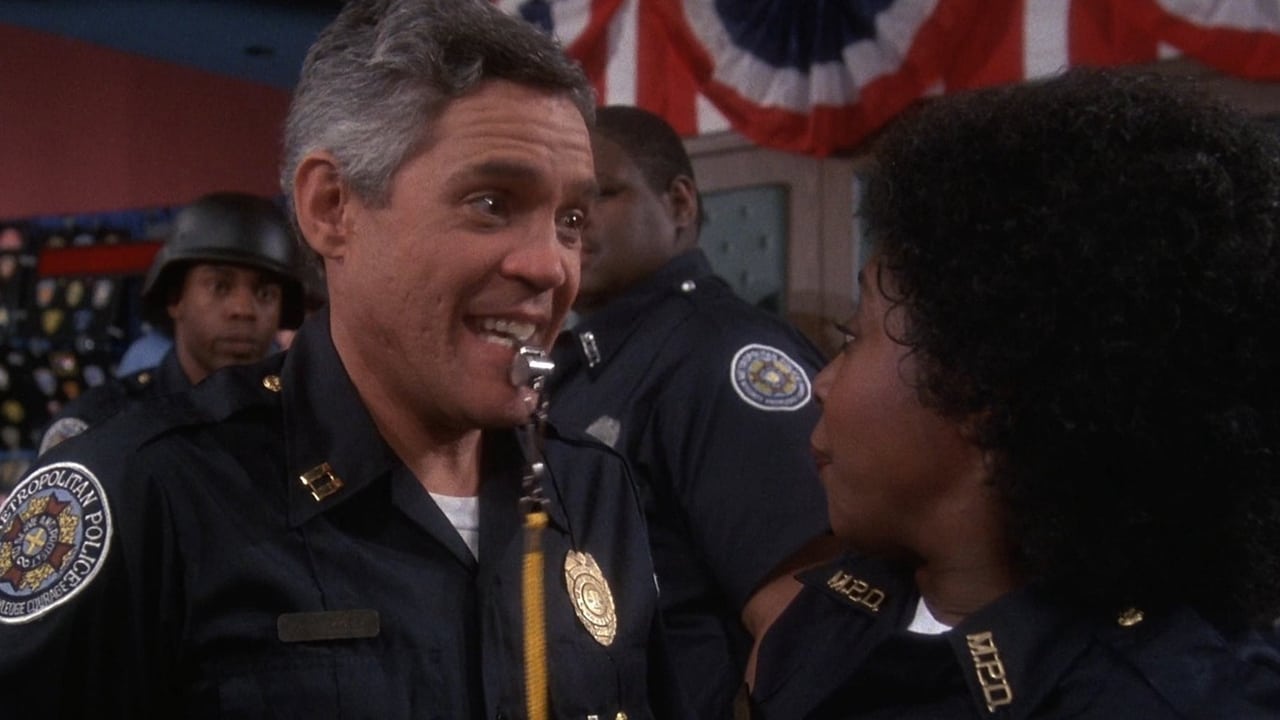
Directed by TV veteran Alan Myerson, who mostly worked on sitcoms, the film has that bright, broad feel common to late-80s comedies. It lacks the slightly grittier edge of the original, leaning fully into cartoonish territory. The move to Miami Beach itself feels like a classic sitcom trope – take the established characters and put them somewhere sunny for an 'event' episode. Filming really did take place on location in Miami Beach, Florida, adding a splash of authentic, sun-drenched scenery that makes the VHS picture perhaps even fuzzier but undeniably warmer.
The comedy relies heavily on familiar beats. Harris gets into ridiculous situations (sunburn, shark encounters, general public humiliation). Tackleberry gets to use excessive force (or at least talk about it). Jones makes noises that save the day or cause confusion. It’s comfort food comedy. You know the punchlines are coming, but there’s a certain pleasure in seeing these actors commit to the bit yet again. G.W. Bailey’s return as Harris injects some much-needed antagonistic energy; his dynamic with Proctor is reliably funny, even if it treads familiar ground. Remember how perfectly exasperated Bailey always looked? His suffering was our gain.
While not heavy on traditional 'action', the film features some decent practical gag work. The speedboat chase, while not exactly Miami Vice, feels tangible and real in that classic 80s way – real boats, real water, real actors (or stunt doubles) getting splashed. The physical comedy involving Harris and the various perils of Florida definitely relied on old-school timing and execution, long before CGI could smooth over every awkward landing. It feels... well, physical.
### Familiarity Breeds Content(ment)?
Let's be honest, by the fifth installment, the formula was wearing thin. Critics were certainly not kind, and the box office returns reflected diminishing enthusiasm – Assignment Miami Beach pulled in around $19.5 million domestically, a far cry from the original's $81 million haul just four years earlier. Writer Stephen Curwick, who also penned the second and third entries, knew the characters well, but finding genuinely fresh situations was becoming a challenge.
Yet, watching it again on that imaginary worn tape, there’s an undeniable warmth. It’s like visiting old, slightly embarrassing friends. You know their jokes, you know their flaws, but you’re kind of glad to see them anyway. Michael Winslow remains a unique talent, David Graf fully inhabits Tackleberry, and George Gaynes is pitch-perfect as the oblivious Commandant. It might be running on fumes, but the engine is still turning over. I distinctly remember renting this one, maybe as part of a weekend binge when my local video store had a '5 movies for $5' deal. It wasn't aiming for cinematic greatness; it was aiming for 90 minutes of easy laughs, and on that level, it mostly delivered.
Rating: 4/10
Justification: While it brings back beloved characters and offers some genuine chuckles fueled by G.W. Bailey's return and the reliable antics of the core cast, Police Academy 5 is undeniably formulaic and running low on original ideas. The Miami setting adds visual novelty but doesn't fundamentally change the recycled plot beats. It lacks the spark of the earlier films and shows clear signs of franchise fatigue. It gets points for nostalgia, the commitment of the cast, and being harmlessly silly fun, but it's significantly weaker than its predecessors.
Final Thought: Assignment Miami Beach is pure late-80s sequelitis captured on magnetic tape – familiar faces, diminishing returns, but still carrying that faint, fuzzy glow of a franchise you couldn't quite quit renting. It’s less a cinematic triumph, more a dog-eared postcard from a vacation the series probably didn’t need to take, but hey, at least Harris got sunburned.