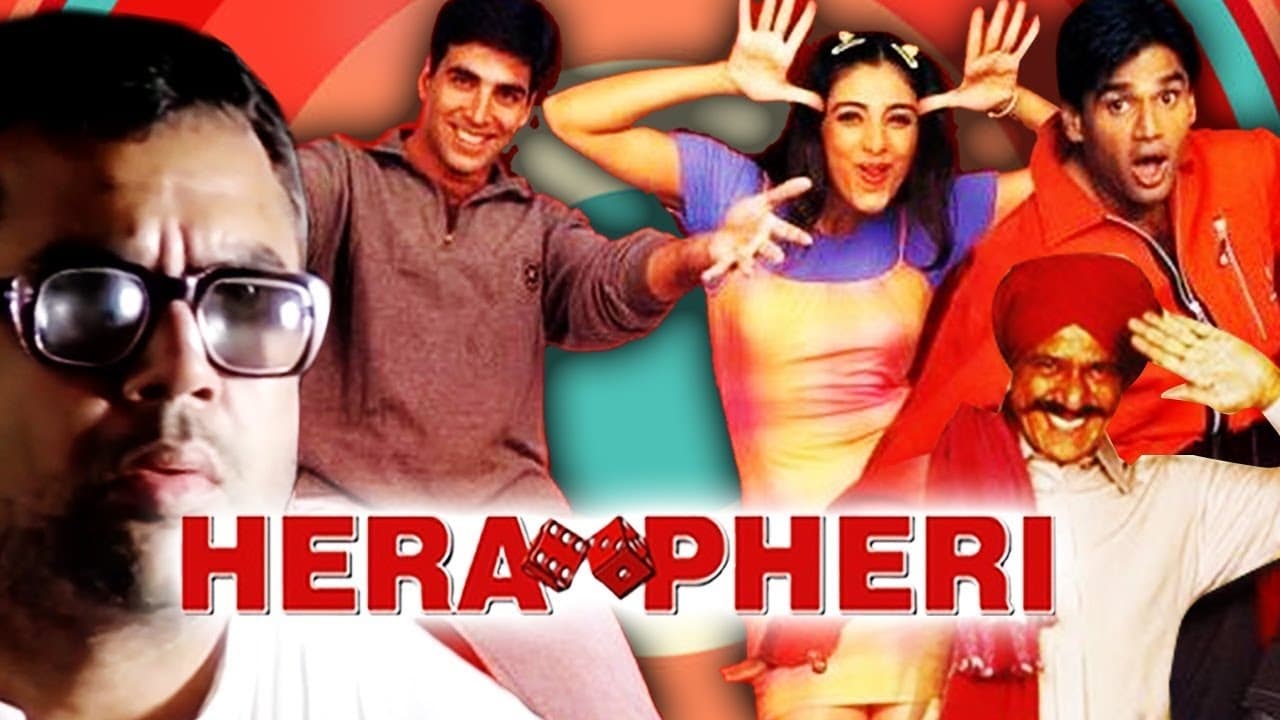
Okay, rewind your minds with me. It’s the turn of the millennium, the Y2K bug didn't quite end the world, and Bollywood was still deep in its colourful, often melodramatic phase. Then, almost out of nowhere, lands this unassuming comedy called Hera Pheri (2000). No mega-budget spectacle, no foreign locations (mostly), just three guys, a cranky landlord, a perpetually ringing phone, and pure comedic chaos. Finding this gem, perhaps on a slightly fuzzy VCD or a rented VHS tape passed around friends, felt like striking gold. It wasn't loud about its arrival, but boy, did it make some noise once people started watching.
### A Wrong Number Rings Right
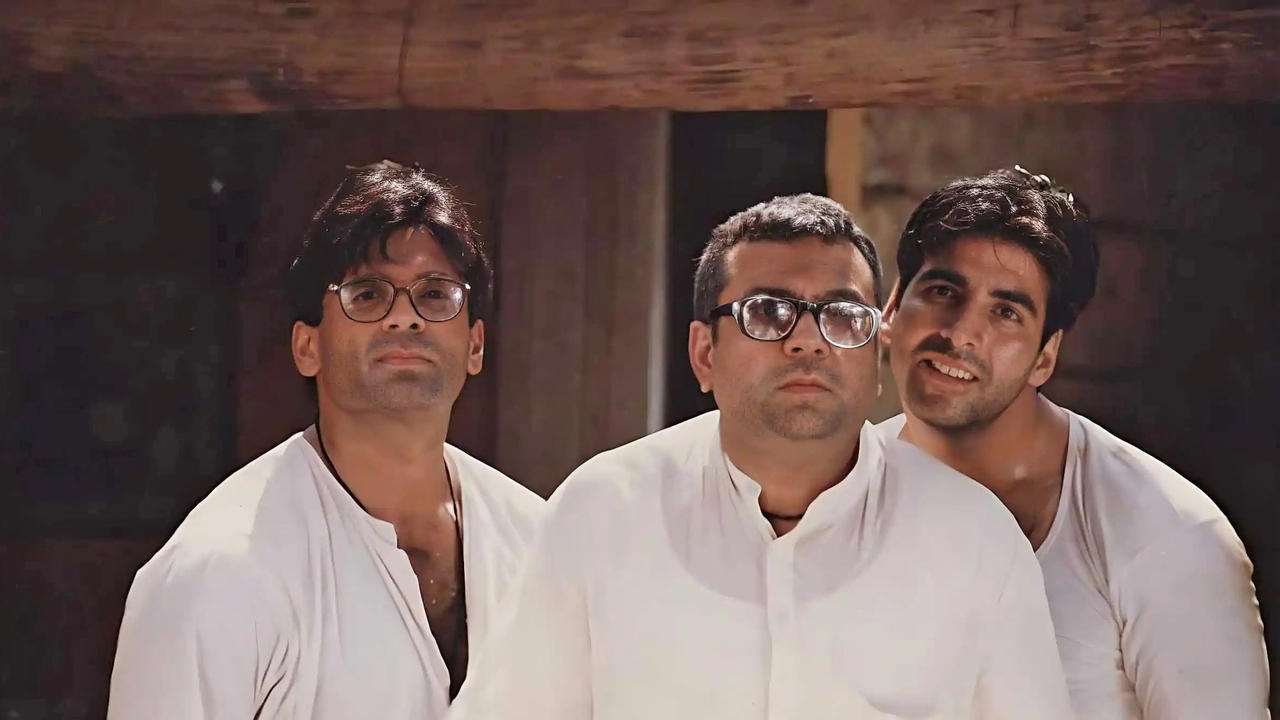
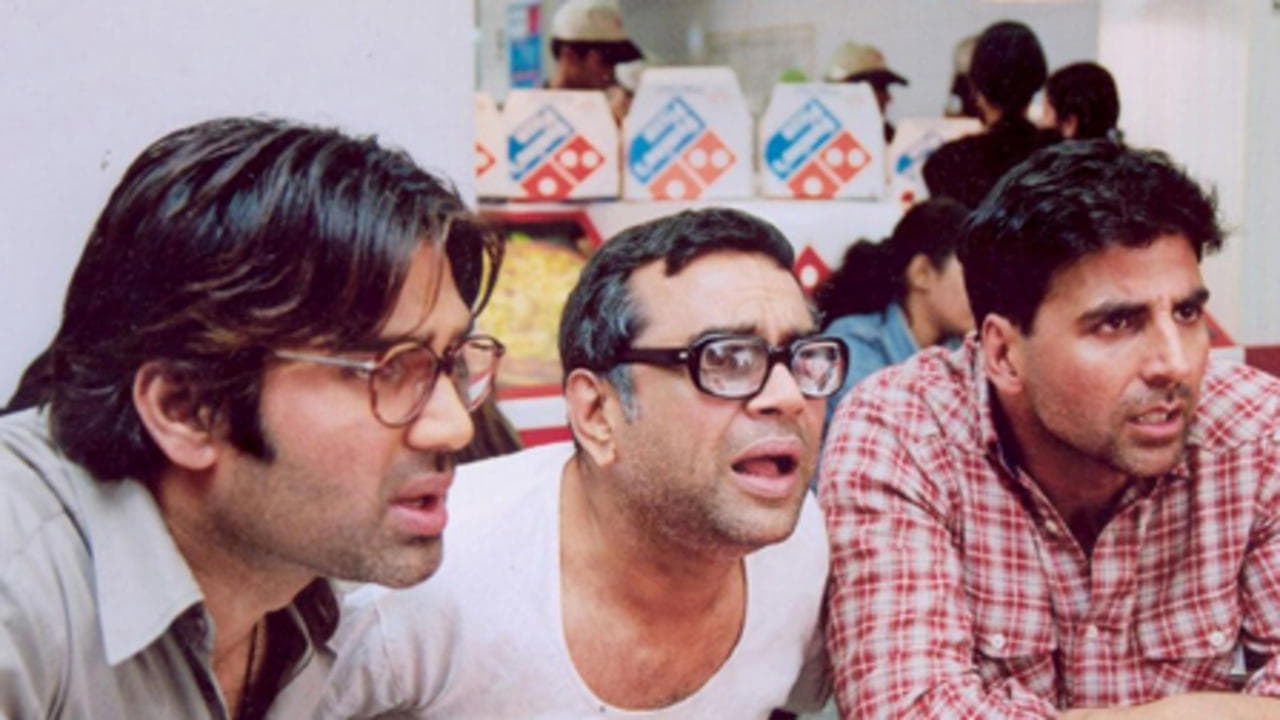
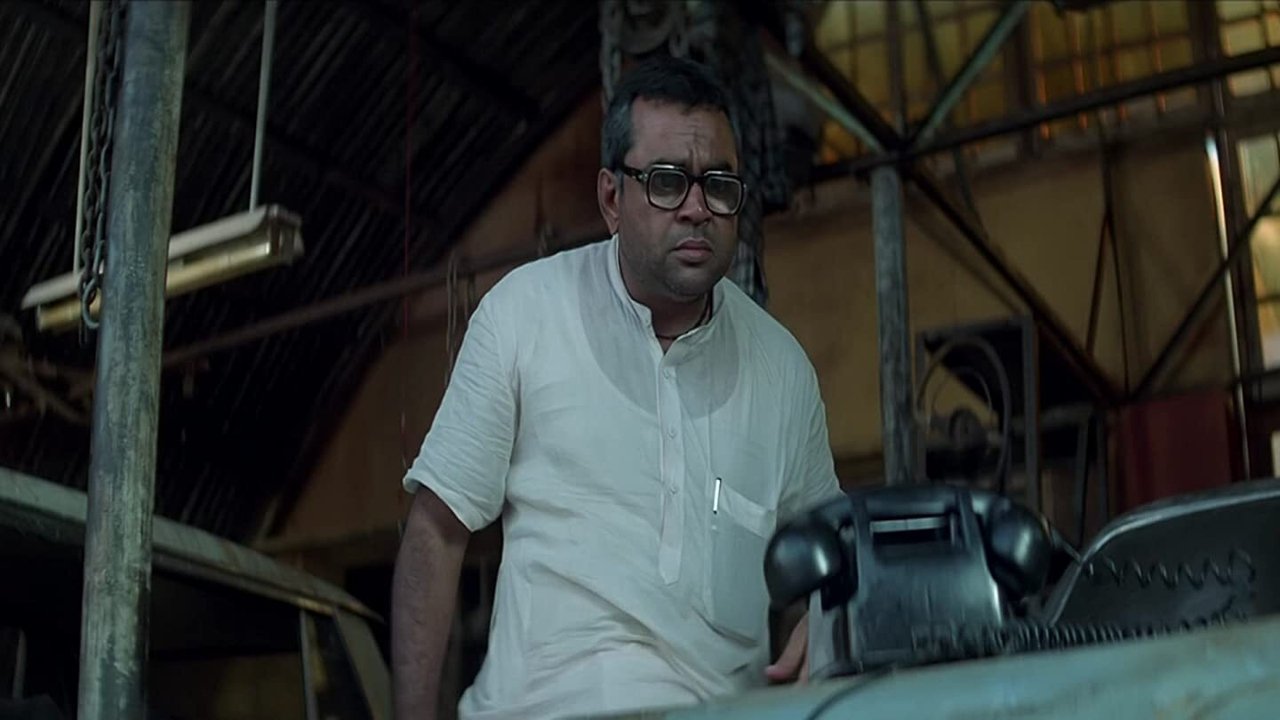
The premise is beautifully simple, rooted in the kind of delightful absurdity that Priyadarshan, adapting the 1989 Malayalam hit Ramji Rao Speaking, excels at. We have Raju (Akshay Kumar), a charming loafer always dreaming up the next get-rich-quick scheme; Shyam (Suniel Shetty), earnest and desperate, trying to claim his late father's job; and their perpetually exasperated landlord, Baburao Ganpatrao Apte (Paresh Rawal), owner of Star Garage (and a pair of iconic, thick glasses). They're broke, bickering, and barely surviving in Baburao's rundown home. Their fortunes change, or seem to, when a wrong number connects them to a kidnapper demanding ransom. Seeing a chance to solve all their money problems, this hapless trio decides to play middleman. What follows is not slick crime, but a masterclass in escalating confusion and situational humour.
It’s fascinating to remember that Akshay Kumar and Suniel Shetty were primarily known as action heroes back then. Hera Pheri was a gamble, a significant departure from the punches and kicks audiences expected. Kumar, shedding his action persona, absolutely nails the opportunistic yet somehow likeable Raju. Shetty, often the stoic tough guy, brings a perfect blend of frustration and desperation to Shyam. It was a move that paid off handsomely, showcasing their surprising comedic timing and paving the way for future comedy roles.
### Enter Baburao: An Icon is Born
But let's be honest, the film’s soul, the element that rocketed it from a fun comedy to legendary status, is Paresh Rawal as Baburao. Before this, Rawal was a respected actor, often playing villains or strong character roles. Here, he delivered a performance for the ages. Baburao, with his perpetually annoyed expression, his unique walking style, the dhoti, the glasses perched on his nose, and those immortal lines ("Utha le re Deva! Utha le... mereko nahi re, in dono ko!", "Yeh Baburao ka style hai!") became an instant cultural phenomenon. It's said Rawal meticulously crafted the character's mannerisms, creating someone utterly unique yet strangely familiar. He wasn't just playing a character; he was Baburao. The sheer chemistry between these three leads, their constant bickering and underlying, dysfunctional camaraderie, is the engine driving the film.
A huge chunk of the credit for the film's legendary status, especially its unforgettable dialogues, must go to the late Neeraj Vora. He not only adapted the screenplay but also penned the Hindi lines that fans quote verbatim even today. Vora, who also makes a brief but memorable appearance as the man explaining the convoluted Star Fisheries plan, had an incredible ear for conversational, quirky humour that felt grounded despite the increasingly frantic plot. His writing, combined with Priyadarshan's direction, captured a specific kind of middle-class Mumbai struggle, making the characters' desperation both funny and oddly relatable.
### The Priyadarshan Formula
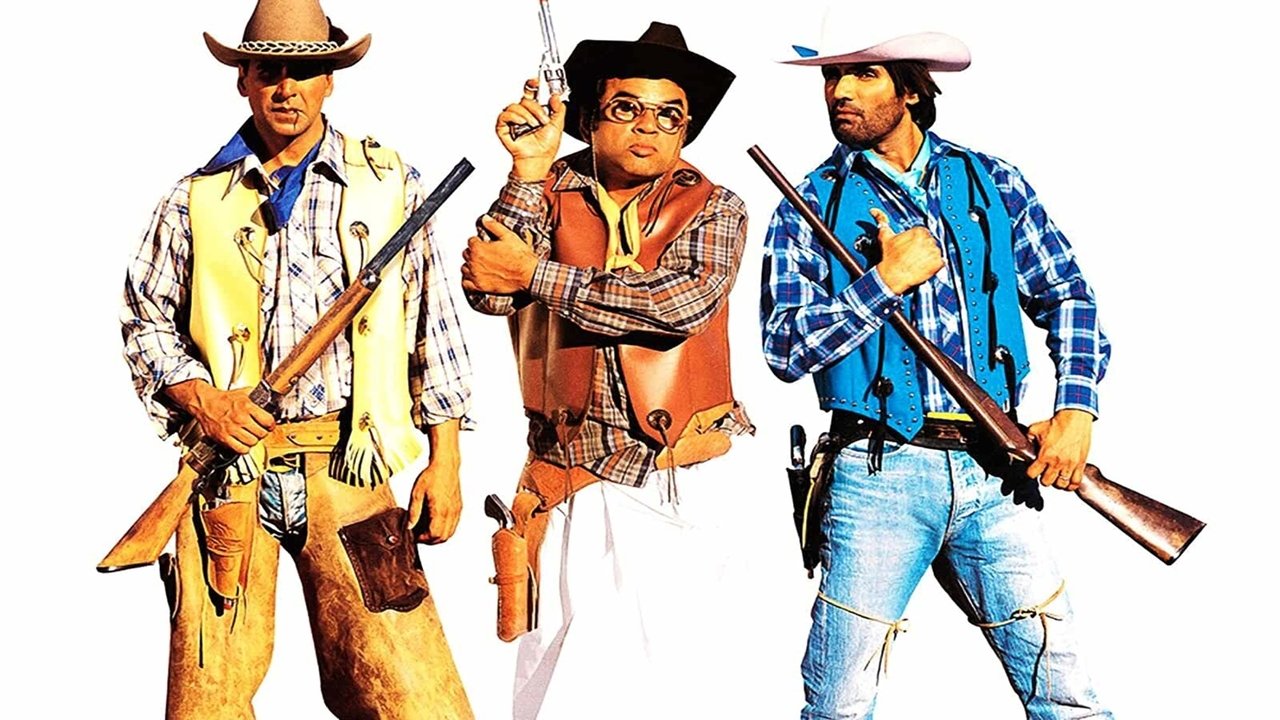
Priyadarshan, known for his successful Hindi remakes of South Indian films (like Hungama (2003) or later, Bhool Bhulaiyaa (2007)), brings his signature style here. It's a controlled chaos – complex situations, multiple characters with crossing paths, misunderstandings piling up, all escalating towards a frantic climax. Unlike the glossier productions becoming common, Hera Pheri had a refreshingly grounded feel. The sets were simple, the locations felt real – that slightly dilapidated house felt lived-in, not like a movie set. This wasn't about slick visuals; it was about character interactions and perfectly timed comedic beats. Even Tabu, as the earnest Anuradha seeking help from Shyam, fits seamlessly into this chaotic world, providing a necessary emotional anchor amidst the madness.
The film wasn't an overnight sensation at the box office. It was a true sleeper hit, gaining momentum through incredible word-of-mouth. People rented the tape, told their friends, watched it again on cable TV, and slowly, Hera Pheri built its legacy. It became one of the definitive Hindi comedies of its era, spawning a sequel (Phir Hera Pheri, 2006) and endless anticipation for a third installment. Its influence is undeniable, setting a benchmark for ensemble comedies driven by character quirks and witty dialogue.
---
Rating: 9/10
Justification: Hera Pheri earns this high score for its timeless comedic performances, particularly Paresh Rawal's legendary Baburao, the razor-sharp writing by Neeraj Vora, and the perfectly orchestrated chaos by Priyadarshan. It successfully broke its lead actors out of their established molds and delivered humour that relies on character and situation rather than just gags. While the production values are modest by today's standards, they contribute to its grounded charm. Its enduring popularity and quotability cement its status as a classic. It's pure, unadulterated fun that gets better with every watch.
Final Take: Forget CGI-laden spectacles; this is comedy gold forged in the fires of desperation, misunderstanding, and one iconic pair of spectacles. Hera Pheri is that rare film that feels both a perfect product of its time and hilariously timeless – a VCD/DVD you’d wear out from replaying.