The melody drifts through the autumn air, faint and achingly sad, before the small, white figure appears. There’s an uncanny stillness to the image, a profound sense of loss etched onto celluloid that settles deep in your bones. Lady in White (1988) isn't a film that jumps out and screams; it’s one that quietly wraps its spectral fingers around you, pulling you into a chilling embrace of childhood fear and small-town secrets. It doesn’t just haunt its young protagonist; it lingers with the viewer, a melancholic ghost story masquerading as nostalgic memory.
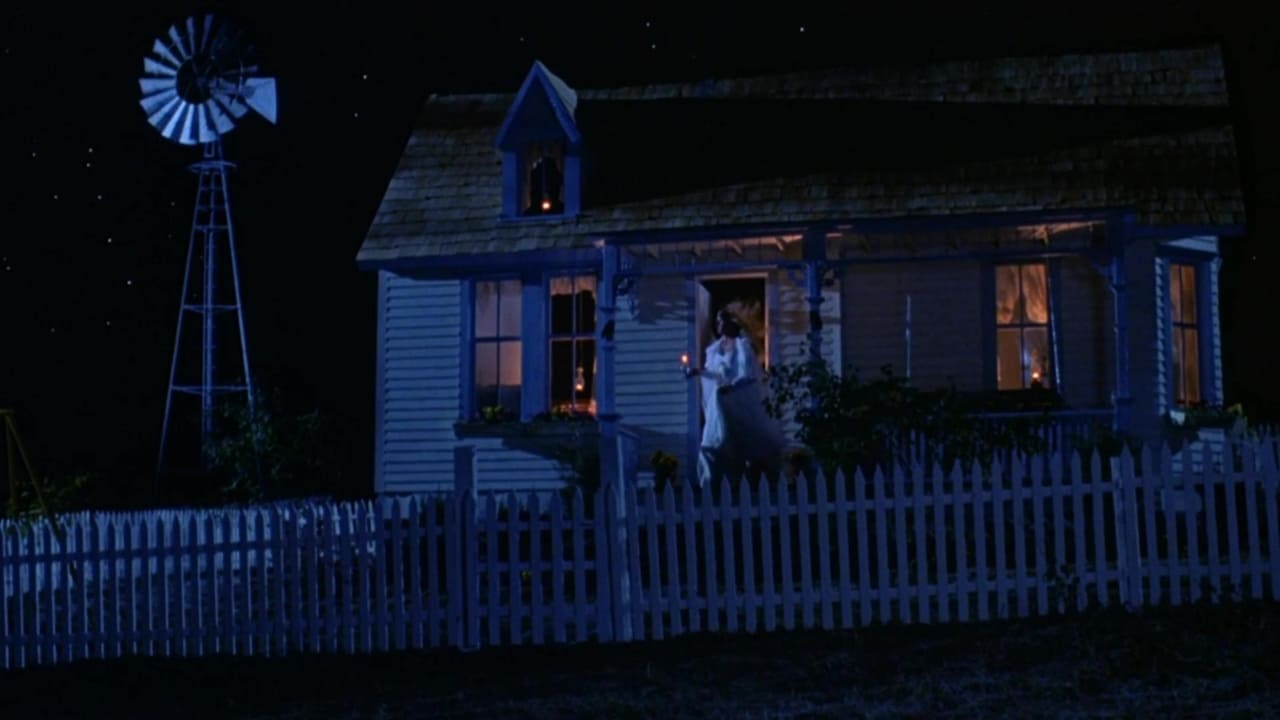
Willowpoint Falls, 1962
Director Frank LaLoggia, who also penned the screenplay, crafts an almost tangible sense of place in the fictional town of Willowpoint Falls. The year is 1962, rendered with a Rockwellian warmth – crisp autumn leaves, cozy family dinners, the innocent rituals of Halloween. But beneath the idyllic surface, something is deeply wrong. This isn't just nostalgia; it's the setup for a violation, the darkening of a seemingly safe world. The atmosphere is thick with unspoken anxieties, captured beautifully through evocative cinematography and Angelo Badalamenti's (yes, that Angelo Badalamenti of Twin Peaks fame) hauntingly beautiful score. It’s a film that feels like autumn – beautiful, but tinged with decay and the promise of encroaching darkness.
An Unwanted Witness
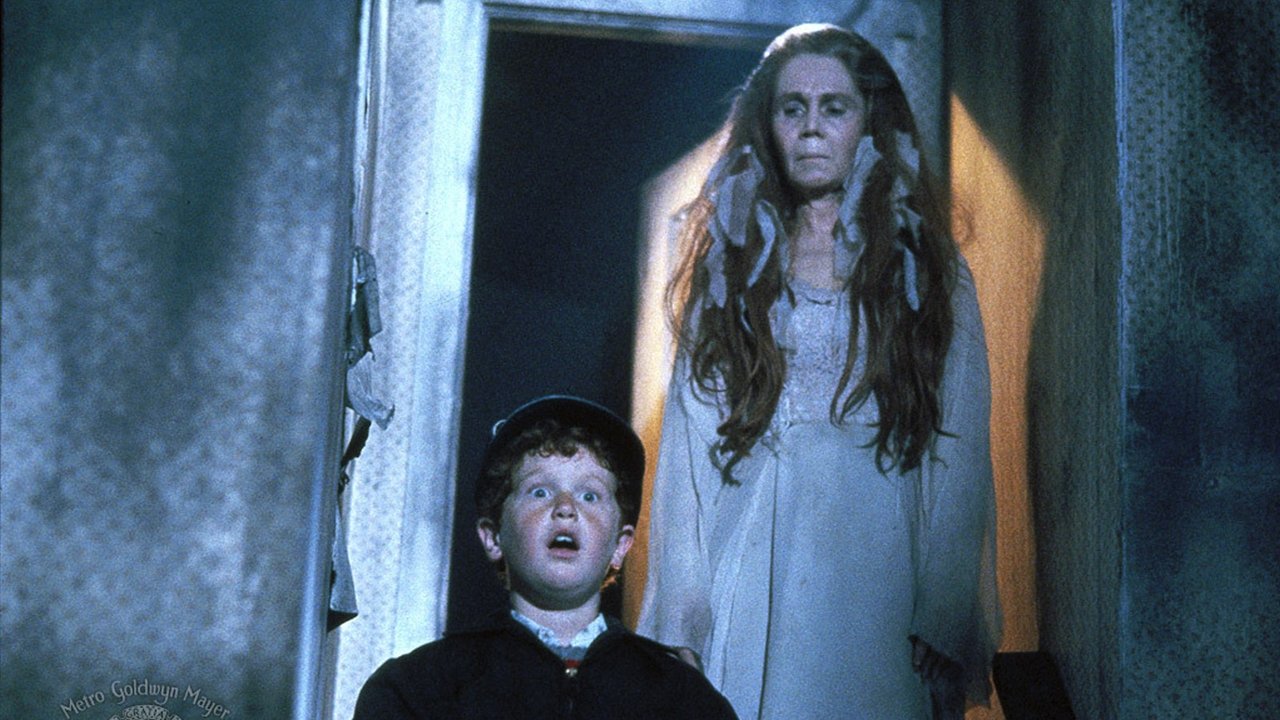
The story unfolds through the eyes of nine-year-old Frankie Scarlatti, played with remarkable sensitivity by Lukas Haas (who already had audiences captivated in Witness (1985)). On Halloween night, Frankie finds himself locked in the school cloakroom after a prank gone wrong. It's here, in the suffocating darkness, that the film delivers its first truly terrifying sequence. He witnesses the spectral replay of a young girl's murder – the ghost of Melissa Ann Montgomery, the first victim of a local serial killer. Moments later, the killer himself returns to retrieve incriminating evidence, nearly making Frankie his next victim. This harrowing encounter leaves Frankie psychically linked to Melissa's ghost and draws him into the town's dark mystery, including the legend of the titular "Lady in White," a phantom said to haunt the nearby cliffs.
More Than Just a Ghost Story
What elevates Lady in White beyond a simple spookfest is its deep emotional core and its willingness to blend genres. It's a coming-of-age story wrapped in a ghost story, interwoven with a murder mystery, and touched by themes of grief, family, and even racial prejudice (though that subplot feels somewhat less developed). Haas carries the film effortlessly, portraying Frankie's terror, curiosity, and burgeoning understanding of the adult world's complexities. We feel his vulnerability acutely, making the threats he faces – both supernatural and horrifyingly human – all the more potent. Supporting performances from Len Cariou as his warm, storytelling grandfather and Alex Rocco as his grieving, pragmatic father add layers of familial warmth and tension.

Retro Fun Facts: A Labor of Love and Fear
Lady in White was a deeply personal project for Frank LaLoggia. The story drew inspiration from a local legend in upstate New York where he grew up, combined with his own childhood memories and fears. This personal investment likely fueled his determination; when major studios balked, LaLoggia poured $1.8 million of his own money into the production, eventually securing the remaining $2.9 million independently for a total budget of around $4.7 million. A gamble, certainly, considering its modest $1.7 million initial box office haul. Yet, like so many gems from the era, it found its devoted audience later, haunting video store shelves and becoming a beloved cult classic on VHS.
The film’s spectral effects, particularly the ghostly apparitions of Melissa, possess that distinct, slightly ethereal quality common in late-80s optical effects. While perhaps dated by today's CGI standards, they retain a disturbing power, especially the sequence where Melissa seems to solidify out of the snowy air. Achieving these moments on a limited budget required ingenuity, contributing to the film's unique, handcrafted feel. Filming primarily in Lyons, New York, helped capture that authentic small-town, mid-century atmosphere crucial to the story's effectiveness. Reportedly, the film initially received an R rating, necessitating some trims to secure the PG-13 that likely helped it reach a broader (though perhaps still slightly too young!) audience back in the day. Doesn't that cloakroom scene still feel genuinely terrifying, regardless of the rating?
Lingering Chills
The film masterfully builds suspense. The initial cloakroom attack is claustrophobic and terrifying. Melissa's ghostly appearances are unsettling rather than overtly shocking. And the climax, involving a desperate chase and a confrontation with the killer near the legendary cliffs, seamlessly merges the supernatural threat with palpable, real-world danger. I distinctly remember renting this tape, likely drawn by the evocative cover art, expecting perhaps a straightforward horror flick. What I got was something far more resonant and melancholic, a film whose scares were rooted in character and atmosphere, leaving a chill that lasted longer than any jump scare. It tapped into that specific childhood fear of the unseen, the feeling that familiar places could hold dark secrets just out of view.
Final Thoughts
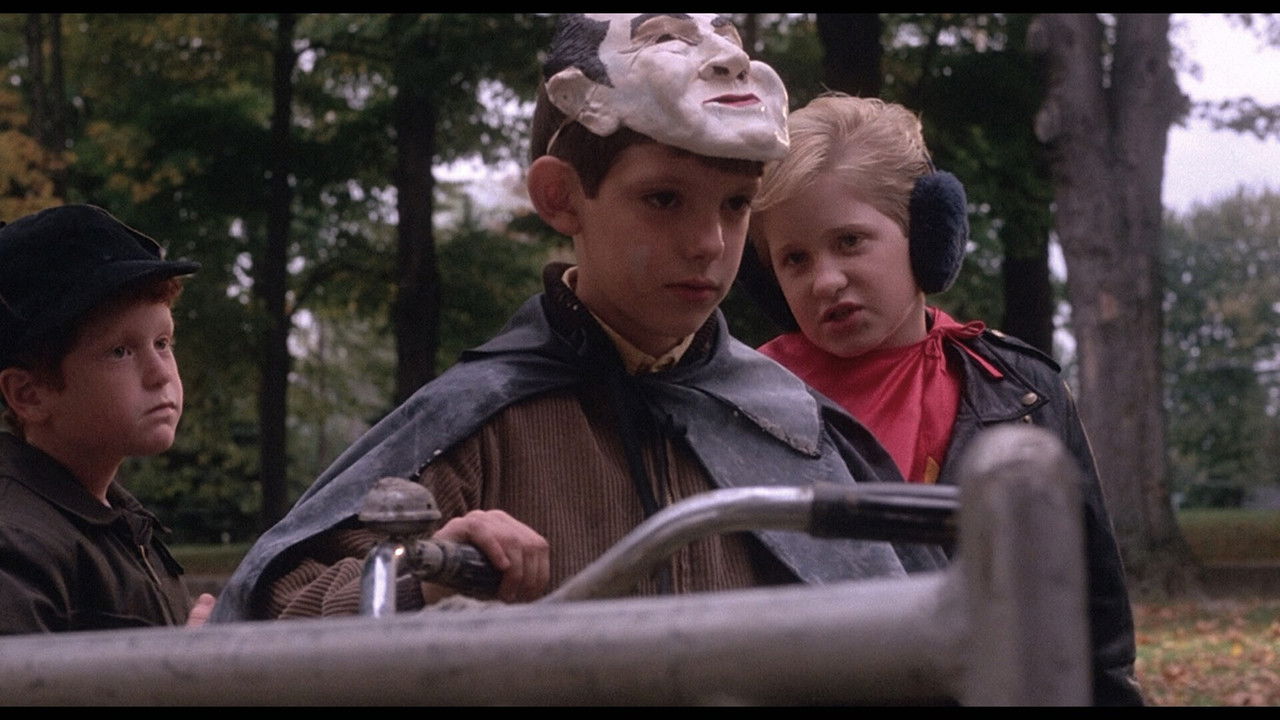
Lady in White isn't perfect. Some plot threads feel a bit underdeveloped, and the pacing occasionally meanders. Yet, its strengths far outweigh its weaknesses. It’s a beautifully crafted, atmospheric, and often genuinely scary film that succeeds as a ghost story, a mystery, and a poignant tale of childhood's end. It stands as a testament to Frank LaLoggia's singular vision and Lukas Haas's compelling performance. It captures a specific kind of autumnal dread, the sort that whispers rather than shouts, making it a standout piece of 80s supernatural cinema.
Rating: 8.5/10
This rating reflects the film's exceptional atmosphere, strong central performance, emotional depth, and successful genre blending. While minor pacing issues and underdeveloped subplots prevent a higher score, its power to genuinely unnerve and move the viewer, combined with its status as a unique and well-loved cult classic from the VHS era, makes it a must-watch. It’s a ghost story with a heart, and its spectral form still lingers powerfully in the landscape of 80s horror.