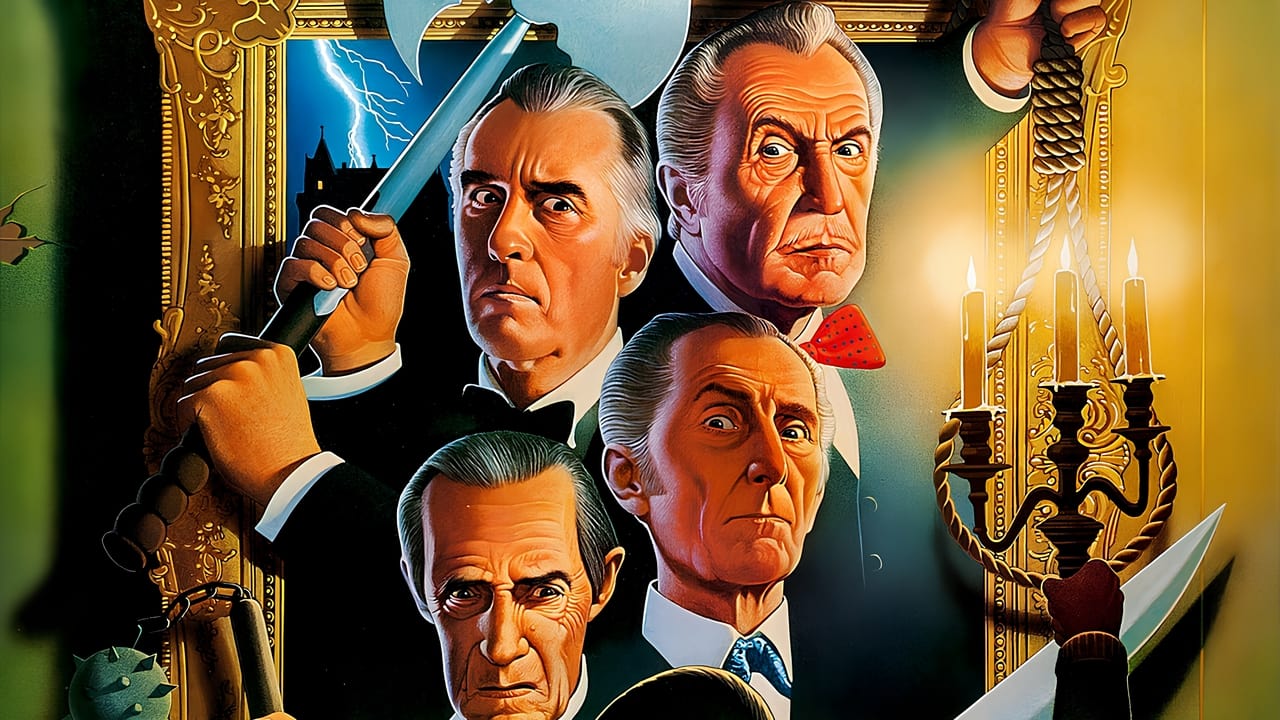
The flickering static clears, the tracking adjusts, and the opening titles roll. Rain lashes against unseen windows, thunder rumbles, and somewhere within the shadowed corners of Blaydhill Manor, four titans of terror are waiting. House of the Long Shadows (1983) isn't just a movie; it feels like an event, a gathering of the ghouls summoned forth by Cannon Films for one last, creaky-door hurrah. Seeing Vincent Price, Christopher Lee, Peter Cushing, and John Carradine share the screen on that worn VHS tape felt less like watching a film and more like stumbling into the world's most legendary (and potentially lethal) dinner party.
A Wager in the Welsh Gloom
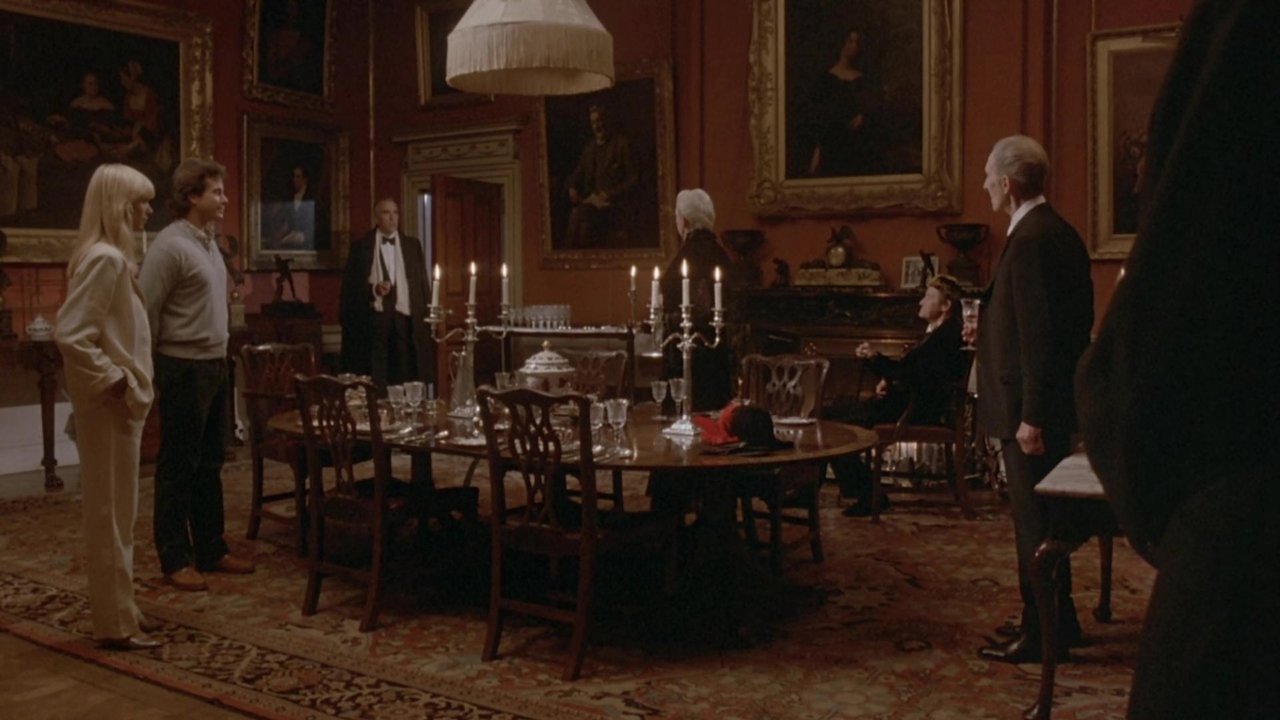
The premise, borrowed loosely from Earl Derr Biggers' novel Seven Keys to Baldpate (itself adapted numerous times), is pure gothic fluff. Young, cocky American author Kenneth Magee (Desi Arnaz Jr.) makes a $20,000 bet with his publisher that he can churn out a Brontë-esque masterpiece in just 24 hours. The catch? He has to do it within the confines of the supposedly deserted Baldpate Manor in the wilds of Wales. Of course, the manor is anything but empty. It’s occupied by the gloriously eccentric Grisbane family and their associates, each one seemingly more unnerving than the last, all drawn back to the house on this particularly stormy night to settle some very old, very dark business.
Director Pete Walker, known more for his gritty, sometimes nasty British exploitation flicks like Frightmare and House of Whipcord, takes a noticeable detour here. He aims for cobweb-draped atmosphere, leaning into the clichés of the "old dark house" subgenre with gusto. Long shadows (naturally), flickering candlelight, secret passages, and a storm that never seems to quit – it’s all here. You can almost smell the damp stone and decay emanating from the screen. While Walker's usual edge is somewhat blunted, perhaps by reverence for his cast or the lighter source material, he still manages to conjure moments of genuine gothic charm. The production design, though likely constrained by a Cannon budget (reportedly around $7.5 million, a respectable sum then but maybe stretched thin for this kind of period piece), effectively creates a sense of isolated unease.
When Legends Assemble
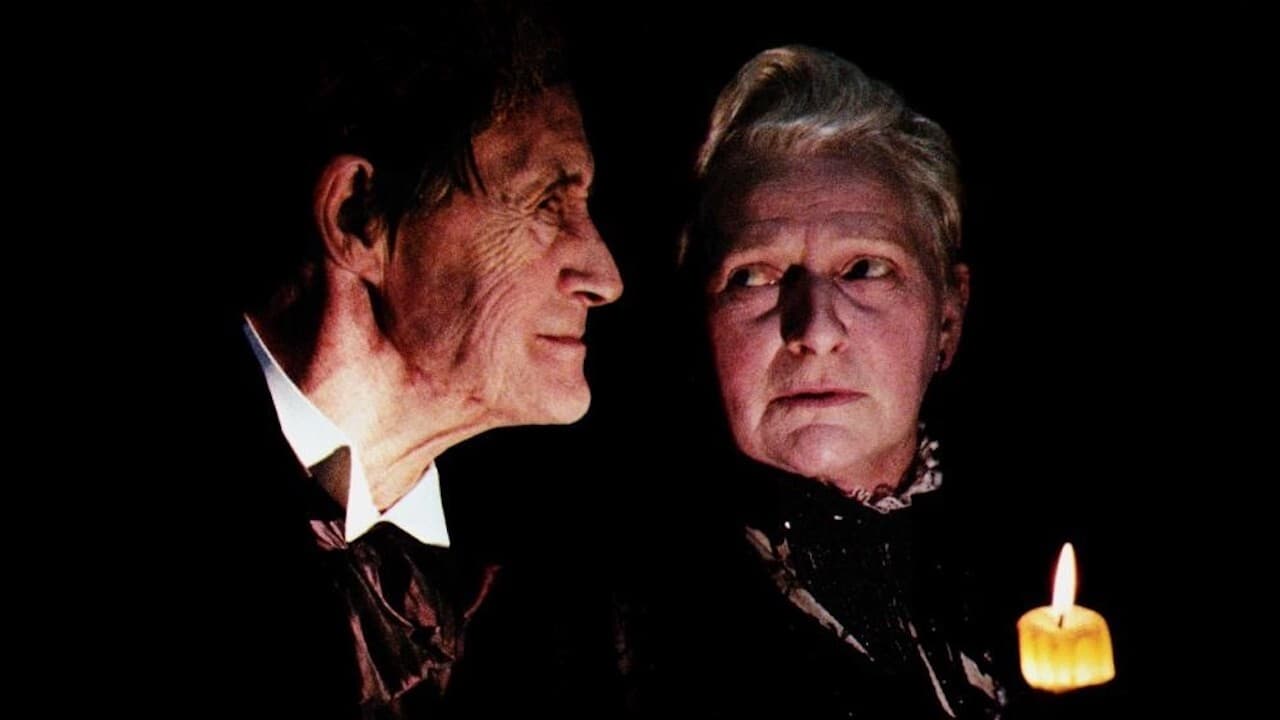
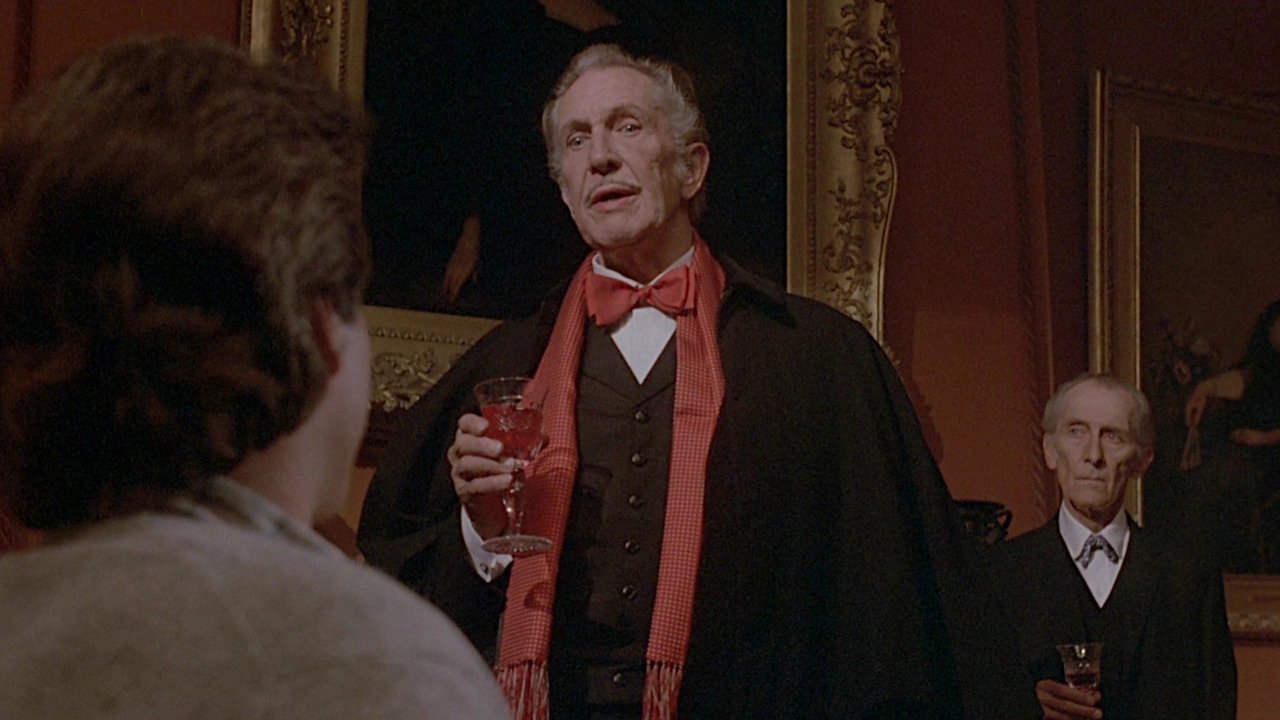
Let's be honest, the plot is secondary. The real reason we slid this tape into the VCR was for them. Vincent Price swans in as Lionel Grisbane, dripping with theatrical charm and barely concealed menace, every line delivered with that unmistakable velvety purr. Watching him relish the absurdity is pure joy. Then there's Christopher Lee as the intense, suspicious Corrigan, seemingly convinced Magee is up to no good. Lee brings his signature gravitas, a grounding force amidst the escalating strangeness. And Peter Cushing, frail but utterly captivating as the gentle, seemingly harmless Sebastian Grisbane, provides the film's heart. It's poignant seeing him here; Cushing had suffered immense personal loss and illness, and taking this role, surrounded by old friends like Lee and Price (with whom he’d shared the screen countless times since their Hammer Horror days), was reportedly a comforting experience. According to Lee, Cushing was initially hesitant due to his health, but the producers rearranged the shooting schedule specifically to accommodate him, a testament to his legendary status. Rounding out the quartet is John Carradine as Lord Grisbane, the ancient patriarch, adding another layer of horror royalty to the proceedings.
Seeing these four icons together – the only time all four would share the screen – is the film's undeniable magic trick. They slip into their roles like comfortable old coffins, playing variations on the personas that made them famous. The script by Michael Armstrong gives them plenty of ripe dialogue to chew on, and their interactions crackle with history, even if the narrative sometimes struggles to give them all equal footing. Desi Arnaz Jr., son of Lucille Ball and Desi Arnaz, holds his own surprisingly well as the outsider caught in this web, acting as the audience's surrogate, bewildered by the gothic madness unfolding around him.
More Tribute Than Terror
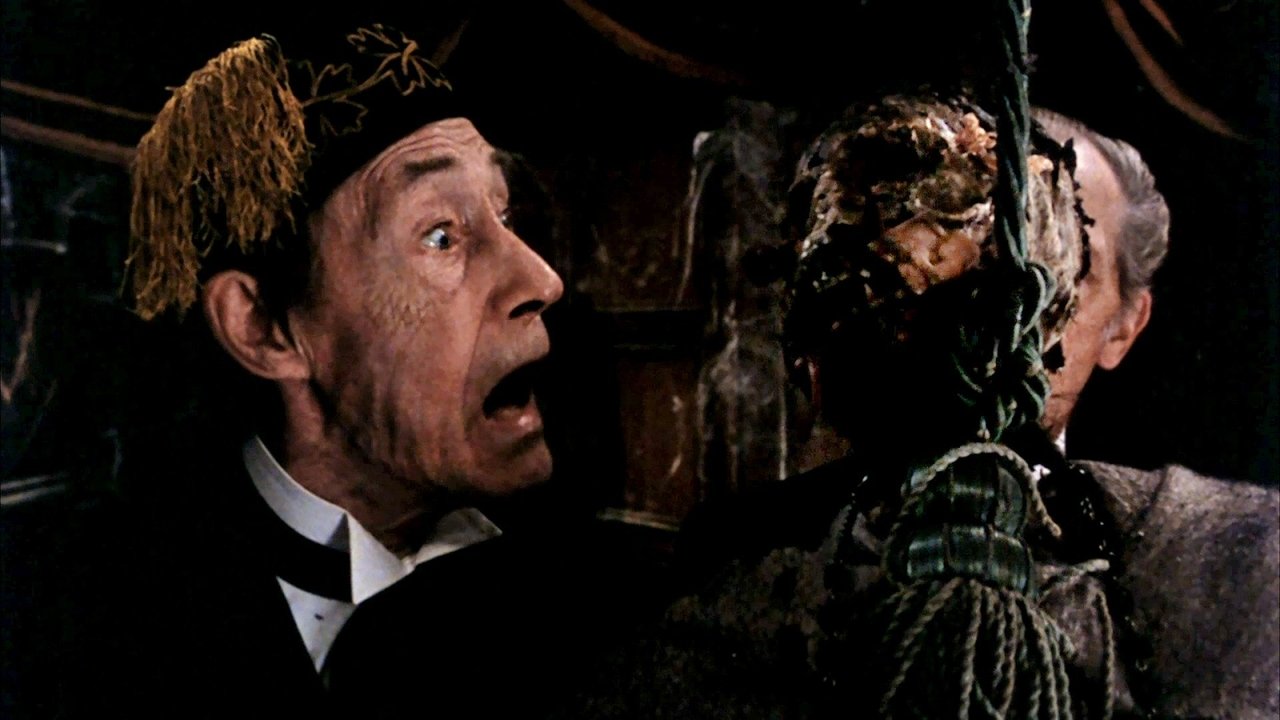
Despite the pedigree and the spooky setting, House of the Long Shadows isn't likely to send shivers down your spine the way a prime Hammer film or one of Price's Poe adaptations might. It operates more as a knowing wink, a playful deconstruction of the genre tropes these actors helped define. There are elements of mystery, a touch of slasher threat, but it’s all wrapped in a layer of affectionate self-parody. The film feels aware of its own casting coup, leaning into the meta-textual thrill of seeing these legends bounce off each other. Remember the marketing? Taglines like "The Masters of Terror in the murder mystery of the year!" played up the reunion angle heavily.
The film builds towards a reveal (Spoiler Alert! though widely known) that essentially reframes everything we’ve seen. It turns out the entire night – the eccentric family, the murders, the dark secrets – was an elaborate hoax orchestrated by Magee's publisher to inspire the very novel Magee was betting he could write. The "family" are all actors. It's a twist that divides audiences; some find it clever and fittingly theatrical, while others feel it deflates the genuine gothic atmosphere the film occasionally manages to build. Personally, watching it back then, the reveal felt like a slightly cheeky rug-pull, less a shock and more an acknowledgement that the real show was always the actors themselves.
Legacy of the Long Shadows
House of the Long Shadows wasn't a box office smash, nor did it redefine horror. Yet, it holds a unique and cherished place for fans of classic horror cinema. It’s a nostalgic curio, a time capsule preserving the moment these four giants shared the same cinematic space. It functions as a final bow for a certain era of gothic horror filmmaking, delivered with affection and a twinkle in its eye. For Golan and Globus at Cannon Films, it represented an unusual departure from the action and ninja movies that were becoming their bread and butter, a gamble on old-school star power that resulted in something charmingly out of step with the slasher-heavy trends of the early 80s. Does it still feel unnerving? Perhaps not in a terrifying way, but the gathering itself carries a powerful, almost melancholic weight.
VHS Heaven Rating: 7/10
Justification: The rating reflects the film's undeniable strength: its legendary cast. Seeing Price, Lee, Cushing, and Carradine together is a 10/10 experience for any classic horror fan. The gothic atmosphere is decently executed (7/10), and the meta-commentary/twist adds an interesting layer (6/10). However, the plot itself is somewhat thin (5/10), the pacing occasionally drags (6/10), and it lacks genuine scares (5/10). It averages out to a solid 7, primarily carried by the sheer joy and historical significance of its cast reunion.
Final Thought: While perhaps not the chilling masterpiece the combined wattage of its stars might suggest, House of the Long Shadows remains a delightful, loving ode to a bygone era of horror. It's less a haunted house movie, more a warm, slightly creaky reunion special featuring the genre's elder statesmen. A must-watch for the cast alone, best enjoyed on a rainy night with the lights down low, purely for the pleasure of their company.