Okay, settle in. Let's talk about a film that arrived on video store shelves feeling both instantly familiar and yet crackling with a slick, modern energy unique to its time. I'm talking about 1986's The Color of Money, a film that carries the weight of legacy on its shoulders but refuses to be just a museum piece. It’s the rare sequel that feels less like a continuation and more like an echo across decades, exploring what happens when the fire dims but the game remains.
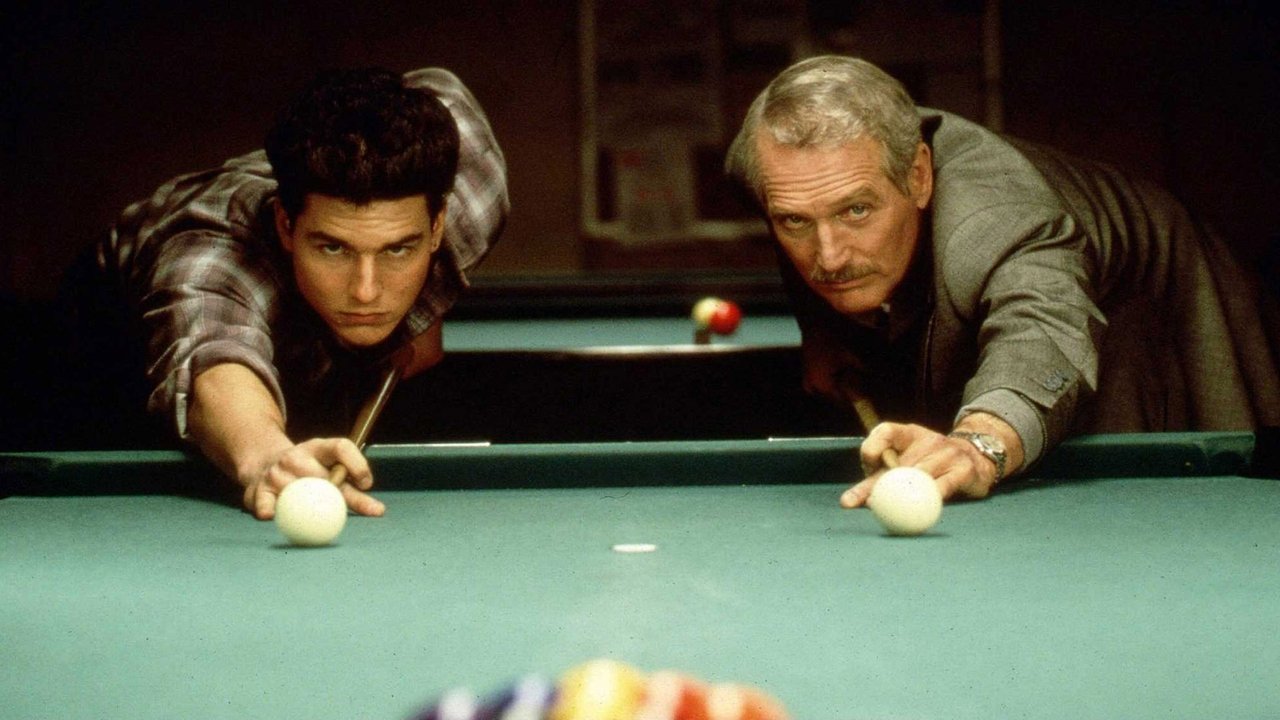
The image that often comes to mind first isn't necessarily a specific pool shot, but the look in Paul Newman's eyes. Twenty-five years after he embodied "Fast" Eddie Felson in the gritty black-and-white world of The Hustler (1961), Newman returns to the character, and the intervening years are etched onto his face. This isn't the hungry, self-destructive Eddie of old. This Eddie is grizzled, settled, selling liquor, the pool cue seemingly hung up for good. But can a hustler ever truly change his stripes? The film doesn't offer easy answers, instead choosing to watch Eddie circle back to the life he left behind, drawn by the magnetic, raw talent of a young hotshot.
Generational Friction on Felt
That hotshot is Vincent Lauria, played by Tom Cruise at the absolute zenith of his cocksure, megawatt-smile 80s stardom, fresh off Top Gun. The energy clash between Newman’s weary experience and Cruise’s explosive, almost naive arrogance is the pulsing heart of the film. Vincent isn't just good at pool; he's a performer, all flashy moves and peacocking confidence. He plays pool like a rockstar, sometimes forgetting the 'hustle' part of the equation. Eddie sees the potential, the pure, untapped skill, but also the dangerous lack of discipline. Can he mold this kid, teach him the real game – the long con, the psychology, the art of losing on purpose to win big later?

Their dynamic is fascinating to watch unfold. Paul Newman is simply masterful. It's a performance layered with regret, submerged ambition, and the dawning, uncomfortable realization that teaching Vincent is reawakening his own dormant hunger. It's less about the money, you feel, and more about reclaiming something lost, proving he still is Fast Eddie. It’s no surprise this performance finally netted Newman his long-overdue Best Actor Oscar, not just as a career acknowledgment, but for the profound depth he brings here. Cruise, for his part, perfectly embodies the unfiltered energy Vincent requires. He’s irritatingly confident, charismatic, and ultimately, perhaps incapable of the kind of cynical calculation Eddie wants to impart. Their scenes together crackle, a complex dance of mentorship, rivalry, and mutual exploitation.
The Sharp Angles of the Game
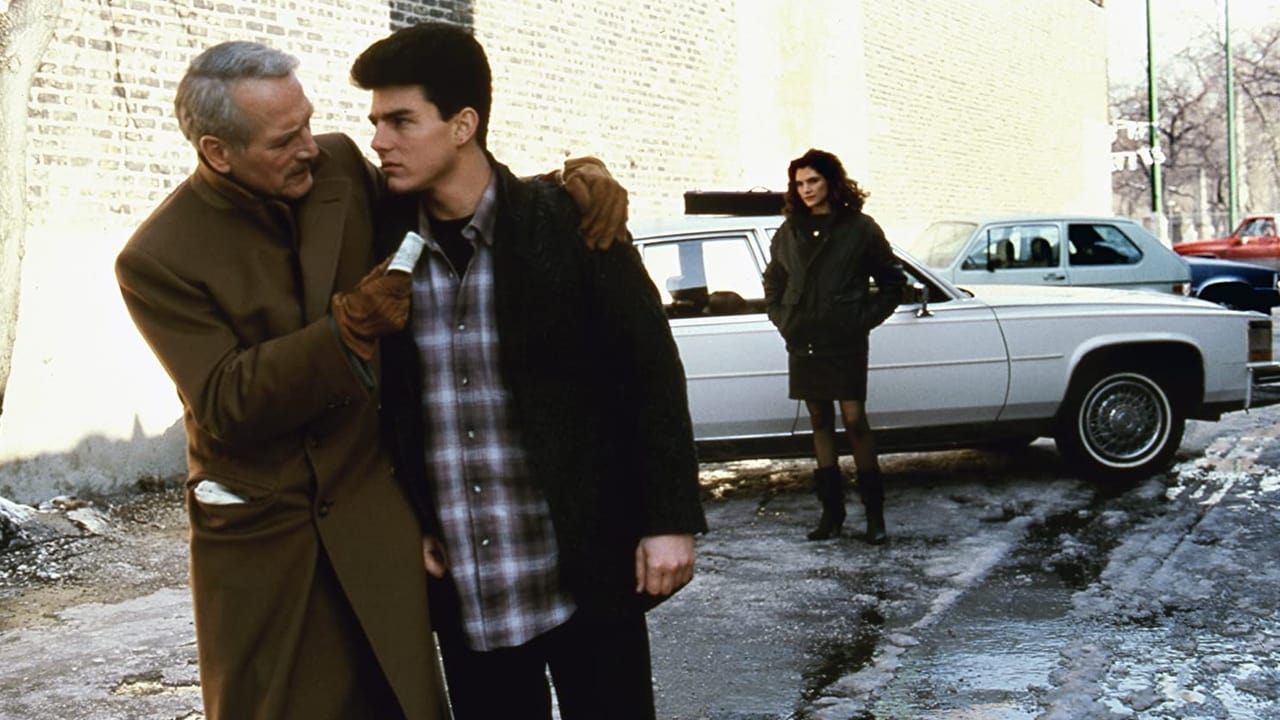
Caught between these two forces is Carmen, played with cool intelligence by Mary Elizabeth Mastrantonio. She’s Vincent’s girlfriend and business manager, sharp, pragmatic, and arguably more attuned to the nuances of the hustle than Vincent himself. Mastrantonio, who had already impressed in films like Scarface, holds her own effortlessly against the two male leads. Carmen isn't just a passive observer; she's an active player in the game, understanding the angles, managing the money, and navigating the shifting loyalties. Her presence adds a crucial layer, preventing the film from becoming purely a two-hander ego battle. Doesn't her clear-eyed assessment of the situation often feel like the most grounded perspective in the room?


Scorsese Makes Pool Cinematic
Let's talk about the direction. This was Martin Scorsese returning to more mainstream studio filmmaking after the challenging production of After Hours, and bringing his signature dynamism to the world of nine-ball. Working with the brilliant cinematographer Michael Ballhaus (who would lens several more Scorsese pictures, including Goodfellas), Scorsese makes the pool games visually electric. Forget static shots of balls rolling into pockets; the camera swoops, circles, and dives, capturing the kinetic energy, the intense focus, the psychological warfare happening around the table. The sharp cuts, the use of close-ups on eyes and hands, the pulse of Robbie Robertson’s (from The Band) distinctive score – it all combines to make pool feel urgent and exciting.
It’s fascinating to learn that Scorsese, remarkably, hadn’t seen The Hustler before taking the project on. He and writer Richard Price (adapting Walter Tevis's novel) approached it more as a standalone character study about Eddie Felson now, rather than being strictly beholden to the original's tone or specific plot points. This perhaps explains why The Color of Money feels so distinctly like an 80s Scorsese film – slicker, faster, drenched in neon and synthesizers, compared to the smoky, noirish feel of Robert Rossen's 1961 classic.
Retro Fun Facts
- Practice Makes Perfect: While Newman was already a decent pool player, Tom Cruise threw himself into training, reportedly practicing 12 hours a day to look convincing. He performed nearly all his own shots, with the notable exception of a complex jump shot over two balls, which was executed by professional player Mike Sigel.
- Oscar Night: Newman had been nominated seven times before finally winning for The Color of Money. He wasn't present at the ceremony, accepting via satellite, stating famously, "It's like chasing a beautiful woman for 80 years. Finally, she relents, and you say, 'I'm terribly sorry. I'm tired.'"
- Budget and Box Office: Made for around $13.8 million, the film was a solid hit, grossing over $52 million in the US alone (that's roughly $145 million today), proving Scorsese could deliver commercially without entirely sacrificing his artistic sensibilities.
- The Ending: Spoiler Alert! The film’s famous final lines – Vincent asking, "What're you gonna do?" and Eddie, chalking his cue with a confident grin, replying, "I'm back!" – leave things on an ambiguous, charged note. Is it a triumphant return or a cynical resignation to his nature? It still sparks debate among fans.
Reflection in the Eight Ball
Watching The Color of Money today, perhaps after pulling that well-worn VHS tape off the shelf, evokes a specific kind of 80s nostalgia – the moody lighting of the pool halls, the sharp fashion, that particular blend of star power and directorial craft. But beneath the surface gloss, it remains a compelling study of ego, aging, and the addictive nature of competition. It asks potent questions about whether we can truly escape our past, or if the core of who we are inevitably pulls us back. What does it truly mean to win, and what's the cost?
The film isn't perfect; some find its 80s aesthetic dates it more than the timeless quality of The Hustler, and the plot takes a somewhat episodic road-movie structure. Yet, the central performances and Scorsese's visual flair elevate it significantly. It's a film that lingers, not just for the satisfying click of the balls, but for the unresolved tensions between its characters and the questions it leaves hanging in the smoky air.
Rating: 8/10
Justification: This score reflects the powerhouse performances, particularly Paul Newman's Oscar-winning turn, Martin Scorsese's vibrant direction that makes pool thrillingly cinematic, and the compelling, if sometimes cynical, exploration of its themes. While perhaps not possessing the raw, existential depth of The Hustler, it stands tall as a smart, stylish, and exceptionally well-acted character drama that perfectly captured a moment in time for its stars and director.
It’s a film that reminds us that sometimes, the most compelling games aren't just played on the felt, but within the hearts and minds of the players themselves. And for Fast Eddie Felson, the game, it seems, was never truly over.