It begins not with a finish line, but a flatline. The frantic energy of the trading floor, a world of sharp suits and sharper instincts, suddenly gives way to the deafening silence of catastrophic loss. This abrupt shift is where 1986's Quicksilver throws us, watching a young, cocksure Kevin Bacon as Jack Casey, riding high one minute and crashing harder than any bike ever could the next. It's a premise that feels almost like an 80s fever dream: ditch Wall Street for… bicycle messengering? Yet, there’s an undeniable, almost naive charm to this tale of finding oneself amidst the pulsing arteries of the city.
### Trading Pinstripes for Pedal Power
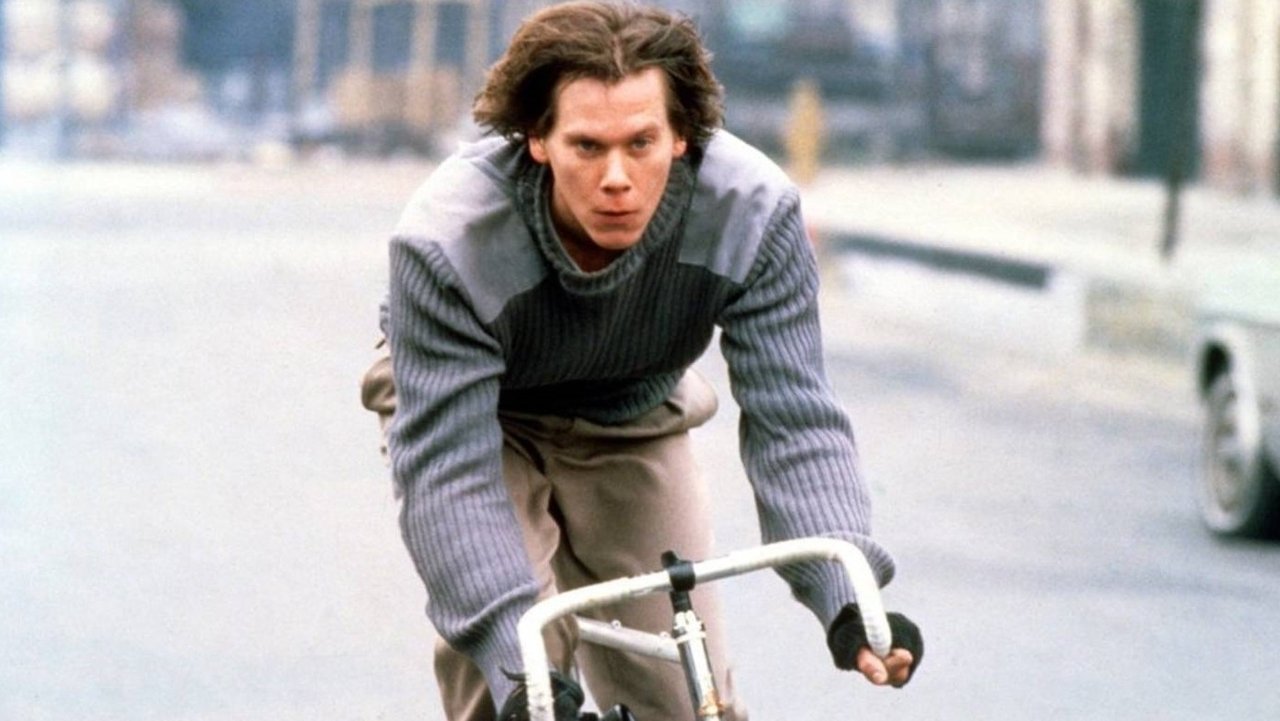
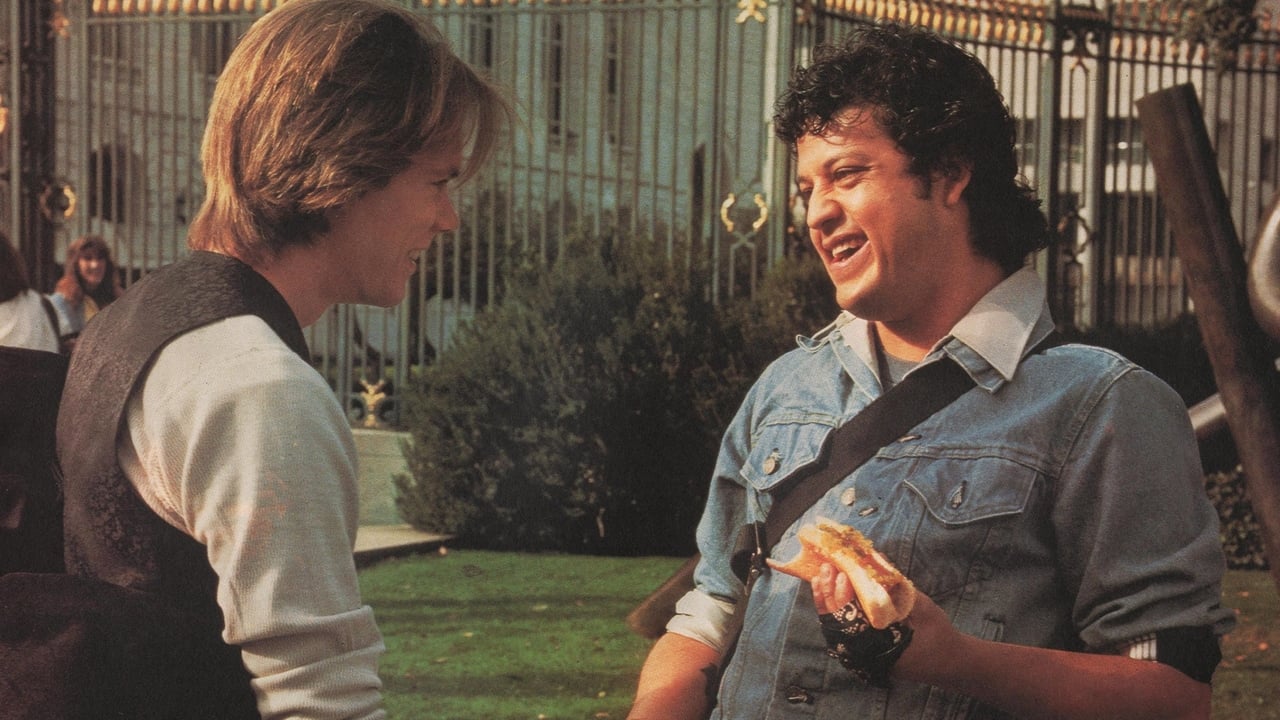
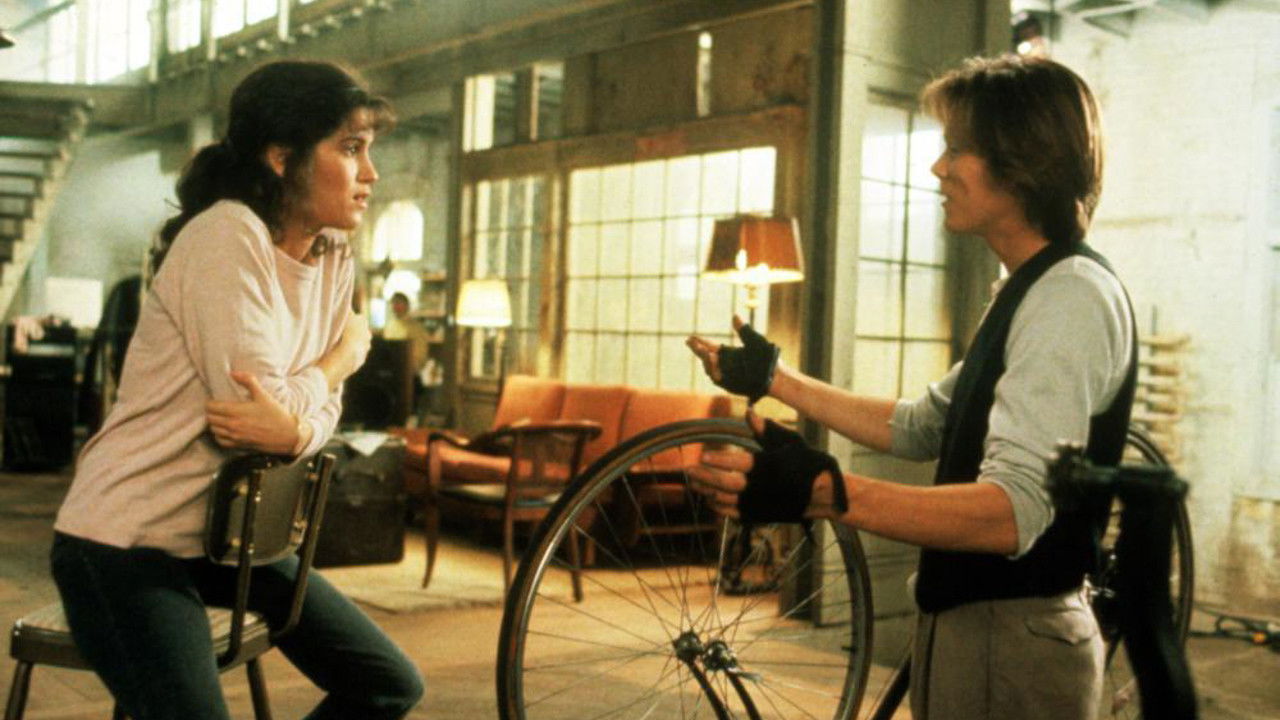
Leaving behind the wreckage of his financial career (and a very concerned family), Jack trades his ticker tape for a fixed-gear bike, plunging into the chaotic, high-octane world of San Francisco's bike messengers. Director and writer Thomas Michael Donnelly attempts to paint this subculture as a kind of urban knighthood – gritty, dangerous, but fiercely independent. Jack quickly finds camaraderie with the street-smart Hector (Paul Rodriguez, bringing his trademark energetic humor) and catches the eye of the tough-but-vulnerable Terri (Jami Gertz, radiating earnestness). The film really tries to sell the romance and freedom of this life, contrasting the sterile pressure of Jack's past with the visceral thrill of weaving through traffic. For anyone who remembers the sight of messengers darting through city streets back then, seemingly defying physics and traffic laws, Quicksilver taps into that mystique.
The transition, admittedly, requires a hefty suspension of disbelief. Could a former ace trader truly find zen dodging taxis? The script doesn't always make the psychological leap convincing, but Kevin Bacon, fresh off the seismic success of Footloose (1984), throws himself into the role with characteristic intensity. He sells the physical demands, the brooding introspection, and even the slightly absurd moments – like the infamous "bike dance" sequence in his apartment. It’s a scene both mesmerizing and faintly ridiculous, a perfect slice of 80s cinematic ambition. Fun fact: while Bacon’s Footloose dance training reportedly helped, much of the truly complex bike ballet was performed by professional cyclist and stunt double Edd FUng.
### The Need for Speed (and Stunts)
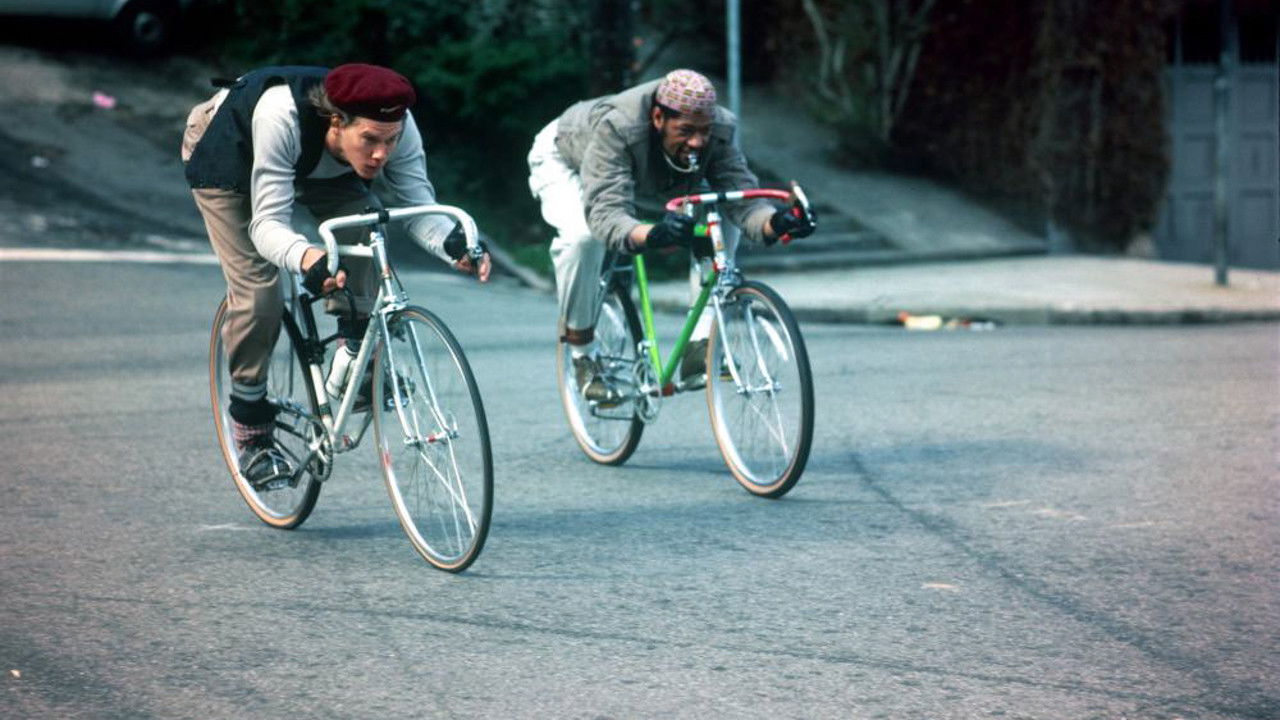
Let's be honest: the real star of Quicksilver isn't the plot, it's the pedaling. The film comes alive during the extended bike sequences. Shot on location in San Francisco (with some parts filmed in LA), the camera work puts you right there on the handlebars, capturing the exhilarating speed and genuine peril of the job. Forget CGI – this was the era of practical stunts, and Quicksilver employed actual competitive cyclists and skilled stunt performers to execute breathtaking maneuvers through unforgiving urban landscapes. Watching them navigate steep hills, dodge opening car doors, and narrowly avoid collisions feels kinetic and real in a way modern effects often miss. You can almost feel the wind and the adrenaline. It’s these moments that truly deliver on the film's title promise. Keep an eye out too for a young Laurence Fishburne (billed as Larry Fishburne back then!), adding a welcome dose of cool intensity as fellow messenger Voodoo.
### Hitting Some Narrative Potholes
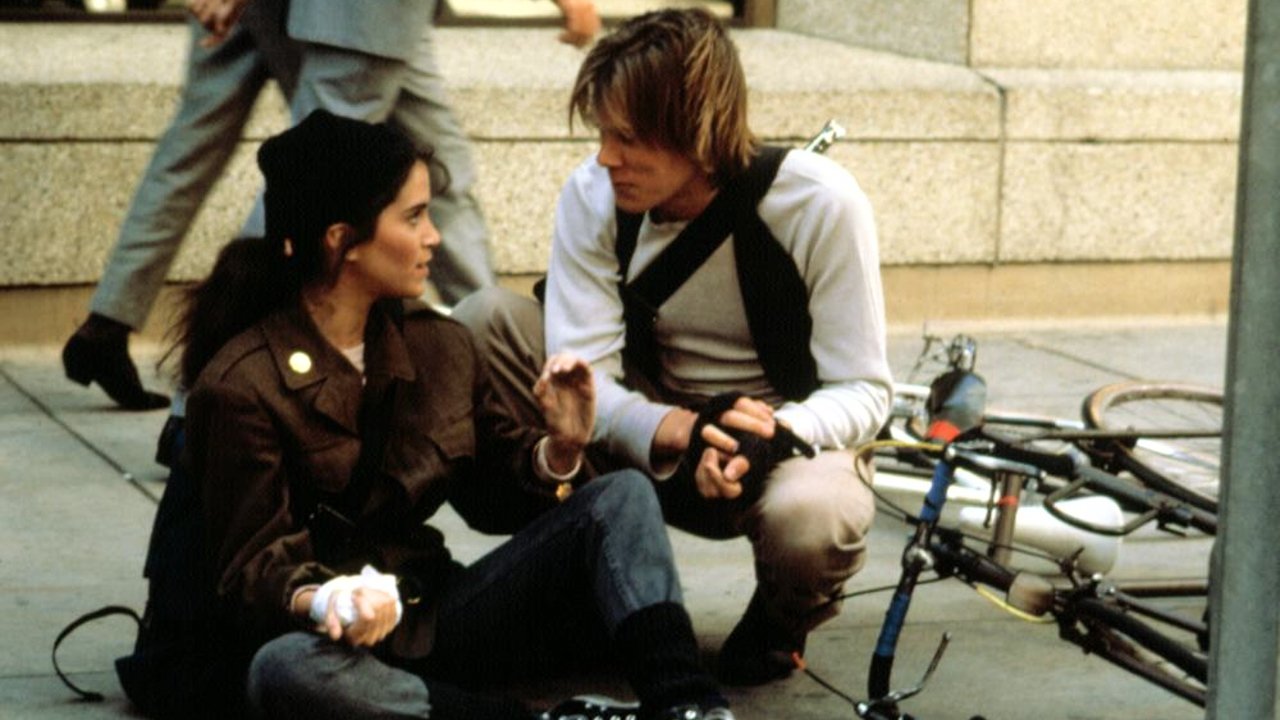
Where Quicksilver arguably wobbles is in its narrative trajectory. After establishing the messenger world and Jack's place within it, the film swerves into a rather generic crime thriller subplot involving a dangerous local gangster named Gypsy (Rudy Ramos) who has Terri in his sights. This shift feels somewhat tacked-on, pulling focus from the more interesting personal journey of Jack and the unique setting. It attempts to raise the stakes but mostly just feels like a conventional way to force a climax, complete with Jack needing to use his old skills to save his new friends.
The film didn't exactly set the box office alight either, grossing around $8.6 million against its estimated $9 million budget, and critical reception at the time was decidedly mixed (it currently holds a chilly 13% on Rotten Tomatoes, though its IMDb score is a more forgiving 5.6/10). Critics pointed to the thin plot and sometimes awkward dialogue, finding the central premise underdeveloped. Even the soundtrack, featuring contributions from Roger Daltrey (The Who) and Tony Banks (Genesis), while pulsing with pure 80s synth energy, couldn't quite elevate the film to blockbuster status. It seemed destined for the "New Releases" wall at the video store and, perhaps inevitably, the cherished shelves of cult film fans.
### Why It Still Rolls Along
So why do we still talk about Quicksilver? For many, it’s pure nostalgia. It captures a specific mid-80s aesthetic and energy – the fashion, the music, the earnest belief in finding oneself through unconventional means. Kevin Bacon is magnetic, proving his star power could carry even uneven material. The bike stunts remain genuinely impressive and offer a tangible thrill. And there's something undeniably appealing about its underdog spirit, both in the story and in the film's own history as a commercial non-starter that found a second life on VHS. It’s one of those films you might have caught on a rainy Saturday afternoon, rented on a whim, and found yourself unexpectedly drawn into its world of urban cowboys on two wheels. It tried to be profound, maybe fell a bit short, but delivered some unforgettable action along the way.
***
VHS Heaven Rating: 6/10
Quicksilver is undeniably flawed, with a script that struggles to balance its disparate elements. However, Kevin Bacon's committed performance, the legitimately thrilling practical bike stunts, and its earnest snapshot of a bygone urban subculture give it a unique, enduring charm. It’s not a masterpiece, but it’s a ride worth taking for fans of 80s cinema and impressive physical filmmaking.
It’s a film that reminds you sometimes the most interesting journeys happen when you ditch the fast lane for the bike lane, even if you hit a few bumps along the way.