The first time the snow crunches underfoot in Norman Jewison's Agnes of God, you feel it – a chill that goes deeper than the Quebec winter depicted on screen. Released in 1985, this wasn't your typical Friday night video rental alongside the action heroes and teen comedies dominating the shelves back then. Watching it on VHS, perhaps on a buzzing CRT screen, felt like stumbling upon something hushed, intense, and profoundly unsettling. It was a film that demanded quiet contemplation, a film that didn't offer easy answers but instead left you wrestling with questions of faith, trauma, and the very nature of belief long after the tape clicked off.

A Cloistered Mystery
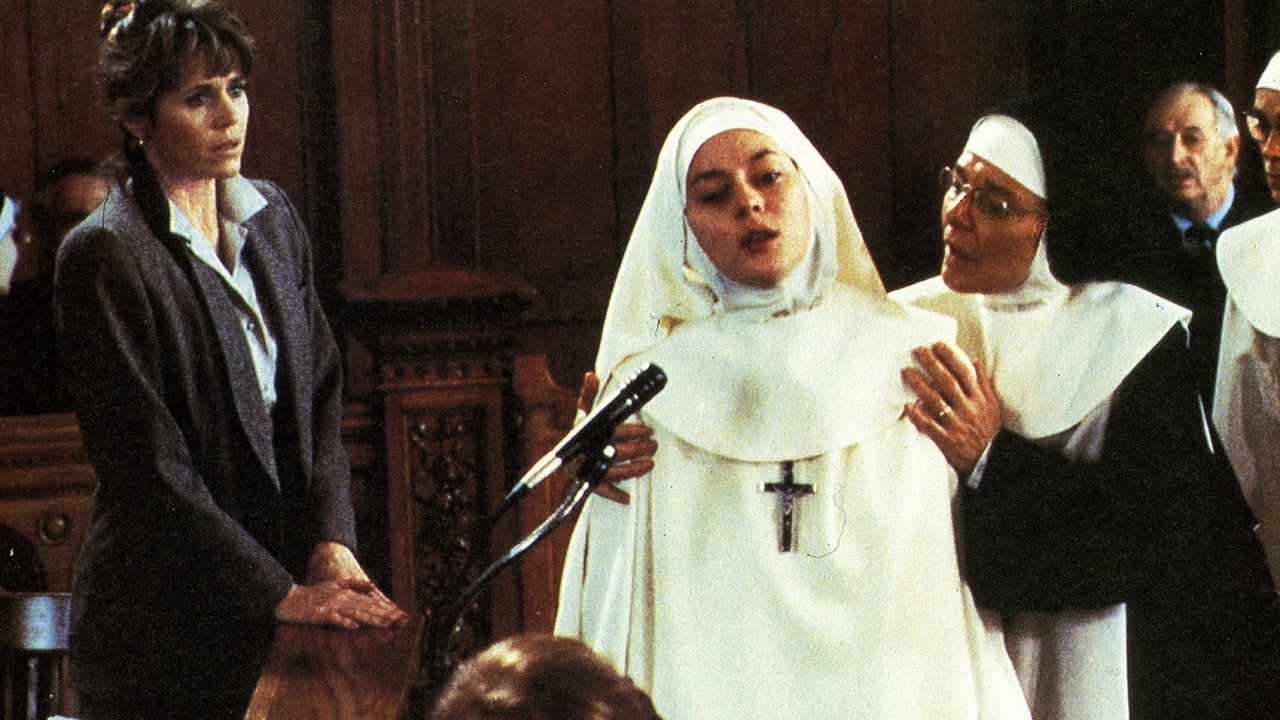
The premise itself is stark and compelling: a dead newborn is found in the convent room of Sister Agnes (Meg Tilly), a young, ethereally innocent nun who claims no memory of the pregnancy or the birth. The court appoints Dr. Martha Livingston (Jane Fonda), a psychiatrist wrestling with her own lapsed Catholicism and personal tragedies, to determine Agnes's sanity. Standing between the psychiatrist's probing questions and the fragile nun is Mother Miriam Ruth (Anne Bancroft), the convent's pragmatic, fiercely protective Mother Superior, who suspects something more divine – or perhaps just more complicated – might be at play. What unfolds is less a whodunit and more a psychological and theological pressure cooker, a three-way confrontation between science, faith, and the potentially devastating power of buried memory.
An Actor's Crucible
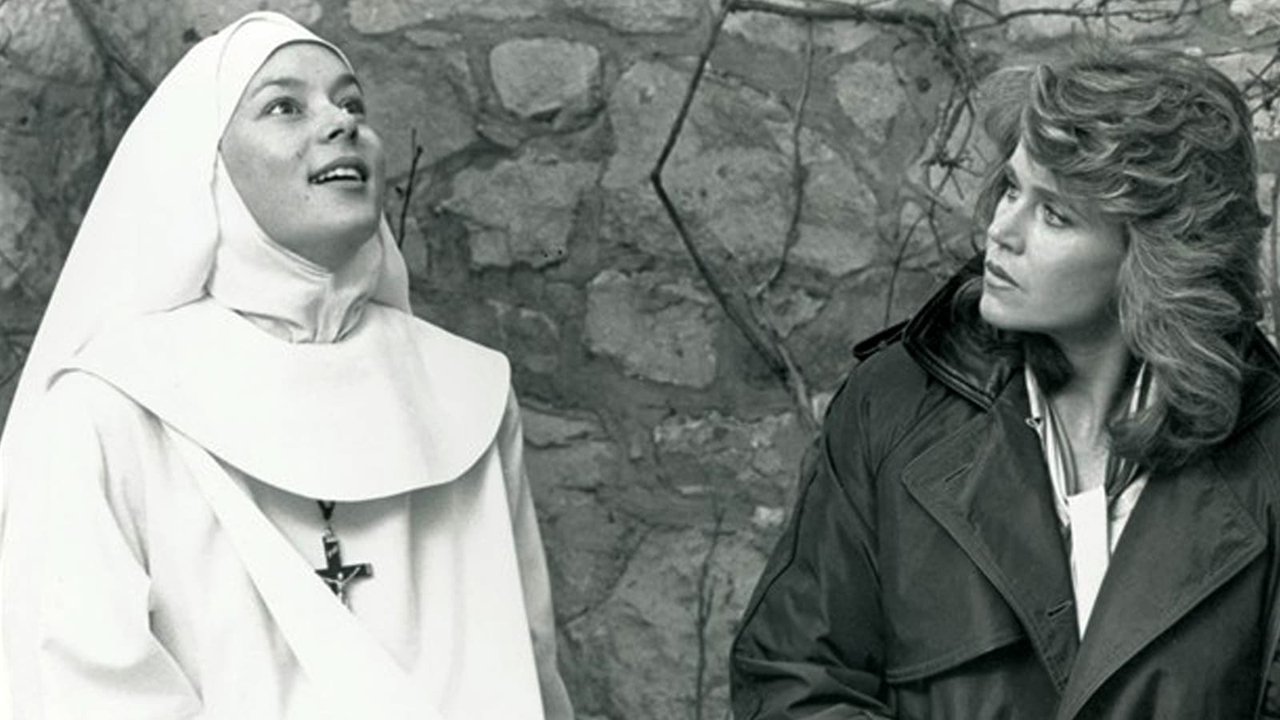
Agnes of God lives and breathes through its central performances, a trifecta of actresses operating at the peak of their powers. Jane Fonda, embodying the skeptical modern world, brings a sharp intelligence and barely concealed woundedness to Dr. Livingston. Her determination to uncover the "truth" is fueled as much by professional duty as by her own unresolved conflicts with the Church and the loss of faith. You see the flicker of doubt, the reluctant empathy that wars with her clinical detachment. Fonda makes Livingston more than just an investigator; she’s a mirror reflecting the audience's own potential skepticism.
Opposite her, Anne Bancroft is magnificent as Mother Miriam Ruth. It’s a performance of immense authority and subtle complexity. Bancroft, who received an Oscar nomination for this role (one of three the film earned), navigates the character's fierce loyalty, her shrewd understanding of the world outside the convent walls, and her own deeply held, perhaps tested, faith with masterful control. Her verbal sparring matches with Fonda are electric, representing the film's central ideological clash. Interestingly, John Pielmeier, who adapted his own successful Broadway play for the screen, ensures neither side is presented as wholly right or wrong. Mother Miriam isn't a naive obstructionist; she's a seasoned leader navigating an impossible situation, wary of the damage Livingston's methods might inflict.
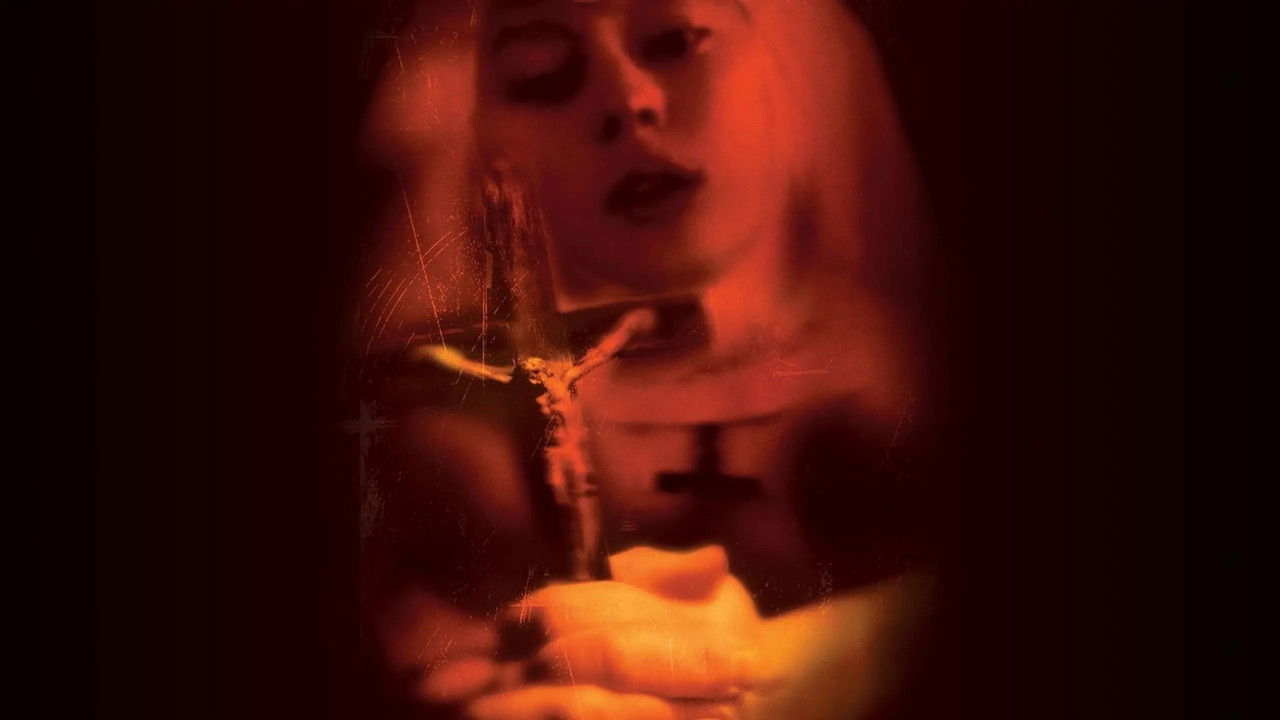
And then there is Meg Tilly. Her portrayal of Sister Agnes is haunting, almost otherworldly. Also nominated for an Academy Award (Best Supporting Actress), Tilly embodies a terrifying innocence, a childlike state that might be genuine divine connection, profound psychological dissociation, or something else entirely. Her wide eyes, angelic singing voice (Tilly did her own singing), and moments of startling, almost feral intensity create a character who feels both impossibly pure and deeply broken. It’s a physically and emotionally demanding role, particularly during the controversial hypnosis scenes (Spoiler Alert! where fragments of a potential sexual assault and the traumatic birth emerge), and Tilly commits completely, leaving the audience uncertain of Agnes’s state right until the ambiguous end. Was she touched by God, or terribly damaged by man? The film wisely refuses to definitively say.
Whispers and Shadows
Director Norman Jewison, already renowned for tackling complex social issues in films like In the Heat of the Night (1967), brings a measured, almost reverent approach to the material. He uses the stark beauty of the Canadian locations (filmed primarily in Montreal and rural Ontario) and the confined, shadowed interiors of the convent to create a palpable sense of isolation and spiritual tension. The cinematography by Sven Nykvist (a frequent collaborator with Ingmar Bergman) enhances this, often framing the characters against austere backgrounds, emphasizing their psychological confinement. Georges Delerue's evocative score further deepens the mood, managing to be both beautiful and subtly unnerving. Jewison allows the film's power to reside in the charged silences, the intense dialogues, and the expressive faces of his leads, rather than resorting to melodrama.
The film wasn't without its detractors upon release, particularly from some Catholic groups who felt it was disrespectful or sensationalistic. Yet, watching it now, it feels less like an attack on faith and more like a profound exploration of faith – its comforts, its complexities, and its sometimes baffling intersections with the harsh realities of the world. Pielmeier's script retains the stage play's intense focus on character and dialogue, creating a chamber piece where ideas and emotions are the primary drivers of the narrative.
Why It Lingers on the Shelf
Pulling Agnes of God off the shelf today evokes a specific kind of nostalgia – not just for the tactile feel of the VHS box, but for a time when mainstream cinema occasionally dared to present audiences with such challenging, ambiguous adult dramas. It wasn’t a film designed for easy consumption; it was meant to provoke thought and discussion. Does Dr. Livingston find the answers she seeks? Does Mother Miriam truly protect Agnes? And what becomes of Agnes herself, caught between the forces of heaven and earth? These aren't questions with simple answers, and perhaps that's the point. The film respects the mystery it presents.
It's a testament to the power of performance-driven storytelling, where the internal landscapes of the characters are as vast and compelling as any physical setting. Remembering watching this back in the day, perhaps after convincing your parents it wasn't that kind of controversial movie, it felt significant – a serious film asking serious questions.
Rating: 8.5/10
This score is earned through the sheer force of the central performances, particularly Bancroft and Tilly's Oscar-nominated turns, and Fonda's grounded portrayal of scientific inquiry meeting intractable mystery. Jewison's sensitive direction, Nykvist's atmospheric cinematography, and Pielmeier's tightly focused, thought-provoking script elevate Agnes of God beyond a simple mystery into a compelling examination of faith, trauma, and the unknowable spaces in the human psyche. While its pacing is deliberate and its themes heavy, the film's refusal to offer easy resolutions makes it all the more powerful and resonant.
Agnes of God remains a haunting piece of 80s cinema, a quiet storm that leaves you pondering the nature of miracles and the scars we carry long after the screen fades to black. What truth, ultimately, resides in that snow-covered convent?