Alright, rewind your minds with me for a moment. Forget the sprawling epics and explosive blockbusters that dominated the video store shelves. Sometimes, the most potent jolts of cinematic memory come from the unexpected corners, the short films tucked away on compilation tapes or catching your eye at a late-night animation festival screening on some fuzzy public access channel. That's the space where a little six-minute wonder from 1984 called Jumping (ジャンピング) resides – a film that might have bounced right past you, but once seen, is impossible to forget.
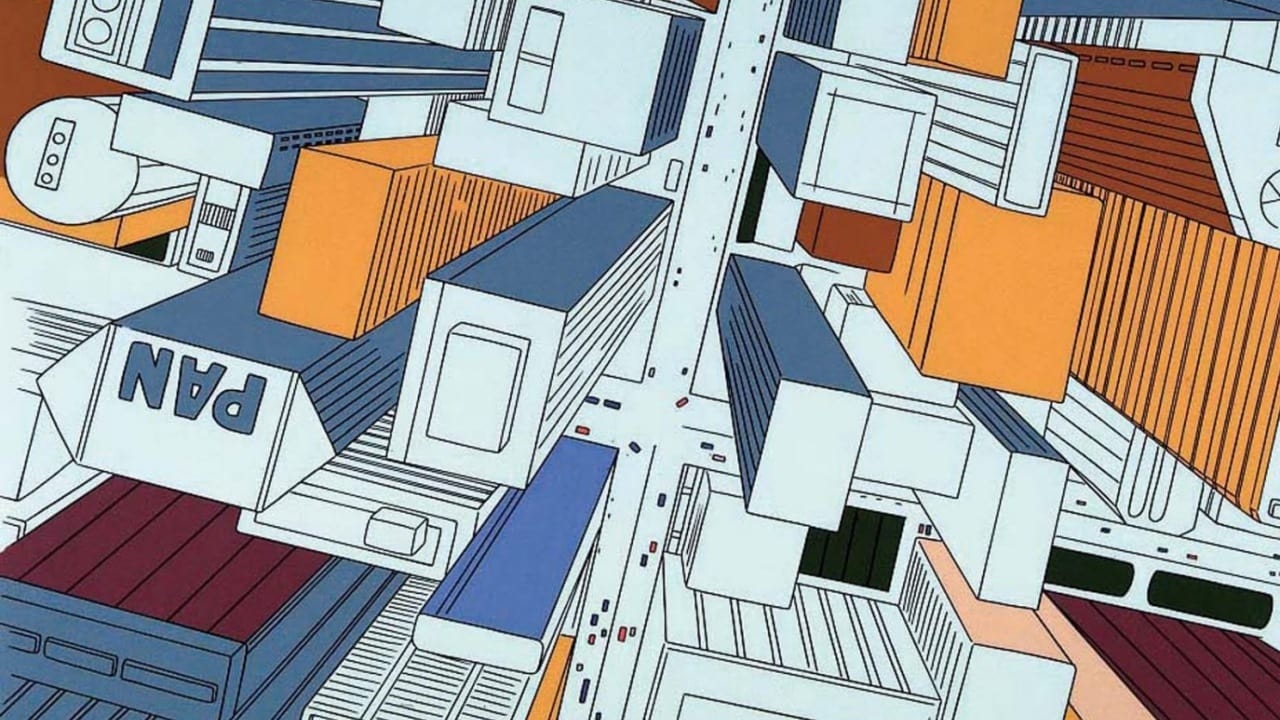
This isn't your typical Saturday morning fare. Crafted by the legendary Osamu Tezuka – yes, the very same "Godfather of Manga" who gave us cultural titans like Astro Boy and Kimba the White Lion – Jumping is a deceptively simple, utterly captivating experimental piece. There are no recurring characters, no intricate plot, just a single, continuous point-of-view shot simulating the perspective of... well, someone jumping. Or perhaps, something.
A Leap of Faith into the Unknown
The film starts innocuously enough. We see the world from ground level, maybe a child's height. Each jump takes us a little higher – over a fence, onto a rooftop. The rhythm is hypnotic, the simple line-drawn animation clean and effective. It feels playful, almost childlike. Remember that feeling of boundless energy, where gravity felt like less of a rule and more of a suggestion? Jumping taps right into that primal urge to leap higher, see further. The sound design, crucial in a film without dialogue, perfectly captures the boing of the jump and the ambient sounds of the world rushing by below.
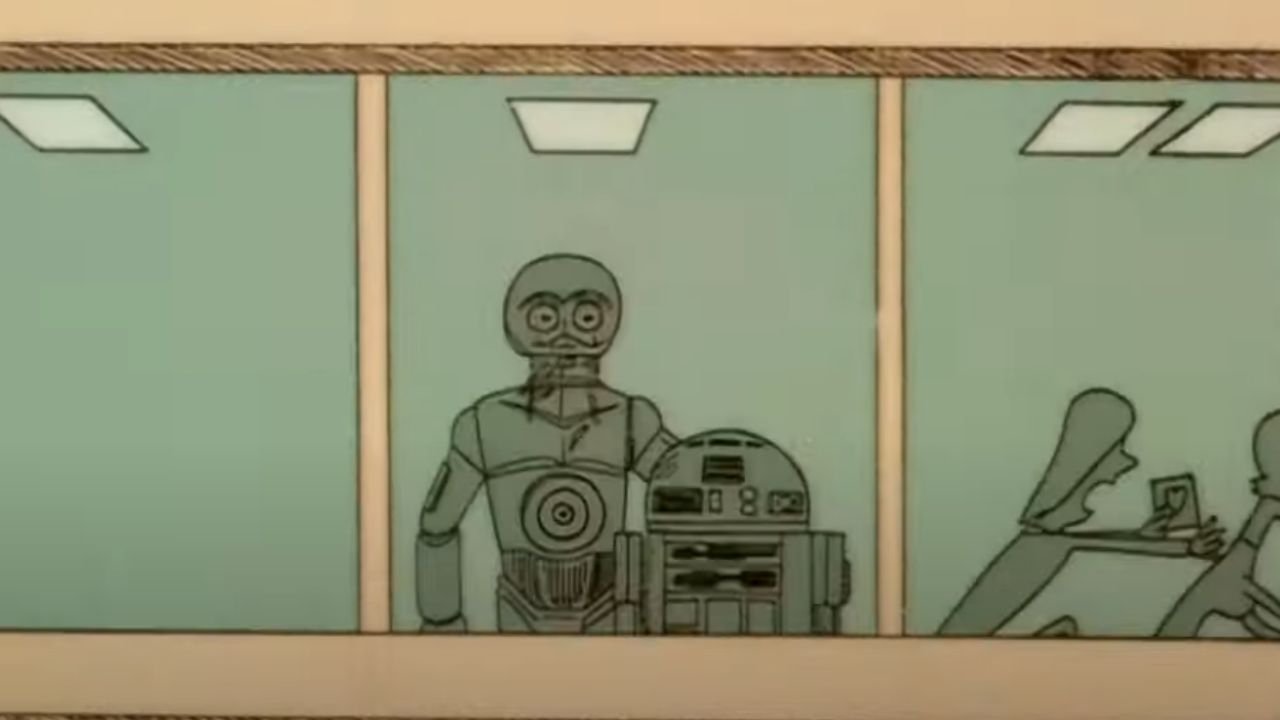
But Osamu Tezuka wasn't just about charming simplicity. As the jumps get progressively, impossibly higher, the tone begins to shift. We soar over houses, then entire city blocks, then skyscrapers. The initial exhilaration starts to mingle with a sense of vertigo, a dawning realization that this journey isn't entirely whimsical. It’s a fascinating technical achievement, maintaining that first-person perspective throughout, making us the unseen protagonist hurtling ever upward. You can imagine Tezuka and his team at Mushi Production meticulously planning each frame to create this seamless sense of escalating movement.
Beyond the Rooftops: A Darker Vista
This is where Jumping truly distinguishes itself. The ascent continues, taking us over forests, mountains, and eventually, into darker territories. Without giving too much away (because the surprise is part of the impact), the film subtly introduces elements of danger, environmental destruction, and even the specter of war. The playful bouncing gives way to something more profound, even unsettling. It’s a testament to Tezuka's genius that he could convey such complex themes wordlessly, purely through perspective, sound, and the changing landscape below. It’s a journey from innocence to a stark awareness of the world's complexities and perils, all achieved through the simple mechanic of a jump.
It’s perhaps no surprise that this unique vision resonated critically. Jumping picked up the Grand Prix at the prestigious Zagreb World Festival of Animated Films in 1984, a significant nod to its artistic merit. While maybe not a tape you'd find easily sandwiched between action flicks at your local Blockbuster, its presence in animation circles and festival circuits cemented its place as a standout piece of experimental animation from the era. Finding it felt like uncovering a secret transmission from a master storyteller exploring the edges of his craft.
Why It Still Lands Today
Watching Jumping now offers a different kind of nostalgia. It’s not just for the 80s animation style, but for a time when a major creative force like Tezuka could produce something so purely conceptual and personal. It reminds us that animation isn't just for kids' stories; it's a medium capable of profound artistic expression and commentary. The film’s environmental and anti-war undertones feel perhaps even more relevant today than they did in 1984. It's a compact, potent dose of visual storytelling that lingers long after its brief runtime.
It might lack the explosions or catchphrases of its multiplex contemporaries, but Jumping offers something else: a moment of pure cinematic perspective-shifting, a reminder of animation's power to transport and provoke thought.
VHS Heaven Rating: 8/10
Jumping earns a solid 8 for its sheer artistic audacity, its masterful execution of a simple concept, and its surprising thematic depth. It might be short, and its experimental nature might not be for everyone expecting typical narrative fare, but its technical brilliance, escalating tension, and wordless commentary make it a standout piece. The slight deduction comes only from its inherent brevity and niche appeal, meaning it might not have the broad rewatchability of a feature, but its impact is undeniable.
It’s a small film with a giant leap of imagination – a perfect little oddity to rediscover from the era when giants like Tezuka still walked the earth, occasionally pausing to show us the world from a breathtaking, and sometimes terrifying, new height.