There's a peculiar kind of silence that hangs heavy in Jerzy Skolimowski's 1982 film Moonlighting, a silence born not just of language barriers, but of unspoken anxieties and the crushing weight of withheld information. It's a quiet that settles deep in your bones long after the tape hiss fades, a stark reminder of how isolation can transform even the most mundane tasks into acts of profound moral complexity. Watching it again recently, transported back via that familiar whir of the VCR, I was struck anew by its claustrophobic power – a power amplified, perhaps, by the grainy intimacy of the VHS format itself.
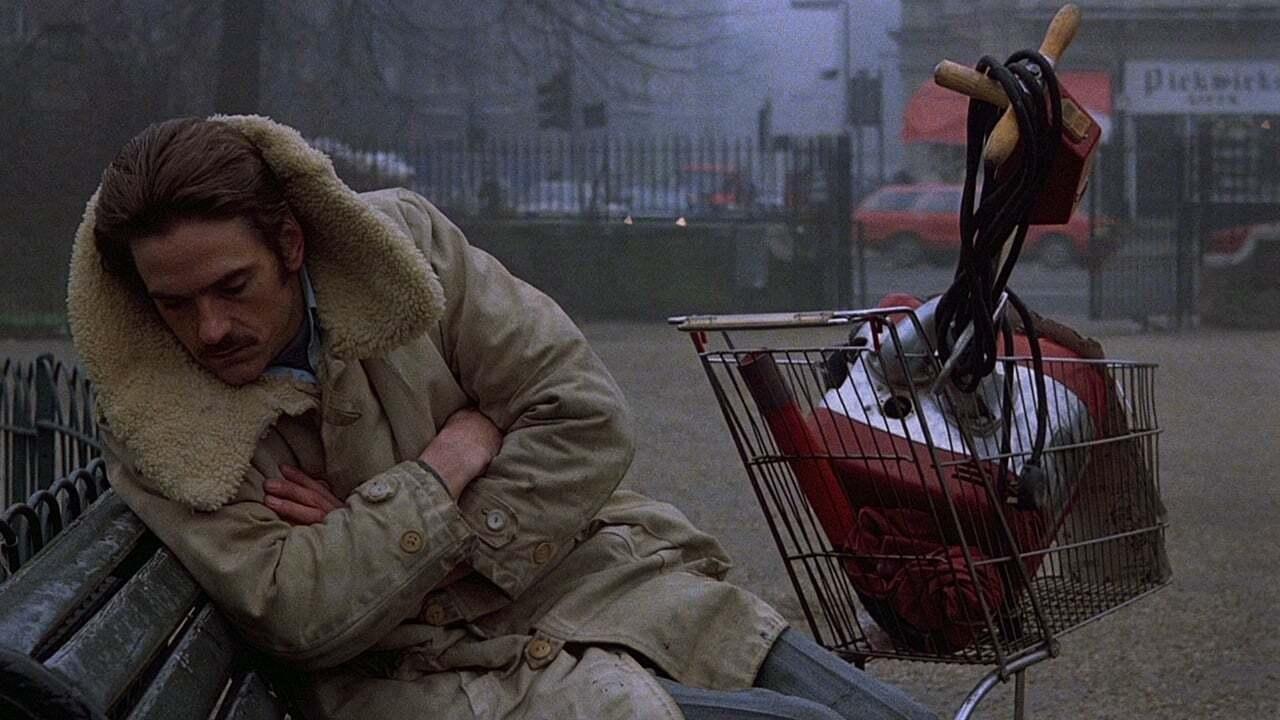
London Calling, Warsaw Burning
The premise is deceptively simple: Nowak (Jeremy Irons), the only English speaker among a quartet of Polish builders, brings his crew to London for a month-long job renovating a Kensington townhouse for a wealthy compatriot (referred to simply as "The Boss"). It's December 1981. They're working illegally, on the cheap, cut off from news back home to save money and avoid distractions. Nowak's job isn't just foreman; he's their translator, their provisioner, their sole conduit to the outside world. But when martial law is declared in Poland, cutting off communication and plunging their homeland into crisis, Nowak intercepts the news. His agonizing decision? To keep his men in the dark, ensuring the job gets finished while shielding them (and himself) from the unfolding catastrophe.
What follows is less a traditional narrative and more a meticulously observed study in mounting pressure. Skolimowski, who also wrote the screenplay with astonishing speed – reportedly in just six days, spurred by the very real events unfolding in Poland – crafts an atmosphere thick with unspoken tension. The renovation itself becomes a metaphor: the stripping away of old wallpaper, the precarious structures, the attempts to build something new under constrained, deceptive circumstances. The irony of Poles working illicitly in Thatcher's London while their own country is under military lockdown is never explicitly hammered home, but it resonates through every frame.
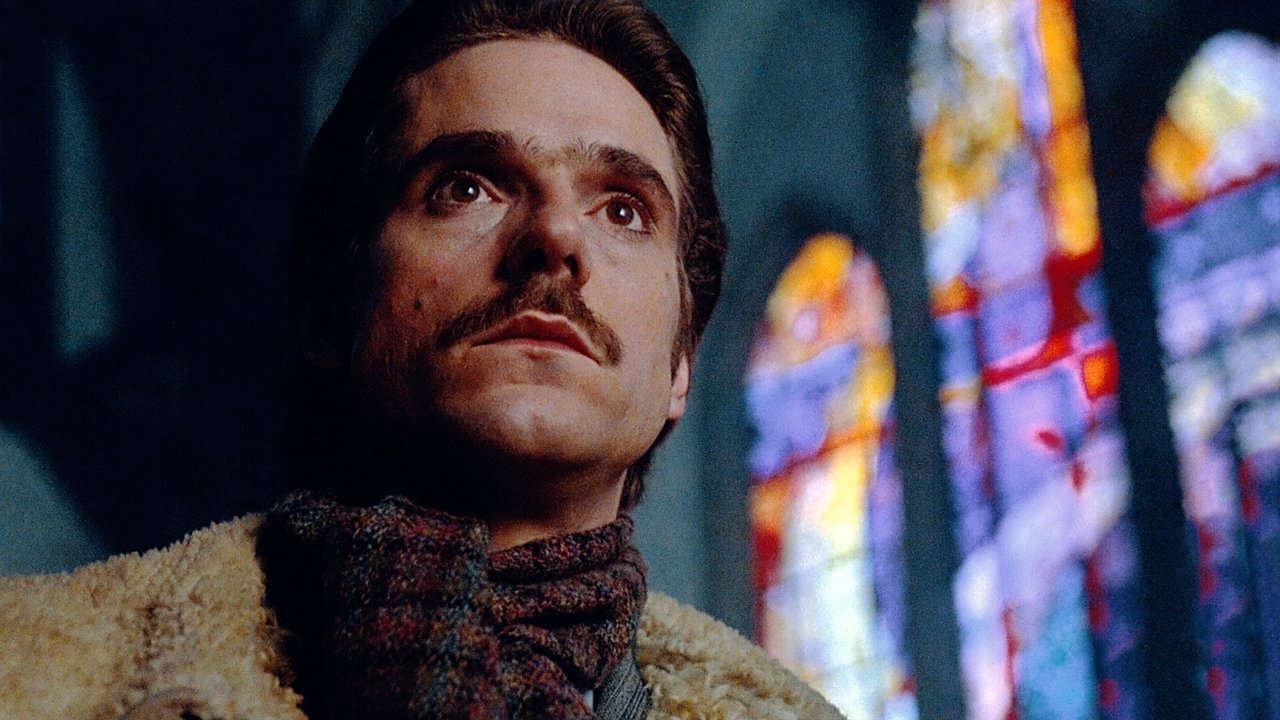
The Burden of Knowing
At the heart of it all is a truly mesmerizing performance from Jeremy Irons. This was relatively early in his screen career, before the voice became quite so iconic, but the intelligence, the simmering internal conflict, it's all there. Nowak isn't a villain; he's a man trapped by circumstance and his own flawed choices. Irons conveys Nowak’s gradual unraveling beautifully – the forced bonhomie that curdles into strained silence, the petty thefts born of desperation as funds dwindle, the haunting loneliness of carrying a secret that isolates him completely from the very men he's ostensibly protecting. We see the mental calculations flicker across his face as he translates selectively, edits reality, and shoulders the moral weight of his deception. It's a performance built on nuance, on the things left unsaid, making his eventual, quiet breakdown all the more affecting.
The other actors, Eugene Lipinski, Jirí Stanislav, and Eugeniusz Haczkiewicz, perform the difficult task of conveying frustration, boredom, and growing suspicion almost entirely through physicality and expression, their dialogue often unheard or mediated through Nowak's biased lens. Their plight underscores the themes of exploitation and the inherent vulnerability of being adrift in a foreign land, unable to communicate directly. Doesn't their predicament echo the anxieties many face when navigating unfamiliar systems, reliant on intermediaries whose motives might not be entirely pure?
Improvisation Under Pressure
The film's production itself mirrors the characters' predicament. Shot quickly and on a tight budget (reportedly around £500,000) while the Polish crisis was ongoing, there’s an urgency, a raw immediacy to the filmmaking. Skolimowski, a key figure in the Polish New Wave before emigrating, uses London not as a glittering backdrop, but as a series of indifferent, sometimes hostile environments – the cramped confines of the house, the impersonal aisles of supermarkets Nowak nervously shoplifts from, the grey, unwelcoming streets. There’s a distinct lack of polish, fitting for a story about clandestine labor and hidden anxieties. It feels real, lived-in, almost like a documentary capturing a specific, uncomfortable moment in time. I remember finding a copy in a dusty corner of the local video store back in the day, drawn in by Irons' name, and being completely unprepared for its quiet intensity – a far cry from the usual 80s blockbuster fare.
One fascinating detail often mentioned is how Skolimowski incorporated actual news footage of the Polish crisis, glimpsed briefly on television screens within the film, adding another layer of chilling reality. This wasn't just allegory; the real world was bleeding into the narrative, amplifying the sense of dread. The constraints seem to have fueled creativity, forcing a focus on character and atmosphere over spectacle.
A Quietly Devastating Portrait
Moonlighting isn't an easy watch. It’s deliberately paced, focusing on the slow erosion of Nowak's composure and the simmering discontent of his crew. There are moments of dark, almost absurd humor – Nowak’s increasingly inept attempts at shoplifting, his strained efforts to maintain normalcy – but they only serve to highlight the underlying desperation. It's a film that asks difficult questions about responsibility, compromise, and the cost of silence. What would you do in Nowak's position? Is his deception a form of protection, or merely self-preservation disguised as altruism?
The film doesn't offer simple answers. Instead, it leaves you contemplating the quiet tragedies that unfold when communication breaks down, when political upheaval ripples outwards to touch individual lives in unexpected, devastating ways. It’s a powerful, understated piece of filmmaking anchored by a phenomenal central performance.
Rating: 8.5/10
The score reflects the film's undeniable strengths: Jeremy Irons' masterful performance, Jerzy Skolimowski's taut direction and potent script (written and filmed with remarkable speed under the shadow of real events), and the palpable atmosphere of isolation and moral ambiguity it creates. It might feel slow to some, and its bleakness is pervasive, but its focused intensity and thematic depth are undeniable.
Moonlighting remains a poignant, unsettling snapshot of a specific historical moment, yet its exploration of human frailty under pressure feels timeless. It's a film that doesn't shout; it whispers its anxieties, making them all the more resonant when the credits finally roll.