### The Unflinching Glare into the Abyss: Remembering Tales of Ordinary Madness
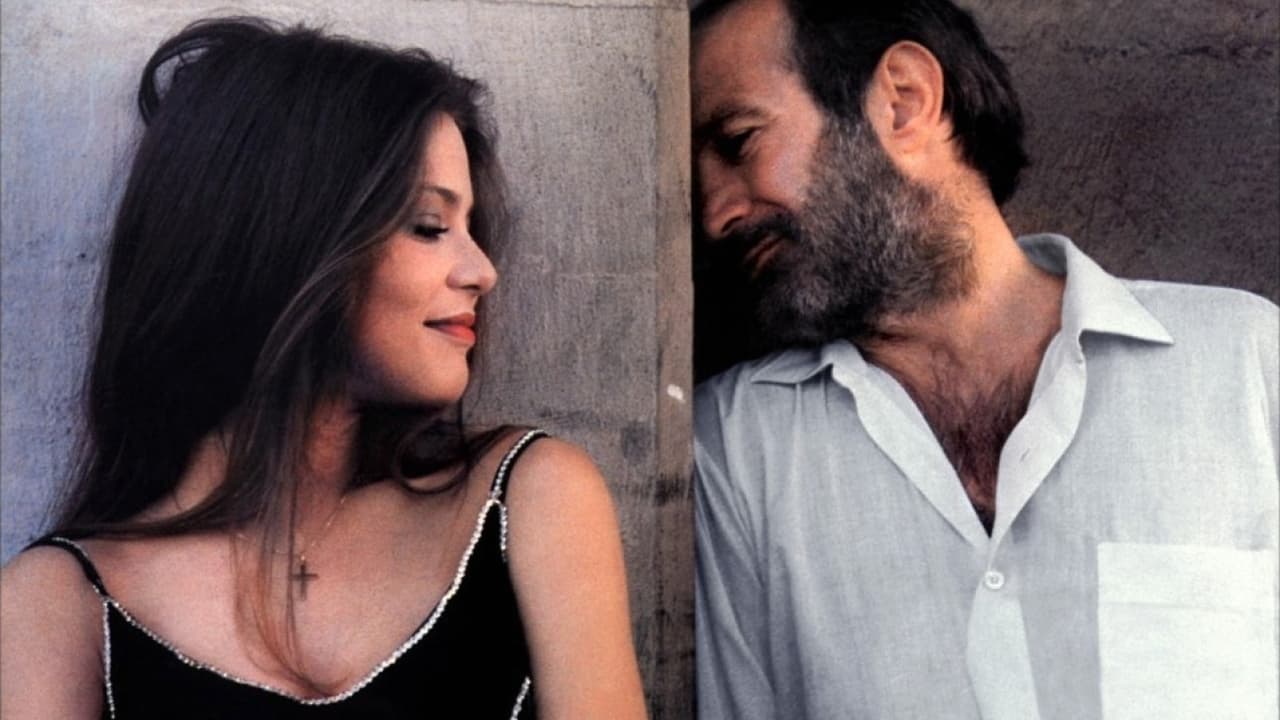
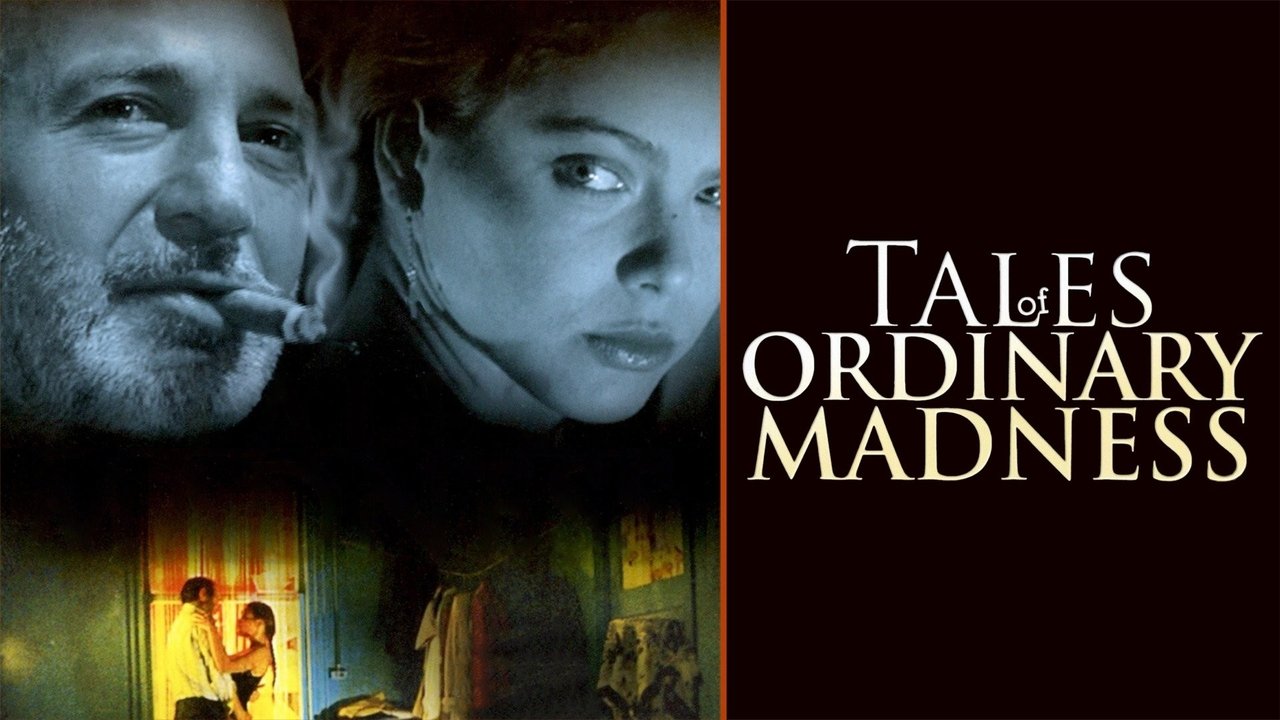
There's a certain kind of film discovery unique to the video store era, isn't there? Sometimes, tucked away on a lower shelf, perhaps near the foreign films or just past the mainstream dramas, you'd find a cover that promised something… different. Something raw, maybe unsettling. Marco Ferreri's Tales of Ordinary Madness (1981) was definitively one of those discoveries. It wasn't a film you watched lightly; it was an experience that burrowed under your skin, leaving a residue of grime, booze, and weary poetry long after the VCR clicked off. Watching it again now, that feeling remains potent – a stark reminder of cinema's power to confront, rather than merely entertain.
A Poet in the Gutter
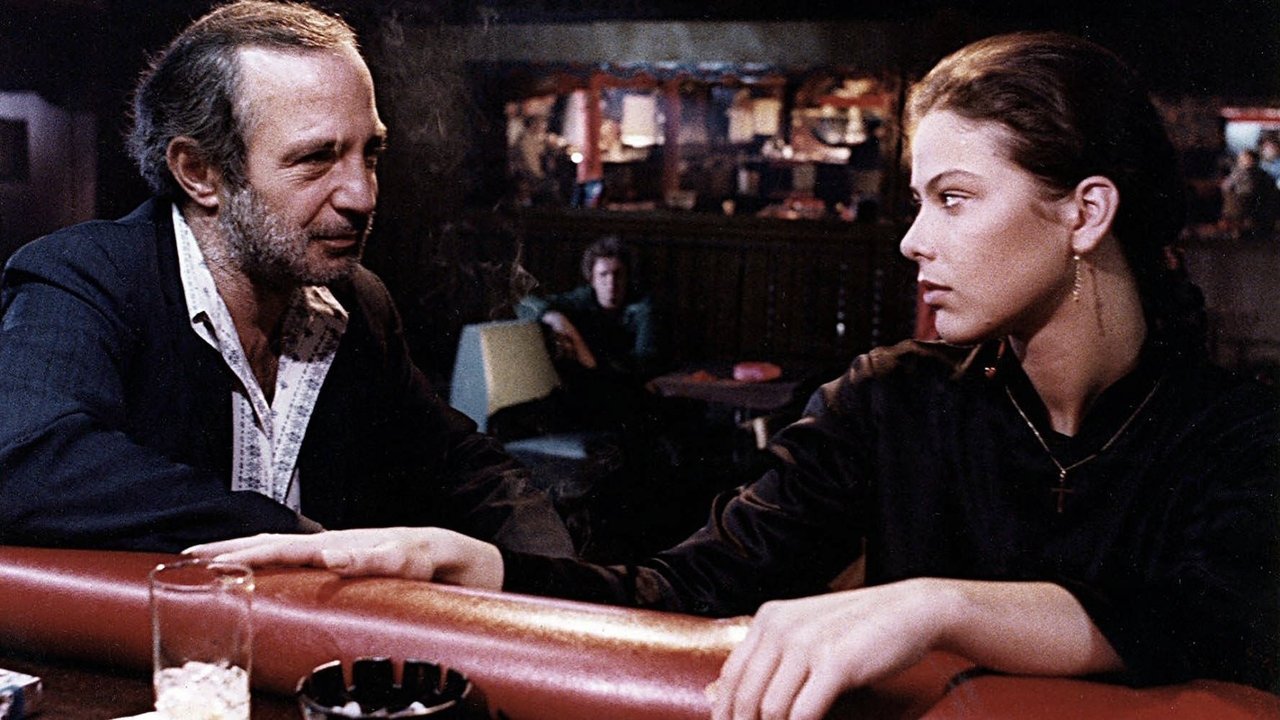
Based loosely on the semi-autobiographical writings of the gloriously degenerate poet Charles Bukowski, the film follows Charles Serking, portrayed with astonishing, lived-in weariness by the great Ben Gazzara. Serking drifts through the sun-bleached squalor of Los Angeles – cheap motels, sticky bars, the lonely apartments of equally damaged souls. He's a writer, yes, but mostly he's a drinker, a gambler, and a man seemingly allergic to stability, navigating a landscape populated by prostitutes, addicts, and the profoundly lonely. Ferreri, an Italian director known for his provocative and often misanthropic works (like the notorious La Grande Bouffe from 1973), brings a distinctly European sensibility to this very American decay, observing Serking's episodic encounters with an unflinching, almost detached gaze.

Gazzara's Defining Hour
Let's be clear: Ben Gazzara is this film. His performance as Serking isn't just acting; it feels like embodiment. There's no vanity, no attempt to soften the character's rough edges or self-destructive impulses. Gazzara carries the weight of Serking's countless disappointments and fleeting pleasures in his posture, in the lines etched around his eyes, in the gravelly cadence of his voice. He finds the flicker of Bukowski's defiant spirit – the refusal to conform, the insistence on finding beauty (or at least truth) in the ugliest corners of life. It’s a performance of raw authenticity, a career highlight that feels deeply personal. Bukowski himself, not always generous with praise for adaptations of his work, reportedly admired Gazzara's portrayal, which speaks volumes. It’s fascinating to think that Gazzara, often known for smoother, more classically handsome roles earlier in his career, fully embraced this descent into the poet's persona.
Alongside him, the supporting cast etches memorable figures into this bleak landscape. Ornella Muti, as the self-harming beauty Cass, brings a tragic vulnerability that provides one of the film's few, albeit deeply troubled, emotional anchors. Her beauty feels almost out of place, yet her internal scars mirror Serking's own. And Susan Tyrrell, an actress who always radiated a unique, off-kilter energy (think Fat City from 1972), is unforgettable as Vera, a desperate woman encountered early in Serking's odyssey. Each encounter serves less as plot progression and more as another station in Serking’s existential crawl.
Capturing the 'Ordinary' Madness
Ferreri’s direction is key to the film's uneasy power. There's little glamour here. The Los Angeles depicted isn't the one of Hollywood dreams, but a landscape of peeling paint, neon haze filtering through dirty windows, and the suffocating silence of lonely rooms. The camera often lingers, forcing us to sit with the characters in their discomfort, their boredom, their moments of bleak revelation. There’s a deliberate lack of sentimentality that can be challenging, even alienating. This isn't a redemption story; it's a portrait of survival, or perhaps just existence, on the fringes.
Interestingly, despite its intensely American setting and source material, the film was an Italian production. Gazzara performed his lines in English, but much of the supporting cast was likely dubbed into English for the international release, adding a subtle layer of displacement that oddly suits the film's theme of alienation. It’s the kind of production detail that feels specific to that era of international co-productions, trying to bridge cultural divides often with mixed, but sometimes fascinating, results. The film even picked up the FIPRESCI Prize at the 1981 San Sebastián International Film Festival, indicating that its uncompromising vision resonated with critics, even if audiences were likely more divided.
A Difficult Beauty
Make no mistake, Tales of Ordinary Madness is not an easy watch. Its depiction of sexuality is often raw and unvarnished, sometimes bordering on exploitative by today's standards, reflecting both Bukowski's controversial perspective and Ferreri's confrontational style. The film doesn't shy away from the degradation and desperation inherent in Serking's world. Yet, beneath the grime, there's a strange kind of beauty – the beauty of resilience, the flicker of poetry found in despair, the stubborn refusal to surrender entirely to the void. What does Serking’s journey tell us about the artist’s need to observe, even wallow in, the messiness of life to find their voice? It’s a question the film forces you to grapple with.
Finding this on VHS felt like uncovering forbidden knowledge. It wasn't slick or polished; it felt dangerous, like the tape itself might somehow transmit the characters' desperation. It represented a type of adult filmmaking – challenging, explicit, morally ambiguous – that seemed to thrive in the less sanitized corners of the video rental landscape.
Rating & Final Reflection
8/10 - This rating reflects the film's uncompromising artistic vision, Ben Gazzara's monumental and defining performance, and its power as a raw, unflinching adaptation of Bukowski's world. It’s a challenging, sometimes repellent film that deliberately avoids easy answers or sentimentality. The pacing can be languid, and the bleakness overwhelming, preventing a higher score, but its authenticity and Gazzara's commitment make it a significant, if difficult, piece of 80s cinema. It's a film that truly earns its title.
Tales of Ordinary Madness isn't a film you recommend casually. But for those seeking cinema that confronts the ugliness and occasional, startling beauty of life on the edge, it remains a potent, unforgettable experience – a grimy artifact from a time when films dared to stare directly into the abyss. What lingers most is Gazzara’s face, a map of hard living and hard-won words, embodying the defiant spirit of a poet who found his muse in the gutter.