Close your eyes and picture this: sun-drenched Alpine meadows stretching towards snow-capped peaks, the distant, gentle clang of goat bells, and a little girl with boundless optimism radiating pure joy. For many of us whose childhoods intersected with the glow of a CRT television and the satisfying click of a VHS tape inserting into the VCR, this wasn't just a scene from a storybook. It was the world brought to life by Heidi, Girl of the Alps, often encountered through its feature-length distillation released in 1979. And behind this enduringly charming animation? None other than Isao Takahata, a name that would later become synonymous with Studio Ghibli masterpieces like Grave of the Fireflies (1988) and Pom Poko (1994).
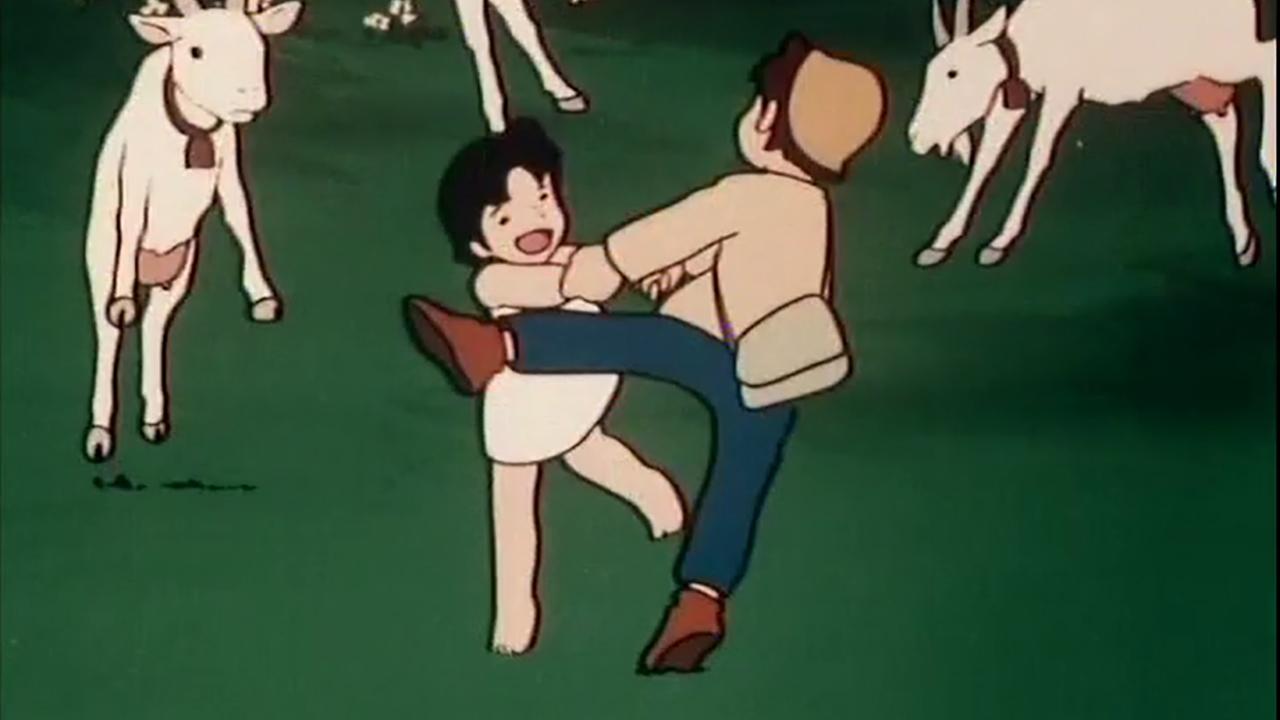
### An Alpine Embrace
This film version is actually a carefully edited compilation drawn from the hugely influential 52-episode anime series that first aired in 1974. That series, also directed by Takahata, wasn't just another cartoon; it was a landmark moment in animation history. It marked a shift towards realism and nuanced character portrayal, a style that would define much of Takahata's later work and influence the entire industry. And here’s a nugget for the true animation aficionado: the scene design and layout for that original series? That was handled by a young Hayao Miyazaki, years before he’d whisk us away with My Neighbor Totoro (1988) or Spirited Away (2001). You can see the seeds of Ghibli's reverence for nature and meticulous world-building right here in Heidi's breathtaking Alpine vistas.
The story, adapted from Johanna Spyri’s beloved 1881 novel, is fundamentally simple yet deeply resonant. We follow the orphaned Heidi (voiced with infectious energy by Kazuko Sugiyama) as she’s sent to live with her gruff, reclusive grandfather (Kôhei Miyauchi) high in the Swiss Alps. Her initial apprehension melts away as she discovers the profound beauty of the mountains, forms a bond with the goatherd Peter, and gradually thaws her grandfather’s lonely heart. The film captures this idyllic period beautifully – the vibrant greens of the meadows, the comforting solidity of the grandfather's cabin, the sheer exhilaration of running free under an impossibly blue sky. It evokes a sense of peace, a connection to nature that felt almost magical pouring out of the television screen back then.
### Heartbreak and Hope in the City
Of course, the story isn't all sunshine and frolicking goats. Heidi’s world is turned upside down when she's taken away to Frankfurt to be a companion for Clara Sesemann (Rihoko Yoshida), a wealthy but lonely girl confined to a wheelchair. This shift provides the narrative's core conflict and emotional weight. The contrast between the freedom of the Alps and the stifling formality of the Sesemann household is palpable. We feel Heidi’s homesickness, her pining for the mountains and her grandfather, with surprising intensity.
This is where Takahata's genius for depicting genuine human emotion shines. Even in this condensed film format, the relationships feel authentic. Heidi’s unwavering optimism, Clara’s quiet longing for friendship and mobility, the stern but ultimately kind Fraulein Rottenmeier – they transcend simple archetypes. Watching it again now, perhaps decades after first seeing it on a worn-out tape, the emotional beats still land. It’s a testament to the strength of the original series and the skill with which this movie version was assembled.
### Retro Fun Facts: Bringing the Alps to Life
The dedication to authenticity in the original 1974 series, whose essence permeates this film, was remarkable for its time. Takahata, Miyazaki, and character designer Yoichi Kotabe actually travelled to Switzerland, specifically Maienfeld and Frankfurt, conducting extensive research. They sketched landscapes, studied architecture, and absorbed the atmosphere to ensure their animated Alps felt real. This commitment is visible in every frame, from the specific design of the chalets to the types of flowers blooming in the meadows. It wasn't just about drawing pretty pictures; it was about capturing a sense of place.
Condensing 52 episodes (roughly 20 hours of television) into a feature film (around 100 minutes) inevitably means sacrificing some depth and subplots. Viewers familiar with the full series might miss certain moments or find the pacing occasionally brisk. However, considering the task, the film does an admirable job of hitting the essential story beats and preserving the core emotional journey. For many international audiences in the 80s and 90s, this film was their primary encounter with animated Heidi, a cherished tape passed between friends or rented countless times from the local video store. It served as a perfect, heartwarming introduction.
### An Enduring Classic's Gentle Charm
Heidi, Girl of the Alps isn't flashy. It doesn't have explosive action or complex sci-fi concepts. Its power lies in its simplicity, its sincerity, and its beautifully rendered world. It’s a story about finding home, the healing power of nature, friendship, and unwavering kindness. The animation style, while simpler than later Ghibli productions, has a timeless charm and clarity. It’s gentle, expressive, and perfectly suited to the story’s tone.
Watching it today offers a double dose of nostalgia – nostalgia for the story itself and its characters, and nostalgia for a time when animation often felt handcrafted and deeply invested in emotional storytelling over spectacle. It feels like a warm blanket, a comforting return to a simpler time, both in the world of the film and perhaps in our own memories of discovering it.
Rating: 8/10
Justification: While undeniably a condensed version of a richer television series, this 1979 film adaptation masterfully captures the heart, soul, and stunning Alpine beauty of the original Heidi. Its emotional honesty, charming animation (bearing the early hallmarks of future Ghibli legends Takahata and Miyazaki), and timeless story of resilience and kindness make it a deeply affecting and worthwhile watch. The slight pacing issues inherent in its compilation format are minor compared to its overall warmth and enduring appeal, especially for those who first met Heidi through this very version on a treasured VHS tape.
Final Thought: Some adventures don't need dragons or spaceships; sometimes, the greatest journey is finding your place among the mountains and meadows, a timeless tale this gentle classic tells beautifully.