Okay, fellow travelers through time and tape, let's dim the lights and settle in. While the year 2000 might technically push the boundaries of our usual 80s/90s stomping grounds here at VHS Heaven, some films arrive just as one era fades, carrying echoes of what came before while hinting at something new. Giuseppe Tornatore's Malena is one such film. Released right on the cusp of the new millennium, it certainly found its way onto plenty of rental shelves alongside the lingering VHS tapes, and for anyone who cherishes Tornatore's earlier masterpiece, Cinema Paradiso (1988), this felt like a vital, albeit tonally different, companion piece. It arrived perhaps too late for ubiquitous VHS, but just in time to dominate the early DVD rental market, becoming a film many of us likely discovered during that transition.
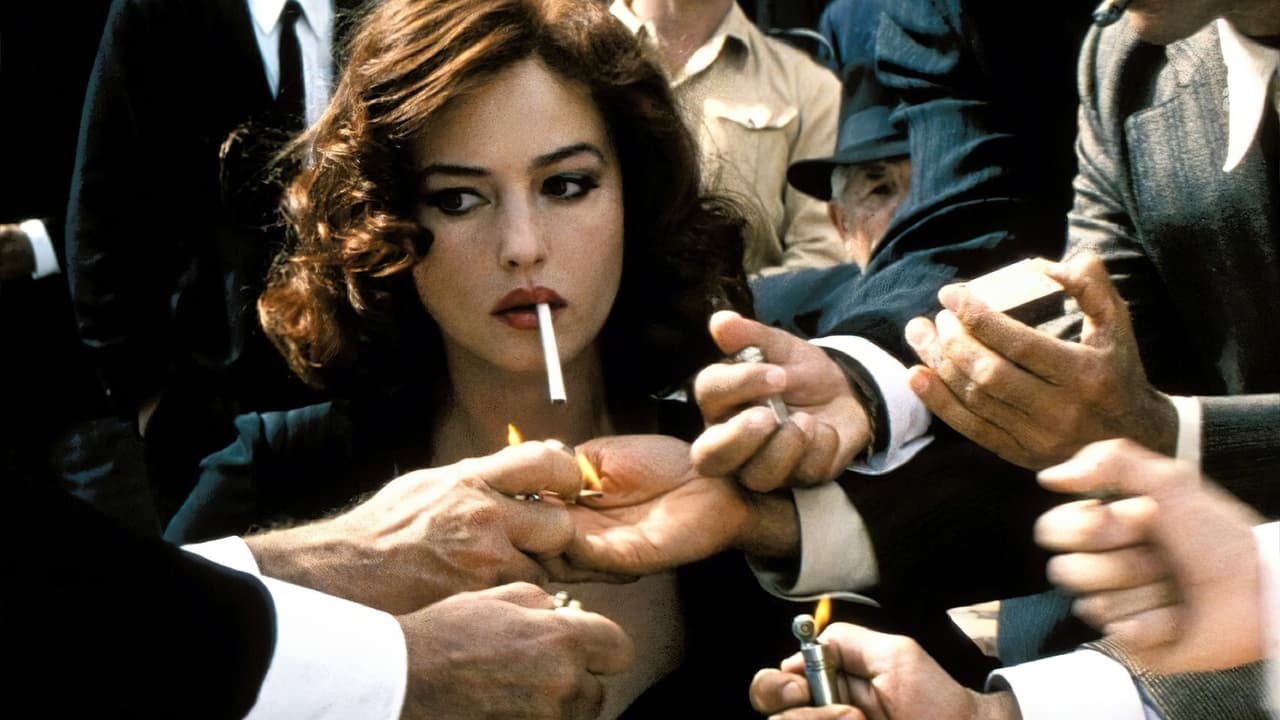
What stays with you, long after the credits roll on Malena, isn't necessarily a single plot point, but the oppressive weight of observation. It's the feeling of eyes – judgmental, lustful, envious, cruel – constantly fixed upon one woman.
### The Sun-Drenched Cage
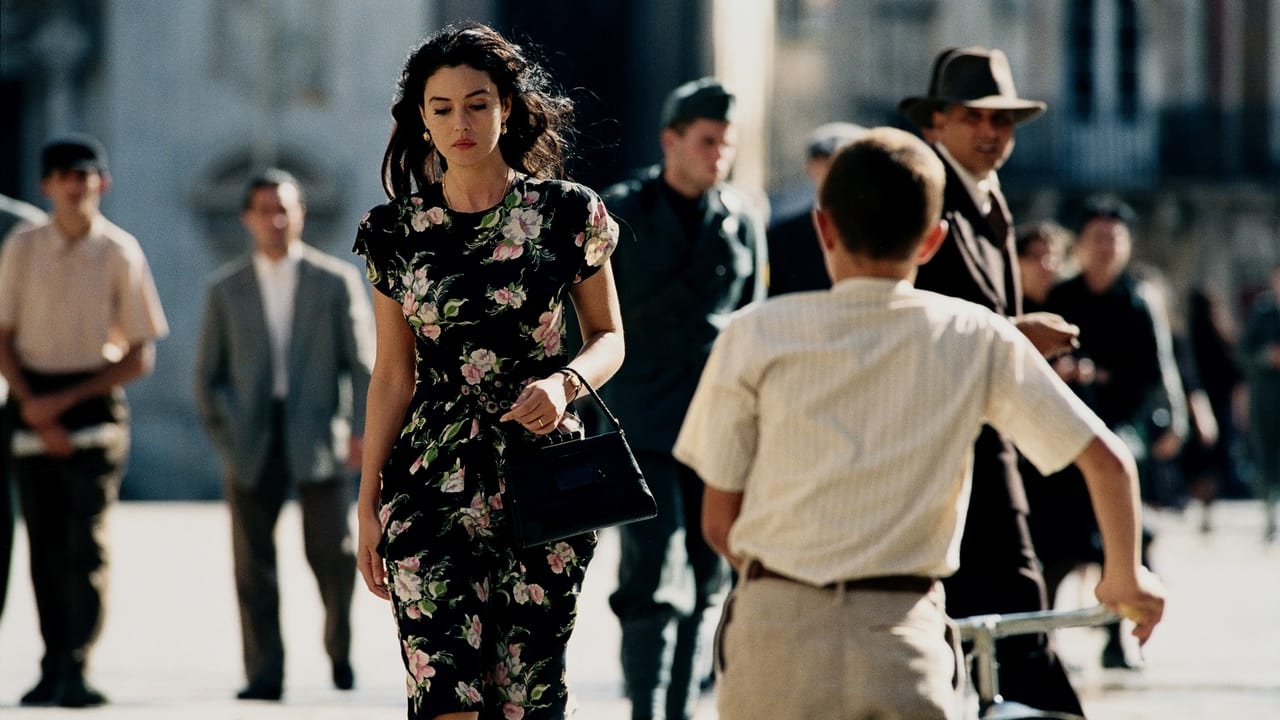
Set in a sun-baked Sicilian town during the tumultuous years of World War II, the film unfolds primarily through the eyes of young Renato Amoroso (Giuseppe Sulfaro), a boy hurtling into adolescence with an all-consuming obsession: Malèna Scordia (Monica Bellucci). Malèna is breathtakingly beautiful, the wife of a soldier away at the front. Her every passage through the town square is an event, a silent spectacle that ignites the imaginations of the boys and the venom of the women. Tornatore, reuniting with the legendary composer Ennio Morricone, crafts an atmosphere thick with longing and unspoken tension. The sunlit beauty of Sicily becomes almost suffocating, a golden cage where Malèna is perpetually on display, judged for the very beauty she cannot help but possess. Does her quiet dignity somehow provoke the town's baser instincts?

### A Performance Beyond Words
Monica Bellucci's portrayal of Malèna is remarkable, largely because it relies so little on dialogue. Her performance is etched in the way she walks, the subtle shifts in her gaze, the quiet endurance she projects even as the town's whispers turn to open hostility. It’s a role that could easily have slipped into mere objectification, but Bellucci imbues Malèna with a profound, sorrowful humanity. We see the toll of the relentless scrutiny, the isolation forced upon her by circumstances and societal prejudice. Renato watches, fantasizes, and interprets her silence, projecting his own burgeoning desires and romantic notions onto her. Giuseppe Sulfaro, in his debut role, captures that adolescent intensity perfectly – the awkwardness, the fierce loyalty born of infatuation, the gradual, painful dawning of understanding about the world's cruelty. His perspective is our window, but Tornatore forces us to question: how much of what Renato sees is truth, and how much is filtered through the lens of his own obsession?
### The Weight of War and Whispers

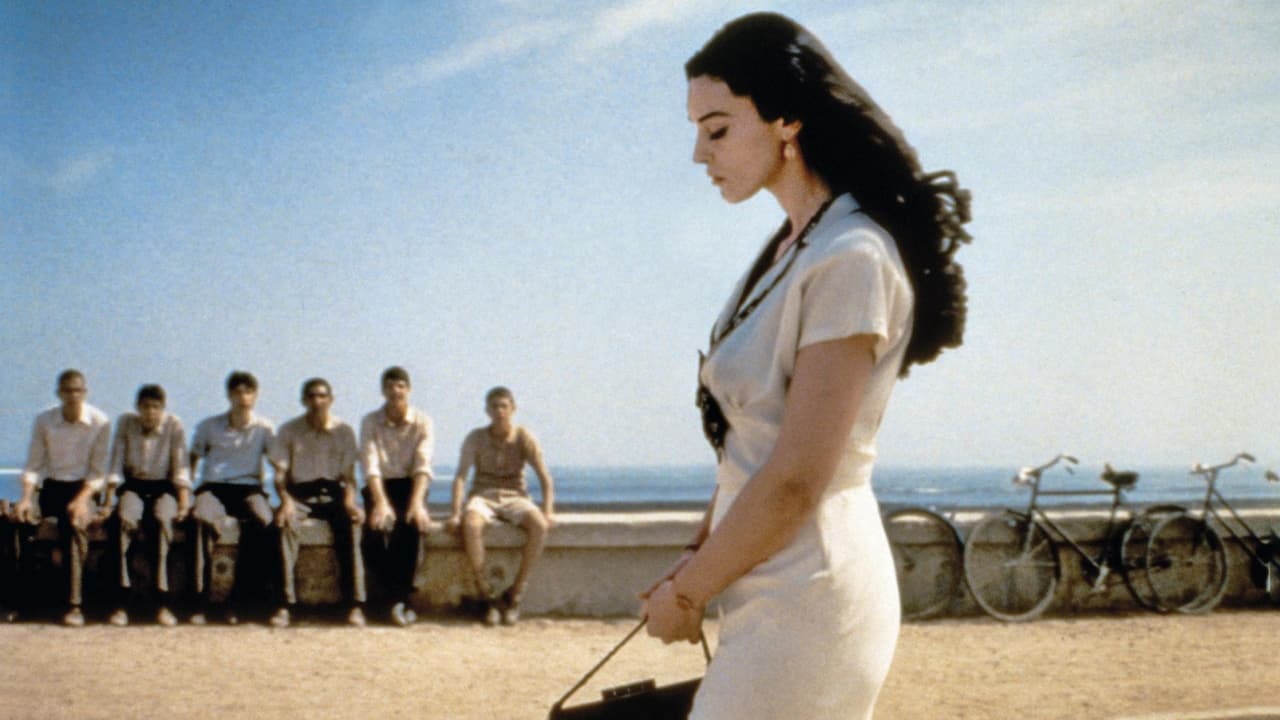
The backdrop of WWII isn't just window dressing; it's the catalyst that unravels Malèna's life. News from the front dictates her fate, stripping away her protection and leaving her vulnerable to the town's predatory instincts. The war exacerbates the existing social fissures – poverty, scarcity, fear – and Malèna becomes a scapegoat, her beauty twisted into a perceived moral failing. It’s a stark reminder of how conflict and societal pressure can bring out the absolute worst in people. Tornatore doesn't shy away from the ugliness; there are scenes here, particularly one involving a public humiliation, that are genuinely difficult to watch. They are brutal, unflinching, and force a confrontation with the hypocrisy and viciousness that can lie beneath a seemingly idyllic surface. It begs the question: how thin is the veneer of civilization when times get tough?
### Tornatore's Nostalgia and Truth
Like Cinema Paradiso, Malena is steeped in a form of nostalgia, a look back at a formative period through the hazy filter of memory. But where Paradiso celebrated the magic of cinema and community (despite its own bittersweet notes), Malena excavates the darker side of that same communal gaze. It's a more complex, arguably more cynical, take on the past. Apparently, Tornatore drew inspiration from the experiences of a woman in his own hometown, adding a layer of uncomfortable authenticity to the narrative. The film reportedly faced some controversy and cuts for its US release, particularly concerning the depiction of Renato's adolescent sexuality and the starkness of the violence, which perhaps speaks to the power of its unflinching portrayal. Interestingly, the collaboration between Tornatore and Ennio Morricone continued here, delivering another evocative score, though perhaps less sweepingly romantic and more melancholic than their work on Paradiso. It perfectly underscores the film's bittersweet, often painful, journey.
### A Lasting Image
Malena isn't always an easy watch. It deals with uncomfortable truths about human nature, voyeurism, and the destructive power of gossip and judgment. Yet, it's also undeniably beautiful, thanks to Lajos Koltai's cinematography capturing the Sicilian light, Morricone's score, and Bellucci's unforgettable presence. It reminds us how memory, particularly childhood memory focused on an enigmatic figure, can be both potent and unreliable. The film lingered in the rental stores for a good while, a testament perhaps to Bellucci's burgeoning international fame (following roles like Persephone in The Matrix Reloaded (2003), which came shortly after) and the enduring pull of Tornatore's storytelling.
Rating: 8/10
Justification: While its themes are challenging and its depiction of cruelty can be hard to stomach, Malena is a masterfully crafted film. Tornatore's direction is confident, the performances (especially Bellucci's non-verbal turn and Sulfaro's debut) are powerful, and the atmosphere is palpable. Morricone's score and Koltai's cinematography elevate it beyond a simple narrative. It loses a couple of points perhaps for the unrelenting bleakness in parts and the sometimes uncomfortable nature of Renato's voyeurism, but its artistic merit and thematic resonance are undeniable. It earns its place as a significant, thought-provoking film from the turn of the century that feels perfectly at home alongside the classics we cherish.
Final Thought: Malena leaves you contemplating the nature of beauty – not just as something to be admired, but as something that can be weaponized, feared, and ultimately punished. It's a film that sits with you, a haunting portrait of innocence lost and the ghosts of observation that linger long after we look away.