Okay, fellow tape travelers, let's rewind to a time just before the millennium bug was the biggest worry, a time when a certain spiky-haired duelist was starting to shuffle his way into pop culture, but maybe not quite the way most remember him. Forget the 4Kids dubs and the worldwide phenomenon for a moment. We're digging deep into the crate for a true curiosity: the 1999 Yu☆Gi☆Oh! theatrical short film. This isn't Pyramid of Light; this is something... different. Something born from the earlier, slightly darker, and more varied roots of the franchise.
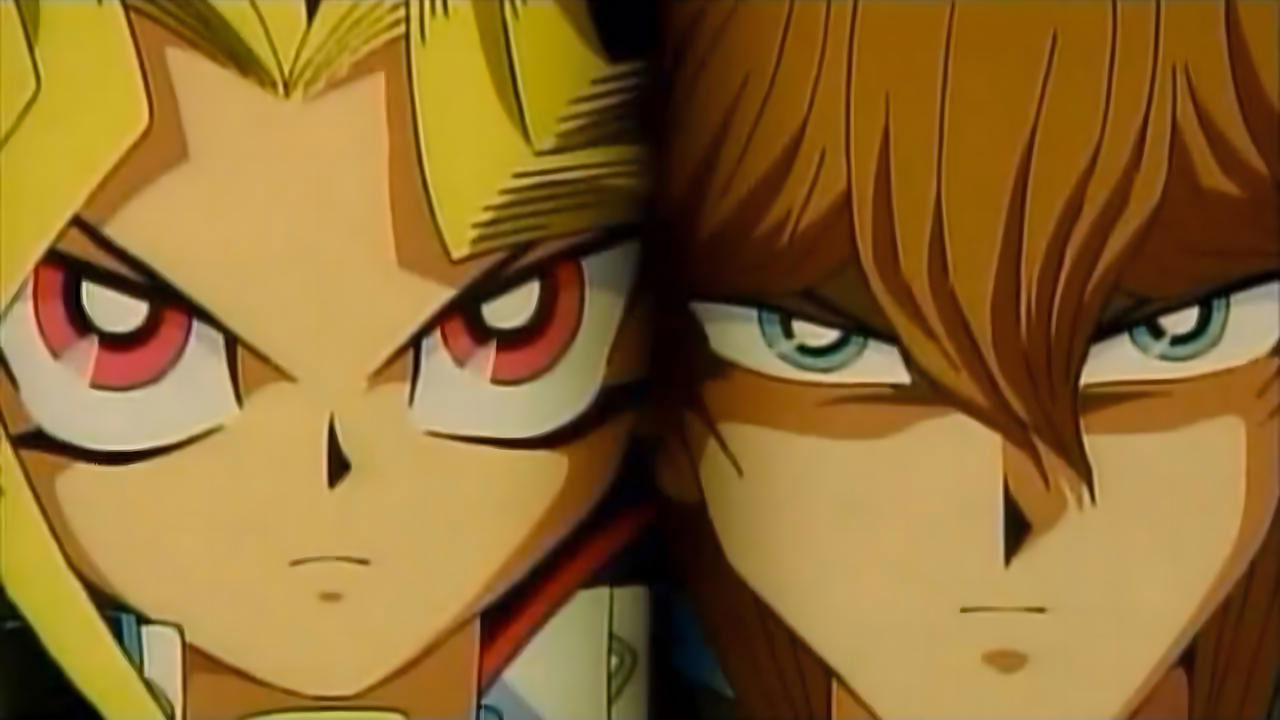
Finding this flicker of anime history often felt like uncovering a secret level back in the day. Released as part of the Toei Animation Summer Fair in Japan, this 30-minute film is a direct continuation of the other Yu-Gi-Oh! anime series – the 1998 Toei one, often affectionately dubbed "Season 0" by Western fans. If your main memory is the Duel Monsters-centric show that took over Saturday mornings, prepare for a fascinating time warp. This film, directed by Junji Shimizu (a Toei veteran who later directed several One Piece features) and penned by Michiko Yokote (a prolific name with credits ranging from Cowboy Bebop episodes to Shirobako), captures a moment before the card game completely eclipsed everything else in Kazuki Takahashi's original vision.
### Beyond Duel Monsters
One of the immediate charms (or perhaps shocks, depending on your entry point) is seeing Yugi and his friends in this slightly rougher, earlier incarnation. The film itself focuses on a timid boy named Shougo Aoyama, who possesses the incredibly rare Red-Eyes Black Dragon card but lacks the courage to ever play it. Naturally, Seto Kaiba, ever the collector of powerful cardboard rectangles, gets wind of this and organizes a tournament to snag it. It falls to Yugi Muto, channeling the confident spirit of Yami Yugi, to teach Shougo about courage and face Kaiba in a duel that feels both familiar and strangely distinct.
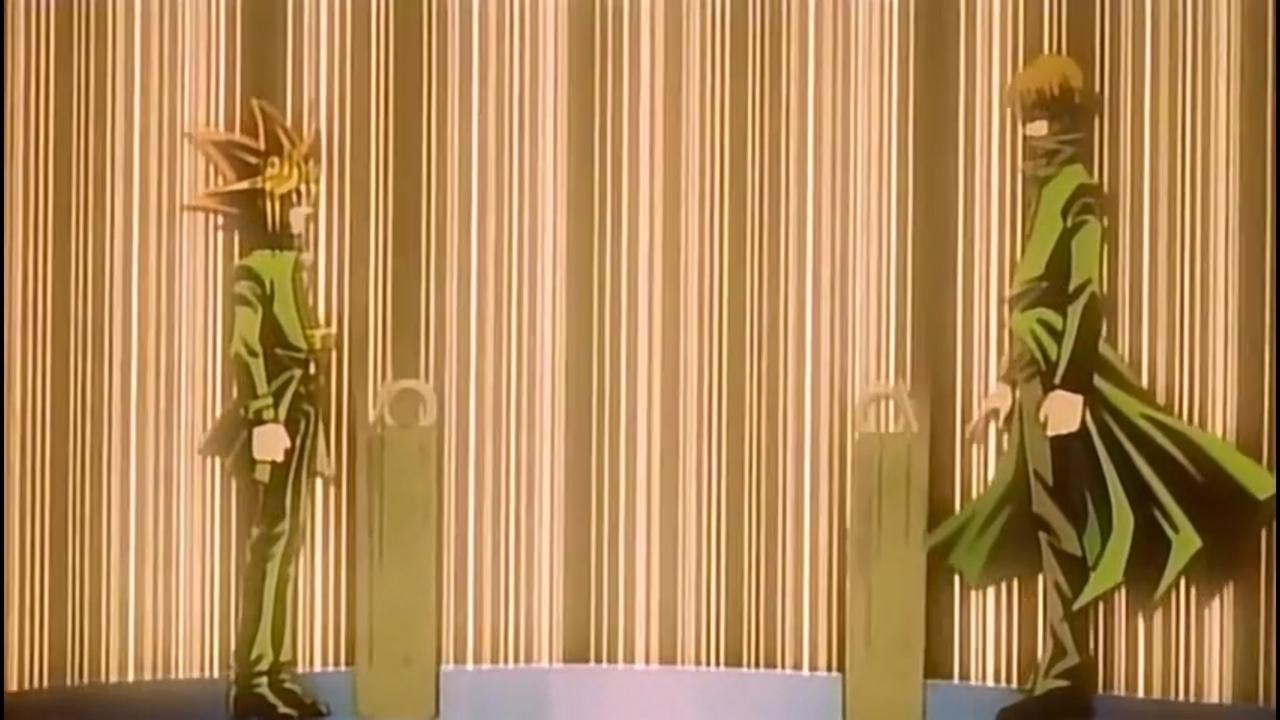
While Duel Monsters is the centerpiece here – specifically a climactic clash involving Blue-Eyes White Dragon and the aforementioned Red-Eyes – the vibe still echoes the original manga's broader focus on various "Shadow Games." There's a slightly more menacing edge, a reminder that losing wasn't just about life points; it often carried heavier, sometimes psychological, stakes in Takahashi's early chapters. This film doesn't delve too deep into that darkness, constrained by its runtime and target audience, but the DNA is there.
### A Different Voice in the Game
Perhaps the most striking element for seasoned fans is the voice cast. Forget Dan Green; the Yugi here is voiced by none other than Megumi Ogata, an absolute legend best known for voicing Shinji Ikari in Neon Genesis Evangelion. Her portrayal of both shy Yugi and the commanding Yami Yugi is fascinatingly different – less booming, perhaps, but carrying a unique intensity. Hearing Hikaru Midorikawa (Heero Yuy in Gundam Wing) as Kaiba and Toshiyuki Morikawa (often Griffith in Berserk) as Jonouchi (Joey Wheeler) also adds to the alternate-universe feel. It’s a glimpse into a parallel timeline of how these iconic characters could have sounded, tied intrinsically to that first, lesser-seen anime adaptation.
### Retro Fun Facts: The Lost Chapter
This movie is a treasure trove of "what ifs" and historical footnotes for the franchise.
- It was never officially released in English, making any viewing outside Japan reliant on fan subtitles – truly capturing that late-90s/early-00s anime discovery feeling for many Western fans hunting for rare imports or downloaded treasures.
- Attendees of the Toei Animation Fair screening in Japan actually received a promotional Red-Eyes Black Dragon card (Bandai version, not Konami!), making it an incredibly sought-after collector's item today. Talk about a prize!
- The animation, while perfectly competent for a late 90s Toei production, definitely has that slightly softer, less sharp look compared to the later Duel Monsters series produced by Studio Gallop. It’s a distinct visual style.
- Plot-wise, it feels simple, almost like an extended episode. The focus is less on intricate strategies and more on the emotional core – Shougo finding his bravery, Yugi defending the weak.
### A Time Capsule Before the Tsunami
Watching the 1999 Yu☆Gi☆Oh! movie today feels like peering through a dusty attic window into the franchise's past. It’s undeniably a product of its specific time and place – a short feature designed for a domestic audience, tied to an anime series that would soon be overshadowed by its massively successful successor. It lacks the polish and complexity that the Yu-Gi-Oh! phenomenon would later develop, and its plot is straightforward, almost quaint.
However, its value lies precisely in its status as a historical artifact. It showcases the original creator Kazuki Takahashi's initial, broader concept of games and darkness, features a stellar alternate voice cast led by Megumi Ogata, and represents a version of Yu-Gi☆Oh! untainted by international marketing demands or the singular focus on the trading card game. For hardcore fans or those fascinated by anime history, it’s a crucial piece of the puzzle, a glimpse of Yugi's origins before he truly became the King of Games worldwide.
VHS Heaven Rating: 6/10
Why this score? Let's be honest, as a standalone film, it's a fairly simple, short adventure with standard animation for its era. The plot isn't revolutionary. However, its historical significance within the Yu-Gi-Oh! franchise, the unique voice cast featuring Megumi Ogata, and its status as a rare, often unseen chapter give it considerable value for fans and collectors. It earns points for being a fascinating time capsule and a glimpse into an alternate path for the series, even if it's not a cinematic masterpiece.
Final Thought: It might not be the duel you remember most vividly, but this 1999 outing is a charmingly raw hand from the deck of anime history – a rare card worth seeking out for a true taste of Yu-Gi-Oh!'s early game.