What if the act of creation demanded a blood sacrifice? Not metaphorically, but literally. That's the darkly absurd question coiled at the heart of Albert Dupontel's 1999 film, Le créateur (The Creator), a frantic, often unsettling dive into the extremes of artistic pressure that feels distinctly like a discovery pulled from the deeper shelves of the video store's foreign film section. It’s the kind of movie that, once the tape clicked off in the VCR, likely left you staring at the static snow, processing the bizarre journey you'd just witnessed.
The Faustian Bargain of the Playwright
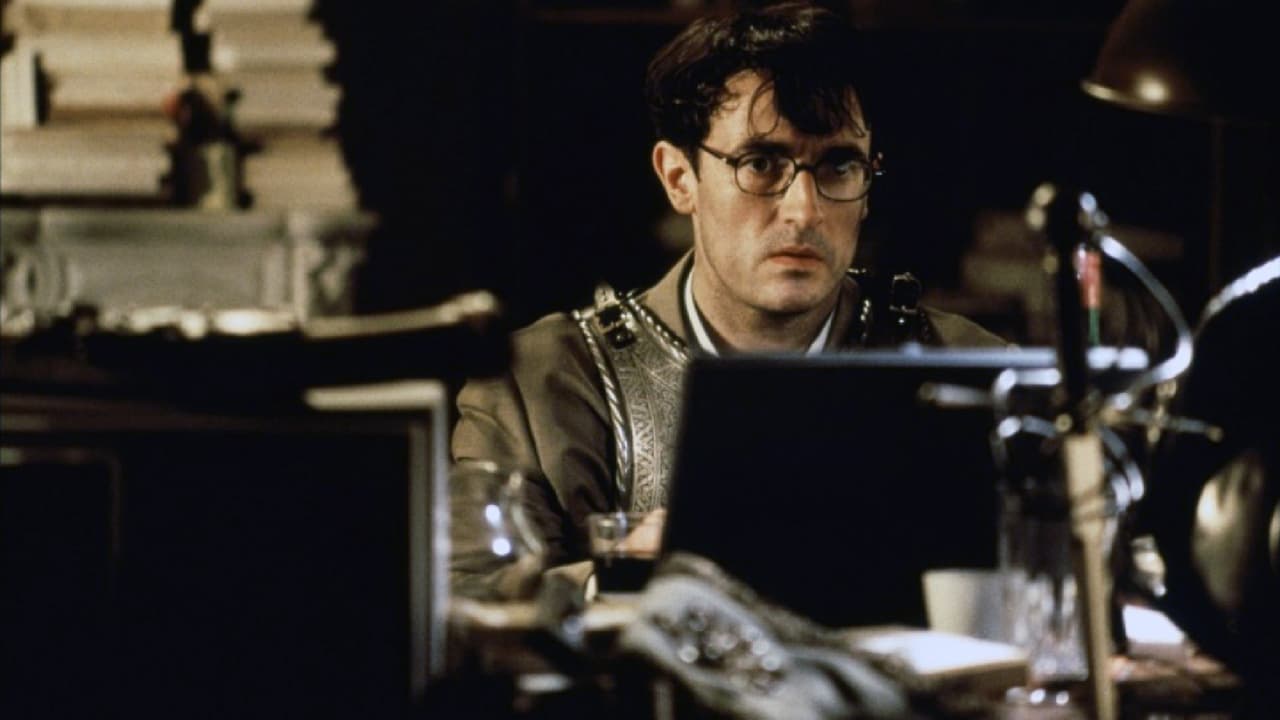
The film centers on Darius (Albert Dupontel himself), a playwright drowning under the weight of an impending deadline for his new play, "The Creator". He hasn't written a word. Facing ruin and humiliation, he makes a desperate, surreal pact with a mysterious entity (represented initially by an egg that hatches bizarre instructions): he will gain the inspiration to finish his masterpiece, but only if he remains completely undisturbed. The catch? Anyone who interrupts him during his five days of feverish writing will die, instantly and often gruesomely. It’s a premise ripe for black comedy, and Dupontel, already known for his high-energy, often caustic humor in films like Bernie (1996), dives headfirst into the chaos.
Dupontel Unleashed
Watching Le créateur is very much experiencing Albert Dupontel's singular, almost manic energy, both in front of and behind the camera. As Darius, he’s a tightly wound spring of desperation, paranoia, and explosive frustration. His physical performance is key; he vibrates with the character's internal torment, trying desperately to barricade himself against a world seemingly determined to intrude. There's a raw truthfulness to his portrayal of creative agony, even when pushed to such grotesque extremes. It’s less about subtlety and more about capturing the sheer panic of the deadline, amplified tenfold by the deadly stakes.
As director and co-writer (with Gilles Laurent), Dupontel crafts a film that mirrors its protagonist's state of mind. The pacing is often frenetic, the camera work dynamic, and the tone veers wildly between slapstick absurdity (the increasingly inventive ways people meet their end) and genuine psychological distress. It lacks the polish of mainstream comedies, embracing a certain rough-edged, almost punk-rock aesthetic that feels very much of its late-90s independent spirit. Filmed primarily in Paris, the city becomes less a romantic backdrop and more a claustrophobic maze Darius must navigate while protecting his lethal bubble of concentration.
Navigating the Chaos
The supporting cast, including Claude Perron as Darius's concerned girlfriend Chloé and Philippe Uchan as his perpetually bewildered producer Victor, serve primarily as foils and potential victims. They represent the intrusions of the real world – love, obligation, commerce – that Darius must violently reject to fulfill his deadly contract. Their reactions, ranging from confusion to terror, ground the absurdity slightly, reminding us of the human cost of Darius's pact, even as the deaths become increasingly comical in their execution. It’s a tricky balancing act, this blend of horror and humor, and the film doesn’t always navigate it perfectly. Sometimes the tonal shifts can be jarring, leaving you unsure whether to laugh or recoil.
Art, Obsession, and Exploding Heads
Beneath the surface-level chaos and dark humor, Le créateur pokes at compelling themes. What is the true price of artistic creation? How far does the justification of "for the sake of art" extend? The film satirizes the almost mythical status sometimes afforded to the suffering artist, pushing the concept to its most literal and lethal conclusion. Darius becomes a prisoner of his own ambition, his creative sanctuary transformed into a deadly trap. Does the film suggest that true creation requires isolation, a cutting-off from humanity? Or does it mock the self-importance of artists who believe their work justifies any cost? The ambiguity lingers, prompting reflection long after the often slapstick violence fades. One interesting production tidbit: Dupontel reportedly financed a significant portion of the film's approximate €4.6 million budget himself, mirroring his character's all-in commitment, albeit with financial rather than mortal risk. This personal investment perhaps fuels the film's passionate, if somewhat ragged, energy.
A Quirky Relic of Late 90s French Cinema
Le créateur wasn't a massive international hit, and finding it on VHS outside of France back in the day might have required a dedicated search or a well-stocked rental store catering to world cinema buffs. It’s not a comfortable watch, nor is it conventionally satisfying in its narrative resolution. It's messy, abrasive, and occasionally uneven. Yet, there's an undeniable audacity to its premise and execution. It feels like a film made with fierce conviction, unburdened by concerns of broad appeal. For fans of Dupontel's unique brand of cinema, or those who appreciate filmmaking that takes wild swings, it remains a fascinating, if flawed, curiosity. It captures a certain end-of-millennium anxiety, filtered through a very specific, darkly comedic French lens. Remember stumbling upon those odd foreign comedies on the shelf, lured in by intriguing cover art, and taking a chance? This feels exactly like one of those finds.
***
Rating: 6.5 / 10
Justification: Le créateur earns points for its sheer originality, Dupontel's committed performance and directorial energy, and its willingness to explore dark themes with absurdist humor. The central concept is strong and memorable. However, the tonal inconsistencies can be jarring, and the humor, while often inventive, sometimes clashes awkwardly with the underlying darkness. It's a bold experiment that doesn't fully coalesce but remains undeniably interesting and distinctively Dupontel.
Final Thought: A chaotic, often funny, sometimes disturbing cinematic pact that reminds us creation can be murder... sometimes literally. A true slice of quirky, late-90s French filmmaking best appreciated by those with a taste for the bizarre.