What happens when the borders aren't just lines on a map, but chillingly invisible walls built from ideology, suspicion, and fear? This isn't a question posed by some far-fetched dystopian thriller, but the suffocating reality at the heart of Régis Wargnier's deeply affecting 1999 drama, East/West (Est-Ouest). Released just as the VHS era was winding down, giving way to the sterile sheen of DVDs, this film feels like a powerful echo from a time when cinema could still blindside you with its raw humanism, demanding your full attention without resorting to easy spectacle. It landed with considerable weight back then, earning an Oscar nomination for Best Foreign Language Film, a testament to its resonant power.

A Homecoming, A Trap
The premise is deceptively simple, yet pregnant with dread. It's 1946, and Stalin has issued an amnesty, inviting Russian émigrés scattered across Europe by war and revolution to return "home" to the Soviet Union. Among them are Alexei Golovine (Oleg Menshikov), a doctor who fled during the Bolshevik revolution, his French wife Marie (Sandrine Bonnaire), and their young son. They arrive in Odessa aboard a ship brimming with hopeful returnees, a poignant scene that quickly sours. The "welcome" is anything but; promises evaporate, possessions are scrutinized, and the air grows thick with the paranoia of the NKVD. Wargnier, who had already proven his talent for sweeping historical epics with the Oscar-winning Indochine (1992), masterfully establishes this shift from fragile optimism to chilling entrapment. You feel the sea breeze turn cold, the relief curdle into fear.
Marie, a Westerner utterly unprepared for the suffocating reality of Soviet life, immediately understands the gravity of their mistake. Alexei, desperate to protect his family and perhaps clinging to a sliver of misplaced patriotic hope (or simply resigned pragmatism), tries to adapt, accepting the compromises demanded by the state. This central conflict – Marie's desperate yearning for escape versus Alexei's complex navigation of survival – forms the film's agonizing core. It’s a story reportedly inspired by the real-life accounts of numerous families who fell victim to this cruel repatriation scheme, adding a layer of historical weight that makes the drama feel devastatingly authentic.
Portraits in Oppression
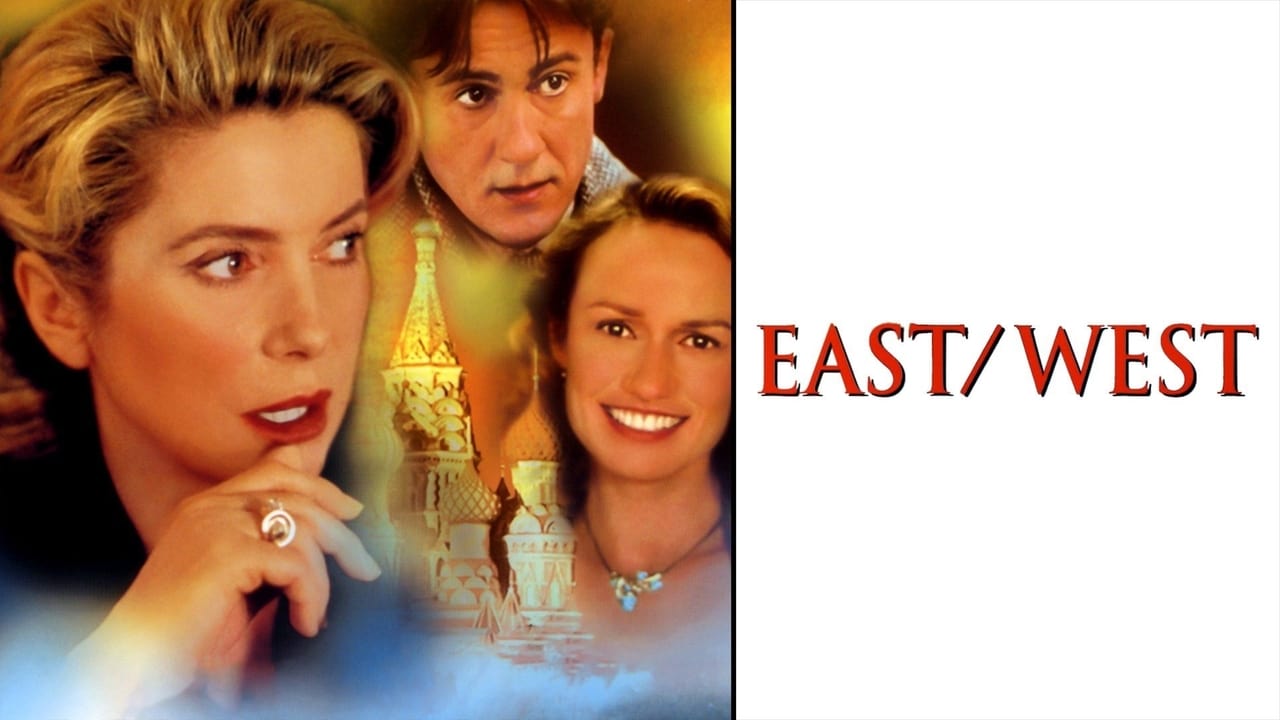
The film rests heavily on the shoulders of its lead actors, and they deliver performances of quiet intensity and profound truth. Sandrine Bonnaire, a stalwart of French cinema known for her naturalism in films like Vagabond (1985), is exceptional as Marie. Her transformation from a loving, somewhat naive wife to a fiercely determined woman fighting against an oppressive system is utterly convincing. You see the dawning horror in her eyes, the hardening of her resolve, the sheer desperation etched onto her face as she realizes their gilded cage has invisible, impenetrable bars. There's no melodrama; her struggle feels terrifyingly real.
Equally compelling is Oleg Menshikov as Alexei. A major star in Russia, known internationally for roles like Burnt by the Sun (1994), he embodies the impossible position of a man caught between two worlds, forced into moral compromises that erode his soul. His face often carries the weary resignation of someone who knows the game is rigged but must play along anyway. Is he a collaborator, a pragmatist, or simply a father trying to shield his son? Menshikov keeps these ambiguities simmering beneath the surface, making Alexei a deeply tragic figure rather than a simple victim or villain. The tension in their shared apartment, thick with unspoken fears and diverging paths, is palpable.
And then there's the brief but crucial appearance of Catherine Deneuve as Gabrielle, a famous French actress visiting on a cultural tour. She represents a potential lifeline, a connection to the world Marie is desperate to regain. Deneuve brings her signature elegance and subtle strength to the role, embodying the West's glamour and, perhaps, its naive understanding of the Soviet reality. Her interactions with Marie are fraught with coded language and desperate hope. Filming these scenes, bridging the gap between established Western stars like Bonnaire and Deneuve and Russian actors like Menshikov, must have mirrored the film's themes of cultural collision – a fascinating production detail reflecting the narrative itself. Shooting primarily in Kyiv (Ukraine) and Bulgaria to recreate post-war Odessa adds another layer of authenticity, capturing the specific atmosphere of faded grandeur and pervasive state control.
The Weight of Atmosphere
Wargnier avoids overt political speechifying. Instead, he lets the atmosphere do the talking. The cramped communal apartments, the omnipresent portraits of Stalin, the casual cruelty of bureaucracy, the constant fear of informers – it all builds a world where individual lives are crushed under the weight of the state. The cinematography captures both the bleakness and the moments of fragile beauty, emphasizing the stark contrast between the characters' inner turmoil and the often indifferent facade of their surroundings. The score, too, subtly underscores the emotional landscape without overwhelming it.
It’s a film that asks profound questions: What is the price of freedom? How much compromise is too much when survival is at stake? Can love endure under such immense pressure? East/West doesn’t offer easy answers. It presents the harrowing choices faced by ordinary people caught in the gears of history, forcing us to consider what we might do in their place. Doesn't this constant negotiation between personal integrity and systemic pressure resonate even today, albeit in different forms?
Final Thoughts
East/West isn't a feel-good movie, nor is it a fast-paced thriller in the conventional sense. It’s a slow-burn historical drama that grips you with its emotional honesty and the quiet power of its performances. It demands patience, but the reward is a deeply moving and thought-provoking cinematic experience that lingers long after the credits roll. It’s a potent reminder of the human cost of totalitarianism and the resilience of the spirit, captured with sensitivity and skill. For those seeking more than just nostalgic thrills from the late 90s, this is a film that absolutely deserves to be sought out and experienced.
Rating: 8.5/10 - A superbly acted, atmospheric, and emotionally resonant historical drama that earns its impact through powerful performances and a chillingly authentic portrayal of life under oppression. Its slightly deliberate pace might test some, but the thematic depth and human story make it a standout film from its era, justifying its critical acclaim and Oscar nod.
What stays with you most isn't just the plot, but the faces – the fear in Marie's eyes, the weary compromise in Alexei's gaze – indelible portraits of humanity caught in history's unforgiving current.