There's a certain kind of cinematic charm, isn't there? Not the slick, focus-grouped kind, but the earned, lived-in sort that arises from genuine character moments and a palpable sense of time and place. Watching Richard Linklater's The Newton Boys (1998) again recently, that’s the feeling that washed over me. It felt less like revisiting a forgotten heist flick and more like settling in with an old, slightly dusty photo album filled with charismatic rogues and a bygone era. It's a film that, perhaps unfairly, slipped through the cracks for many back in '98, nestled between Linklater's generation-defining talkfests like Dazed and Confused (1993) and the burgeoning Before series. Seeing his name attached to a period piece about 1920s bank robbers felt like an intriguing detour then, and it remains one of his most fascinating, if less heralded, works.
### Gentlemen Bandits in the Lone Star State
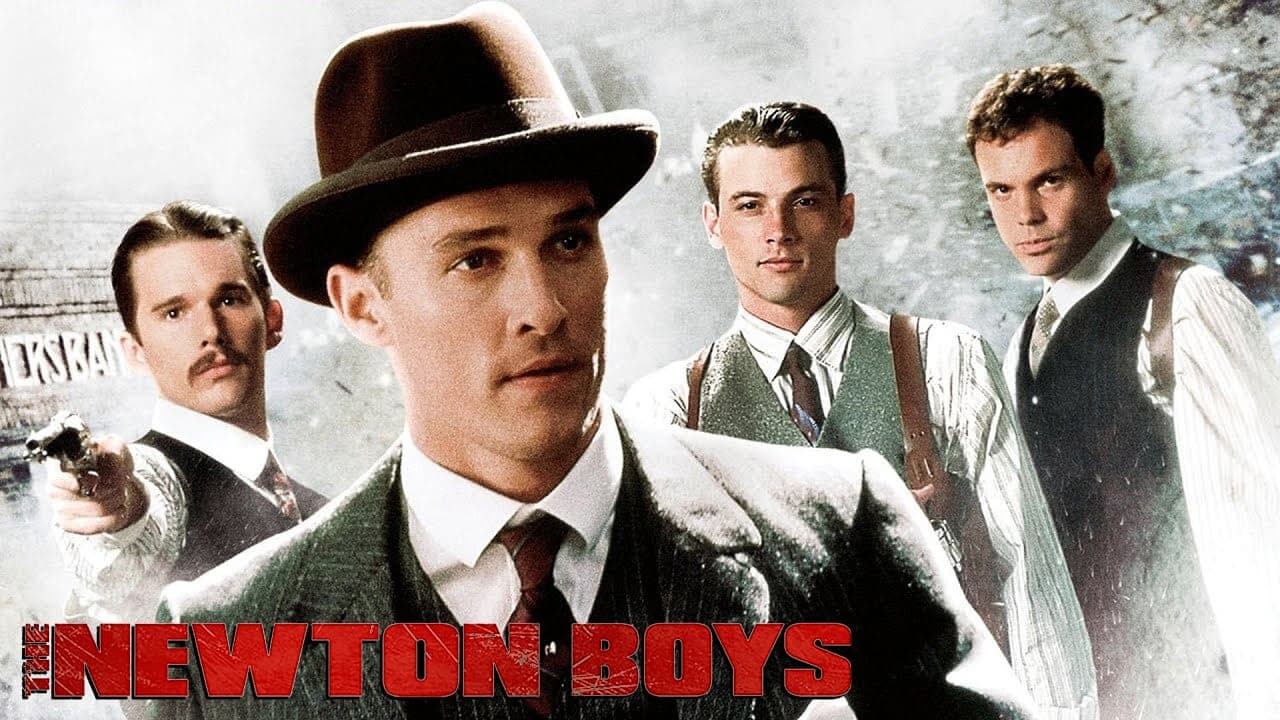
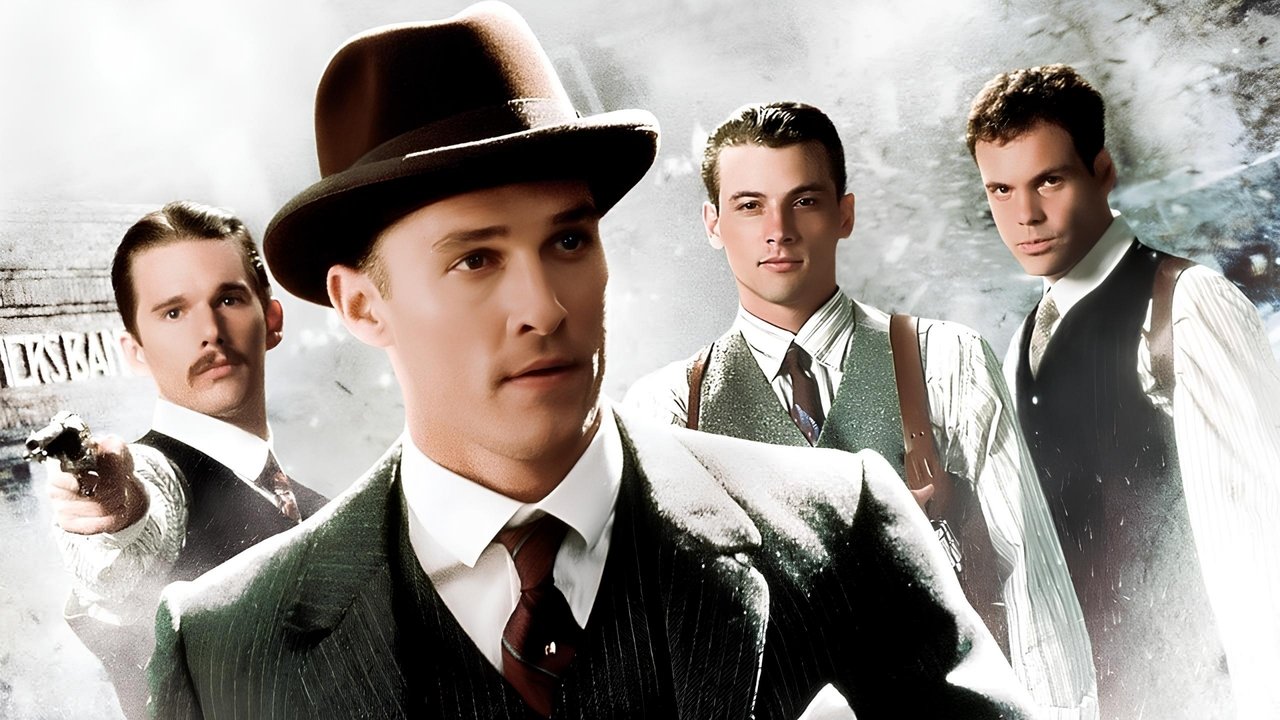
Based on the true story of the most successful bank (and later train) robbers in American history – who famously prided themselves on never killing anyone – The Newton Boys introduces us to the four titular brothers. There's Willis (Matthew McConaughey), the smooth-talking, ambitious leader fresh out of an unjust prison stint; Jess (Ethan Hawke), the eager, slightly more reckless younger brother; Joe (Skeet Ulrich), the pragmatic explosives expert; and Dock (Vincent D'Onofrio), the more religious, slightly slower member who joins later. Together, often aided by the nitroglycerin maestro Brentwood Glasscock (Dwight Yoakam, perfectly cast), they embark on an astonishingly prolific spree across Texas and beyond, navigating the transition from cracking safes in small-town banks to attempting audacious daylight heists and, ultimately, the infamous $3 million mail train robbery near Rondout, Illinois – a staggering sum then, equating to well over $50 million today.
Linklater, a Texan himself, clearly felt a connection to this slice of local history, drawing heavily from Claude Stanush's book which included interviews with the elderly Willis Newton. This grounding gives the film an authenticity that elevates it beyond simple genre exercise. Rather than focusing purely on the thrill of the heists, Linklater, true to form, lingers on the interactions, the fraternal bonds, the casual planning sessions that feel less like hardened criminal masterminding and more like ambitious entrepreneurs discussing their next venture. It’s this focus on character, a hallmark even when he stepped outside his contemporary wheelhouse, that makes the film resonate. You feel the dusty Texas air, see the slightly awkward fit of their city suits, and understand the allure of beating a system they felt had wronged them.

### That Late 90s Star Power
The casting here feels like a perfect snapshot of late-90s Hollywood potential. Matthew McConaughey, already riding high but before his later 'McConaissance', absolutely embodies Willis's effortless charisma and folksy charm. He makes you understand why people would follow this man, even when his ambition starts to outstrip his caution. Ethan Hawke, Linklater's frequent collaborator, brings a fiery energy to Jess, the brother perhaps most susceptible to the allure of the outlaw lifestyle. Watching them together, you feel the genuine rapport built over previous projects.
Skeet Ulrich, post-Scream (1996) fame, offers a quieter, more grounded presence as Joe, the technical mind of the operation. And Vincent D'Onofrio, always an arresting screen presence, adds a touch of unpredictability and moral conflict as Dock. Even Dwight Yoakam steals scenes with his laconic portrayal of Glasscock, a man utterly unfazed by handling ridiculously unstable explosives. It's fascinating to recall seeing this lineup back then – a collection of actors hitting their stride, bringing their distinct energies to Linklater's atypical project. I distinctly remember renting this one, the cover art promising a sort of old-fashioned adventure, and being pleasantly surprised by the depth beneath the period dressing.
### The Romance and Reality of the Heist
Linklater doesn't shy away from depicting the excitement and success of the Newtons' initial run. There's a certain vicarious thrill in watching them meticulously plan and execute their robberies, often using nitro with surprising finesse (or sometimes, comical excess). The production design effectively captures the era, from the sputtering Model Ts to the small-town bank facades. Filming in actual Texas towns like Lockhart adds immeasurably to this authentic feel. However, the film wisely avoids outright glorification. As the stakes get higher, particularly with the notoriously botched Rondout train robbery, the consequences become starkly real. The easy charm begins to fray, replaced by desperation and the harsh reality that their luck, however prodigious, couldn't last forever.
One fascinating tidbit highlighting the film's commitment to authenticity: the real Willis Newton lived into his 90s and even appeared on The Tonight Show Starring Johnny Carson in 1980, recounting his exploits with surprising candor. Linklater incorporates this framing device, with an elderly Willis reflecting on his past, adding a layer of poignant self-awareness to the narrative. It’s a touch that reminds us these were real people, not just movie archetypes. Despite its $27 million budget, the film unfortunately didn't connect with audiences at the time, grossing only around $10.5 million. Perhaps it was too gentle for audiences expecting a grittier crime saga, or maybe Linklater's shift was too unexpected. Yet, viewed now, its charms feel more apparent.
### Worth Tracking Down on the Retro Trail
The Newton Boys isn't Linklater's most profound film, nor is it the most action-packed heist movie you'll find on the rental shelves (real or metaphorical). What it offers instead is a warm, character-driven look at a fascinating true story, brought to life by a stellar cast operating within their charismatic prime. It captures the specific allure of the "gentleman bandit" mythos while subtly acknowledging the inevitable gravity that pulls such figures back to earth. It feels like a comfortable, engaging story told with affection and a keen eye for period detail. Does it sometimes feel a little leisurely paced? Perhaps. But that pacing allows the characters and the era to breathe, making the journey, rather than just the destination, the real reward.
Rating: 7/10
Justification: The film boasts strong performances, particularly from McConaughey and Hawke, captures its period setting authentically, and tells a genuinely interesting true story with Linklater's characteristic focus on character. While its pacing might occasionally lag and it didn't make a huge splash upon release, its charm, warmth, and the snapshot of its talented cast make it a rewarding watch, especially for fans of the director or period crime stories.
Final Thought: It's a reminder that sometimes the most interesting outlaws aren't the ones who leave the biggest body count, but the ones whose sheer audacity and improbable success leave you shaking your head with a grudging smile, long after the credits roll. A true hidden gem from the late VHS era.