Alright VHS voyagers, slide that tape into the VCR, maybe give the tracking a little nudge, and settle in. Tonight, we’re popping in a mid-90s comedy that might have slipped past your radar back in the day, nestled perhaps between the bigger blockbusters on the New Releases wall: 1997’s Trial and Error. This wasn't the movie plastered on every billboard, but finding it felt like discovering a fun, unexpected treat, especially if you were riding high on Seinfeld fever.
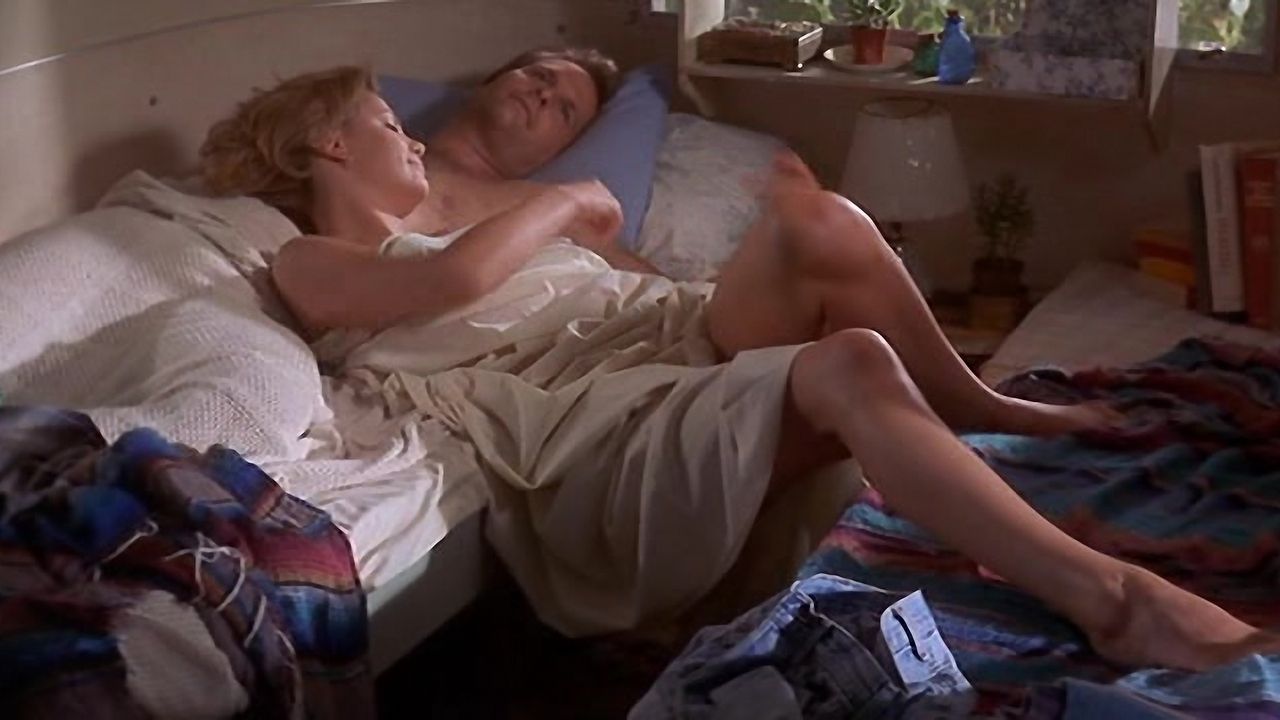
The premise alone has that classic, slightly absurd 90s comedy energy. Jeff Daniels, ever the reliable anchor, plays Charles Tuttle, a straight-laced lawyer from a prestigious firm, about to marry his boss's daughter (Jessica Steen) and finally make partner. All he needs to do is drive to the quaintly named Paradise Bluff, Nevada, handle a simple postponement for his wealthy, slightly shady future brother-in-law (Rip Torn, chewing scenery with glorious gusto as always), and head back to his perfect life. Easy, right? Enter Richard Rietti (Michael Richards), Charlie’s loose-cannon actor best friend, tagging along for a pre-wedding bachelor blowout that goes spectacularly off the rails.
When Kramer Goes to Court
What follows is pure fish-out-of-water gold, albeit with a distinctly Kramer-esque flavor. After Richard’s antics leave Charlie incapacitated (and hilariously hungover), Richard, the struggling actor, has to impersonate Charlie, the actual lawyer, in court before a stern judge (Austin Pendleton). This is the movie’s big gamble: letting Michael Richards, then at the absolute peak of his Seinfeld fame, cut loose in a leading film role. And boy, does he cut loose. If you ever wondered what Cosmo Kramer would do if forced to practice law with zero knowledge but maximum confidence, this is pretty much it.
Richards throws himself into the role with the same manic physical energy that made Kramer iconic. The courtroom scenes are his playground – disastrous objections, bizarre lines of questioning, sudden bursts of slapstick. It’s undeniably funny watching him try to bluff his way through legal proceedings while Jeff Daniels, relegated to the background and recovering from his hangover horror, tries to covertly coach him through sheer panic. Daniels is honestly the secret weapon here; his slow burns, exasperated sighs, and moments of sheer terror are the perfect counterpoint to Richards' whirlwind performance. Their chemistry, this friction between order and chaos, is what makes the film tick.
Directed by a Pro
It helps immensely that the film was helmed by Jonathan Lynn, who knows his way around a courtroom comedy. Just five years earlier, he’d given us the absolute classic My Cousin Vinny (1992), another tale of an unqualified outsider disrupting the legal system. Lynn brings a steady hand here, keeping the absurdity grounded just enough and understanding how to pace the gags. While Trial and Error doesn't quite reach the sharp perfection of Vinny, Lynn ensures the film feels like a proper movie, not just a sitcom sketch stretched thin. He lets the charm of the small-town setting (actually Paradise Valley, Arizona, filling in for Nevada) provide a nice backdrop for the escalating chaos. Adding to the charm offensive is a young Charlize Theron as Billie Tyler, the local waitress who sees through Richard's act but finds herself drawn to the mayhem – and maybe to the real Charlie hiding underneath. She brings a warmth and spark that elevates her scenes.
A Case of Mistaken Identity (and Box Office)
Digging through the old video store archives (or, you know, the internet), you find some interesting tidbits. Trial and Error was definitely positioned as a potential star vehicle for Richards outside of Seinfeld. Written by the husband-and-wife team of Sara and Gregory Bernstein, it had a solid comedic pedigree behind the camera. However, despite the talent involved, the film didn't exactly set the box office on fire. Made for around $25 million (that's roughly $48 million in today's money – not insignificant!), it only pulled in about $13 million domestically. Perhaps audiences weren't quite ready for Kramer without the rest of the Seinfeld gang, or maybe the premise felt a little too familiar. It became one of those comedies you discovered later, on VHS or cable, enjoying it on its own terms without the opening weekend hype.
Does some of Richards' shtick feel very Kramer? Absolutely. At times, it borders on being distracting, pulling you out of the character of Richard Rietti and reminding you intensely of the eccentric neighbor across the hall. But honestly, isn't that part of the fun now, looking back? It’s a time capsule of a specific moment when one of TV’s biggest stars tried to translate that lightning to the big screen.
The Verdict
Trial and Error isn't aiming for high art. It's a goofy, good-natured 90s comedy built on a simple, effective premise and the comedic talents of its leads. Daniels provides the relatable frustration, Richards delivers the chaotic energy, Theron adds the charm, and Lynn keeps it all moving at a pleasant clip. It's the kind of movie that probably played great on a fuzzy CRT screen late at night, the familiar rhythms of the courtroom farce punctuated by Richards’ unpredictable physical comedy.
Rating: 6.5/10
Why this score? Trial and Error earns points for its genuinely funny premise, the solid comedic work by Jeff Daniels as the straight man, Charlize Theron's early charm, and Jonathan Lynn's capable direction drawing on his My Cousin Vinny experience. It delivers consistent chuckles and leverages Michael Richards' unique energy effectively, even if it sometimes feels like Kramer Takes the Stand. However, it loses a few points for being somewhat predictable, occasionally leaning too heavily on Richards' established persona, and ultimately not quite achieving the classic status of its courtroom comedy predecessor. It was also a commercial disappointment, hindering its initial impact. Still, it's a thoroughly pleasant and often hilarious watch with definite nostalgic appeal.
Final Thought: A charmingly chaotic courtroom caper powered by peak-90s Kramer energy, proving that sometimes the best legal strategy involves tripping over the evidence box – a perfect slice of rental-era comfort food.