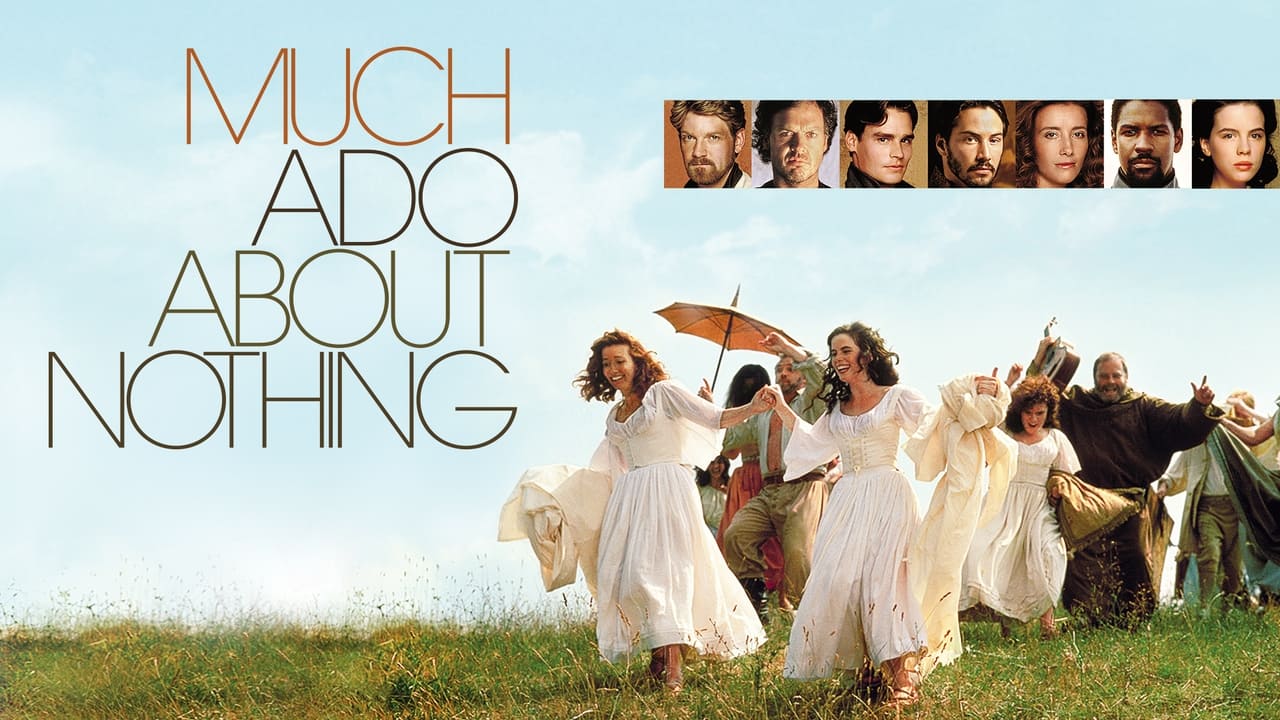
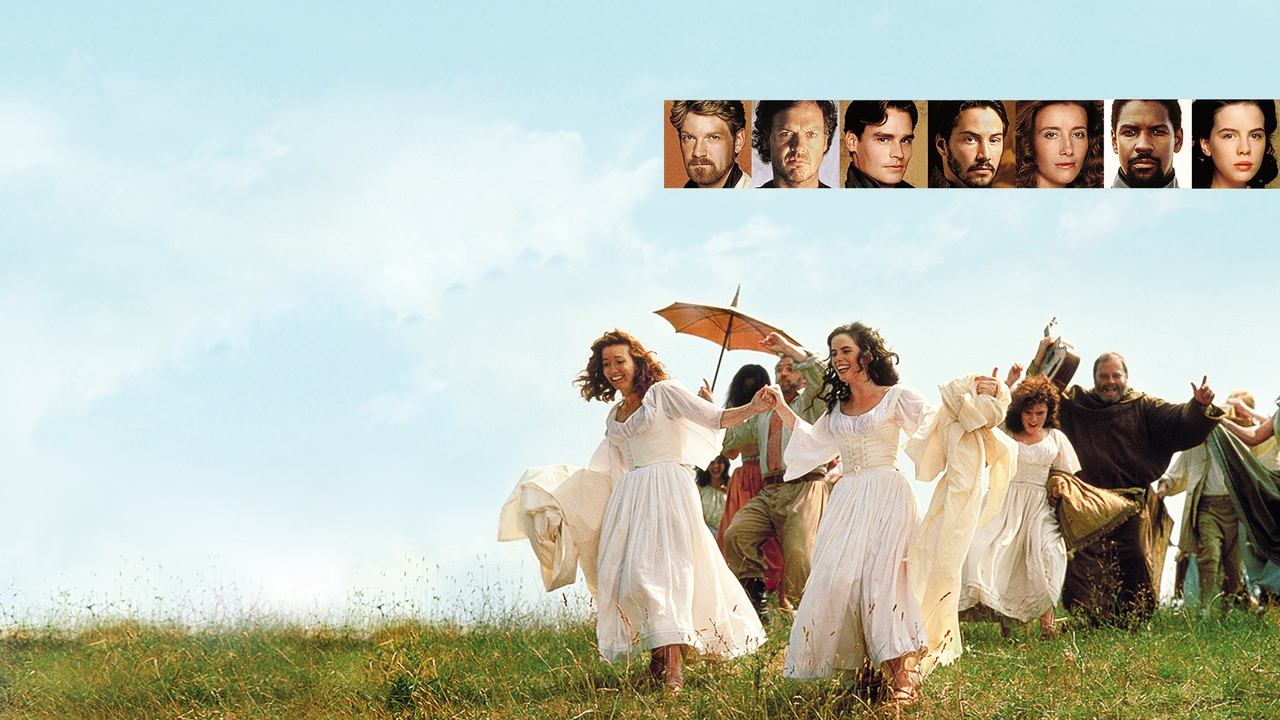
Remember that feeling, back in '93, when the idea of watching Shakespeare felt less like entertainment and more like assigned reading? Then along came Kenneth Branagh's Much Ado About Nothing, bursting onto the screen not with dusty reverence, but with sunshine, laughter, and a palpable, almost shocking sense of fun. It felt like throwing open the shutters in a stuffy room and letting the Tuscan light pour in. This wasn't just Shakespeare; it was Shakespeare invited to the best summer party imaginable, and somehow, miraculously, we were all on the guest list.
A Feast for the Eyes and Ears
What immediately strikes you, even revisiting it decades later, is the sheer exuberance. Branagh, directing himself and then-wife Emma Thompson as the famously sparring lovers Benedick and Beatrice, doesn't just stage the play; he unleashes it. The film opens with a legendary, complex single-take tracking shot (reportedly requiring days of meticulous rehearsal) following Don Pedro (Denzel Washington) and his men returning from war, galloping towards a stunning Tuscan villa. It’s a shot brimming with energy, promise, and the kind of cinematic confidence that defined Branagh’s early directorial efforts. He makes Shakespeare move, visually and emotionally, translating the witty banter and tangled romances into pure screen energy. The sun-drenched cinematography by Roger Lanser makes the Italian landscape itself a character, radiating warmth and romance. It's a world you want to step into.
The War of Wits, Perfectly Waged
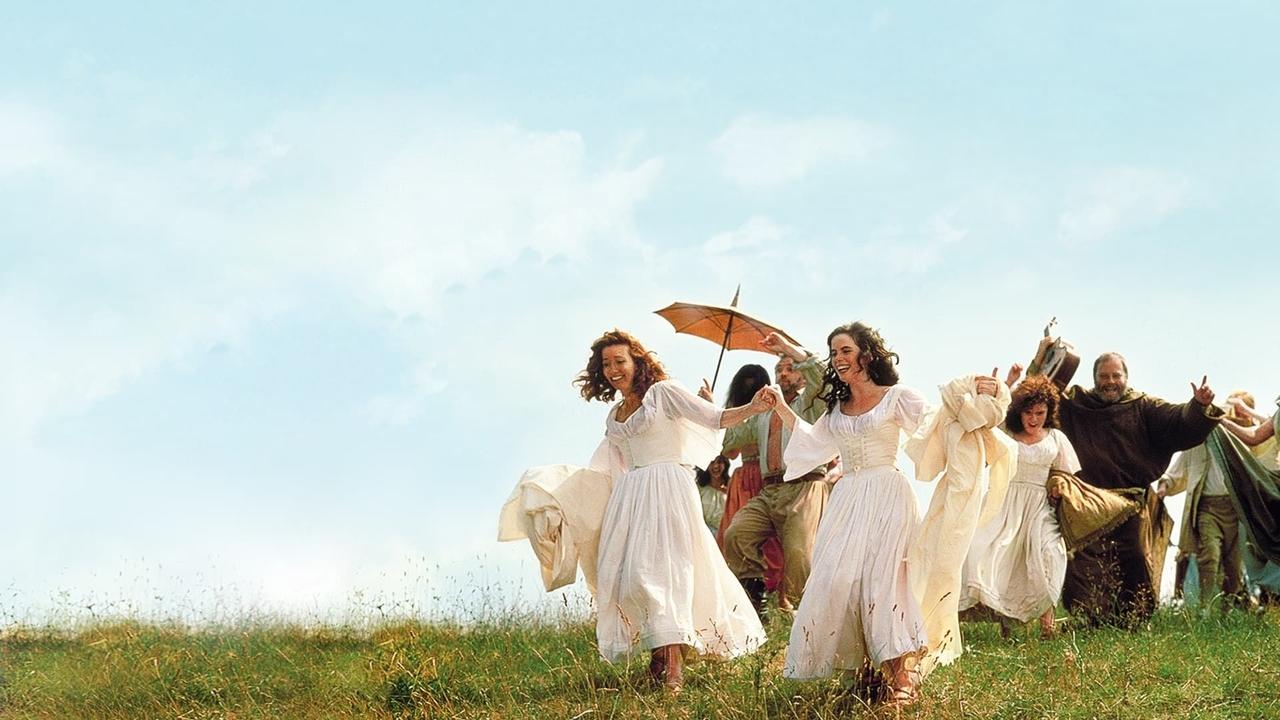
At the heart of it all, naturally, is the 'merry war' between Beatrice and Benedick. Emma Thompson is simply incandescent. Her Beatrice isn't just witty; she’s fiercely intelligent, vulnerable beneath the barbs, and possesses a comic timing so sharp it could draw blood. Watching her navigate Beatrice’s reluctant path to love is pure joy. Kenneth Branagh matches her step-for-step as Benedick, the confirmed bachelor whose own defences crumble with equal charm and hilarity. Their chemistry is undeniable – a product, perhaps, of their real-life relationship at the time, but translated perfectly into the characters’ friction and underlying affection. Their scenes together crackle; you believe every insult, every denial, and ultimately, every hesitant step towards admitting their feelings. It’s a masterclass in delivering Shakespearean dialogue not as poetic declamation, but as living, breathing conversation.
Sunshine and Shadows
While the Beatrice/Benedick plot provides the sparkling comedy, Branagh doesn't shy away from the play’s darker undercurrents. The cruel deception targeting the young lovers, Hero (Kate Beckinsale in her film debut) and Claudio (Robert Sean Leonard, fresh off Dead Poets Society), lands with genuine weight. Leonard effectively conveys Claudio’s swift descent from lovestruck soldier to jealous accuser, while Beckinsale portrays Hero’s devastation with heartbreaking sincerity. The tonal shift from lighthearted romance to public shaming and near-tragedy is handled adeptly, reminding us that even in sunny Messina, reputations are fragile and malice can fester.
That Eclectic Nineties Casting
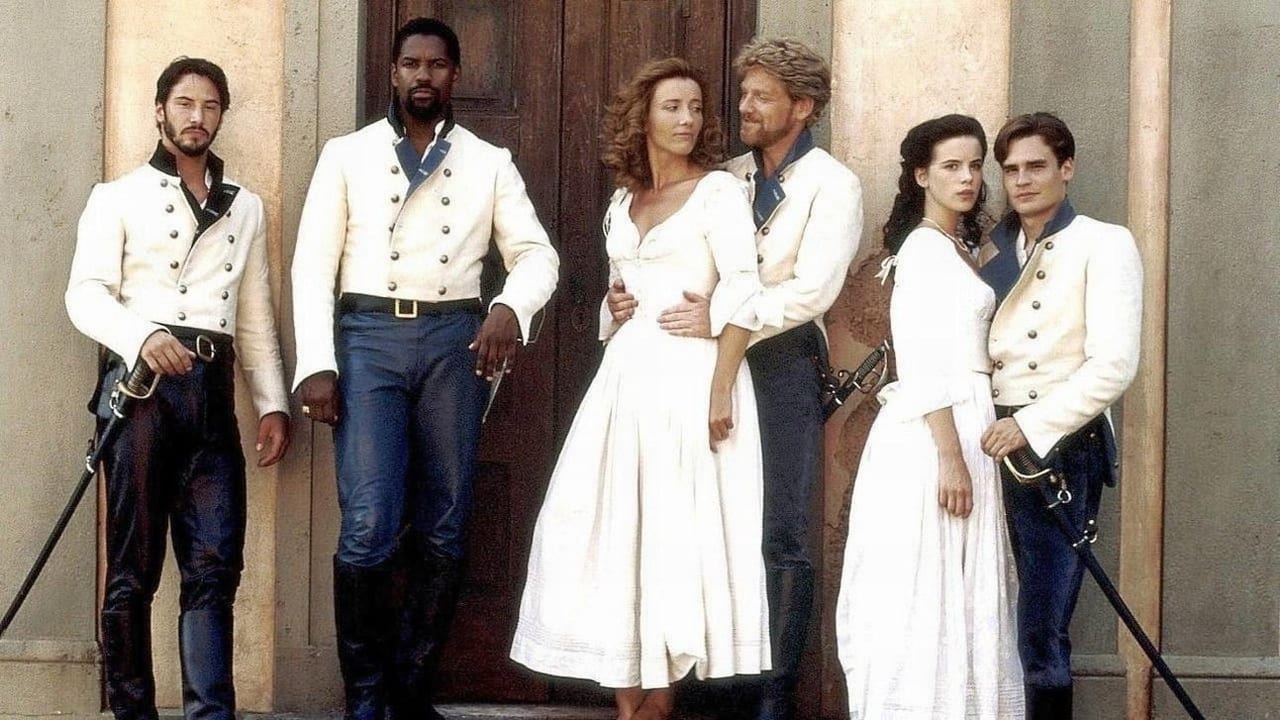
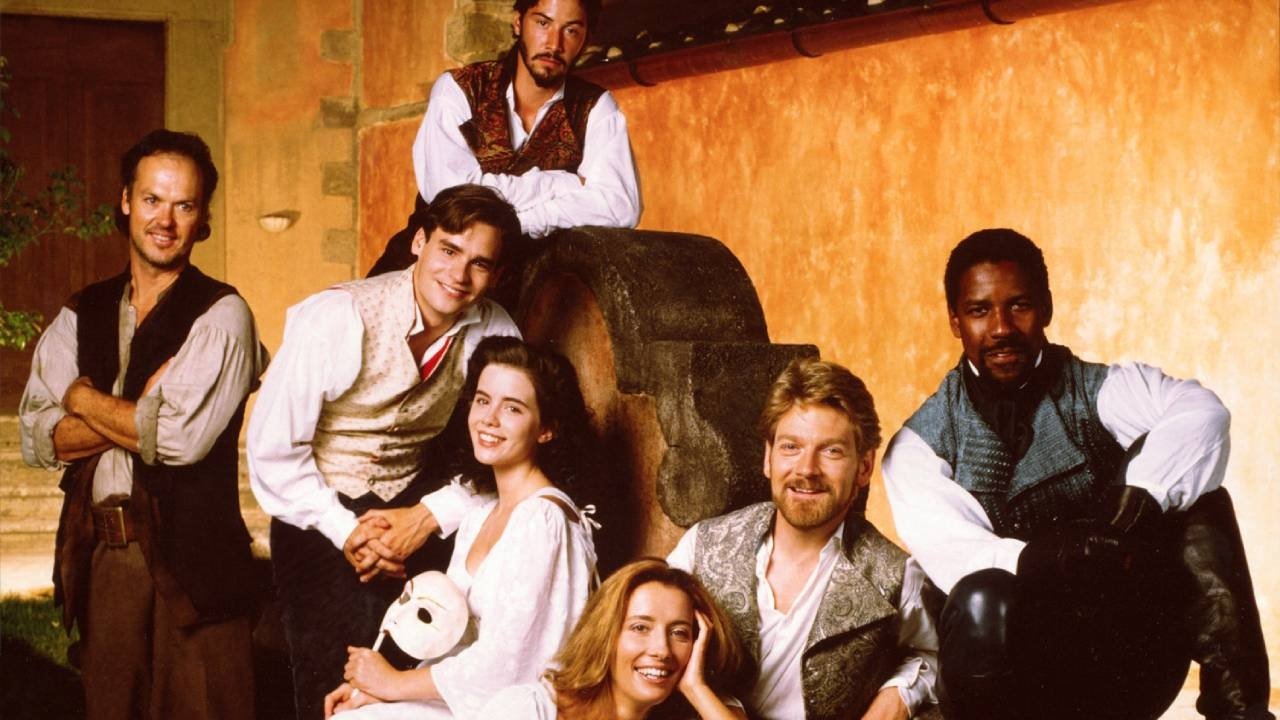
Let's talk about the casting, because it was – and remains – a fascinating snapshot of early 90s Hollywood meeting the Bard. Alongside seasoned British stage actors like Richard Briers (Leonato) and Brian Blessed (Antonio), Branagh brought in American star power. Denzel Washington exudes effortless charisma and authority as Don Pedro. Michael Keaton delivers a memorably manic, almost Beetlejuice-esque performance as the constable Dogberry, chewing the scenery with delightful abandon (apparently, much of his comedic business was improvised on set).
And then there's Keanu Reeves as the villainous Don John. It was a casting choice that raised eyebrows then and is often singled out for criticism now. Does he possess the same classical dexterity as others? Perhaps not. Yet, there’s a sullen, brooding quality he brings that, intentionally or not, makes Don John’s motiveless malignity feel grounded in a kind of detached resentment that’s strangely effective in its own way. It was a bold move by Branagh, indicative of his desire to make the film feel contemporary and reach a wider audience, even if the results were mixed for some.
Shakespeare for the Multiplex
One fascinating bit of trivia: the film was produced for a relatively modest $11 million. Its worldwide gross of over $43 million (around $90 million in today's money) was a resounding success, proving that Shakespeare, when presented with verve and accessibility, could absolutely connect with mainstream audiences. It opened doors for subsequent adaptations in the 90s. Branagh's genius here wasn't just in understanding Shakespeare, but in understanding film. He used close-ups, dynamic editing, and Patrick Doyle’s soaring score to amplify the emotion, making the 400-year-old text feel immediate and relatable. Remember listening to that soundtrack? Doyle's score perfectly captured both the buoyant romance and the creeping darkness.
The setting itself, the Villa Vignamaggio in Tuscany, supposedly has its own connection to the Bard's world – some believe it to be the childhood home of Lisa Gherardini, the model for Da Vinci's Mona Lisa. Whether true or not, the location lends an authenticity and beauty that elevates the entire production. It feels less like a set and more like a real place where these passions could unfold.
Rating and Final Thoughts
Much Ado About Nothing remains a vibrant, joyful, and deeply intelligent adaptation. It captures the sparkling wit, the aching romance, and the sudden cruelty of Shakespeare's text with cinematic flair and brilliant performances, particularly from its leads. While certain casting choices might provoke debate, the overall achievement is undeniable. It made Shakespeare feel alive and relevant for a whole new generation.
Rating: 9/10
This score reflects the film's sheer exuberance, the powerhouse performances of Thompson and Branagh, its visual beauty, and its remarkable success in making Shakespeare accessible and genuinely entertaining without sacrificing depth. The slight deduction acknowledges that not every element (particularly some supporting casting) hits the same sublime heights, but the overall impact remains incredibly strong.
What lingers most after watching Much Ado About Nothing today? It's that feeling of bright, infectious energy – a reminder that classic stories, when handled with passion and cinematic vision, can transcend time and connect with us just as powerfully now as they did on that first, sun-drenched viewing back in '93. It truly was a breath of fresh Tuscan air.