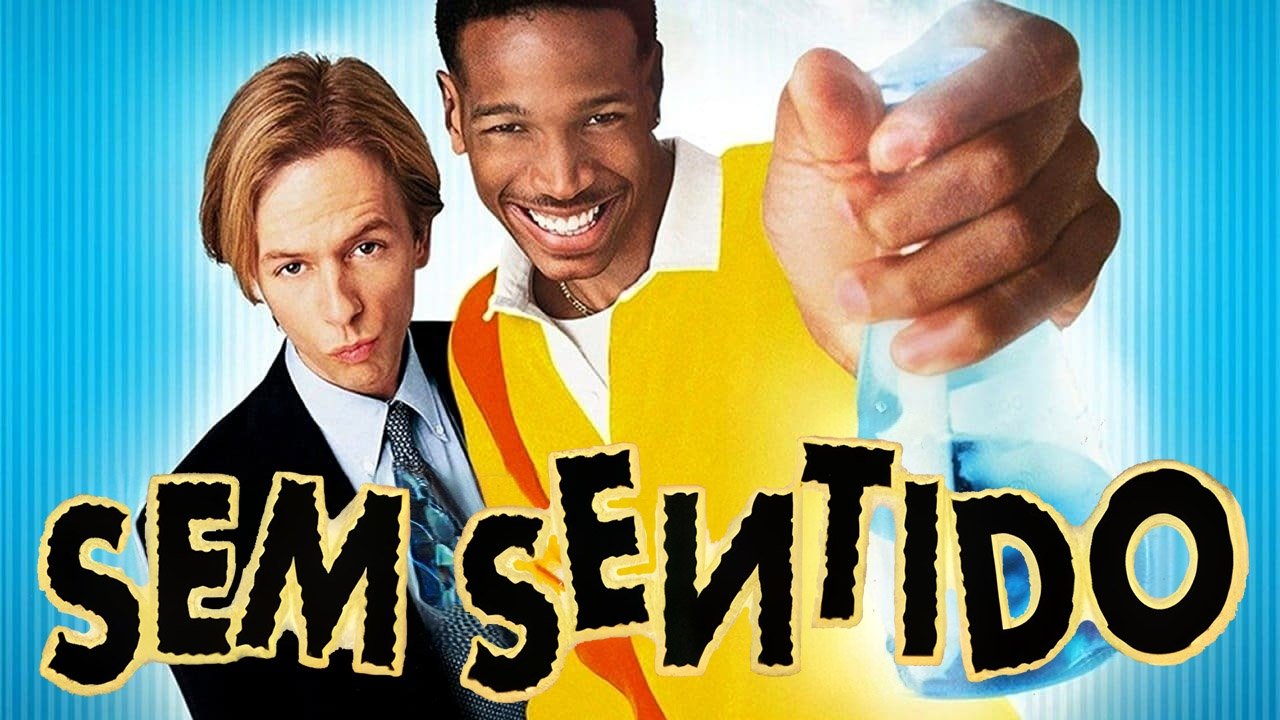
Alright, rewind your minds with me. Picture this: it's late 1998, the fluorescent lights of the video store are buzzing overhead, and you're scanning the 'New Releases' wall. Your eyes land on a brightly coloured box featuring Marlon Wayans looking suitably stressed out. The title? Senseless. The premise? Absolutely bonkers high-concept. You grab it, maybe alongside Rush Hour or There's Something About Mary, anticipating some easy laughs for the weekend. That, my friends, is the natural habitat of this particular slice of 90s cinematic cheese.
### Higher Education, Higher... Senses?
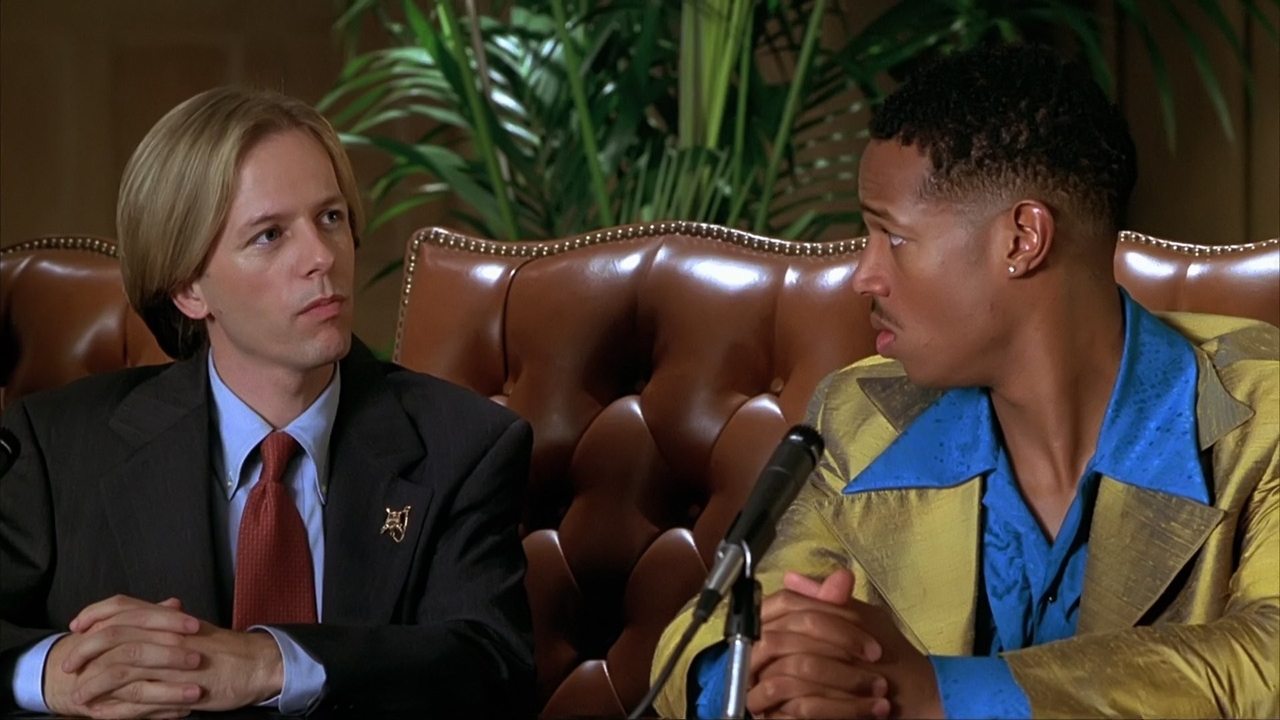
Senseless throws us headfirst into the frantic world of Darryl Witherspoon (Marlon Wayans), a whip-smart economics student juggling about five part-time jobs to support his family back home while desperately trying to win a prestigious analyst competition run by Smythe-Bates. His rival? The insufferably smug Scott Thorpe (David Spade, doing his patented brand of acidic snark honed on SNL and perfected in films like Tommy Boy). Darryl's big chance comes via a shady medical experiment – a neon-green serum that promises to enhance one human sense fivefold. Naturally, needing every edge he can get, Darryl overdoses, super-charging all his senses simultaneously.
The result is pure comedic chaos, largely carried on Wayans' impressively elastic shoulders. This isn't subtle character comedy; it's broad, often outrageous physical stuff. Darryl suddenly overhears whispers from across campus, sees microscopic details, smells odours miles away, tastes the molecular structure of food, and feels the slightest air current like a physical blow. It’s a premise ripe for visual gags, and the film dives in headfirst. Remember how overwhelming it felt just watching him try to navigate a crowded hallway or eat a meal?

### The Human Special Effect
Directed by Penelope Spheeris, who brought us the iconic Wayne's World (1992) just a few years earlier, Senseless feels like a very different beast. Where Wayne's World had sharp cultural satire and endlessly quotable lines, Senseless leans heavily into Wayans' gift for physical comedy. There aren't many "practical effects" in the traditional action movie sense here, but Wayans himself becomes the special effect. The way the film visualizes his sensory overload – quick cuts, fish-eye lenses, exaggerated sound design, Wayans' bug-eyed reactions – feels distinctly late 90s. It’s achieved through performance and relatively simple camera tricks, a far cry from how such a concept might be rendered with slick CGI today.
Retro Fun Fact: One of the film's writers might surprise you. Alongside Greg Erb, the script was co-written by Craig Mazin. Yes, that Craig Mazin, the future Emmy-winner who would later give us the harrowing historical drama Chernobyl and the acclaimed adaptation of The Last of Us. It’s quite the journey from super-senses slapstick to prestige television, highlighting the unpredictable paths careers can take in Hollywood!

### Campus Hijinks and Familiar Faces
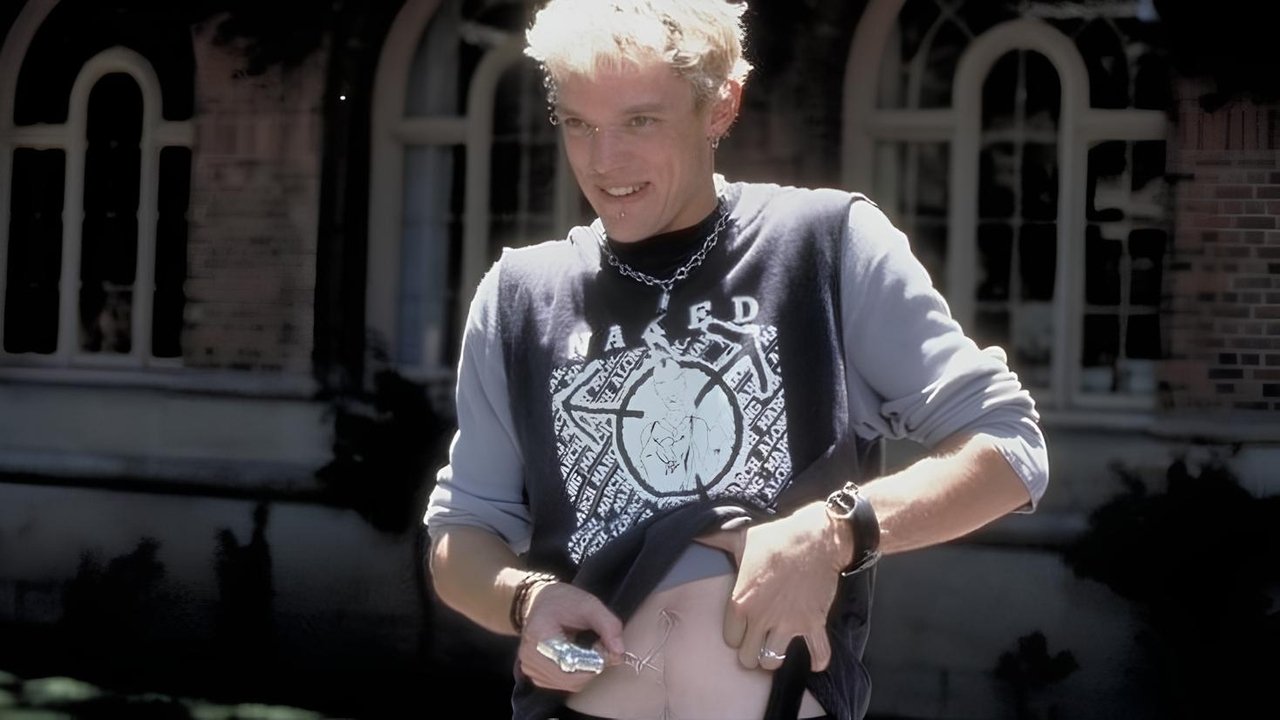
Supporting Wayans and Spade is a cast filled with recognisable 90s faces. Matthew Lillard, fresh off Scream (1996) and right before SLC Punk! (1998), pops up as Darryl's energetic, perpetually stressed-out best friend, Tim. His manic energy is always welcome, even if the role itself is fairly standard 'wacky sidekick' stuff. The dynamic between Wayans' increasingly freaked-out Darryl and Spade's sneering Thorpe provides the film's main conflict, a familiar campus comedy rivalry structure.
The film didn't exactly set the world on fire upon release. Made for a modest $15 million, it only pulled in about $11.8 million domestically, marking it as a box office disappointment. Critics weren't kind either (it currently languishes with a pretty brutal score on Rotten Tomatoes from back in the day). But like so many comedies of this era, it found a second life on VHS and cable, becoming one of those films you stumbled upon and enjoyed for its sheer silliness and Wayans' committed performance.
Retro Fun Fact: The university scenes were largely filmed at the University of Southern California (USC) in Los Angeles, giving it that authentic (if generic) American college campus feel common in films of the time.
### Does It Still Make Sense?
Revisiting Senseless today is an interesting experience. The humour is definitely rooted in its time – some gags land better than others, and the plot mechanics are fairly predictable. The reliance on broad physical comedy might feel a bit dated compared to more nuanced modern comedies. Yet, there's an undeniable charm to its straightforward goofiness. Marlon Wayans throws himself into the role with infectious energy, and the high-concept premise, while absurd, provides a solid engine for laughs.
It's not a sophisticated film, nor does it try to be. It aims for easy chuckles and succeeds often enough, largely thanks to its star. It captures that specific late-90s moment in studio comedies – bright lighting, broad concepts, familiar archetypes, and a certain optimistic silliness.
Rating: 6/10
Justification: The rating reflects the film's success as a vehicle for Marlon Wayans' physical comedy and its status as a recognisable, if flawed, piece of 90s nostalgia. It delivers on its goofy premise with enough energy to be entertaining, despite predictable plot points and some dated humour. Points are docked for the weak box office/critical reception and lack of lasting impact, but it earns marks for being a memorable high-concept rental from the era.
Final Thought: Senseless might overload your critical faculties if you expect high art, but as a fizzy dose of late-90s absurdity powered by pure Wayans energy, it’s a surprisingly fun trip back to the video store shelf. Sometimes, a little nonsense is exactly what the VCR ordered.