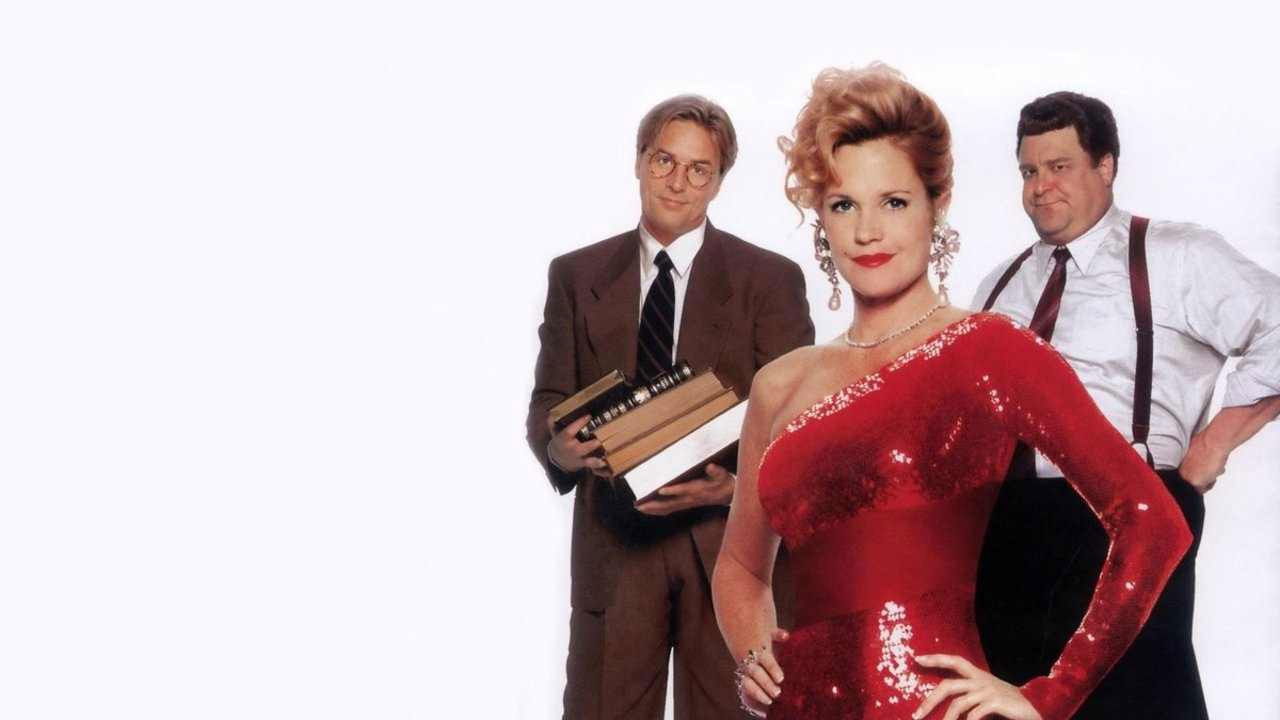
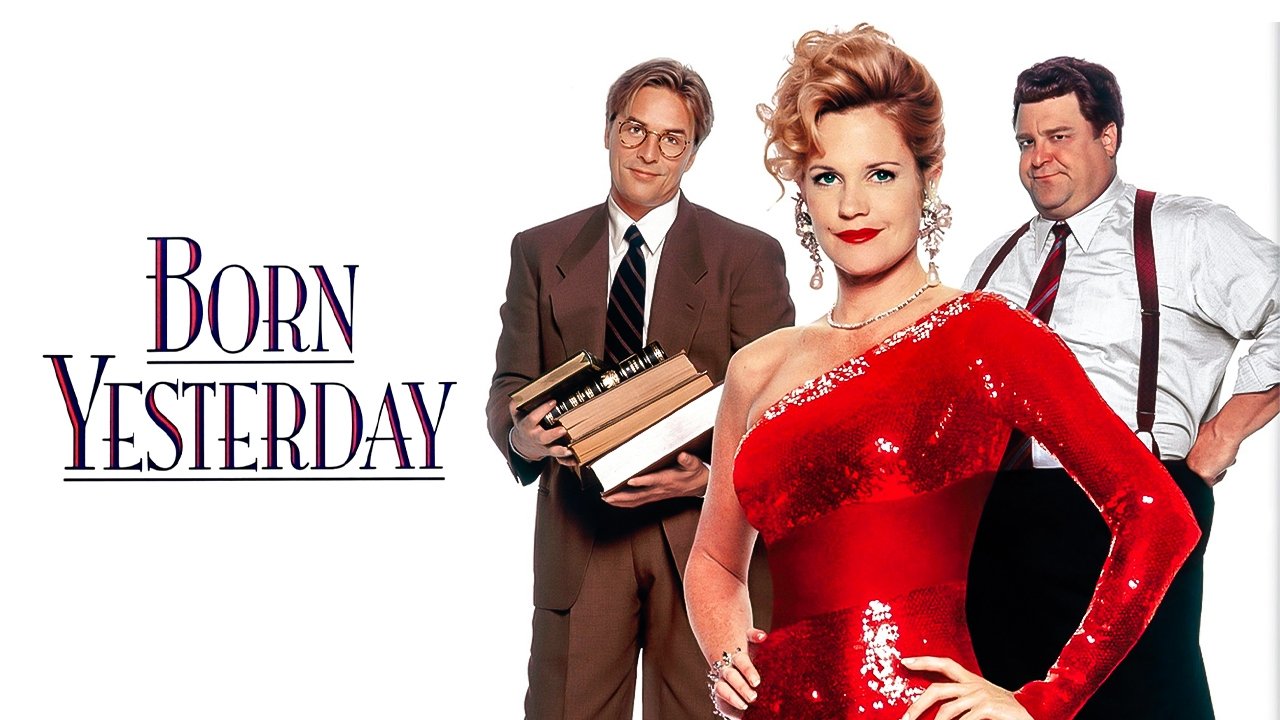
It's a curious thing, revisiting a film that felt almost ubiquitous on video store shelves back in the day, yet seems to have faded considerably from the collective memory. I'm talking about the 1993 remake of Born Yesterday, a glossy vehicle seemingly tailor-made for its trio of early-90s stars, yet one that perhaps prompts more questions now about the nature of remakes and star power than it does about political corruption. Does anyone else remember seeing that VHS box, with Melanie Griffith, John Goodman, and Don Johnson beaming out, promising a sophisticated comedy, and maybe feeling a little surprised it wasn't quite the sensation it seemed poised to be?
Washington Gloss and Familiar Steps
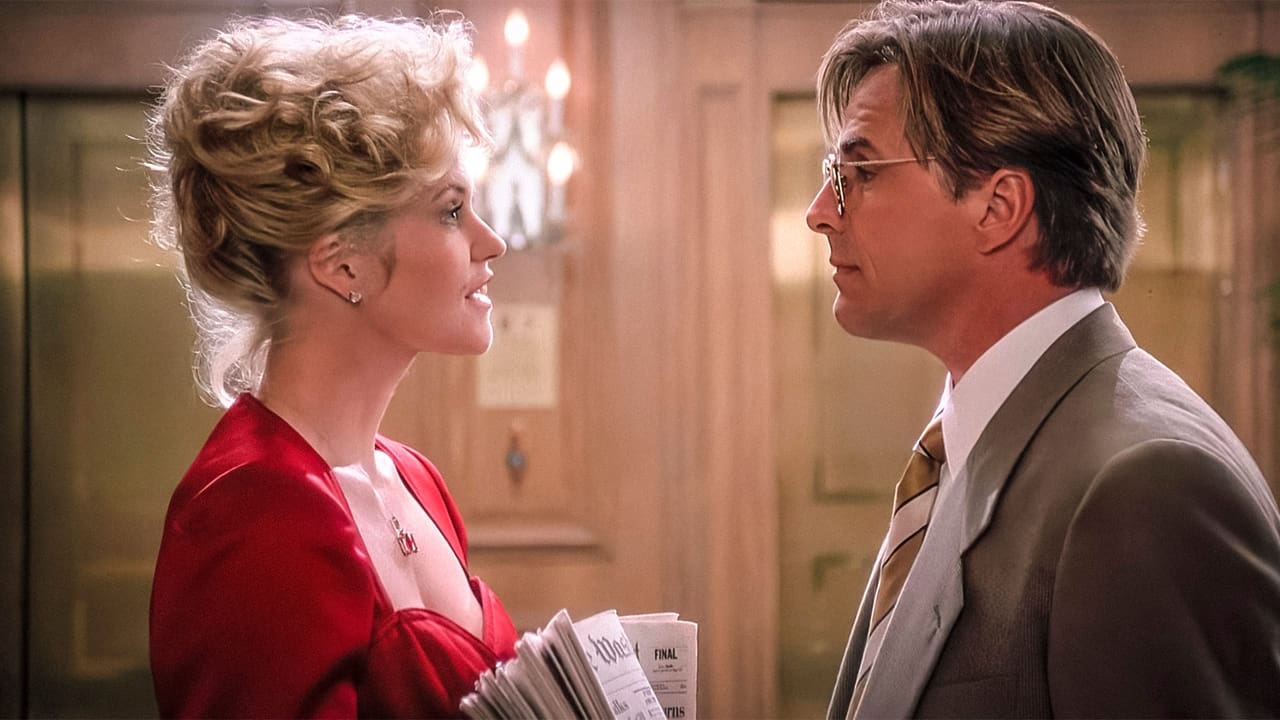
The setup, of course, mirrors Garson Kanin's brilliant 1946 play and the subsequent, iconic 1950 film adaptation directed by George Cukor. Loud, uncouth, and fabulously wealthy scrap-metal tycoon Harry Brock (John Goodman, bringing his signature blend of menace and surprising vulnerability) descends upon Washington D.C. with ambitions of bribing his way to even greater fortune. His only potential liability? His long-time girlfriend, former Las Vegas showgirl Billie Dawn (Melanie Griffith), whose lack of refinement might embarrass him in front of the political elite. His solution is classic Brock: hire someone to fix it. Enter handsome, idealistic journalist Paul Verrall (Don Johnson, Griffith's real-life husband at the time), tasked with smoothing Billie's rough edges and teaching her enough to pass in polite society. Naturally, sparks fly, not just intellectual ones.
Directed by Luis Mandoki, who would later give us dramas like When a Man Loves a Woman (1994), the film certainly looks the part of a slick early-90s studio picture. The D.C. locations are presented with a certain sheen, the costumes are sharp, and there's an undeniable professional polish to the proceedings. Screenwriter Douglas McGrath (who later directed Emma (1996)) faced the daunting task of updating Kanin's whip-smart dialogue and timely political satire for a new era. The core story remains potent: the corrupting influence of big money in politics, and the unexpected blossoming of intelligence and integrity when nurtured.
The Weight of Expectation
But let's be honest, the shadow of the 1950 original looms large over this production. Judy Holliday's performance as Billie Dawn wasn't just great; it was legendary, earning her a Best Actress Oscar against formidable competition (including Gloria Swanson for Sunset Boulevard and Bette Davis for All About Eve!). Stepping into those shoes was always going to be an almost impossible task. Melanie Griffith, then riding high from successes like Working Girl (1988), certainly commits. She adopts a distinctive, high-pitched, breathy voice and imbues Billie with a surface naiveté. Yet, where Holliday found layers of unwitting wisdom and innate shrewdness beneath the ditzy exterior, Griffith's interpretation sometimes feels more like a performance of naiveté. There are moments where her burgeoning awareness shines through, particularly in her interactions with Johnson, but the transformation doesn't feel quite as organic or revelatory as it did in the original. It’s a valiant effort, undoubtedly, but one perpetually judged against an iconic benchmark.
Goodman's Powerhouse and a Curious Chemistry
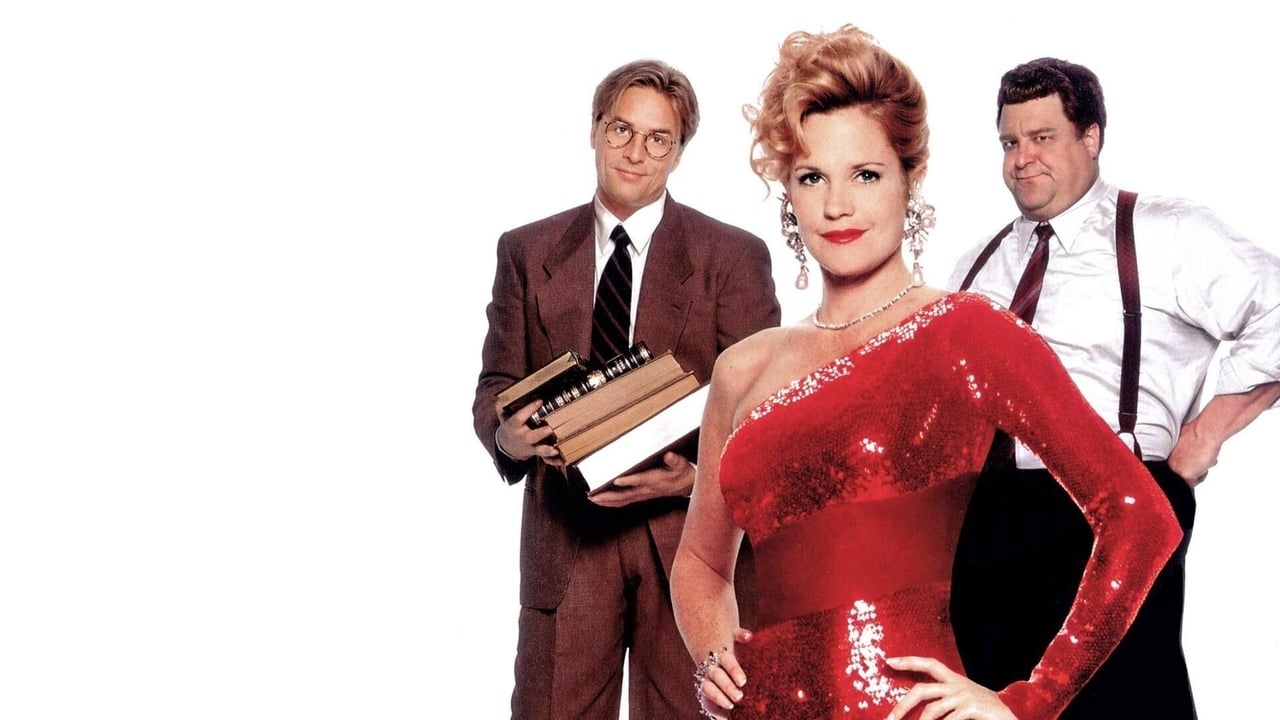

Where the film arguably finds surer footing is with John Goodman. Fresh off the massive success of TV's Roseanne and acclaimed character work in films like the Coen Brothers' Barton Fink (1991), Goodman fully embodies the boorish, bullying energy of Harry Brock. He's intimidating, crass, and utterly convinced of his own power, yet Goodman subtly hints at the insecurity driving the bluster. He doesn't shy away from Brock's ugliness, making the character a formidable, believable antagonist.
The casting of then-married couple Melanie Griffith and Don Johnson as the romantic leads was clearly a major selling point. Johnson, still carrying the cool factor from Miami Vice and transitioning into more film roles, plays Paul Verrall with an easy charm and intellectual confidence. The question is, did their real-life chemistry translate effectively on screen? It's… pleasant. There's a warmth there, certainly, but perhaps not the crackling, unexpected fire one might hope for between the awakening Billie and her idealistic tutor. Sometimes, the awareness of their off-screen relationship creates a different sort of dynamic than the story strictly requires.
A 90s Artifact?
Watching Born Yesterday today feels like unearthing a specific kind of 90s studio artifact. It's competently made, boasts genuine star power, and tackles themes that remain relevant. However, the attempt to update the political satire doesn't land with the same punch as the post-WWII original, feeling a bit more generalized. The film reportedly cost around $25 million but only recouped about $18 million domestically, suggesting audiences at the time weren't entirely won over either, perhaps sensing it couldn't quite escape the gravitational pull of its predecessor. Trivia buffs might note that this was one of several remakes during the era aiming to recapture classic Hollywood magic, with varying degrees of success.
Did the update dilute some of the original's bite? Was the casting slightly off in its central dynamic despite the star wattage? It’s hard to pinpoint one single reason why this version doesn’t resonate as strongly. It lacks the effervescent magic and surprising depth of the 1950 film, feeling smoother but also less substantial.
Rating: 5/10
This score reflects a film that is professionally assembled and features a commanding performance from John Goodman, but ultimately struggles to justify its existence beyond being a star vehicle. Melanie Griffith gives it her all, but the role is overshadowed by history, and the overall production lacks the spark and satirical edge of the original Garson Kanin material. It's not a bad film, merely an adequate one that feels somewhat redundant.
It remains a fascinating watch, though, perhaps less for its own merits and more as a snapshot of early 90s Hollywood ambition, star dynamics, and the perennial challenge of remaking a true classic. It’s a reminder that sometimes, even with all the right ingredients on paper, capturing lightning in a bottle twice is a near-impossible feat. It's the kind of film you might have rented, watched, and returned without it leaving a truly lasting impression, unlike the tape it was recorded on.