Alright, fellow tapeheads, let's rewind to 1996. Remember the buzz? The iconic theme music blasting from multiplex speakers, promising espionage on a scale we hadn't quite seen before? I distinctly recall grabbing the Mission: Impossible VHS from Blockbuster, the hefty cassette promising explosions, intrigue, and Tom Cruise doing… well, impossible things. Directed by the master of suspense and visual flair, Brian De Palma (the maestro behind Scarface (1983) and The Untouchables (1987)), this wasn't just another action flick; it felt like an event.

### De Palma's High-Wire Act
What immediately set Mission: Impossible apart, especially looking back from our CGI-saturated present, was De Palma's distinct directorial stamp. Known for his Hitchcockian homages, voyeuristic camera angles, and meticulously staged sequences, he brought an almost operatic tension to the proceedings. This wasn't the cosy team dynamic of the beloved 60s TV show – something that actually ruffled the feathers of some original series fans, particularly the controversial handling of Jon Voight's Jim Phelps character. Instead, De Palma delivered a paranoid thriller where trust was the rarest commodity, and the slick, often dialogue-light sequences built suspense to an almost unbearable degree. The script itself went through numerous hands, including heavyweights like David Koepp (hot off Jurassic Park (1993)) and Robert Towne (Chinatown (1974)), resulting in a plot that, let's be honest, could tie your brain in knots if you blinked. But the sheer style often carried you through the narrative kinks.
### Going Rogue, Practically
The story kicks off with a disastrous IMF mission in Prague – gorgeously shot, using the city's gothic atmosphere to maximum effect – that leaves Ethan Hunt (Tom Cruise) framed as a mole. Disavowed and hunted, he assembles his own ragtag team, including the instantly cool hacker Luther Stickell (Ving Rhames, the only actor besides Cruise to appear in every film since) and pilot Franz Krieger (Jean Reno), to clear his name and uncover the real traitor.
But let's talk about why this movie still resonates with fans of practical filmmaking. De Palma and Cruise (stepping into his power as a producer here too, a role he'd maintain for the entire franchise) committed to a level of tangible reality in the action. Forget weightless digital doubles; this was about grit, sweat, and genuine peril.
Iconic Set Pieces, Analog Style
Two sequences, in particular, are burned into our collective VHS-era memory:
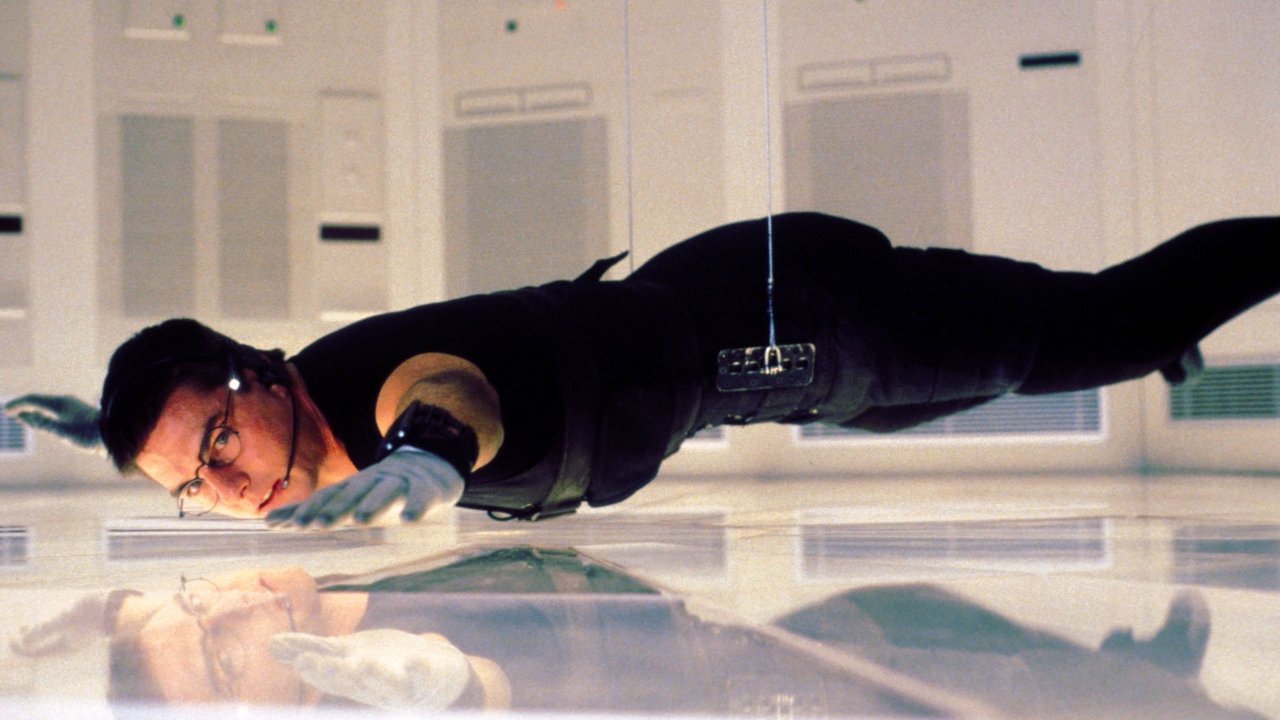
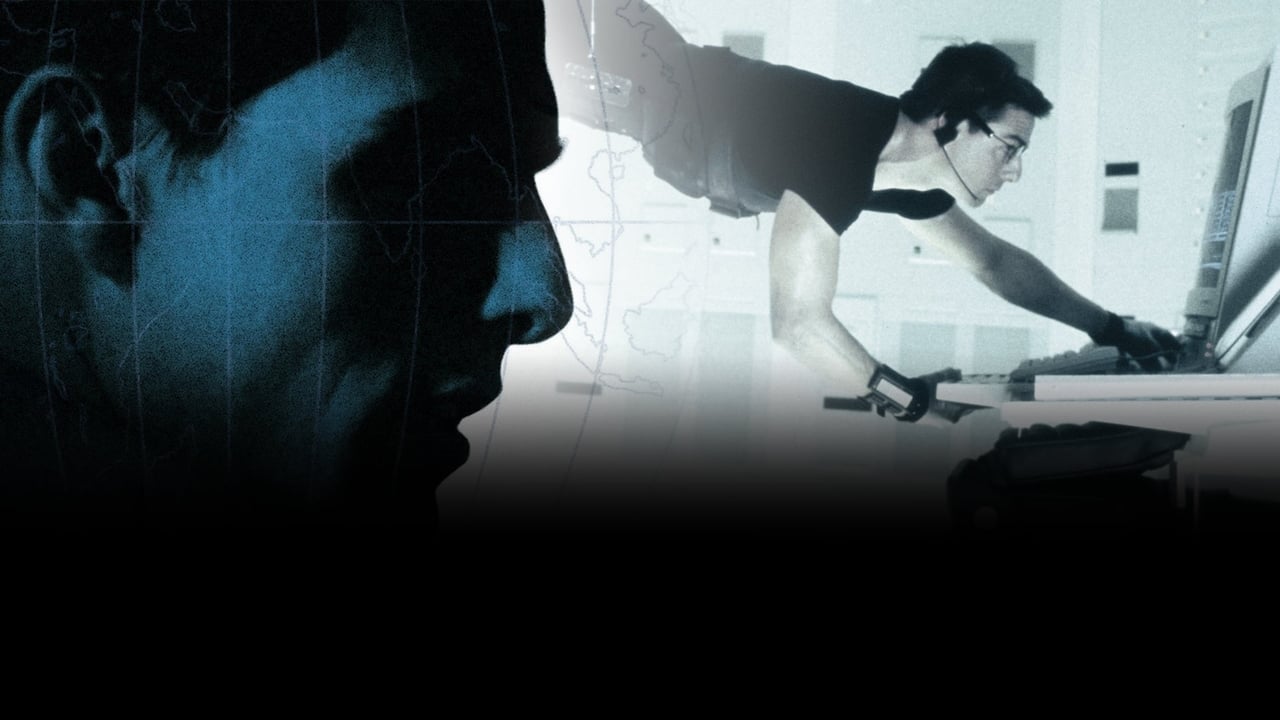
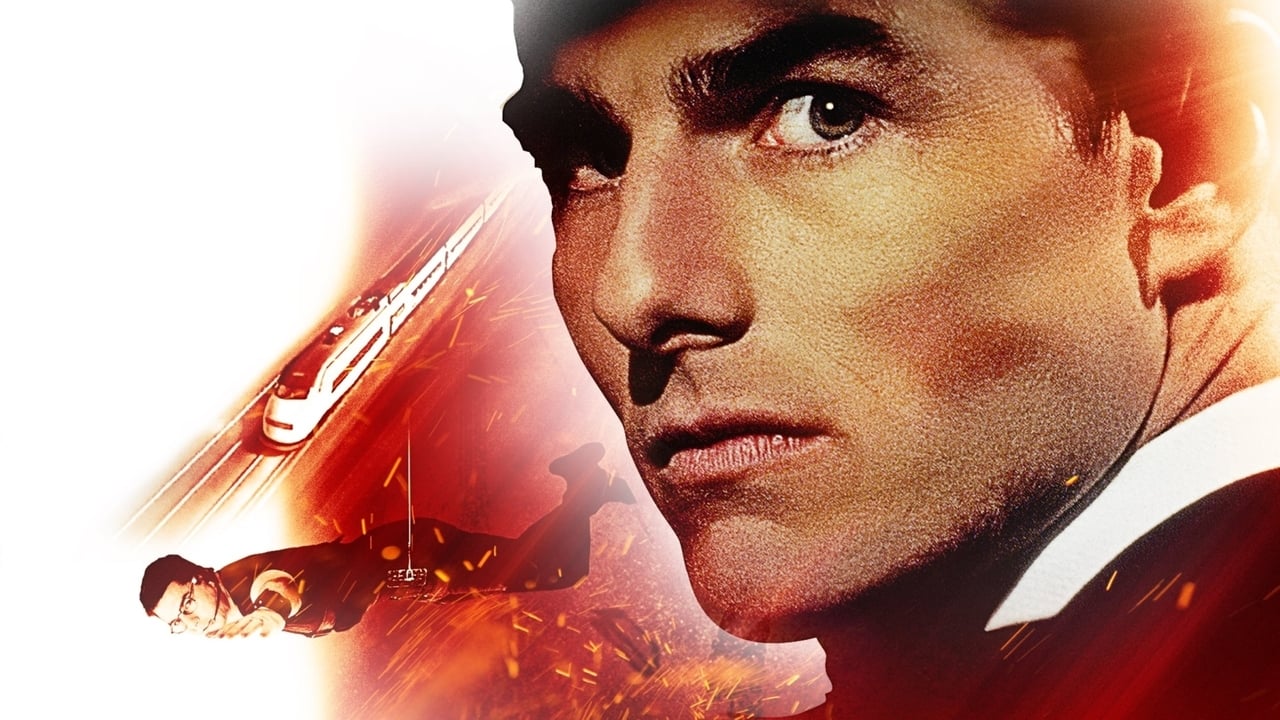
- The Langley Heist: Pure cinematic tension. The silence, the white room, the precarious wire descent. Remember leaning forward, holding your breath as that single drop of sweat rolled down Hunt’s glasses? Cruise famously performed much of this stunt himself, suspended on the wire, and apparently kept hitting his face on the floor during takes trying to maintain balance, adding an unscripted layer of difficulty. There's virtually no music, just the hum of the vault – a masterclass in suspense that relied entirely on physical performance and clever staging. It felt unbelievably tense back then, a puzzle box of practical execution.
- The TGV Train Finale: This explosive climax was a marvel of practical effects wizardry. Filmed partly on a soundstage at Pinewood Studios' legendary 007 Stage, they used gigantic wind machines generating speeds over 140 mph to simulate the train's velocity, apparently almost blowing crew members away. The helicopter sequence, the fight atop the speeding train – it felt kinetic, dangerous, and real. While modern blockbusters might render this with seamless CGI, there's a visceral weight and chaotic energy here that pixels struggle to replicate. You felt the impact, the danger. Remember how jaw-dropping that helicopter getting dragged into the tunnel looked?
And who could forget the exploding aquarium? That sudden, shocking blast sending 16 tons of water flooding the restaurant was a classic De Palma jump scare executed on a grand scale, a practical gag that sent audiences jumping out of their seats.
### Sounds of Suspense, Seeds of a Saga
Complementing the visuals was the score. While Lalo Schifrin's original theme is untouchable, Danny Elfman delivered a fantastic, pulse-pounding score for the film itself. And then there was that chart-topping techno remix of the main theme by U2's Adam Clayton and Larry Mullen Jr. – you couldn't escape it in '96, and it perfectly captured the movie's modern, high-stakes energy.
Mission: Impossible wasn't just a hit; it was a behemoth. On an $80 million budget (a hefty sum for the time), it pulled in over $457 million worldwide, proving Cruise's bankability as an action lead and launching one of the most enduring Hollywood franchises. It demonstrated that audiences were ready for spy thrillers that were complex, visually sophisticated, and driven by high-octane, practically achieved spectacle.
### The Verdict
Sure, the plot requires your full attention (maybe even a notepad), and some of the 90s tech feels charmingly retro now (floppy disks!). But Mission: Impossible remains a high-water mark for the thinking person's blockbuster. De Palma's artistry, combined with Cruise's star power and commitment to thrilling, tangible action, created something special. It was slick, smart, and genuinely suspenseful in a way few big-budget films manage. Watching it again on a fuzzy screen might even enhance the paranoid, gritty atmosphere.
Rating: 9/10
Why this score? It's a near-perfect blend of directorial vision, star power, iconic practical set pieces, and nerve-shredding tension. The intricate plot might be a slight barrier for casual viewing, but the sheer craft and unforgettable sequences elevate it to classic status within the 90s action-thriller landscape. It set a template and a high bar for the franchise that followed.
Final Thought: This tape absolutely delivered on its promise back in '96, offering a dose of high-stakes espionage thriller that felt grounded, dangerous, and brilliantly executed – a mission you’ll gladly accept revisiting.