There are films that tell stories we recognize, populated by faces we know. And then, there are films that fundamentally shift our perspective, revealing universes hidden in plain sight. Microcosmos (1996), the breathtaking journey into the world of insects by French filmmakers Claude Nuridsany and Marie Pérennou, belongs firmly in the latter category. Pulling this tape from the shelf at the local video store might have felt like an unusual choice back then, nestled amongst the explosions and rom-coms. But those who took the plunge discovered not just a documentary, but an experience – a quiet, mesmerizing revolution whispered from the undergrowth.
A World Magnified
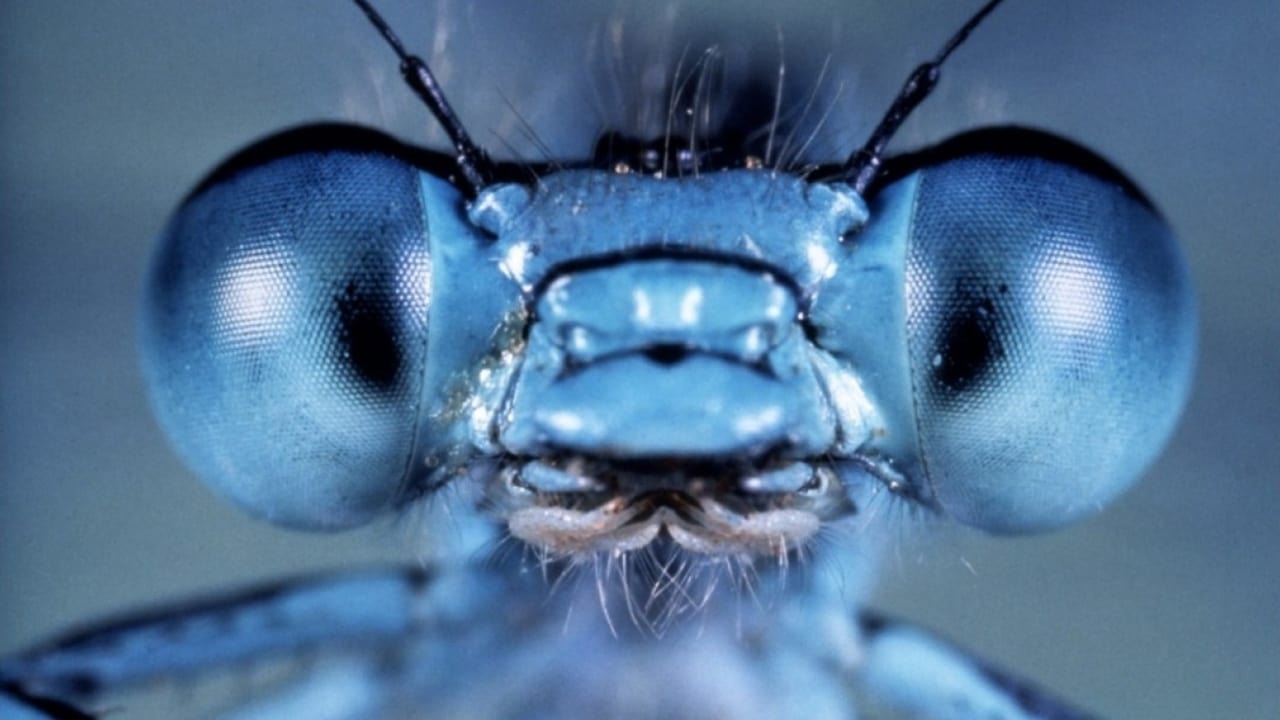
What Microcosmos achieves, first and foremost, is a profound alteration of scale. It doesn't just show us bugs; it transports us into their world. Suddenly, a meadow transforms into an imposing jungle, blades of grass tower like skyscrapers, and a single raindrop hits with the force of a localized storm. This immersive quality wasn't magic, but the result of painstaking dedication and technological innovation. Nuridsany and Pérennou, both biologists by training, spent years developing and refining specialized macroscopic cameras and lenses capable of navigating this Lilliputian landscape with startling intimacy and clarity. Think about that – they didn’t just find the right tools, they essentially invented them for this project, driven by a singular vision to unveil the unseen. This film reportedly involved some fifteen years of research and observation, followed by three intense years of filming in the Aveyron region of France. The patience required is almost unimaginable.
The Symphony of the Small
Perhaps one of the most striking choices in Microcosmos is its near-total absence of traditional narration. Barring brief introductory and concluding remarks (voiced with gentle gravity by Kristin Scott Thomas in the UK/US version), the film allows the world itself to speak. And speak it does, through an extraordinary soundscape. The rustle of tiny legs across dry leaves, the resonant buzz of wings, the almost percussive impact of water droplets – every sound is amplified, meticulously crafted, turning the mundane into the mythic. This isn't just field recording; it's sound design as world-building. Composer Bruno Coulais's score works in perfect harmony with this, sometimes playful, sometimes operatic, enhancing the drama, wonder, and occasional menace without ever overwhelming the visuals. It's a film you feel as much as you see.
Unexpected Protagonists
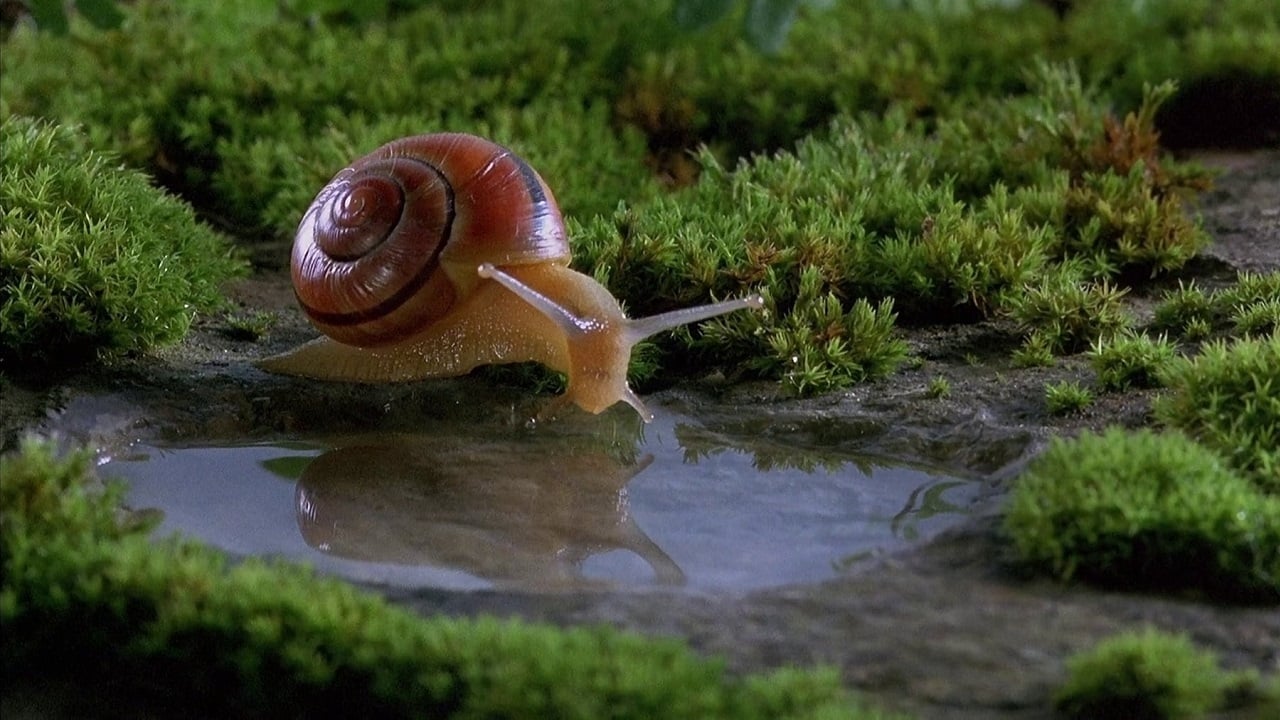
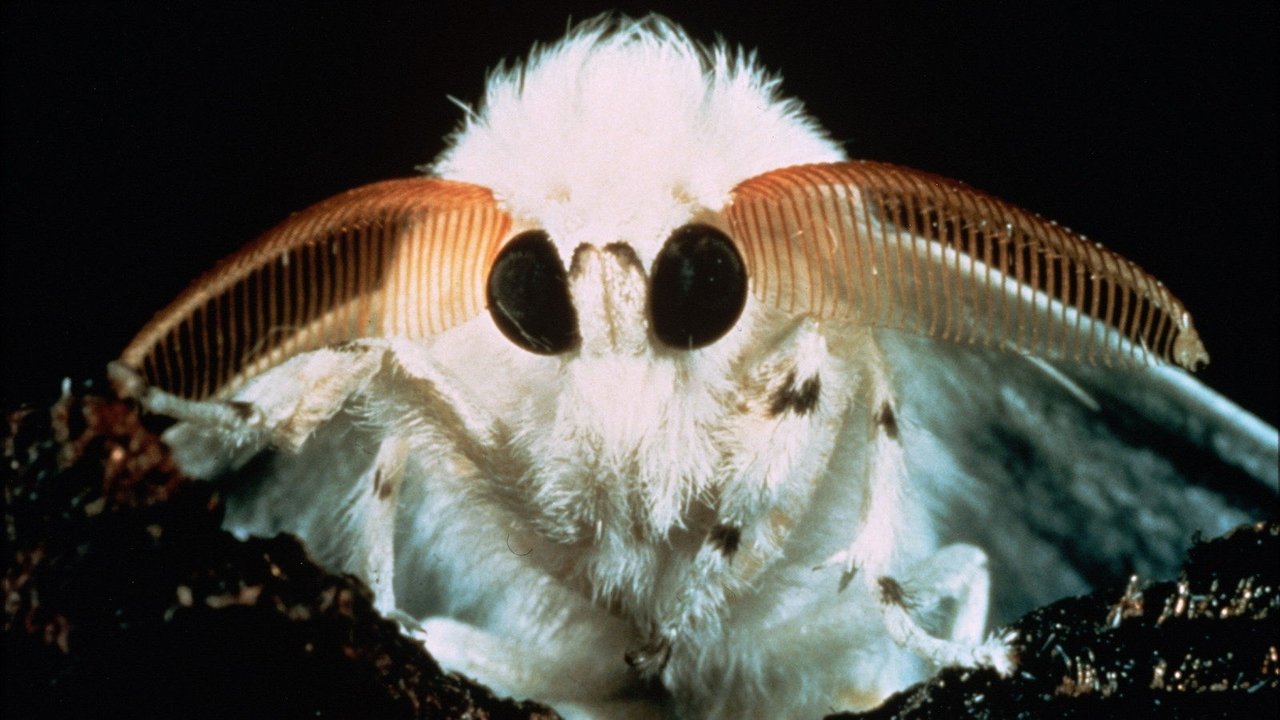
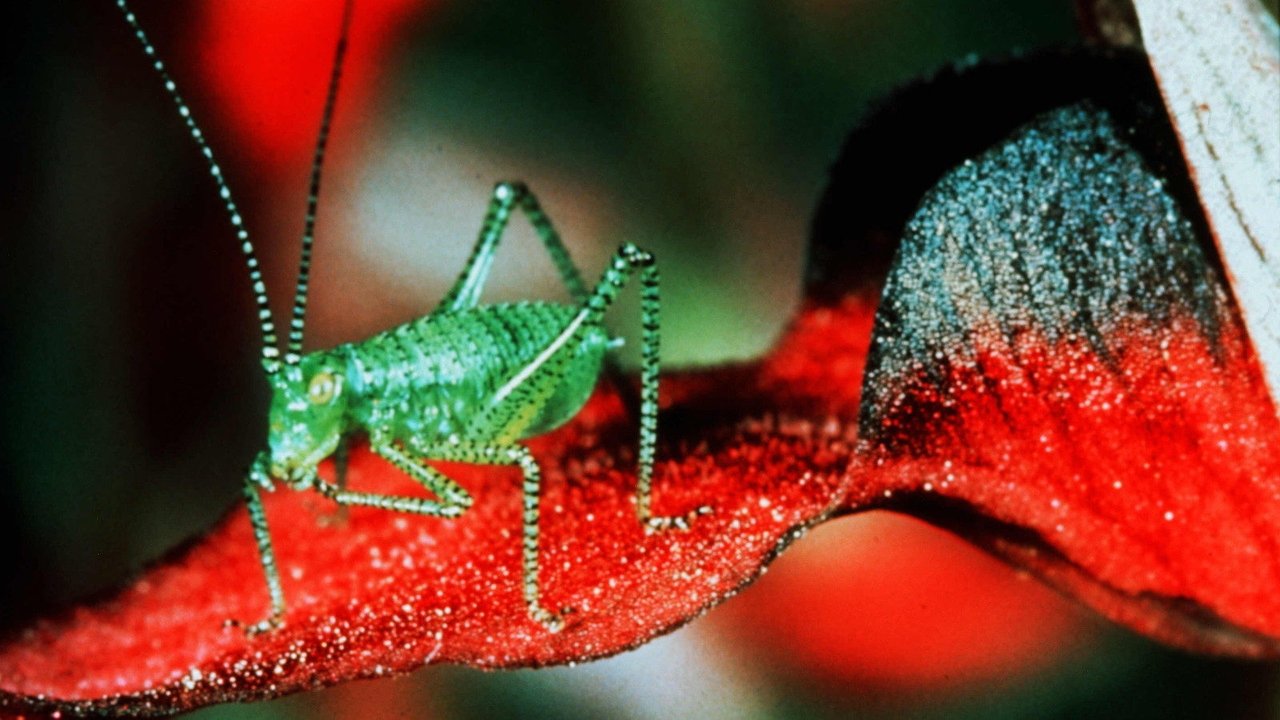
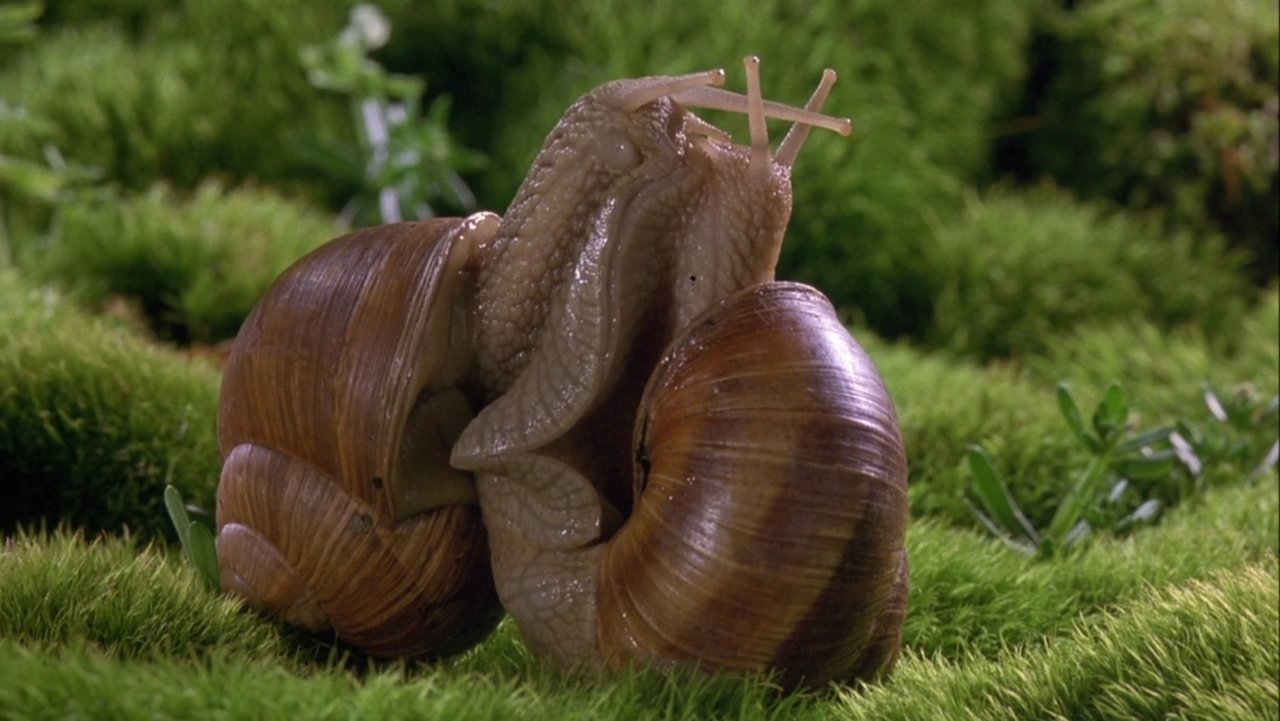
While devoid of human actors, Microcosmos is teeming with compelling characters. We witness the tireless, almost Sisyphean struggle of a scarab beetle wrestling its precious dung ball uphill – a moment of pure, primal effort. We're mesmerized by the ethereal, slow-motion ballet of two snails engaging in courtship, their movements imbued with a strange, alien grace. There's the startling efficiency of a hunting spider dispatching its prey, the communal effort of ants, the miraculous emergence of a dragonfly from its larval stage. Nuridsany and Pérennou frame these moments not merely as biological functions, but as miniature dramas playing out life, death, courtship, survival, and transformation. You find yourself rooting for a beetle, marveling at a snail's journey. Could any scripted drama truly capture such raw, unscripted moments of existence?
Beyond the Garden Path
Watching Microcosmos today, especially if you first encountered it on a slightly fuzzy VHS tape displayed on a CRT television, retains a unique power. The hyper-real clarity achieved by the filmmakers felt almost otherworldly back then, a window into a dimension typically ignored. It was a surprise hit, winning multiple César Awards (the French equivalent of the Oscars) including Best Cinematography, Editing, Sound, Music, and Producer, and finding a significant audience worldwide – quite a feat for a nature documentary with minimal dialogue. It proved there was an appetite for wonder, for films that challenged our perception rather than just reflecting our own lives back at us. It didn't just document nature; it reframed our relationship to it, reminding us of the intricate, often brutal, and profoundly beautiful ecosystems thriving right under our noses. Remember seeing those water spiders 'walking' on the surface tension? Or the sheer tenacity of that dung beetle? These images stick with you.
Rating: 9/10
This score reflects the film's groundbreaking technical achievement, its artistic vision, and its unique ability to evoke genuine wonder and shift the viewer's perspective. The patient cinematography, masterful sound design, and the sheer audacity of the project make it a landmark documentary. It might lack a conventional narrative, but it compensates with unparalleled visual poetry and an intimate look at life on a scale rarely considered. It’s a film that succeeds entirely on its own ambitious terms.
Microcosmos remains more than just a nature film; it's an invitation. An invitation to slow down, to look closer, and to recognize the staggering complexity and drama unfolding in the miniature worlds that surround us every day. It leaves you pondering not just the lives of insects, but the sheer, improbable beauty of life itself.