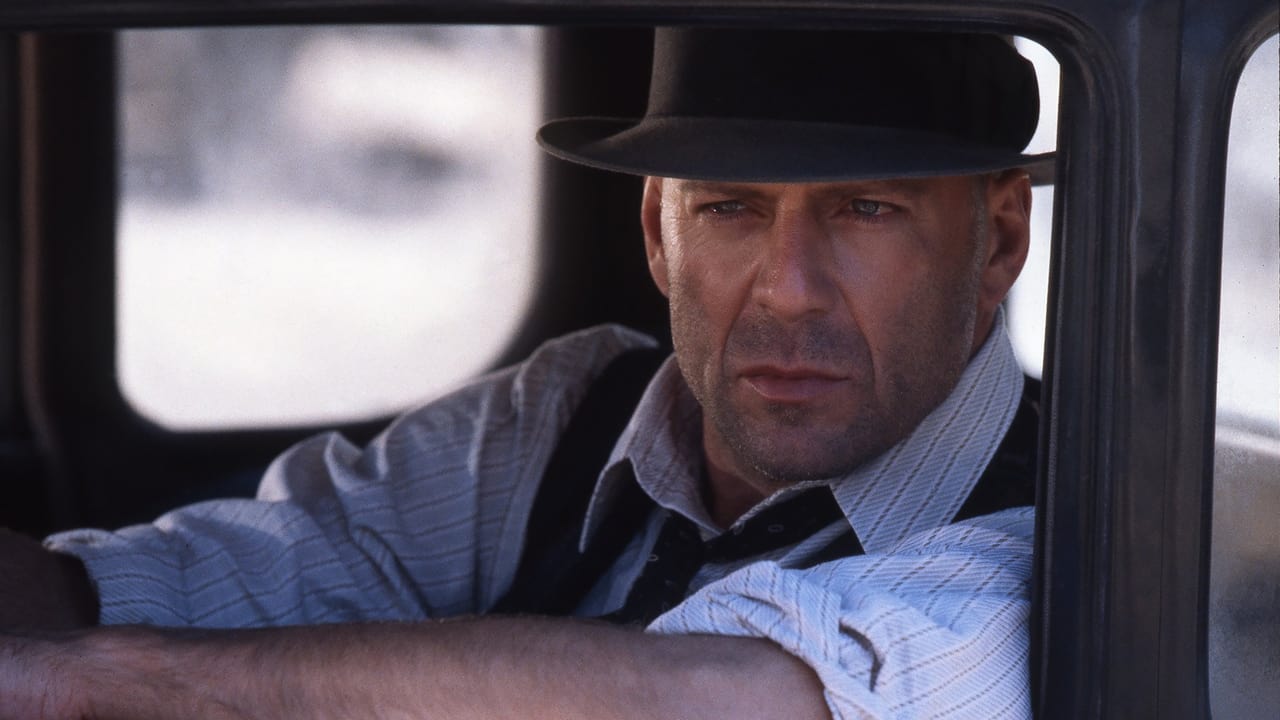
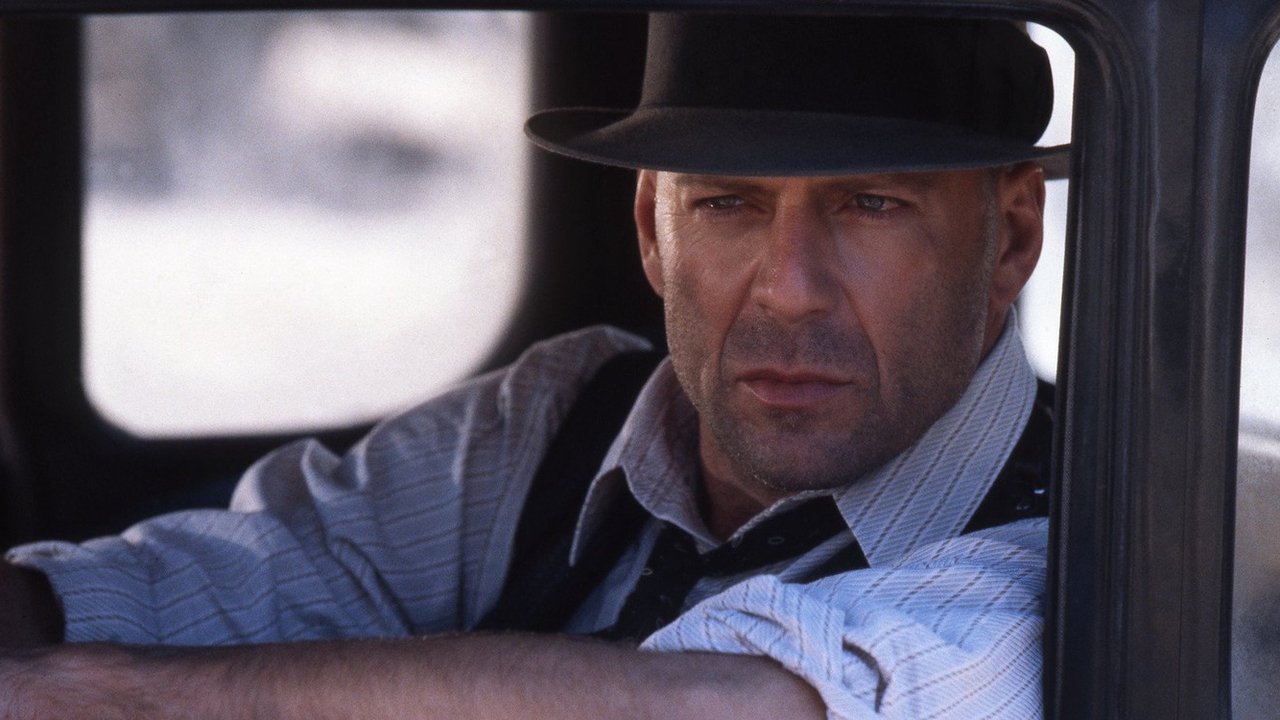
The wind carries nothing but dust and the promise of violence. It whips through Jericho, Texas – a ghost town prematurely born, haunted not by spirits but by the living dead men walking its single, desolate street. This isn't just a setting; it's a state of mind, the suffocating preamble to Walter Hill's brutal 1996 neo-noir western, Last Man Standing. Forget the neon gleam of most mid-90s action flicks; this one felt dredged from the parched earth, smelling of cheap whiskey, cordite, and decay.
Jericho: A Circle of Hell, Texas Style
Right from the start, Hill, a master craftsman of lean, muscular filmmaking known for gritty classics like The Warriors (1979) and 48 Hrs. (1982), establishes an atmosphere thick with menace. Jericho isn’t just isolated; it feels terminally ill. Cinematographer Lloyd Ahern paints the screen in sepia tones and harsh sunlight, making the dust kicked up by infrequent Model T Fords seem like a permanent, choking shroud. The production design is remarkably tangible – you can almost feel the grit under your fingernails. They actually built much of the doomed town of Jericho from scratch near Galisteo, New Mexico, only for it to become the stage for near-constant, stylized bloodshed. This palpable sense of place is one of the film's strongest assets, immediately setting it apart. It’s a landscape where hope comes to die, leaving only cynical survival.
Enter John Smith, Exit Everybody Else
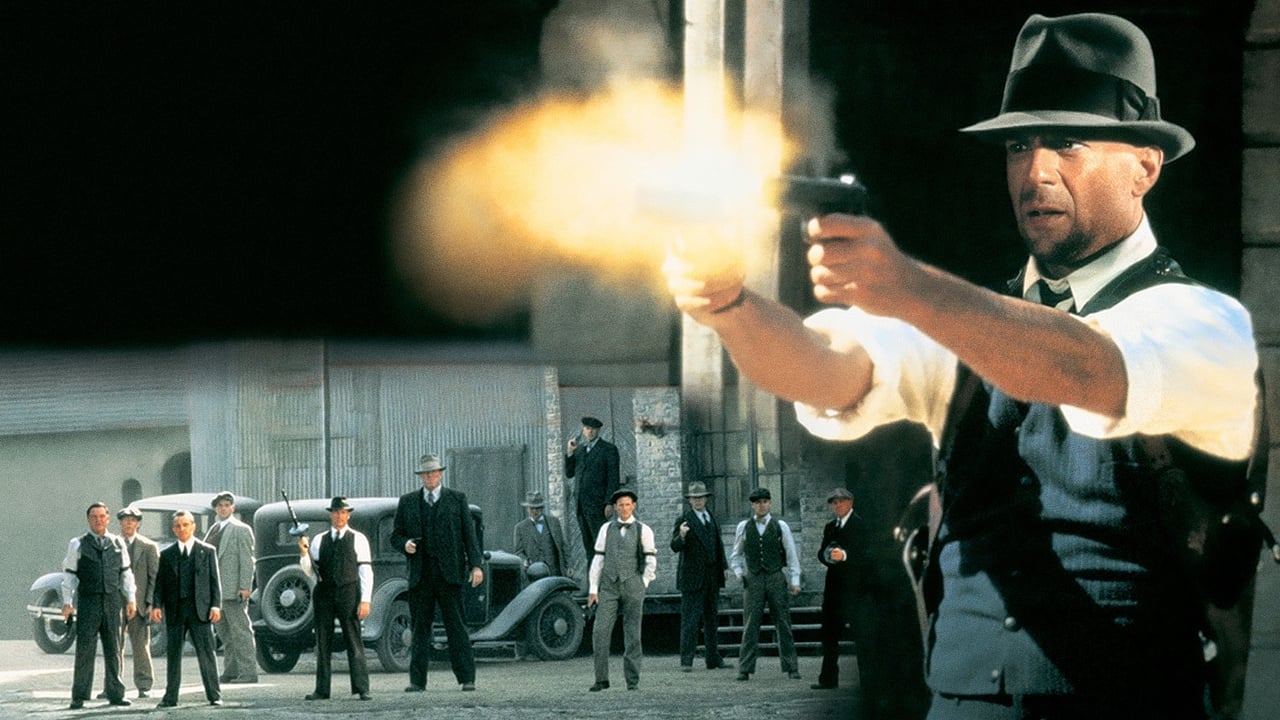
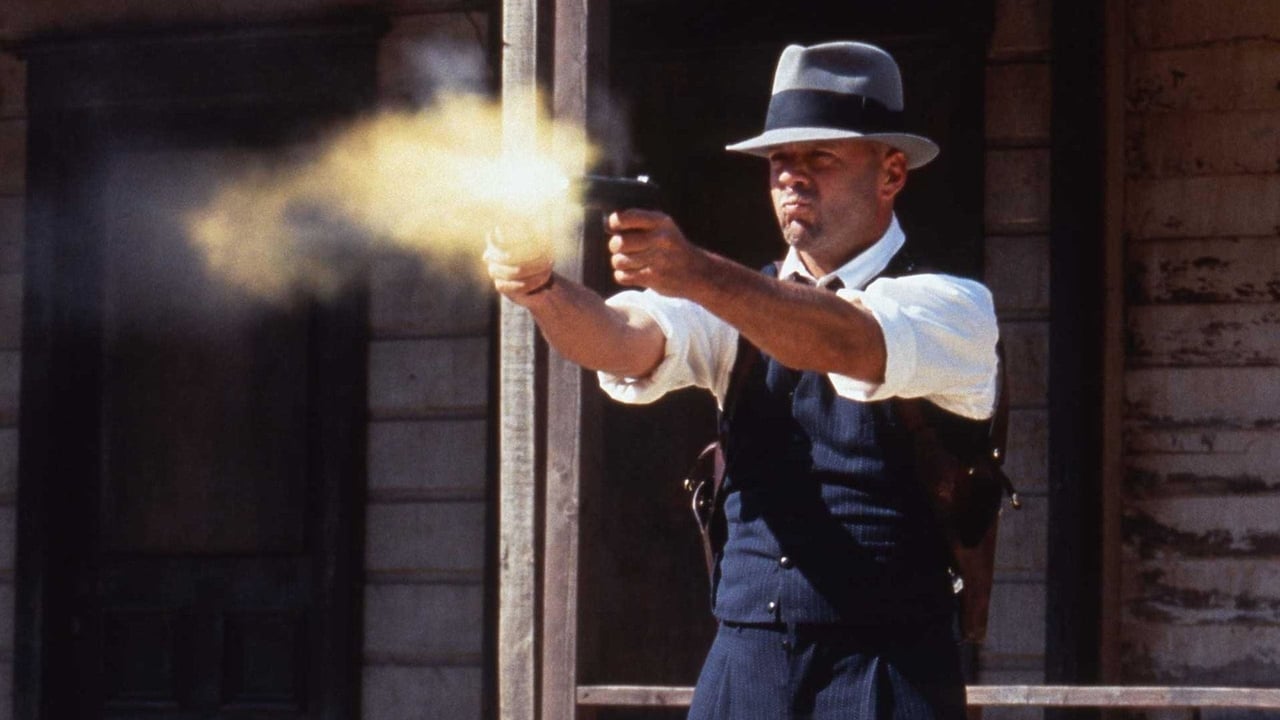
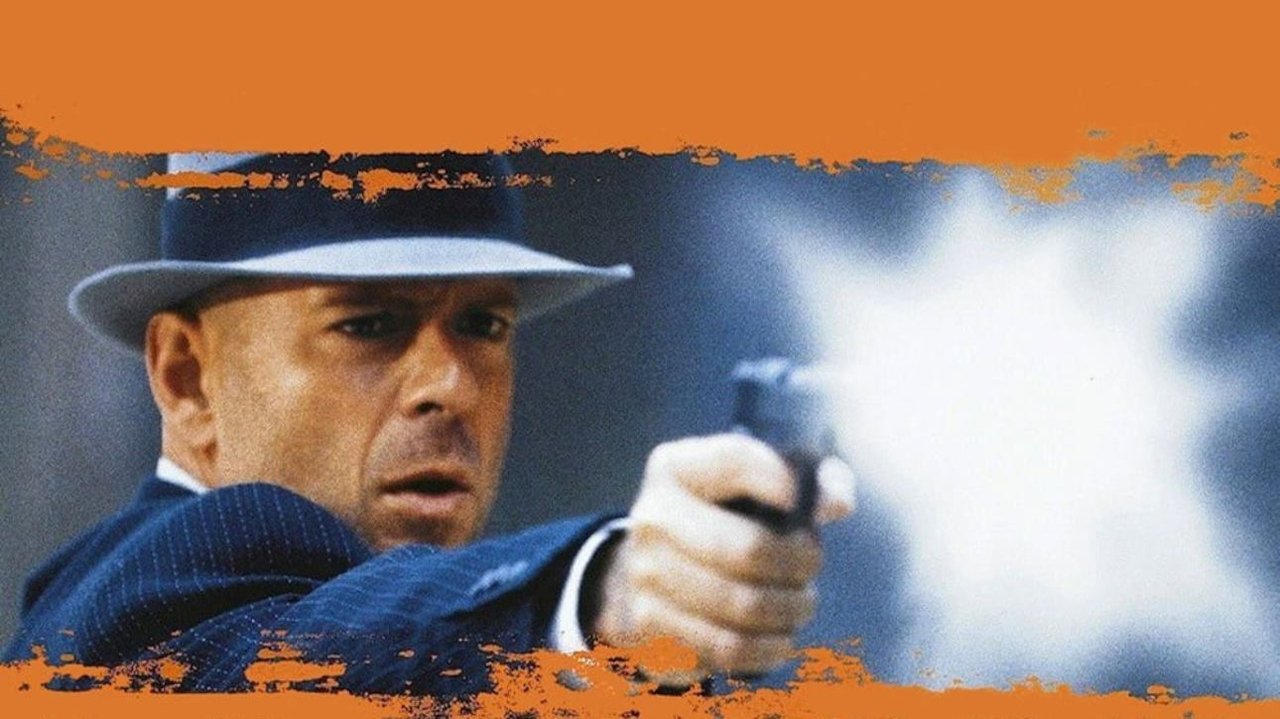
Into this simmering pot walks "John Smith," played by Bruce Willis at the height of his action-star fame, fresh off the global success of Die Hard with a Vengeance (1995). But this isn't John McClane cracking wise. Smith is laconic, almost spectral, a force of nature clad in a duster coat, carrying twin Colt .45s like extensions of his own weary soul. Willis dials back the charisma, offering a performance built on watchful eyes and sudden, explosive violence. He’s the catalyst, the Man with No Name archetype dropped into Prohibition-era gang warfare, coolly observing the feuding Irish and Italian mobs before deciding to play them against each other for his own enigmatic reasons (and a little cash). Does his near-silent approach always work? It's debatable – sometimes you crave a little more spark – but it fits the film's bleak, almost nihilistic worldview. His narration, sparse and cynical, feels like weary notes jotted down in Hell's waiting room.
The action, when it erupts, is pure Walter Hill: stylized, hyper-kinetic, and unapologetically brutal. Forget elegant shootouts; these are desperate, messy affairs where bodies are riddled with inhuman amounts of lead. Remember those scenes where Smith seemingly absorbs entire clips before finally dropping his target? It’s almost comical in its excess, yet staged with a grim intensity. It's no surprise the film initially flirted with an NC-17 rating before trims were made. The sheer impact of those gunfights, especially Smith’s signature move of seemingly endless firing from his twin pistols without reloading, felt uniquely potent on a fuzzy VHS transfer, the sound design rattling the modest TV speakers.
A Cast of Damned Souls
Surrounding Willis is a gallery of superb character actors chewing the scenery with appropriate gravel and menace. Bruce Dern is perfectly cast as the compromised Sheriff Ed Galt, a man whose cynicism mirrors the town's decay. William Sanderson (instantly recognizable to sci-fi fans from Blade Runner) provides a sliver of humanity as Joe Monday, the beleaguered saloon owner. And then there's Christopher Walken as Hickey, the scarred, psychopathic chief enforcer for the Irish Doyle gang. Walken doesn't need much screen time to leave an indelible mark; his chilling presence adds another layer of unpredictable dread. Every face in Jericho seems etched with hardship and moral compromise.
Echoes of Kurosawa and Leone
Of course, the shadow of cinematic history hangs heavy over Jericho. Last Man Standing is an official remake of Akira Kurosawa's legendary samurai film Yojimbo (1961), which itself famously inspired Sergio Leone's spaghetti western breakthrough A Fistful of Dollars (1964). Hill secured the remake rights directly from Kurosawa's estate, acknowledging the lineage openly. Knowing this adds a fascinating layer, watching how Hill translates the feudal Japanese setting and ronin archetype into Depression-era Texas and a gun-slinging anti-hero. While perhaps not reaching the iconic heights of its predecessors, Hill's version carves out its own identity through its specific period flavour, relentless violence, and the mournful, slide-guitar heavy score by the legendary Ry Cooder, which perfectly complements the arid visuals. I recall renting this tape, expecting maybe a straightforward Willis shoot-'em-up, and being struck by its moody seriousness and deliberate pacing – it wasn't quite Die Hard in the dust bowl.
It wasn't a hit, either. Made for a hefty $67 million (a huge sum in '96, roughly $130 million today), it only scraped back about $47 million worldwide. Critics at the time were largely unkind, finding it perhaps too grim, too derivative, or too focused on style over substance. Yet, viewed through the haze of nostalgia and the passage of time, Last Man Standing holds up as a fascinating, flawed, but undeniably atmospheric piece of 90s genre filmmaking. It’s a film that commits fully to its bleak vision.
Final Verdict
Last Man Standing is a mood piece disguised as an action film. It’s drenched in atmosphere, powered by Walter Hill’s distinct directorial signature and punctuated by moments of staggering, stylized violence. While Bruce Willis’s stoicism might feel one-note to some, and the narrative doesn't offer profound character arcs, the film succeeds brilliantly in creating a tangible world of dust, desperation, and death. Its connection to Yojimbo adds historical weight, but it stands on its own as a gritty, visually striking neo-noir western hybrid. It might not have set the box office alight, but its sheer commitment to its grim aesthetic makes it a compelling watch, especially late at night when the shadows outside feel a little deeper.
Rating: 7/10
It’s a film that might have underwhelmed on release, caught between audience expectations for a Willis vehicle and its artier, more brutal influences. But for fans of Hill's style, atmospheric genre pieces, or just a damn good-looking slice of 90s pessimism, Last Man Standing remains a potent shot of cinematic moonshine – harsh, maybe acquired taste, but it burns going down just right. Doesn't that final, bloody street clearing still pack a punch?