The air in Gateway Prison hangs thick and heavy, tasting of rust, sweat, and despair. It’s a place designed not just to contain bodies, but to break spirits, presided over by a man whose calm demeanor masks a chillingly personal vendetta. Warden Drumgoole doesn't just want Frank Leone incarcerated; he wants him erased. This isn't just prison; it's a meticulously crafted purgatory, and John Flynn's 1989 thriller Lock Up plunges us headfirst into its oppressive depths.
### A Sentence Served, A Nightmare Renewed
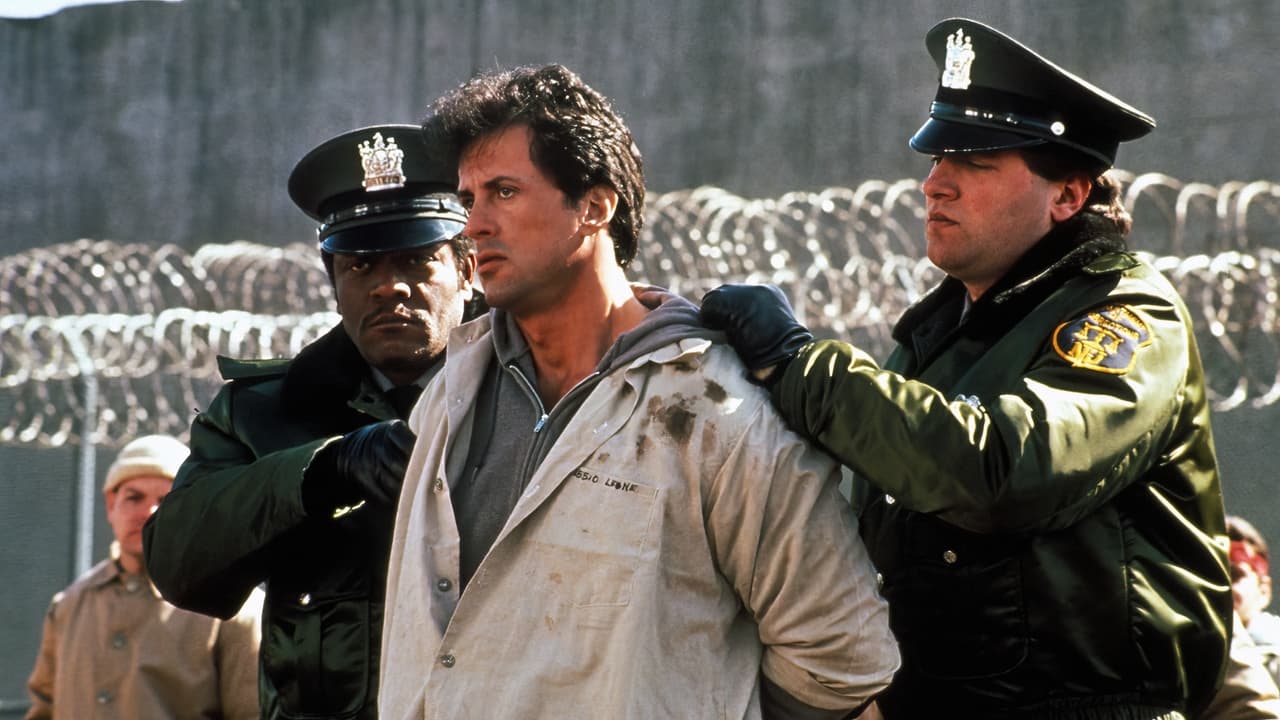
The premise hooks you with its brutal unfairness. Frank Leone (Sylvester Stallone), a model inmate just six months shy of freedom after serving time for defending an old friend, is violently ripped from his minimum-security life in the dead of night. His destination? Gateway, a maximum-security hellhole run by the very man whose political career Leone inadvertently ruined years prior during a brief escape to see his dying mentor. Warden Drumgoole (Donald Sutherland) orchestrates this transfer with quiet, meticulous cruelty, making it terrifyingly clear: Leone isn't expected to survive his remaining sentence. It’s a setup dripping with dread, the kind of institutional powerlessness that gnaws at you long after the credits roll.
### Stallone Against the Machine

This isn't the invincible Rambo or the triumphant Rocky Balboa we often associate with Sylvester Stallone in this era. Frank Leone is tough, undeniably, but he’s also vulnerable, weary, and desperate. Stallone dials back the superheroics, delivering a performance grounded in simmering frustration and resilience against impossible odds. You feel the weight of Drumgoole's psychological warfare bearing down on him. He’s constantly provoked, tested, pushed towards the very violence that would justify Drumgoole's tyranny. While the film doesn't shy away from brutal action – the muddy, bone-crunching football game is a standout, a sequence during which Stallone reportedly cracked a rib for real – it’s Leone’s struggle to maintain his composure, to not give Drumgoole the satisfaction, that forms the film's tense core. Remember how convincing Stallone could be as the cornered underdog? Lock Up is prime evidence.
### The Soft-Spoken Menace
Opposite Stallone's simmering everyman stands Donald Sutherland as Warden Drumgoole, a masterclass in understated villainy. Sutherland eschews mustache-twirling theatrics for something far more unsettling: a bureaucratic sociopath who wields rules, regulations, and institutional power like surgical instruments. His voice rarely rises above a polite murmur, yet his eyes gleam with vindictive satisfaction. He orchestrates Leone's torment with chilling precision, manipulating guards and inmates alike. Sutherland, already a legend with roles spanning Klute (1971) to Invasion of the Body Snatchers (1978), crafts a villain who feels terrifyingly real precisely because his evil operates within the system, hidden behind a veneer of authority. He’s the reason the film’s tension often feels suffocating.
### Inside Gateway's Walls
Director John Flynn, who knew his way around gritty, character-driven thrillers like Rolling Thunder (1977), uses the filming location to maximum effect. Much of Lock Up was shot at the imposing Rahway State Prison in New Jersey (now East Jersey State Prison), infamous for the documentary Scared Straight! (1978). You can almost feel the cold damp seep off the screen. The production design emphasizes decay and confinement, creating a genuinely grim atmosphere. The supporting cast adds layers to this microcosm of society: John Amos brings weary integrity as Captain Meissner, the guard caught between duty and conscience, while familiar faces like Tom Sizemore (in an early, memorable role as Dallas) and Frank McRae (as Eclipse) flesh out the inmate population, representing fragile alliances and ever-present threats. The script, co-written by Jeb Stuart (who'd later lend his talents to action titans Die Hard (1988) and The Fugitive (1993)), understands the dynamics of prison life, even if it occasionally leans into genre tropes.
### A Relic of Gritty 80s Thrills?
Lock Up wasn't a box office juggernaut upon release, pulling in just $22.1 million domestically against its $24 million budget (that's roughly $54 million against $59 million in today's money – a definite underperformer). Critically, it was often dismissed as another Stallone vehicle, perhaps unfairly overlooking Sutherland's chilling performance and the film's effective, grim tone. Watching it today on that slightly fuzzy VHS tape, or even a crisper digital format, its power lies in its straightforward, brutal approach. It doesn't reinvent the prison movie, but it delivers a potent dose of suspense and injustice. The methods Drumgoole employs – destroying Leone’s connections to the outside, manipulating fellow prisoners, the constant threat of violence from guards like the thuggish Manly (played by wrestler Professor Toru Tanaka) – still feel effectively cruel. Does that final confrontation feel a tad cathartic but perhaps overly Hollywood? Maybe. But the journey there is undeniably gripping.
---

VHS Heaven Rating: 7/10
Justification: Lock Up earns a solid 7 for its palpable atmosphere of dread, Donald Sutherland's brilliantly understated villainy, and a compellingly vulnerable performance from Sylvester Stallone. While the plot follows some predictable prison movie beats and didn't break new ground, director John Flynn crafts a tight, tense, and often brutal thriller that effectively uses its real prison location. The supporting cast is strong, and the core conflict remains genuinely gripping. It might not be the most iconic Stallone film from the era, but it's a gritty, well-executed piece of 80s action-drama that delivers exactly the kind of tough, atmospheric experience fans remember from late-night VHS rentals.
Final Thought: Overshadowed perhaps by Stallone’s bigger franchises, Lock Up remains a potent reminder of how effective a simple, high-stakes story of survival against a truly despicable antagonist could be, especially when anchored by committed performances and a genuinely oppressive setting. It’s a grim slice of 80s prison cinema that still knows how to tighten the screws.