Okay, slide that worn cardboard sleeve off the shelf, blow the dust off the top of the VCR, and slot this one in. Remember the distinct clunk? Because tonight, we're not just watching a comedy special, we're revisiting a cultural detonation captured on glorious, slightly fuzzy videotape: Chris Rock's 1996 masterpiece, Bring the Pain. Forget waiting for YouTube clips – back then, you caught this incendiary hour on HBO, maybe on a prized taped copy passed around like contraband, and felt the ground shift beneath your feet. This wasn't just stand-up; it felt like witnessing something raw, necessary, and unbelievably funny erupting right there on your CRT screen.
### More Than Jokes: A Cultural Event
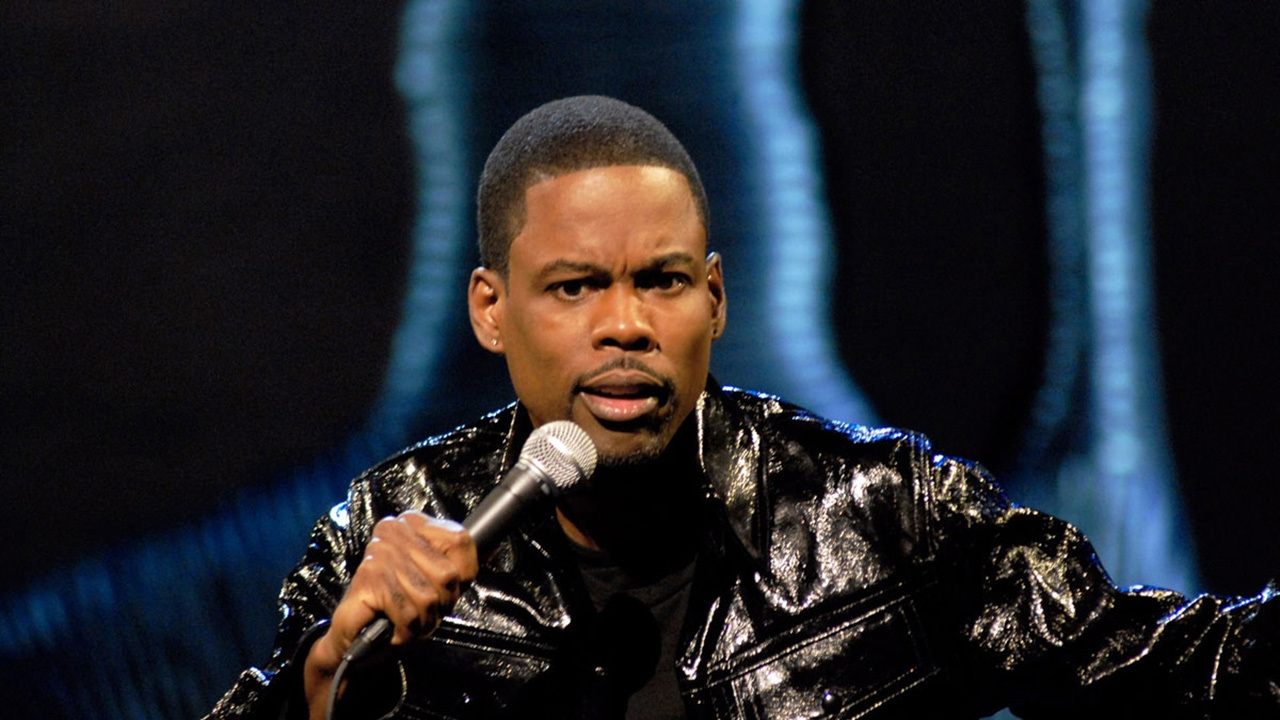
Let's be clear: Bring the Pain, filmed at the Takoma Theatre in Washington D.C., wasn't just another hour of comedy. This was Chris Rock, post-Saturday Night Live and In Living Color, staking his claim, not just as a comedian, but as a vital voice dissecting race, relationships, and American life with surgical precision and a preacher's fury. The special arrived like a thunderclap. Many felt Rock hadn't quite found his definitive voice on SNL; Bring the Pain announced its arrival loud and clear. It felt less like watching a polished routine and more like witnessing a high-wire act performed without a net, fueled by pure adrenaline and insight. The direction by Keith Truesdell, who lensed many classic comedy specials, wisely keeps the focus tight on Rock – his energy, his pacing, his relentless connection with the audience. There are no fancy camera tricks, no distracting graphics; it's just Rock, a mic, and a truth bomb payload.
### The Raw Power of Performance
Forget CGI spectacle; the "special effect" here was Chris Rock himself. Prowling the stage, dripping sweat, modulating his voice from a conspiratorial whisper to a full-throated roar – this was comedy as a physical act. Remember the sheer energy he brought? It felt less polished than many specials today, more visceral. That slight graininess of the VHS tape somehow enhanced the feeling that you were there, caught in the electric atmosphere of that D.C. theatre. He wasn't just telling jokes; he was wrestling with ideas, embodying characters, and using the rhythm of his delivery like a weapon. It’s fascinating to think that this special reportedly came together relatively quickly after Rock felt his previous material wasn't hitting hard enough. That urgency bleeds through the screen.
This raw power is most evident in the special's most famous – and controversial – segment: "N***as vs. Black People." Watching it now, decades later, it still crackles with uncomfortable truths and audacious humour. It was the kind of routine that dominated conversations for weeks, dissected and debated in break rooms and around dinner tables. Could it be done today? Probably not in the same way, but its fearless confrontation of intra-community issues cemented Rock's reputation as someone willing to go there. This segment alone won Rock one of his two Emmys for the special (Outstanding Writing for a Variety or Music Program); the special itself won for Outstanding Variety, Music or Comedy Special. It wasn't just popular; it was critically lauded, instantly elevating Rock to comedy royalty.
### Beyond the Big Routine
While "N***as vs. Black People" often overshadows the rest, Bring the Pain is packed wall-to-wall with killer material. His takes on relationships ("Men are défaut"), the O.J. trial ("If the glove doesn't fit, you must acquit... I don't know"), and the difference between being rich and being wealthy are still quoted today. Each bit lands with the force of a perfectly timed punch, showcasing Chris Rock's writing brilliance. He had this uncanny ability to articulate unspoken frustrations and absurdities, making audiences howl with laughter and recognition simultaneously. I distinctly remember renting this – probably multiple times – and just being floored by how smart it was beneath the explosive delivery. It wasn't just shock value; there were layers to it.
The production itself is classic 90s HBO special: simple staging, good lighting, clear sound focused on the performer. It wasn't about elaborate sets; it was about capturing the lightning in a bottle that was Rock's performance that night. The $1.1 million budget (roughly $2.1 million today) seems almost quaint now for a special of this magnitude, but it delivered arguably one of the most impactful hours of comedy ever recorded.
### The Verdict
Chris Rock: Bring the Pain isn't just a nostalgic relic; it's a landmark piece of stand-up comedy that fundamentally altered the landscape. It redefined Chris Rock's career, pushing boundaries and demonstrating the power of unfiltered comedic voice. The rawness, the intelligence, the sheer nerve – it all feels potent even through the slight haze of VHS tracking lines. It captured a moment, not just in comedy, but in culture.
Rating: 10/10
Why the perfect score? Because Bring the Pain is watershed moment. It's flawlessly performed, brilliantly written, culturally seismic, and remains breathtakingly funny and relevant. It achieved everything a stand-up special could possibly hope to achieve, setting a benchmark that comedians still aspire to reach.
Final Thought: Pop this tape in, and you're not just watching jokes; you're plugging into the raw, uncut energy of a comedic revolution, delivered with the force only possible before the internet sanded down all the edges. It still brings the pain, and the laughs, in equal measure.